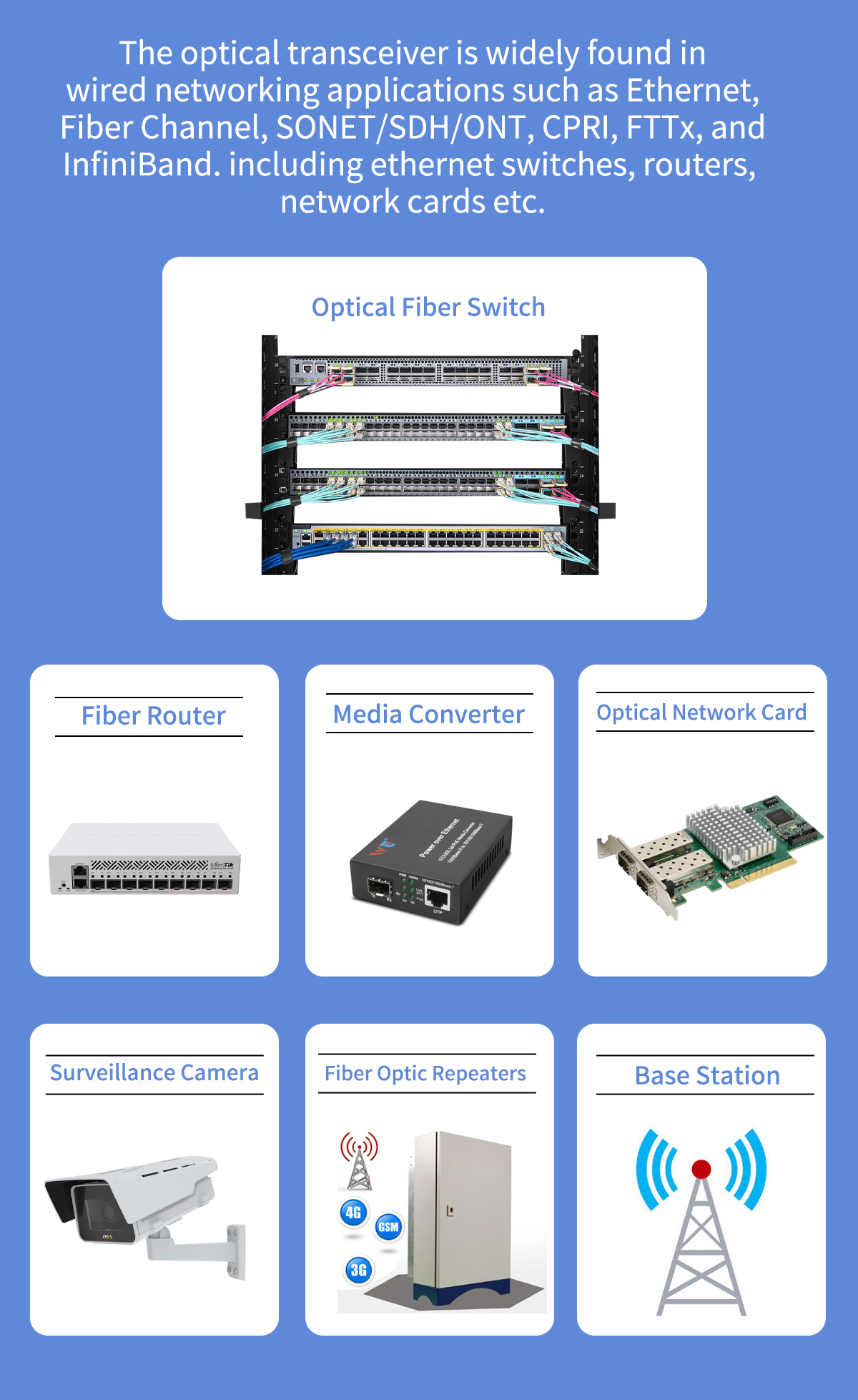
| NO. | Brand | Compatible P/N | Transceiver Type |
| 1 | Cisco | SFP-10G-ZR | SFP-10G-SR |
| 2 | Cisco | SFP-10G-ZR-S | SFP-10G-LR |
| 3 | Alcatel-Lucent | SFP-10G-ZR | SFP-10G-LRM |
| 4 | Arista Networks | SFP-10G-ZR | SFP-10G-ER |
| 5 | Huawei | SFP-10G-ZR | |
| 6 | Brocade | 10G-SFPP-ZR | |
| 7 | HPE(H3C) | SFP-10G-ZR | |
| 8 | Cisco Meraki | MA-SFP-10GB-ZR | |
| 9 | Juniper Networks | EX-SFP-10GE-ZR |
| Brocade Compatible | 10G-SFPP-ZR | Vendor Name | HYTOPTODEVICE |
| Form Factor | SFP+ | Max Data Rate | 10.7Gbps |
| Wavelength | 1550nm | Max Distance | 80km |
| Connector | Duplex LC | Transmitter Type | EML 1550nm |
| Cable Type | SMF | Receiver Type | APD |
| TX Power | 0~+4dBm | Receiver Sensitivity | < -24.0dBm |
| Typical Power Consumption | ≤1.8W | Receiver Overload | -7dBm |
| Bit Error Ratio (BER) | 1E-12 | DDM/DOM | Support |
| Protocols | IEEE 802.3ae, SFF-8472, SFF-8431, SFF-8432, SFP+ MSA Compliant, CPRI, eCPRI | Operation Temperature | 0to 70°C (32 to 158°F) |
For detailed technical specifications, please refer to the Datasheet
Usage Guidelines & Best Practices
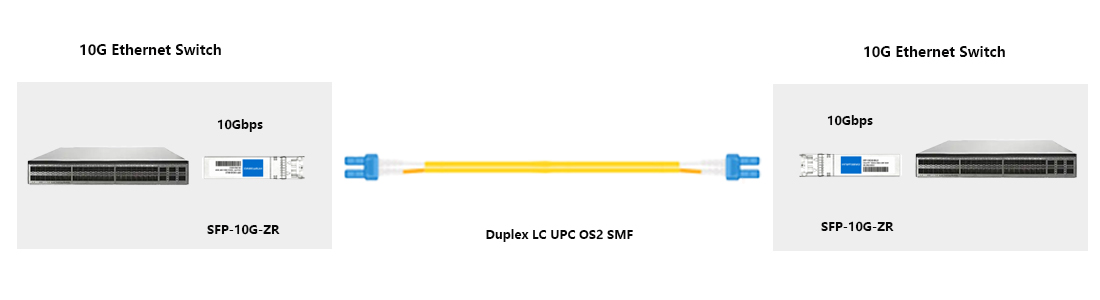
Fiber Choice: OS1/OS2 single-mode fiber (9/125 µm) is correct. Standard duplex LC-LC connectors are standard. Do NOT use OM1/OM2/OM3/OM4 Multimode Fiber (MMF) cables; severe modal dispersion will prevent link establishment.
Connector Match: Clarify that UPC/PC is required for proper optical contact, while APC will result in an unusable link and excessive signal loss.
Cleanliness & Dust: Keep dust caps on whenever unattached. Clean fiber end-faces with a optical cleaning pen before insertion; dust causes over 80% of optical link failures.
Link Tuning: If auto-negotiation fails with legacy SAN switches, manually lock the port speed to 10Gbps
Handling: Wear an ESD wrist strap during installation. Maintain a minimum fiber bend radius of 30 mm to prevent micro-bends and optical power loss.
Installation & Hot-Swap Rules
Supports MSA-compliant hot-swapping. Insert/remove gently without powering down the device. Keep dust caps on unused LC ports and avoid frequent re-plugging.
Operating Environment
Commercial grade: 0°C to 70°C in indoor environments. Keep away from extreme heat, moisture, and dust for long-term stability.
For detailed operation instructions, please refer to the User Guide.
Full Compatibility List and Supported Devices
Lab‑validated with Brocade customized EEPROM, plug‑and‑play without extra CLI tuning.
• Brocade 6505 / 6510 / 6520 SAN fabric switches
• Brocade VDX data center switching platforms
• Brocade ICX series enterprise routing switches
• Brocade MLX‑X metro core router series
Note: Use latest stable Brocade Fabric OS firmware for best compatibility performance.
Technical Warning: When testing or deploying this SFP-10G-ZR 80km module over short distances (typically less than 30km), an optical attenuator (12dB to 15dB) must be used. Failure to attenuate the signal may cause permanent damage to the receiver due to optical overload.
| Distance | ≤ 10km | ≤ 30km | ≤50km | Remarks |
| Attenuator | 15dB | 12dB | 6dB |
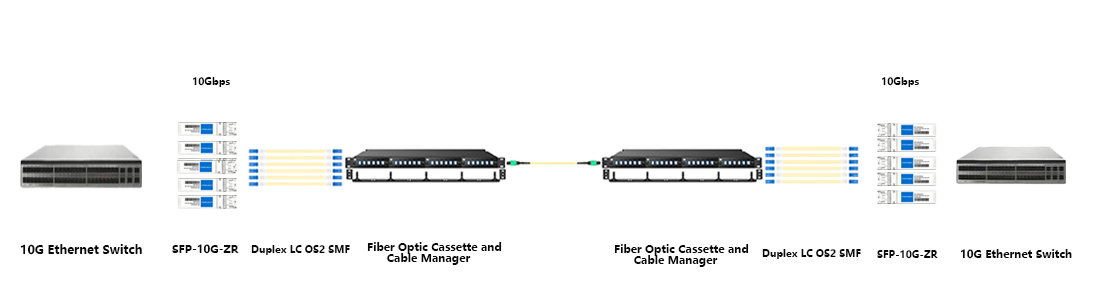
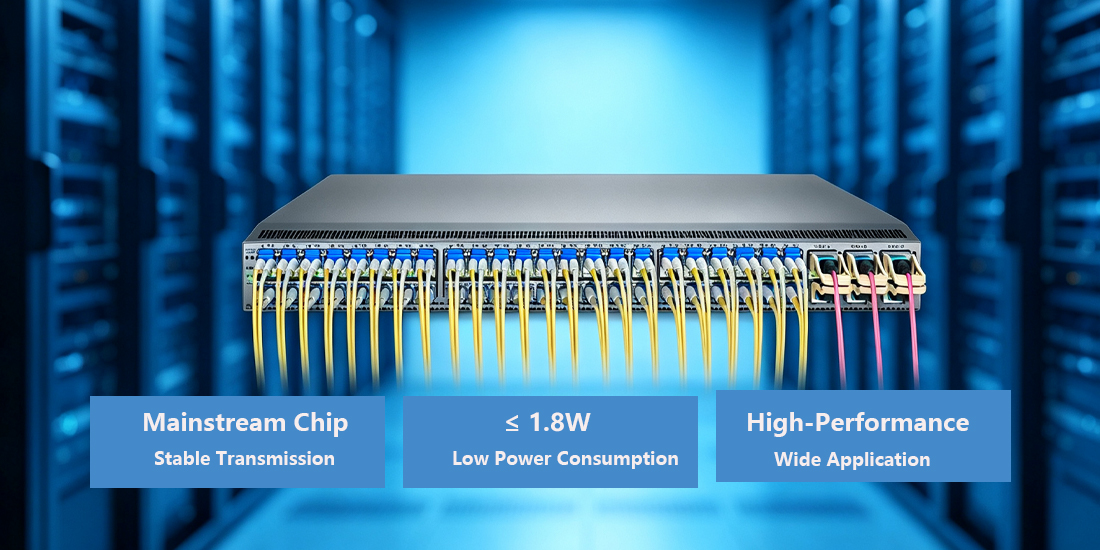


Q1:Can high incoming optical power destroy the APD photodiode during short‑distance fiber deployments? A:Yes, APD photodiodes can get burned out on short‑fiber deployments. HYTOPTODEVICE SFP+ 10G ZR transceiver APD maximum safe input power is ‑7 dBm; short links may deliver far higher incoming optical power. Deploy a suitable inline optical attenuator to keep received power between ‑7 dBm and ‑24 dBm to protect the receiver inside your compatible SFP‑10G‑ZR module.
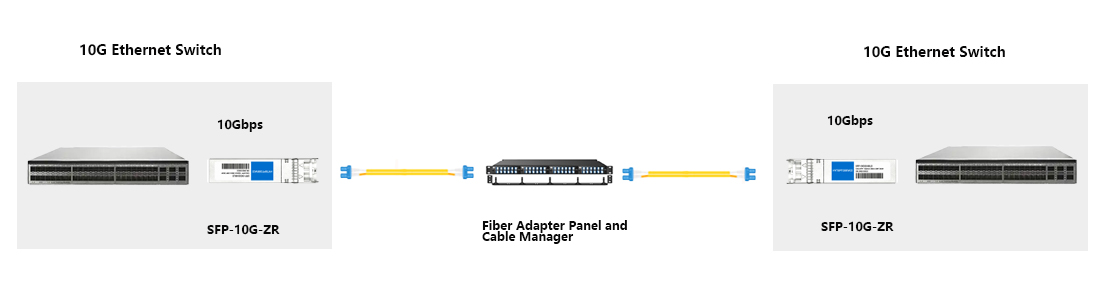
Q2:How do fiber splices and patch‑panel connectors impact the maximum 80km transmission distance? A:Yes, splices and patch panels reduce usable maximum reach. Each splice typically adds 0.1‑0.3 dB loss, each patch‑panel connector adds 0.2‑0.5 dB loss; HYTOPTODEVICE compatible SFP‑10G‑ZR provides 24 dB total optical budget. Sum all link losses and keep total loss under 24 dB, otherwise reduce working distance or use lower‑loss connectors to maintain stable 80‑km class performance.
Q3:What level of chromatic dispersion tolerance is built inside a standard 10G‑ZR optical transceiver? A:SFP‑10G‑ZR has fixed built‑in chromatic dispersion tolerance around ±1600 ps/nm for standard 80 km G.652 fiber. HYTOPTODEVICE SFP+ 10G ZR transceiver uses cooled EML laser optimized for this window. Stay within G.652 single‑mode fiber specification; for links beyond 80 km deploy external dispersion compensation modules to avoid excessive signal distortion.
Q4:Will optical back‑reflection from fiber joints harm or degrade ZR‑series SFP+ transmitters? A:Yes, poor optical return loss (ORL) can degrade and potentially damage the ZR transmitter. Typical minimum ORL requirement for 10GBASE‑ZR is 27 dB. Use high‑quality UPC polished connectors and avoid dirty end‑faces on HYTOPTODEVICE compatible SFP‑10G‑ZR; clean patch cords regularly to maintain sufficient return‑loss performance.
Q5:Will filling all SFP+ slots with ZR‑type optics trigger overheating risks on network switches? A:Yes, full population can raise switch thermal load. Each HYTOPTODEVICE SFP+ 10G ZR transceiver consumes roughly 2.0‑2.5 W due to cooled laser and APD circuitry. Follow your switch vendor thermal guidelines; ensure adequate chassis airflow and monitor switch temperature metrics when filling all SFP+ slots with ZR‑type optics.
Q6:Are ZR‑grade SFP+ modules capable of auto‑negotiating down to 1G or 100‑megabit speeds? A:No, SFP‑10G‑ZR cannot auto‑negotiate down to 1G or 100 M. HYTOPTODEVICE compatible SFP‑10G‑ZR is a 10G‑only 10GBASE‑ZR transceiver operating at 9.95‑11.3 Gbps. Force the switch port to 10G fixed speed; do not rely on auto‑negotiation for 1G/100M fallback, use separate 1G SFP optics for lower‑rate links.
Q7:Which official MSA standards define the hardware specifications for 10G‑ZR SFP+ transceivers? A:SFP‑10G‑ZR is governed by multiple industry MSA documents. Primary standards are SFF‑8431 for SFP+ mechanical and electrical, SFF‑8472 for DDM/DDM digital optical monitoring. HYTOPTODEVICE SFP+ 10G ZR transceiver strictly follows these MSA requirements; always confirm MSA compliance when sourcing third‑party ZR optics for your network.
Q8:What different temperature grade choices are available when purchasing SFP‑10G‑ZR transceivers? A:Two main temperature grade options exist for SFP‑10G‑ZR. Commercial grade:0 °C ~ +70 °C, industrial grade:‑40 °C ~ +85 °C. HYTOPTODEVICE provides both commercial and industrial‑range SFP+ 10G ZR transceiver variants; select industrial‑temperature modules for outdoor cabinets or harsh uncontrolled‑environment deployments.
Q9:Why does stable APD bias voltage play such a critical role for long‑reach ZR optical modules? A:Yes, stable APD bias voltage is critical for consistent ZR‑module performance. APD gain is highly voltage‑dependent; voltage drift shifts receiver sensitivity and increases bit‑error rate. HYTOPTODEVICE compatible SFP‑10G‑ZR implements closed‑loop APD bias control; monitor DDM receiver‑power readings, replace units if you see unstable received‑power readings under steady‑link conditions.
Q10:What factory‑backed warranty coverage can buyers expect for third‑party compatible 10G‑ZR optics? A:HYTOPTODEVICE compatible SFP‑10G‑ZR modules carry standard 3‑year factory warranty against manufacturing defects. This covers hardware failures under rated operating conditions; warranty does not cover damage caused by optical overload, ESD, improper handling or physical abuse. Contact our support team for RMA procedures for your SFP+ 10G ZR transceiver.
Q11:Is it feasible to re‑write SFP‑10G‑ZR EEPROM on‑site to match different brand network hardware? A:Generally no, field‑side reprogramming is not recommended. HYTOPTODEVICE SFP+ 10G ZR transceiver is factory‑programmed with target‑brand EEPROM profiles before shipment. If you change switch platforms, order pre‑programmed units matched to your new hardware; field‑programming tools require specialist skills and risk bricking the transceiver.
Q12:Why do original vendor 10G‑ZR SFP+ transceivers carry such steep price premiums? A:OEM original SFP‑10G‑ZR carries heavy brand markup beyond component cost. OEM pricing includes licensing, marketing and lock‑in strategies, while core optical bill‑of‑materials is comparable. HYTOPTODEVICE compatible SFP+ 10G ZR transceiver delivers MSA‑compliant, pre‑programmed drop‑in performance at factory‑direct pricing for system integrators and bulk buyers.
Q13:Is it good practice to keep spare ZR‑class SFP+ optics stocked locally for production networks? A:Yes, keeping local spare inventory for SFP‑10G‑ZR is strongly recommended for production networks. ZR long‑haul links are critical infrastructure; lead‑times for emergency orders can delay repair. HYTOPTODEVICE supports stock bulk shipments for local inventory; keep matched spare SFP+ 10G ZR transceiver units ready for fast link‑recovery during outages.
Q14:How can network engineers check real‑time receiver optical power levels before bringing up a fiber port? A:Yes, you can read real‑time DDM optical power via switch CLI. After inserting HYTOPTODEVICE compatible SFP‑10G‑ZR, run the show transceiver / show interface transceiver command to check Rx optical power. Confirm received power sits between ‑7 dBm and ‑24 dBm; adjust attenuation if out‑of‑range before you enable the network port.
Q15:Are SFP‑10G‑ZR transceivers suitable for inter‑data‑center connections over leased dark‑fiber circuits? A:Yes, SFP‑10G‑ZR is well‑suited for dark‑fiber lease links between regional data centers. It supports up to 80 km over G.652 SMF with 24 dB power budget. HYTOPTODEVICE SFP+ 10G ZR transceiver is widely deployed for carrier‑grade dark‑fiber MAN inter‑DC connections; perform a pre‑deployment link‑loss budget calculation before commissioning each leased‑fiber route.
Q16:What major operational risks come with purchasing untested low‑cost no‑brand ZR optical modules? A:Low‑cost unbranded ZR optics carry multiple key risks. Poorly calibrated cooled‑EML lasers, unstable APD bias circuits, incomplete MSA compliance, missing DDM accuracy, short service life and higher failure rates. HYTOPTODEVICE SFP+ 10G ZR transceiver undergoes full 72‑hour aging‑test; avoid unbranded no‑test optics for production‑critical long‑haul dark‑fiber links
Packaging & Custom OEM Solutions
Individually sealed in ESD-safe packaging and ready to ship. We offer tailored OEM solutions—including custom logos and private labeling—to support high-volume distributors,wholesaler and system integrators.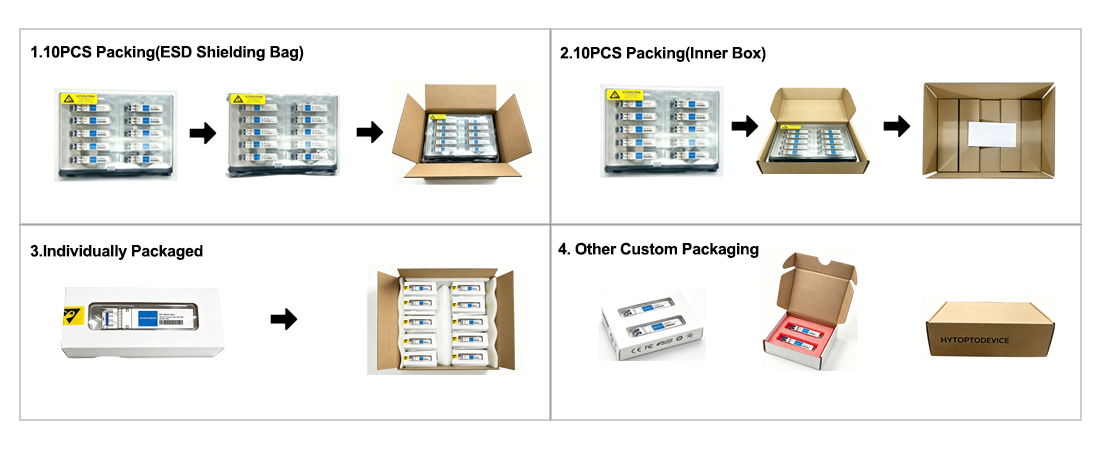
Why Network Engineers Choose HYTOPTODEVICE
HYTOPTODEVICE has supplied over 5000,000 optical transceiver modules to data centers, ISPs, and enterprise networks across 100+ countries since 2011. Every module undergoes a 72-hour burn-in test and full DDM/DOM validation before shipment.
“Phenomenal performance. We deployed 200 HYTOPTODEVICE SFP+ modules to replace Cisco OEMs in our backbone network. Result? Zero compatibility issues and a 60% reduction in costs. Highly recommended for mission-critical networks."— Senior Network Engineer, Regional Telecom, Australia
Quality Certification & Compliance
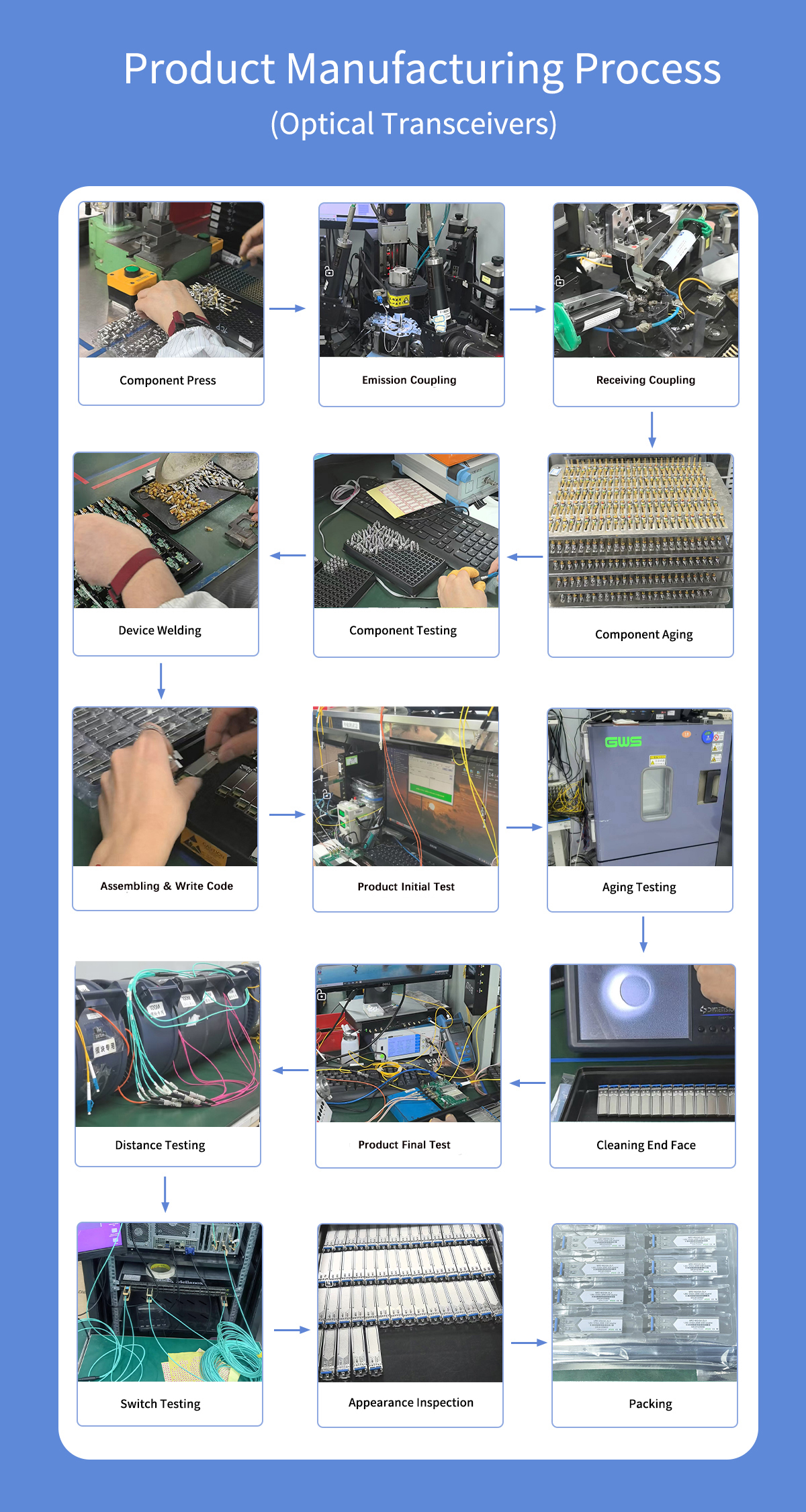
At HYTOPTODEVICE, our quality commitment is backed by industry-standard validations. From fiber optical transceiver manufacturing to final visual inspection, from IQC、IPQC、FQC to OQC, our processes ensure global compliance and reliability.
We adhere to rigorous standards for our SFP modules and network solutions:
ISO 9001: Certified quality management and production consistency.
CE & FCC: Fully compliant for seamless Global Market Access.
RoHS: Committed to environmental responsibility and hazardous material control.
Proven Reliability: Rigorous testing to reduce compliance risk and ensure safety.
Certified Quality. Global Standards. Guaranteed Performance.