| NO. | Brand | Compatible P/N | Transceiver Type |
| 1 | Cisco | SFP-10G-ZR | SFP-10G-SR |
| 2 | Cisco | SFP-10G-ZR-S | SFP-10G-LR |
| 3 | Alcatel-Lucent | SFP-10G-ZR | SFP-10G-LRM |
| 4 | Arista Networks | SFP-10G-ZR | SFP-10G-ER |
| 5 | Huawei | SFP-10G-ZR | |
| 6 | Brocade | 10G-SFPP-ZR | |
| 7 | HPE(H3C) | SFP-10G-ZR | |
| 8 | Cisco Meraki | MA-SFP-10GB-ZR | |
| 9 | Juniper Networks | EX-SFP-10GE-ZR |
| Huawei Compatible | SFP-10G-ZR | Vendor Name | HYTOPTODEVICE |
| Form Factor | SFP+ | Max Data Rate | 10.7Gbps |
| Wavelength | 1550nm | Max Distance | 80km |
| Connector | Duplex LC | Transmitter Type | EML 1550nm |
| Cable Type | SMF | Receiver Type | APD |
| TX Power | 0~+4dBm | Receiver Sensitivity | < -24.0dBm |
| Typical Power Consumption | ≤1.8W | Receiver Overload | -7dBm |
| Bit Error Ratio (BER) | 1E-12 | DDM/DOM | Support |
| Protocols | IEEE 802.3ae, SFF-8472, SFF-8431, SFF-8432, SFP+ MSA Compliant, CPRI, eCPRI | Operation Temperature | 0to 70°C (32 to 158°F) |
For detailed technical specifications, please refer to the Datasheet
Usage Guidelines & Best Practices
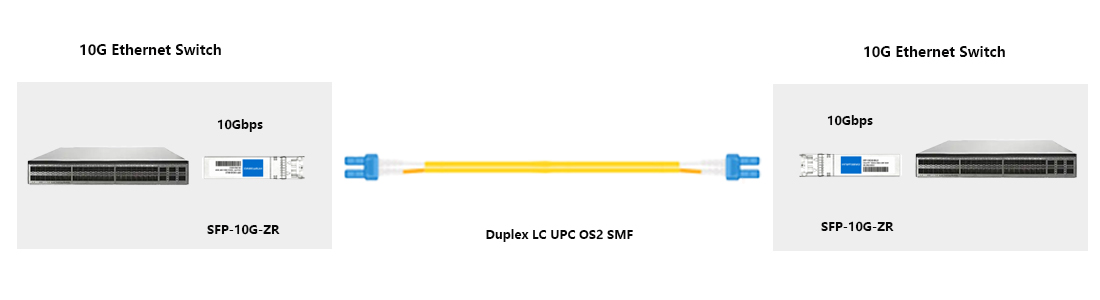
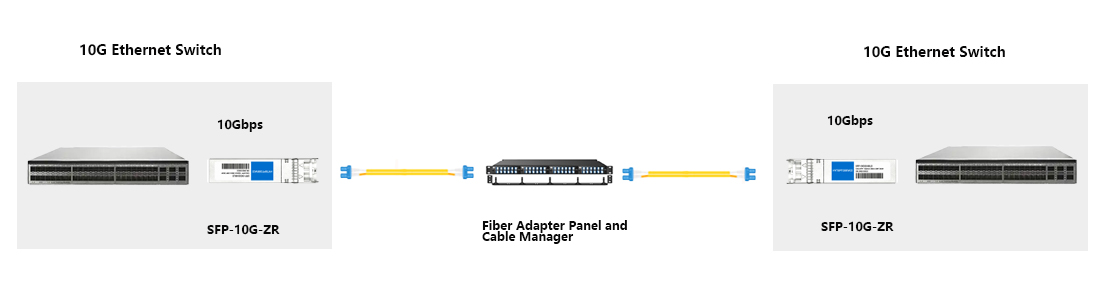
Fiber Choice: OS1/OS2 single-mode fiber (9/125 µm) is correct. Standard duplex LC-LC connectors are standard. Do NOT use OM1/OM2/OM3/OM4 Multimode Fiber (MMF) cables; severe modal dispersion will prevent link establishment.
Connector Match: Clarify that UPC/PC is required for proper optical contact, while APC will result in an unusable link and excessive signal loss.
Cleanliness & Dust: Keep dust caps on whenever unattached. Clean fiber end-faces with a optical cleaning pen before insertion; dust causes over 80% of optical link failures.
Link Tuning: If auto-negotiation fails with legacy SAN switches, manually lock the port speed to 10Gbps
Handling: Wear an ESD wrist strap during installation. Maintain a minimum fiber bend radius of 30 mm to prevent micro-bends and optical power loss.
Installation & Hot-Swap Rules
Supports MSA-compliant hot-swapping. Insert/remove gently without powering down the device. Keep dust caps on unused LC ports and avoid frequent re-plugging.
Operating Environment
Commercial grade: 0°C to 70°C in indoor environments. Keep away from extreme heat, moisture, and dust for long-term stability.
For detailed operation instructions, please refer to the User Guide.
Full Compatibility List and Supported Devices
Lab‑validated with Huawei customized EEPROM, plug‑and‑play without extra CLI tuning.
• Huawei CloudEngine 5800 / 6800 / 8800 / 9800 series switches
• Huawei S5735 / S6735 enterprise switch platforms
• Huawei NE series enterprise & metro routers
• Huawei CE‑S12700 high‑end chassis switches
Note: Use latest stable Huawei VRP firmware for best compatibility performance.
Technical Warning: When testing or deploying this SFP-10G-ZR 80km module over short distances (typically less than 30km), an optical attenuator (12dB to 15dB) must be used. Failure to attenuate the signal may cause permanent damage to the receiver due to optical overload.
| Distance | ≤ 10km | ≤ 30km | ≤50km | Remarks |
| Attenuator | 15dB | 12dB | 6dB |
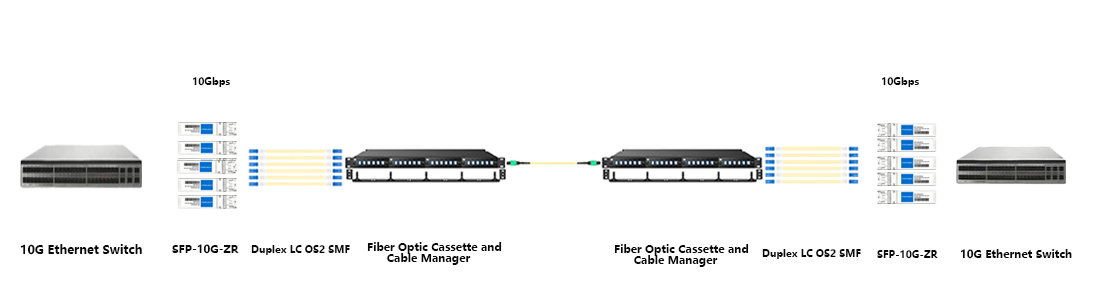
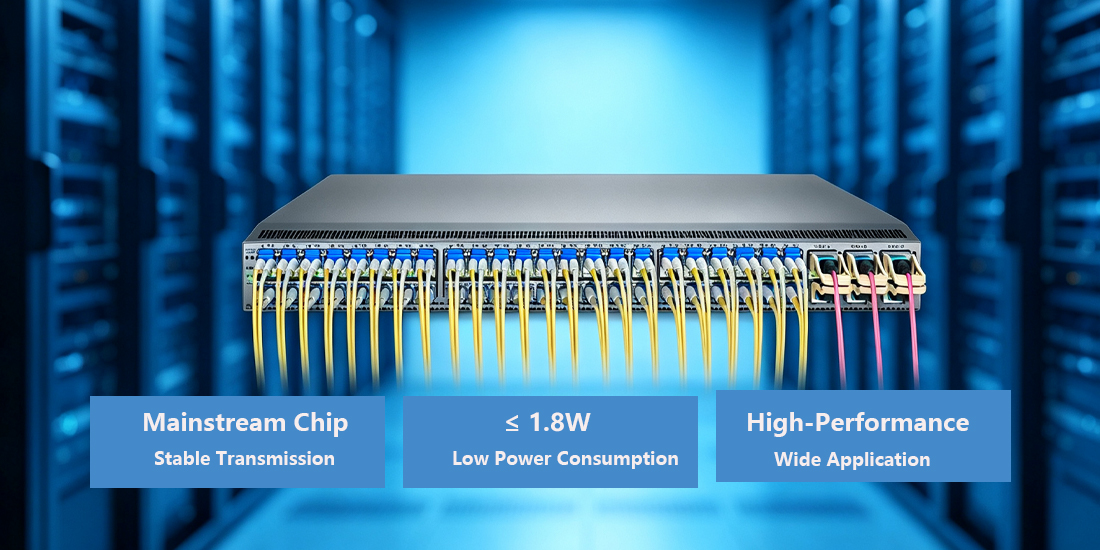


Q1:What risk does APD receiver face when deploying HYTOPTODEVICE Huawei‑compatible 10G SFP+ ZR on short fiber spans? A:Yes, the APD avalanche photodiode inside HYTOPTODEVICE Huawei‑compatible 10G SFP+ ZR faces optical overload risk on short fiber runs; its maximum safe input power is ‑7dBm while offering ‑24dBm receiving sensitivity for 80km links, you need to deploy proper inline optical attenuator for short‑distance deployments to avoid component damage.
Q2:How do telecom system integrators calculate proper attenuator value for HYTOPTODEVICE SFP‑10G‑ZR short‑range 10GBASE‑ZR links? A:Yes, you can calculate the attenuator value based on real‑world link loss data; HYTOPTODEVICE Huawei SFP‑10G‑ZR compatible module features 0~+4dBm TX power,‑7dBm overload threshold and<‑24dBm sensitivity, keep received optical power between ‑7dBm and ‑24dBm, install fixed attenuator if input power exceeds‑7dBm.
Q3:What optical loss budget can bulk buyers expect from HYTOPTODEVICE aftermarket SFP‑10G‑ZR for Huawei 80km metro long‑haul deployment? A:Yes, HYTOPTODEVICE Huawei‑compatible SFP‑10G‑ZR delivers 24 dB optical power budget, supported by 0~+4dBm transmit power and<‑24dBm receiver sensitivity, this budget supports maximum 80km transmission over standard G.652 single‑mode fiber for your metro network project.
Q4:Can ISP network operators deploy HYTOPTODEVICE 10G SFP+ ZR transceiver over legacy OS1 single‑mode fiber for 80‑kilometer 10G connections? A:Yes, HYTOPTODEVICE SFP‑10G‑ZR works with legacy OS1 single‑mode fiber for 80‑km 10G transmission, OS1 complies with G.652 1550nm specifications; keep total link loss under 24 dB and minimize splice points to guarantee stable link performance.
Q5:Can HYTOPTODEVICE Huawei SFP‑10G‑ZR compatible module run over existing single‑strand BiDi fiber infrastructure? A:No, HYTOPTODEVICE 10G SFP+ ZR cannot operate over single‑strand BiDi fiber, this transceiver uses duplex LC dual‑fiber architecture, separate transmit and receive paths require two independent single‑mode fiber strands for normal operation.
Q6:How does chromatic dispersion impact long‑distance performance of HYTOPTODEVICE 10GBASE‑ZR SFP+ ZR on 80km fiber spans? A:Yes, chromatic dispersion causes optical pulse broadening over long fiber spans and distorts 10G signals at 1550nm 80km transmission; HYTOPTODEVICE SFP‑10G‑ZR equips cooled EML laser to mitigate dispersion impact for standard G.652 fiber deployments.
Q7:What laser device is integrated inside HYTOPTODEVICE replacement SFP‑10G‑ZR for Huawei enterprise switches? A:HYTOPTODEVICE Huawei‑compatible SFP‑10G‑ZR integrates a cooled EML electro‑absorption modulated laser, this 1550nm laser supplies stable output power and low chromatic dispersion to meet 80‑km long‑reach single‑mode fiber transmission requirements.
Q8:Do global wholesalers have to enable FEC feature while rolling out HYTOPTODEVICE 10G SFP+ ZR 10GBASE‑ZR modules? A:No, FEC is not mandatory for HYTOPTODEVICE 10GBASE‑ZR SFP+ ZR transceivers, 10G Ethernet runs natively without FEC; you may turn on device‑level FEC to improve link margin under high‑loss fiber link conditions.
Q9:What influence does PMD bring to metro WAN links built with HYTOPTODEVICE Huawei‑compatible 10G SFP+ ZR? A:PMD brings random signal distortion on long‑haul fiber connections; for 80km links with HYTOPTODEVICE SFP‑10G‑ZR, select low‑PMD G.652 fiber, old high‑PMD fiber will raise bit‑error rate and trigger unstable intermittent link flapping.
Q10:Will pre‑programmed HYTOPTODEVICE third‑party SFP‑10G‑ZR trigger transceiver alarms on Huawei VRP‑based network hardware? A:No, HYTOPTODEVICE SFP‑10G‑ZR comes with Huawei‑specific pre‑programmed EEPROM to avoid unrecognized transceiver alarms on Huawei VRP platforms; verify against your actual VRP firmware version before field installation.
Q11:Is direct interconnection acceptable between HYTOPTODEVICE SFP‑10G‑ZR and SFP‑10G‑LR / SFP‑10G‑ER optical transceivers? A:Yes, cross‑model interconnection is technically feasible, but HYTOPTODEVICE 10G SFP+ ZR outputs high transmit power 0~+4dBm which may overload LR/ER receivers; you must fit inline optical attenuator for short‑range mixed‑module interconnection scenarios.
Q12:Will deploying aftermarket HYTOPTODEVICE SFP‑10G‑ZR void the official hardware warranty of Huawei network switches? A:Normally using HYTOPTODEVICE compatible SFP‑10G‑ZR will not void Huawei chassis hardware warranty, original manufacturer warranty covers the switch hardware itself; only physical damage directly caused by optical module may invalidate warranty coverage.
Q13:Can data‑center procurement teams pair HYTOPTODEVICE 10G SFP+ ZR with mainstream SFP+ server NIC adapters? A:Yes, HYTOPTODEVICE Huawei‑compatible 10G SFP+ ZR works with standard SFP+ server NICs, confirm your NIC firmware supports 10GBASE‑ZR standard; note certain server adapters cannot read DDM monitoring data from third‑party optical modules.
Q14:Which laser safety classification applies to HYTOPTODEVICE bulk‑supply SFP‑10G‑ZR 10G optical transceiver? A:HYTOPTODEVICE mass‑produced SFP‑10G‑ZR belongs to Class 1 laser safety classification, it is eye‑safe under normal operating status; never look directly into open fiber ports while the module is powered on.
Q15:What test documents should global importers check before placing bulk purchase orders for HYTOPTODEVICE Huawei SFP‑10G‑ZR compatible modules? A:Before bulk procurement of HYTOPTODEVICE SFP‑10G‑ZR, verify MSA SFF‑8431, SFF‑8472, RoHS and Class 1 laser safety certificates, also check full‑rate aging‑test reports and confirm EEPROM programming matches your Huawei hardware environment.
Packaging & Custom OEM Solutions
Individually sealed in ESD-safe packaging and ready to ship. We offer tailored OEM solutions—including custom logos and private labeling—to support high-volume distributors,wholesaler and system integrators.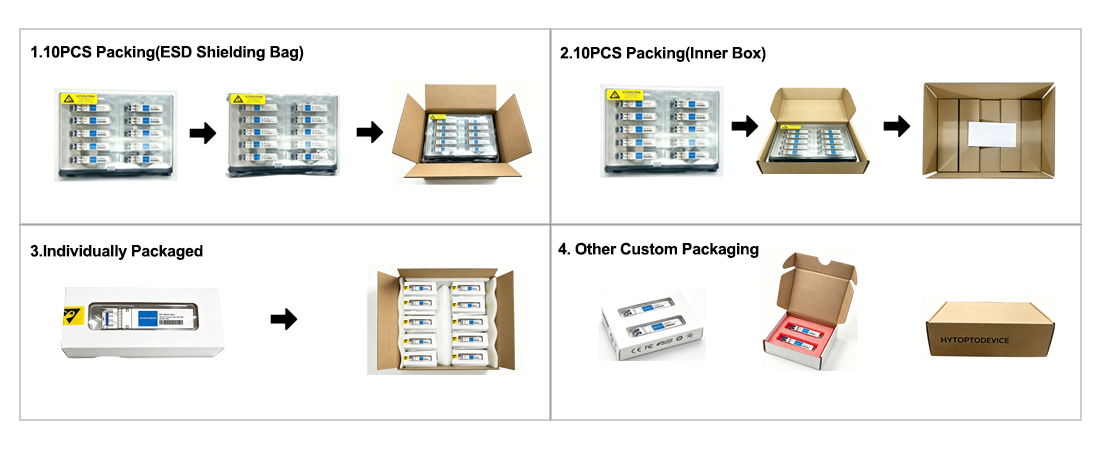
Why Network Engineers Choose HYTOPTODEVICE
HYTOPTODEVICE has supplied over 5000,000 optical transceiver modules to data centers, ISPs, and enterprise networks across 100+ countries since 2011. Every module undergoes a 72-hour burn-in test and full DDM/DOM validation before shipment.
“Phenomenal performance. We deployed 200 HYTOPTODEVICE SFP+ modules to replace Cisco OEMs in our backbone network. Result? Zero compatibility issues and a 60% reduction in costs. Highly recommended for mission-critical networks."— Senior Network Engineer, Regional Telecom, Australia
Quality Certification & Compliance
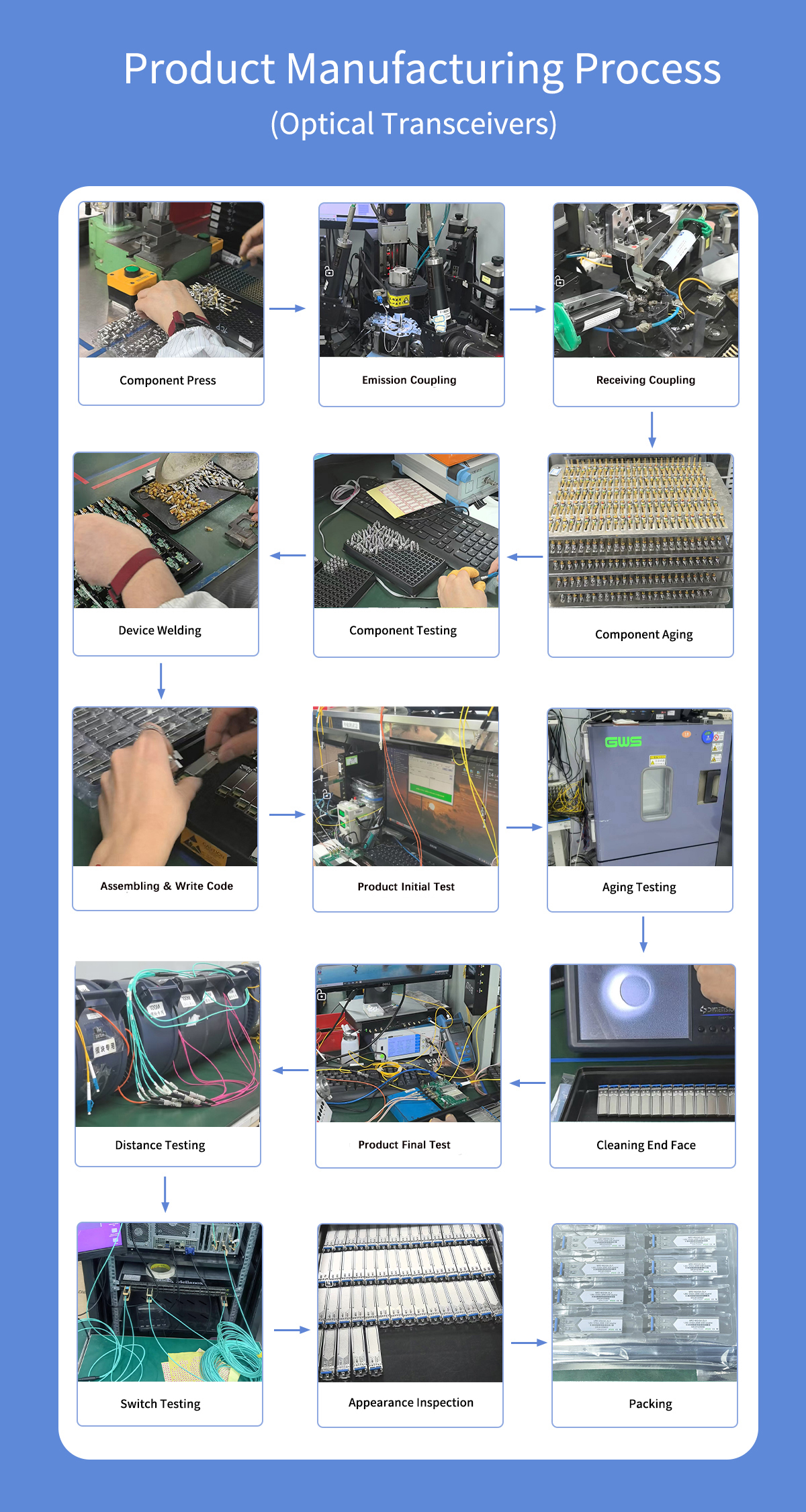
At HYTOPTODEVICE, our quality commitment is backed by industry-standard validations. From fiber optical transceiver manufacturing to final visual inspection, from IQC、IPQC、FQC to OQC, our processes ensure global compliance and reliability.
We adhere to rigorous standards for our SFP modules and network solutions:
ISO 9001: Certified quality management and production consistency.
CE & FCC: Fully compliant for seamless Global Market Access.
RoHS: Committed to environmental responsibility and hazardous material control.
Proven Reliability: Rigorous testing to reduce compliance risk and ensure safety.
Certified Quality. Global Standards. Guaranteed Performance.