| NO. | Brand | Compatible P/N | Transceiver Type |
| 1 | Cisco | SFP-10G-ZR | SFP-10G-SR |
| 2 | Cisco | SFP-10G-ZR-S | SFP-10G-LR |
| 3 | Alcatel-Lucent | SFP-10G-ZR | SFP-10G-LRM |
| 4 | Arista Networks | SFP-10G-ZR | SFP-10G-ER |
| 5 | Huawei | SFP-10G-ZR | |
| 6 | Brocade | 10G-SFPP-ZR | |
| 7 | HPE(H3C) | SFP-10G-ZR | |
| 8 | Cisco Meraki | MA-SFP-10GB-ZR | |
| 9 | Juniper Networks | EX-SFP-10GE-ZR |
| Cisco Compatible | SFP-10G-ZR | Vendor Name | HYTOPTODEVICE |
| Form Factor | SFP+ | Max Data Rate | 10.7Gbps |
| Wavelength | 1550nm | Max Distance | 80km |
| Connector | Duplex LC | Transmitter Type | EML 1550nm |
| Cable Type | SMF | Receiver Type | APD |
| TX Power | 0~+4dBm | Receiver Sensitivity | < -24.0dBm |
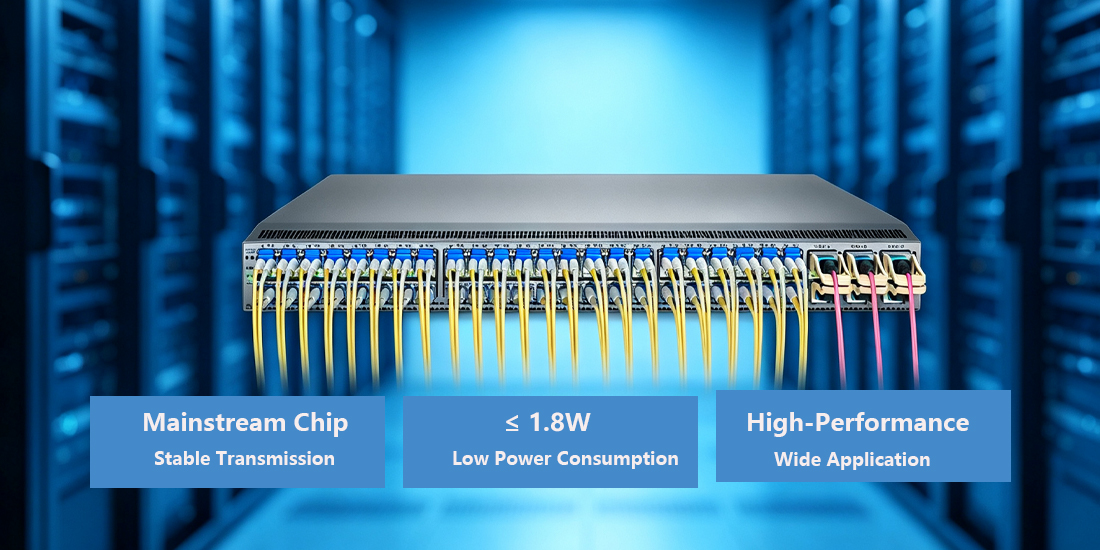
| Typical Power Consumption | ≤1.8W | Receiver Overload | -7dBm |
| Bit Error Ratio (BER) | 1E-12 | DDM/DOM | Support |
| Protocols | IEEE 802.3ae, SFF-8472, SFF-8431, SFF-8432, SFP+ MSA Compliant, CPRI, eCPRI | Operation Temperature | 0to 70°C (32 to 158°F) |
For detailed technical specifications, please refer to the Datasheet
Usage Guidelines & Best Practices
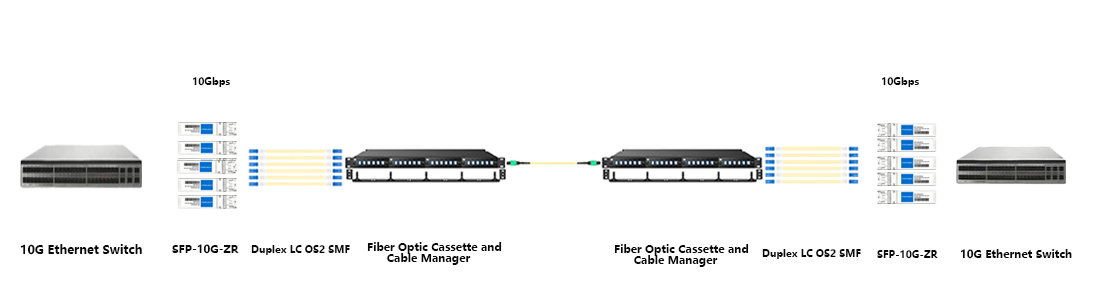
Fiber Choice: OS1/OS2 single-mode fiber (9/125 µm) is correct. Standard duplex LC-LC connectors are standard. Do NOT use OM1/OM2/OM3/OM4 Multimode Fiber (MMF) cables; severe modal dispersion will prevent link establishment.
Connector Match: Clarify that UPC/PC is required for proper optical contact, while APC will result in an unusable link and excessive signal loss.
Cleanliness & Dust: Keep dust caps on whenever unattached. Clean fiber end-faces with a optical cleaning pen before insertion; dust causes over 80% of optical link failures.
Link Tuning: If auto-negotiation fails with legacy SAN switches, manually lock the port speed to 10Gbps
Handling: Wear an ESD wrist strap during installation. Maintain a minimum fiber bend radius of 30 mm to prevent micro-bends and optical power loss.
Installation & Hot-Swap Rules
Supports MSA-compliant hot-swapping. Insert/remove gently without powering down the device. Keep dust caps on unused LC ports and avoid frequent re-plugging.
Operating Environment
Commercial grade: 0°C to 70°C in indoor environments. Keep away from extreme heat, moisture, and dust for long-term stability.
For detailed operation instructions, please refer to the User Guide.
Full Compatibility List and Supported Devices
Lab‑tested with Cisco‑tuned EEPROM. Works out‑of‑box without extra CLI override.
• Cisco Catalyst 9000, 3850, 4500 series switches
• Cisco Nexus 3000, 9000, 9500 data‑center switches
• Cisco ASR 1000, 9000 core routers
• Cisco MDS storage switches
Note: Use latest stable Cisco IOS/IOS‑XE firmware for best compatibility.
Technical Warning: When testing or deploying this SFP-10G-ZR 80km module over short distances (typically less than 30km), an optical attenuator (12dB to 15dB) must be used. Failure to attenuate the signal may cause permanent damage to the receiver due to optical overload.
| Distance | ≤ 10km | ≤ 30km | ≤50km | Remarks |
| Attenuator | 15dB | 12dB | 6dB |

Q10: Can SFP‑10G‑ZR achieve 80 km over legacy OS1 single‑mode fiber?
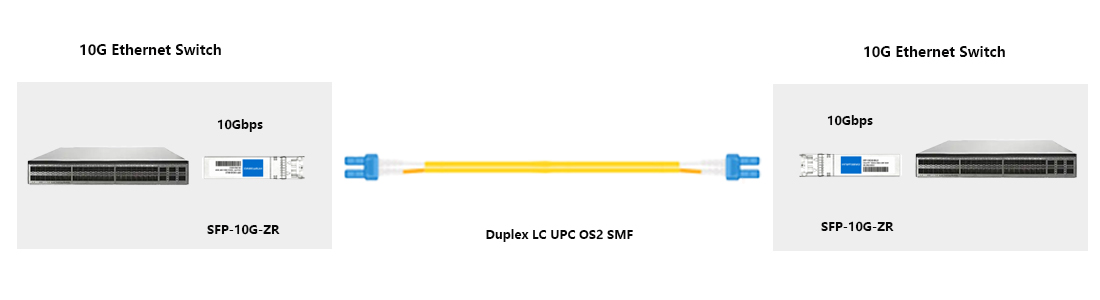
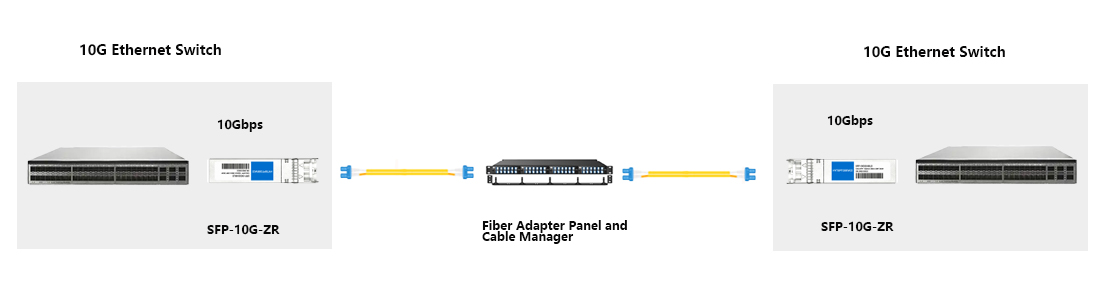
A: Yes, SFP‑10G‑ZR supports 80km on OS1 single‑mode fiber. OS1 matches G.652 specification at 1550nm, ensure total link loss stays under 23dB and minimize splice points for stable performance.
Q11: Can SFP‑10G‑ZR operate over a single fiber strand (BiDi)?
A: No, SFP‑10G‑ZR cannot run over single‑strand BiDi fiber. It uses duplex LC dual‑fiber architecture, separate transmit and receive paths require two strands of single‑mode fiber.
Q12: What is Chromatic Dispersion (CD) and why is it a major challenge at 80km?
A: Chromatic dispersion is signal pulse spreading over fiber. At 80km 1550nm long‑haul transmission, CD distorts 10G signal; cooled EML laser inside SFP‑10G‑ZR suppresses CD effects for compliant G.652 fiber.
Q13: What type of transmitter laser is used in SFP‑10G‑ZR?
A: SFP‑10G‑ZR adopts cooled EML electro‑absorption modulated laser. This cooled 1550nm laser maintains stable output and low dispersion to satisfy 80km long‑reach single‑mode transmission requirements.
Q14: Does SFP‑10G‑ZR require Forward Error Correction (FEC)?
A: No, SFP‑10G‑ZR does not mandate FEC. 10GBASE‑ZR runs standard 10G Ethernet without FEC, though enabling device‑side FEC can improve link margin under high‑loss fiber conditions.
Q15: Does SFP‑10G‑ZR require Forward Error Correction (FEC)?
A: No, SFP‑10G‑ZR does not mandate FEC. 10GBASE‑ZR runs standard 10G Ethernet without FEC, though enabling device‑side FEC can improve link margin under high‑loss fiber conditions.
Packaging & Custom OEM Solutions
Individually sealed in ESD-safe packaging and ready to ship. We offer tailored OEM solutions—including custom logos and private labeling—to support high-volume distributors,wholesaler and system integrators.
Why Network Engineers Choose HYTOPTODEVICE
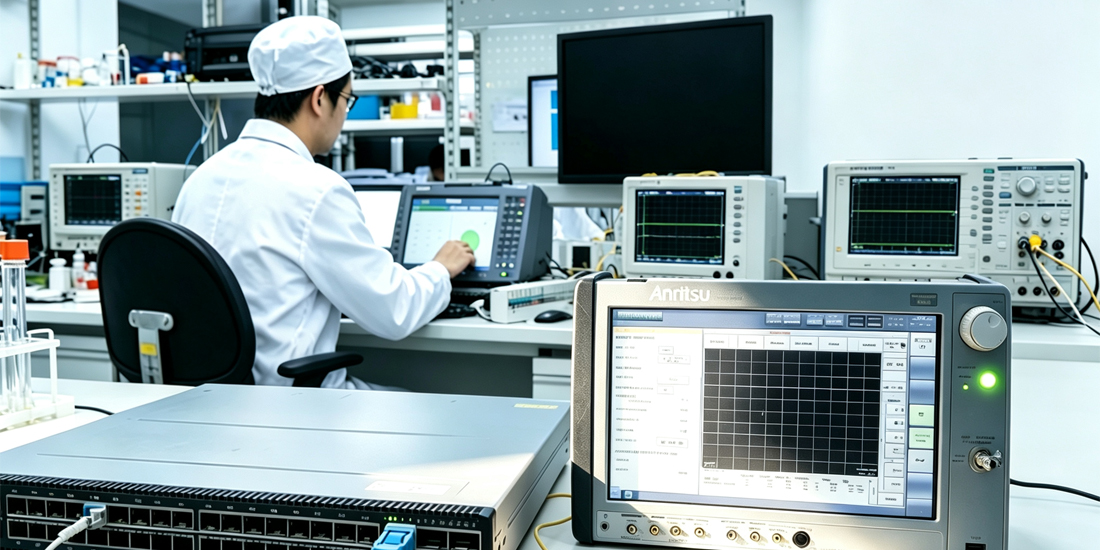
HYTOPTODEVICE has supplied over 5000,000 optical transceiver modules to data centers, ISPs, and enterprise networks across 100+ countries since 2011. Every module undergoes a 72-hour burn-in test and full DDM/DOM validation before shipment.
“Phenomenal performance. We deployed 200 HYTOPTODEVICE SFP+ modules to replace Cisco OEMs in our backbone network. Result? Zero compatibility issues and a 60% reduction in costs. Highly recommended for mission-critical networks."— Senior Network Engineer, Regional Telecom, Australia
Quality Certification & Compliance
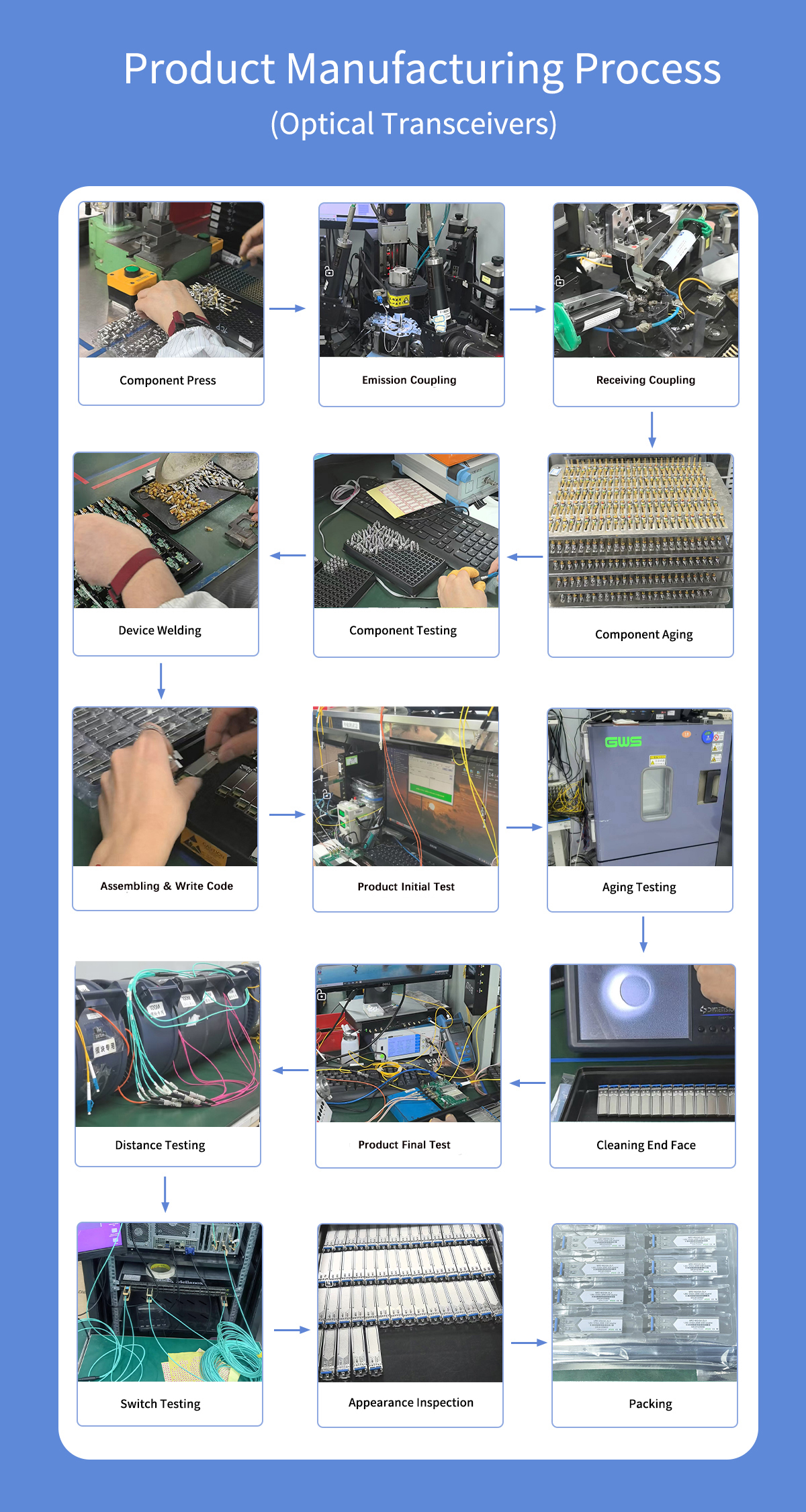
At HYTOPTODEVICE, our quality commitment is backed by industry-standard validations. From fiber optical transceiver manufacturing to final visual inspection, from IQC、IPQC、FQC to OQC, our processes ensure global compliance and reliability.
We adhere to rigorous standards for our SFP modules and network solutions:
ISO 9001: Certified quality management and production consistency.
CE & FCC: Fully compliant for seamless Global Market Access.
RoHS: Committed to environmental responsibility and hazardous material control.
Proven Reliability: Rigorous testing to reduce compliance risk and ensure safety.
Certified Quality. Global Standards. Guaranteed Performance.