
In the hyper-scale data centers and telecommunications infrastructure of 2026, compatibility is the heartbeat of connectivity. As network architectures shift towards open networking and multi-vendor environments, the "vendor lock-in" strategy used by major OEMs (Original Equipment Manufacturers) has become a significant bottleneck for scalability and cost-efficiency.
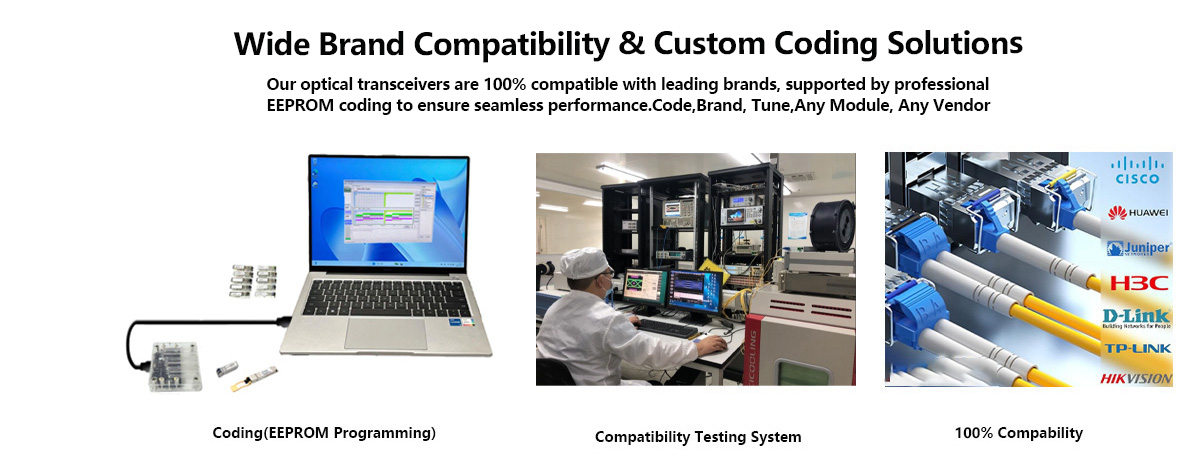
At HYTOPTODEVICE, our Programming & OEM Solution division is dedicated to breaking these barriers. Through our professional Compatible Coding & Recoding Services, we empower network engineers to achieve 100% interoperability across diverse hardware ecosystems.
The optical transceiver market is projected to exceed $24 billion by 2026, driven by the mass adoption of 400G, 800G, and early-stage 1.6T Ethernet. However, a significant portion of capital expenditure (CAPEX) is still lost to "brand premiums."
Most Tier-1 switch and router manufacturers program their systems to recognize only "genuine" modules via specific identifiers stored in the module's EEPROM. When a third-party module is inserted, the system may trigger a "Foreign/Unsupported Module" error, disabling the port.
Compatible Coding & Recoding is the process of modifying these internal identifiers (including Vendor Name, PN, Serial Number, and Checksums) to match the expected signature of the host device.
Standardizing on a single OEM can lead to a 300% to 500% markup on optical components. Our recoding services allow you to use high-quality, generic hardware that performs identically to OEM-branded optics, drastically reducing CAPEX.
In a dynamic network, hardware requirements change. A module coded for Cisco today might be needed for a Juniper or Arista switch tomorrow. Our recoding solutions allow you to rewrite the module’s firmware in the field, ensuring your inventory is never obsolete.
We don't just change the vendor name. Our service includes the precise calibration of Digital Optical Monitoring (DOM) parameters. This ensures that your network management software receives accurate real-time data on temperature, voltage, and bias current, which is critical for maintaining 99.999% uptime.
| Performance Metric | Generic Uncoded Module | HYTOPTODEVICE Coded Solution |
| System Recognition Rate | 45% - 60% | 100% (Guaranteed) |
| Port Error Rate (BER) | Variable | < 10^-12 (Optimized) |
| Lead Time for Spares | Weeks (OEM) | Instant (On-site Recoding) |
| Average Cost Saving | 0% | 65% - 85% |
The Challenge: A major Cloud Service Provider (CSP) based in Europe was undergoing a massive migration from 100G to 400G across three separate data centers. Due to a supply chain oversight, they received 2,000 units of QSFP-DD modules coded for a specific switch brand that was subsequently replaced by a different vendor's hardware. The modules were "unrecognized," threatening a month-long delay in the project.
The HYTOPTODEVICE Solution: Instead of shipping 2,000 modules back across borders, we deployed our Remote Programming Solution.
We provided the client with our proprietary Cloud-Link Coding Boxes.
Our engineers in the HYTOPTODEVICE Global Support Center accessed the devices via a secure remote tunnel.
We performed bulk remote recoding of the entire inventory directly at the client’s site.
The Result:
Time Saved: The entire batch was recoded in under 48 hours.
Cost Avoided: Estimated $1.2 million in potential downtime and shipping/restocking fees.
Outcome: The client successfully launched their 400G cluster on schedule with zero hardware failures.
The future of networking is open. As the industry moves toward white-box switching and disaggregated hardware, the ability to control the "software layer" of your physical optics is paramount.
HYTOPTODEVICE’s Programming & OEM Solution is more than just a service; it is a strategic asset for your network's scalability. Whether you are a small enterprise or a global carrier, our Compatible Coding & Recoding Services ensure that your hardware works for you—not the other way around.
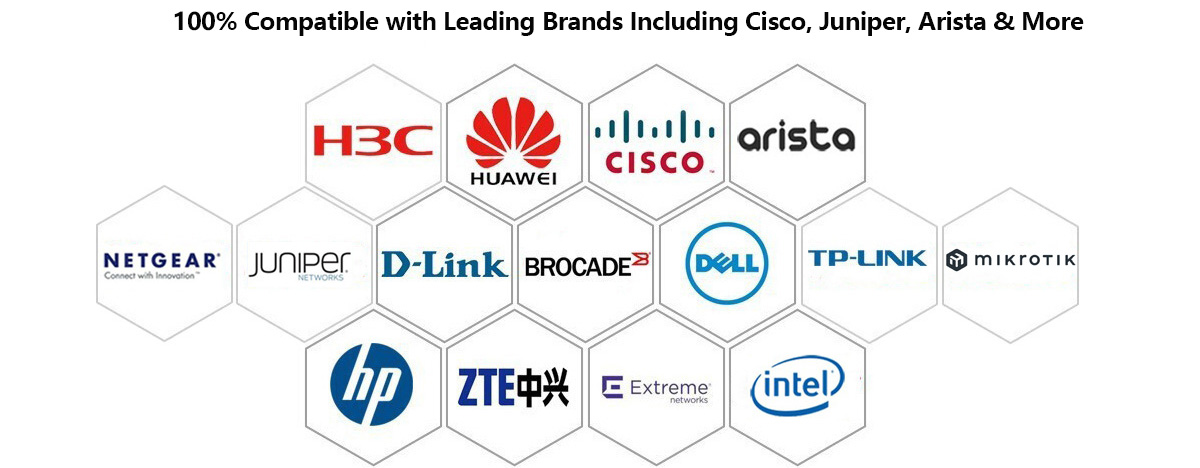
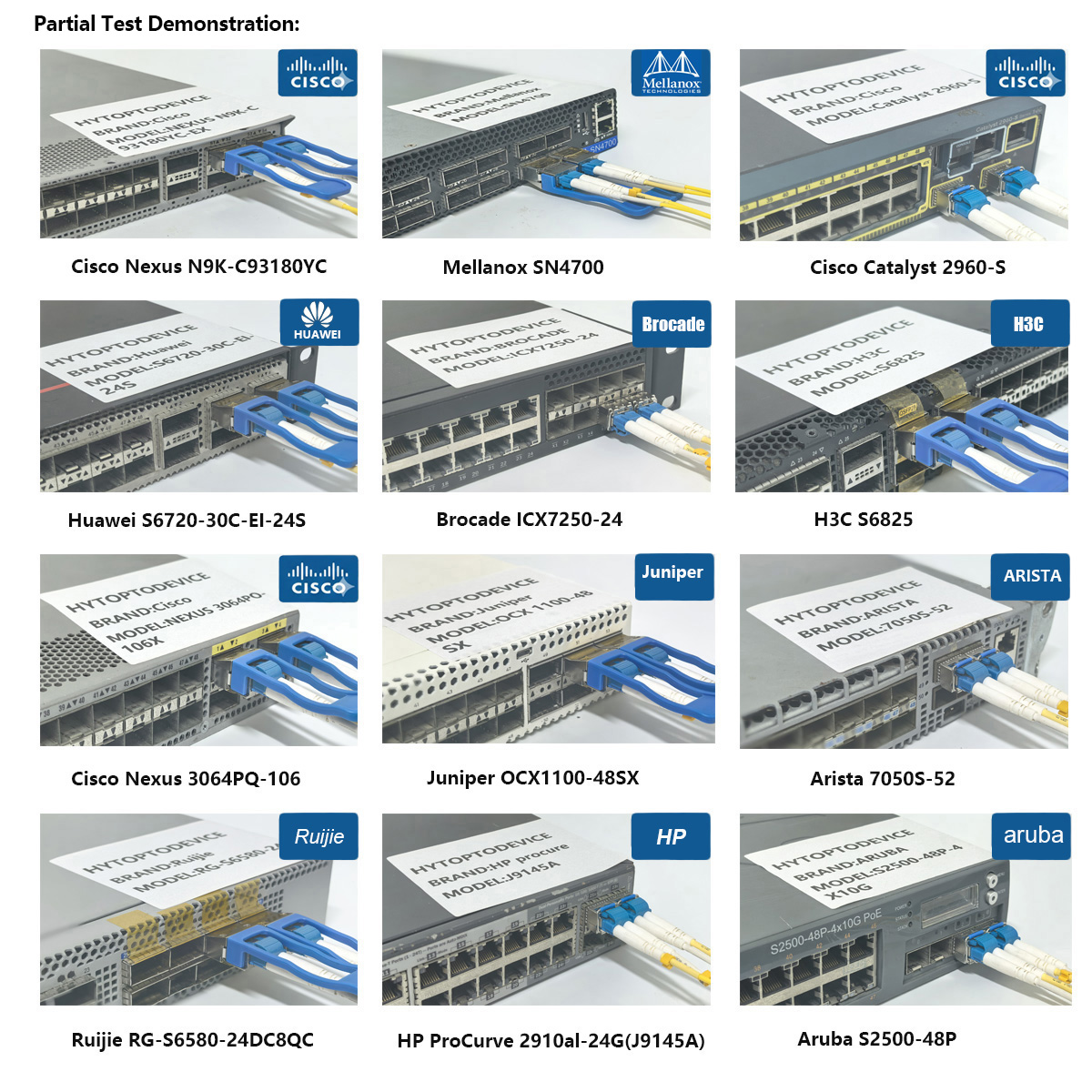
Our wide brand compatibility covers over 200 networking vendors, including:
Tier 1: Cisco, Arista, Juniper, Nokia, Huawei, HPE.
Enterprise: Dell, Intel, Mellanox, Extreme, Mikrotik, Ubiquiti.
Specialized: Brocade (Fibre Channel), Ciena, and Allied Telesis.

