

| NO. | Brand | Compatible P/N | Transceiver Type |
| 1 | Cisco | SFP-10G-SR | SFP-10G-SR(Alcatel) |
| 2 | Cisco | SFP-10G-SR-S | SFP-10G-LR |
| 3 | Cisco | SFP-10G-SR-X | SFP-10G-LRM |
| 4 | Cisco | SFP-10G-SR-I | SFP-10G-ER |
| 5 | Arista Networks | SFP-10G-SR | SFP-10G-ZR |
| 6 | Brocade | 10G-SFPP-SR | |
| 7 | Huawei | SFP-10G-USR | |
| 8 | HP Procurve | J9150A |
|
Brocade Compatible |
10G‑SFPP‑SR |
Vendor Name |
HYTOPTODEVICE |
| Form Factor | SFP+ | Max Data Rate | 10.7Gbps |
| Wavelength | 850nm | Max Distance | 300m on OM3 |
| Connector | Duplex LC | Transmitter Type | VCSEL 850nm |
| Cable Type | MMF | Receiver Type | PIN |
| TX Power | -6.5~-0.5dBm | Receiver Sensitivity | < -10.5dBm |
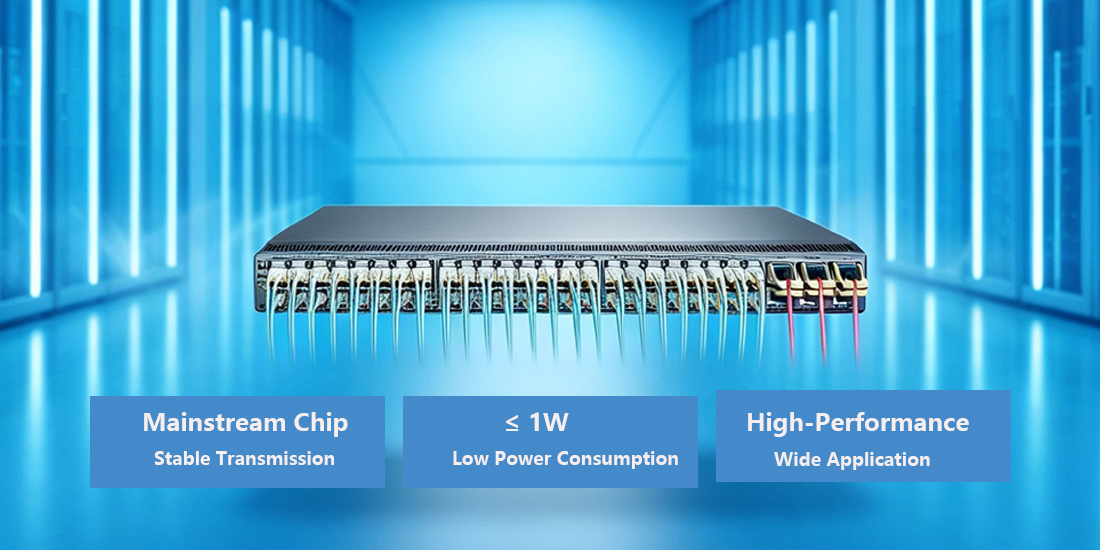
| Power Consumption | ≤1W | Operation Temperature | 0 to 70°C (32 to 158°F) |
Usage Guidelines & Best Practices
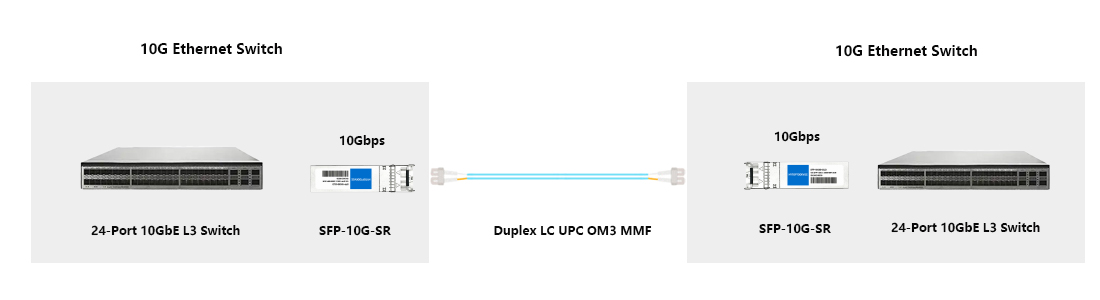
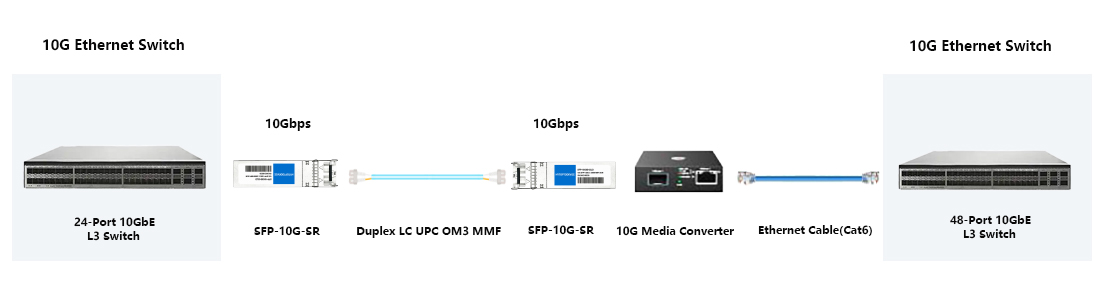
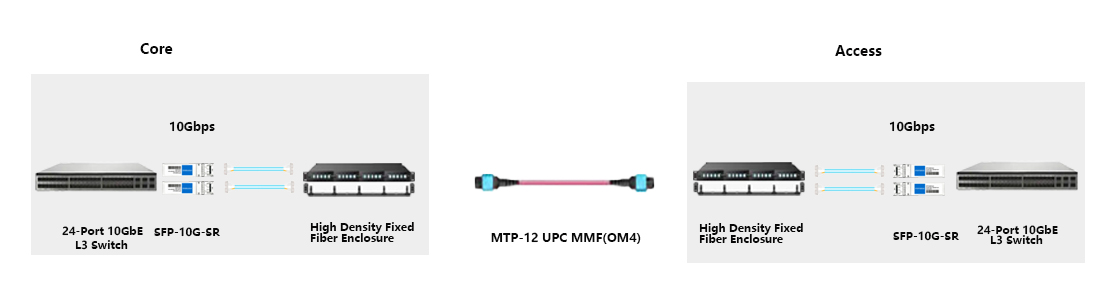
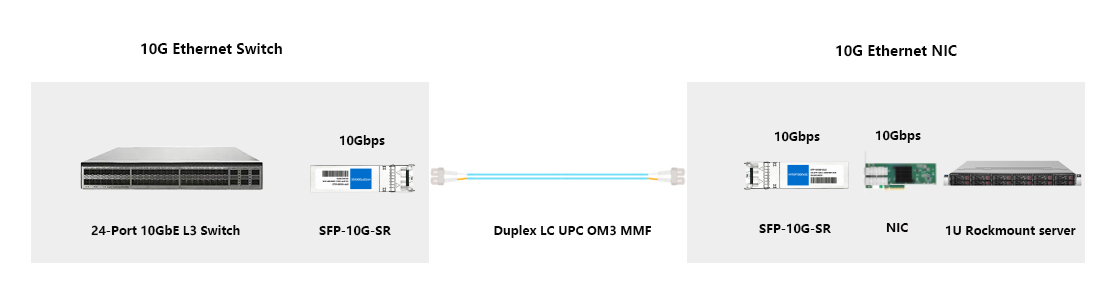
Fiber Choice: Duplex LC Multimode Fiber (MMF) — OM3 / OM4 (50/125 µm). Do NOT use SMF.
Connector Match: UPC/PC polish only. Do NOT use APC.
Cleanliness & Dust: Keep dust caps on whenever unattached. Clean fiber end-faces with a optical cleaning pen before insertion; dust causes over 80% of optical link failures.
Link Setup:Set speed to 10Gbps Full Duplex. Lock speed manually if auto-negotiation fails.
Handling: Wear ESD protection. Keep fiber bend radius ≥ 30 mm.
Installation & Hot-Swap Rules: MSA hot-swappable. Insert/remove gently without powering down.
Environment: Commercial temperature (0°C to 70°C). Avoid extreme heat, moisture, and dust.
Full Compatibility List and Supported Devices
1. Supported Hardware & Firmware
Main Application Scenarios
• Short‑reach leaf‑spine inter‑switch links for Brocade SAN & enterprise data‑center architectures
• 10G high‑speed storage and core‑aggregation trunk expansion for Brocade FC‑SAN environments, bulk project deployment
• 10G ToR switch uplinks for virtualization, compute and SAN storage server clusters
• Intra‑building campus 10G multimode‑fiber transmission for enterprise computer‑room sites
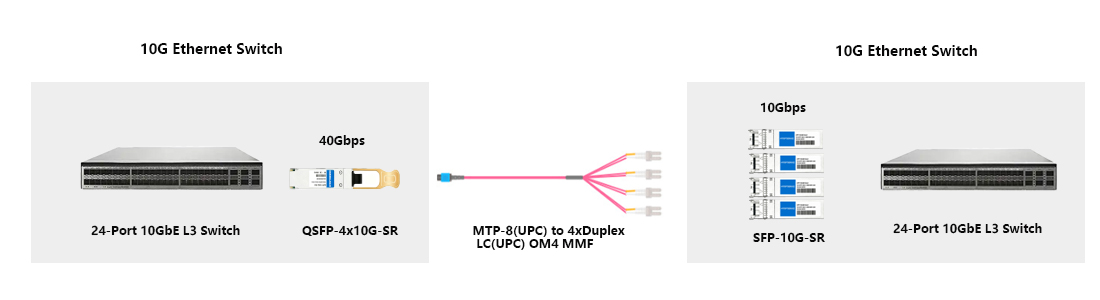
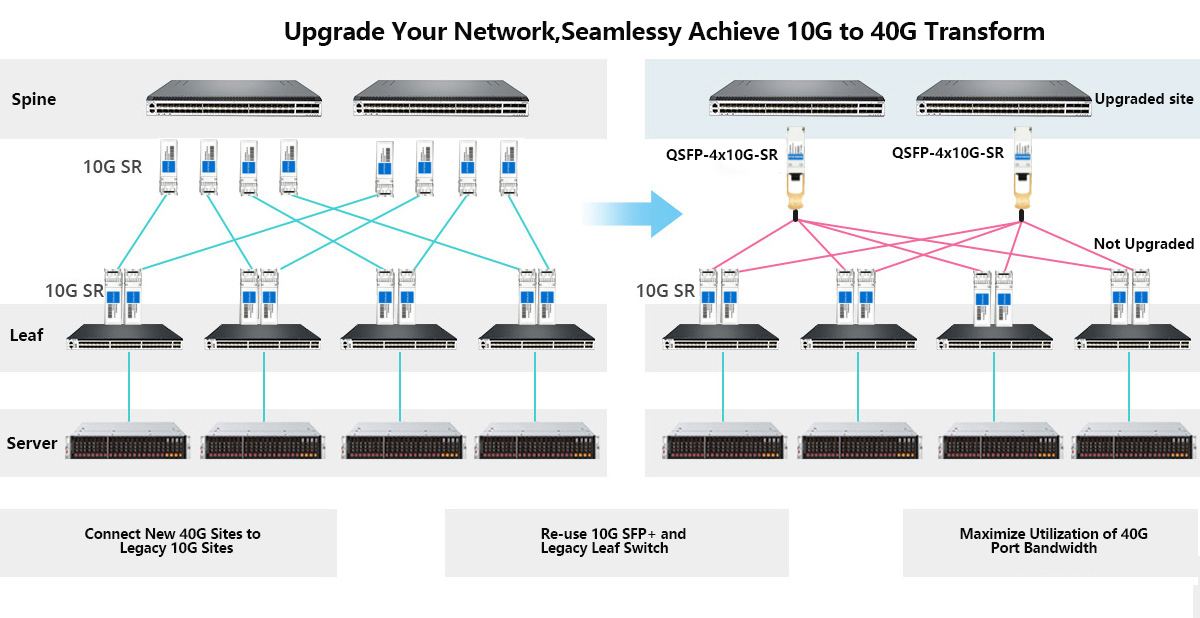
• 40G‑to‑10G network migration via QSFP+ 4×10G breakout cables for wholesale SAN‑network refresh projects
• Multi‑vendor hybrid SAN‑enterprise infrastructure deployment for large‑quantity purchase


FAQ
Q1: Will this Brocade‑profile 10G SR optic function on different brands of SAN and enterprise network hardware? A: YES. This 10G‑SFPP‑SR follows MSA 10GBASE‑SR specifications and completes real‑machine validation for Brocade SAN, Arista, Juniper and Dell platforms; Brocade SAN gear requires dedicated Brocade‑optimized EEPROM while other brands use generic MSA firmware, select pre‑flashed Brocade EEPROM variant for Brocade equipment, pick generic MSA build for third‑party hardware, and provide exact switch plus firmware information before bulk purchase or RFQ for pre‑adaptation.
Q2: Can you establish valid fiber links by mixing this 10G SFP+ SR with legacy 1G SFP‑SX optics? A: NO. It is mechanically pluggable only; 10G‑SFPP‑SR runs 10.3125Gbps versus 1.25Gbps for SFP‑SX with mismatched optical modulation and bit‑rate, deploy identical‑speed transceivers on both link ends, use paired 1G SFP‑SX modules for 1G‑speed connections, and note port auto‑negotiation cannot resolve optical‑layer rate incompatibility.
Q3: Does deploying third‑party 10G‑SFPP‑SR optics void original Brocade SAN‑switch manufacturer warranty? A: NO. Most network and SAN vendors will not void full‑device warranty solely for third‑party transceivers, though hardware failures induced by third‑party modules are excluded from OEM warranty coverage; native switch hardware defects stay under warranty while port damage caused by incompatible optics may get warranty rejection, use HYTOPTODEVICE factory‑validated in‑stock modules, preserve purchase records and remove third‑party optics before submitting RMA, and request project test reports for strict‑compliance large‑volume data‑center procurement.
Q4: What handling should be taken when "unsupported transceiver" alerts pop‑up on Brocade SAN switches? A: NOT RECOMMENDED to suppress alerts via switch configuration commands. Brocade SAN enforces strict vendor‑specific EEPROM validation; CLI alarm‑masking only hides warning messages and brings hidden port‑instability risks, order pre‑programmed Brocade‑profile EEPROM modules to achieve native zero‑alarm plug‑and‑play, apply alarm‑masking only for temporary lab testing, and upgrade SAN‑switch firmware to official stable release to reduce module‑recognition failures for bulk SAN‑project roll‑out.
Q5: Can I pull real‑time optical working statistics out of this Brocade‑compatible 10G‑SFPP‑SR SFP+ transceiver? A: YES. It fully complies with SFF‑8472 specification and supports real‑time read‑out of transmit power, receive power, module temperature and supply voltage with qualified measurement accuracy, fetch DDM metrics from SAN‑switch CLI for proactive storage‑link health inspection, configure optical‑power threshold alerts, and verify switch firmware supports SFF‑8472 if DDM readings cannot be obtained.
Q6: Which fiber cable variants work properly together with Brocade‑compatible 10G‑SFPP‑SR transceiver? A: Multimode fiber ONLY. It delivers 300 m reach over OM3 MMF, 400 m over OM4 MMF; OM1 / OM2 delivers heavily reduced distance and is not recommended for 10GBASE‑SR SAN deployment, select OM4 for new SAN‑room cabling or OM3 for existing infrastructure, maintain proper fiber bend radius, and never exceed rated distance to prevent high BER and link flapping for wholesale storage‑network roll‑out.
Q7: Am I allowed to deploy this multimode‑optimized SFP+ 10G SR transceiver on existing single‑mode fiber infrastructure? A: NO. Its 850 nm VCSEL laser is purpose‑designed for multimode fiber and suffers severe signal attenuation running over SMF with no usable received optical signal, select 10GBASE‑LR SFP+ single‑mode transceivers for single‑mode‑cable environments, and avoid mode‑conversion patch cords which introduce random packet‑loss risks for SAN traffic.
Q8: What operational light‑emitting wavelength does the Brocade‑compatible 10G‑SFPP‑SR SFP+ module adopt? A: 850 nm. Center wavelength sits at 850 nm within 840‑860 nm operating window with Class 1 laser safety rating, deploy matching 850 nm SR‑series transceivers on both ends of the fiber link, avoid direct eye exposure to exposed optical ports during SAN‑equipment maintenance, and monitor transmit‑power readings via DDM to spot laser degradation.
Q9: What physical fiber‑connector interface does 10G‑SFPP‑SR commercial‑grade SFP+ transceiver use? A: Duplex LC‑UPC. It comes with separated transmit and receive signal channels with minimum 500 mating cycles, use matching LC‑UPC patch cords and do not mix APC end‑face types, clean fiber end‑faces prior to physical insertion, and prevent reversed TX‑RX polarity which results in complete no‑link status.
Q10: Is interoperability guaranteed when pairing this 10G‑SFPP‑SR module with OM5 lime‑green wide‑band multimode patch cords? A: YES. OM5 is backward‑compatible for 850 nm optical signals and the module maximum transmission distance remains OM4‑level 400 m, you can directly deploy this transceiver onto OM5‑based SAN‑data‑center cabling systems for bulk‑purchase projects, and note OM5 advantages mainly target short‑wave WDM scenarios with no extra distance improvement for standard 10GBASE‑SR Ethernet or FCoE traffic.
Q11: How much electrical power will this commercial‑grade SFP+ 10G SR consume running under full traffic load? A: ≤1.0 W. This low‑power 10G‑SFPP‑SR optic draws maximum 1.0 W under full‑load traffic, plan thermal budget ≤1 W per port for high‑density SAN‑rack deployment, keep switch default fan profiles active to avoid module thermal overheating, and observe module‑temperature metrics via DDM for early thermal‑anomaly warning.
Q12: What temperature‑grade choices are available for this compatible Brocade 10G‑SFPP‑SR optical part? A: Commercial grade 0 ℃ ~ +70 ℃ (in stock); industrial grade −40 ℃ ~ +85 ℃ available by custom‑order only. Commercial‑grade units fit climate‑controlled data‑center and SAN computer‑rooms, submit custom‑order requirements before bulk RFQ if you need industrial‑temperature variants, and keep commercial‑grade modules operating within 0‑70 ℃ rated window to prevent elevated BER and shortened laser service life.
Q13: Does this Brocade‑compatible SFP+ 10G SR satisfy data‑center and SAN‑fabric bit‑error‑rate performance requirements? A: YES. Factory‑tested BER ≤1×10⁻¹² and fully conforms to IEEE 802.3ae 10GBASE‑SR standards for both Ethernet and FCoE storage traffic, reserve adequate optical‑power budget during SAN‑link design phase, keep receive‑power well above sensitivity threshold through ongoing DDM monitoring, and run long‑duration traffic & storage burn‑in acceptance tests before large‑volume SAN‑fabric roll‑out.
Q14: Can this 10G‑SFPP‑SR transceiver deliver stable bidirectional full‑line‑rate for both Ethernet and FCoE workloads? A: YES. Both TX and RX channels run full 10.3125Gbps line‑rate supporting 10GBASE‑SR Ethernet plus native FCoE storage traffic, force switch port speed to fixed 10G instead of fully relying on auto‑negotiation, execute bidirectional full‑rate Ethernet / FCoE validation tests, and confirm your Brocade SAN‑switch firmware supports 10G‑SFPP‑SR profile before bulk procurement.
Q15: What network and SAN symptoms emerge once incoming receive optical power falls below module receiving‑sensitivity threshold? A: Link instability or complete port down will occur. Typical receive sensitivity ≤‑11.1 dBm; BER rises sharply below this value and full link failure may follow even within commercial‑grade temperature range, continuously track Rx optical‑power value by DDM function, troubleshoot excessive fiber loss, contaminated end‑faces, defective patch cords or laser aging inside SAN‑rack environments, clean connectors or replace patch cords, shorten link distance or pick longer‑reach transceivers when overall link loss exceeds optical‑power budget.
Packaging & Custom OEM Solutions
Every 10G SFP+ module comes individually sealed in standard anti-static (ESD-safe) packaging, pre-stocked and ready for immediate shipment. For bulk orders, we offer custom OEM packaging—including logo printing and private labeling—tailored for network distributors, system integrators, and enterprise deployments.
Why Network Engineers Choose HYTOPTODEVICE
HYTOPTODEVICE has supplied over 5000,000 optical transceiver modules to data centers, ISPs, and enterprise networks across 100+ countries since 2011. Every module undergoes a 72-hour burn-in test and full DDM/DOM validation before shipment.
“Phenomenal performance. We deployed 200 HYTOPTODEVICE SFP+ modules to replace Cisco OEMs in our backbone network. Result? Zero compatibility issues and a 60% reduction in costs. Highly recommended for mission-critical networks."— Senior Network Engineer, Regional Telecom, Australia
Quality Certification & Compliance
At HYTOPTODEVICE, our quality commitment is backed by industry-standard validations. From fiber optical transceiver manufacturing to final visual inspection, from IQC、IPQC、FQC to OQC, our processes ensure global compliance and reliability.
We adhere to rigorous standards for our SFP modules and network solutions:
ISO 9001: Certified quality management and production consistency.
CE & FCC: Fully compliant for seamless Global Market Access.
RoHS: Committed to environmental responsibility and hazardous material control.
Proven Reliability: Rigorous testing to reduce compliance risk and ensure safety.
Certified Quality. Global Standards. Guaranteed Performance.






