| NO. | Brand | Compatible P/N | Transceiver Type |
| 1 | Cisco | SFP-10G-SR | SFP-10G-SR(Alcatel) |
| 2 | Cisco | SFP-10G-SR-S | SFP-10G-LR |
| 3 | Cisco | SFP-10G-SR-X | SFP-10G-LRM |
| 4 | Cisco | SFP-10G-SR-I | SFP-10G-ER |
| 5 | Arista Networks | SFP-10G-SR | SFP-10G-ZR |
| 6 | Brocade | 10G-SFPP-SR | |
| 7 | Huawei | SFP-10G-USR | |
| 8 | HP Procurve | J9150A |
|
Arista Compatible |
SFP-10G-SR |
Vendor Name |
HYTOPTODEVICE |
| Form Factor | SFP+ | Max Data Rate | 10.7Gbps |
| Wavelength | 850nm | Max Distance | 300m on OM3 |
| Connector | Duplex LC | Transmitter Type | VCSEL 850nm |
| Cable Type | MMF | Receiver Type | PIN |
| TX Power | -6.5~-0.5dBm | Receiver Sensitivity | < -10.5dBm |
| Power Consumption | ≤1W | Operation Temperature | 0 to 70°C (32 to 158°F) |
Usage Guidelines & Best Practices
Fiber Choice: Duplex LC Multimode Fiber (MMF) — OM3 / OM4 (50/125 µm). Do NOT use SMF.
Connector Match: UPC/PC polish only. Do NOT use APC.
Cleanliness & Dust: Keep dust caps on whenever unattached. Clean fiber end-faces with a optical cleaning pen before insertion; dust causes over 80% of optical link failures.
Link Setup:Set speed to 10Gbps Full Duplex. Lock speed manually if auto-negotiation fails.
Handling: Wear ESD protection. Keep fiber bend radius ≥ 30 mm.
Installation & Hot-Swap Rules: MSA hot-swappable. Insert/remove gently without powering down.
Environment: Commercial temperature (0°C to 70°C). Avoid extreme heat, moisture, and dust.
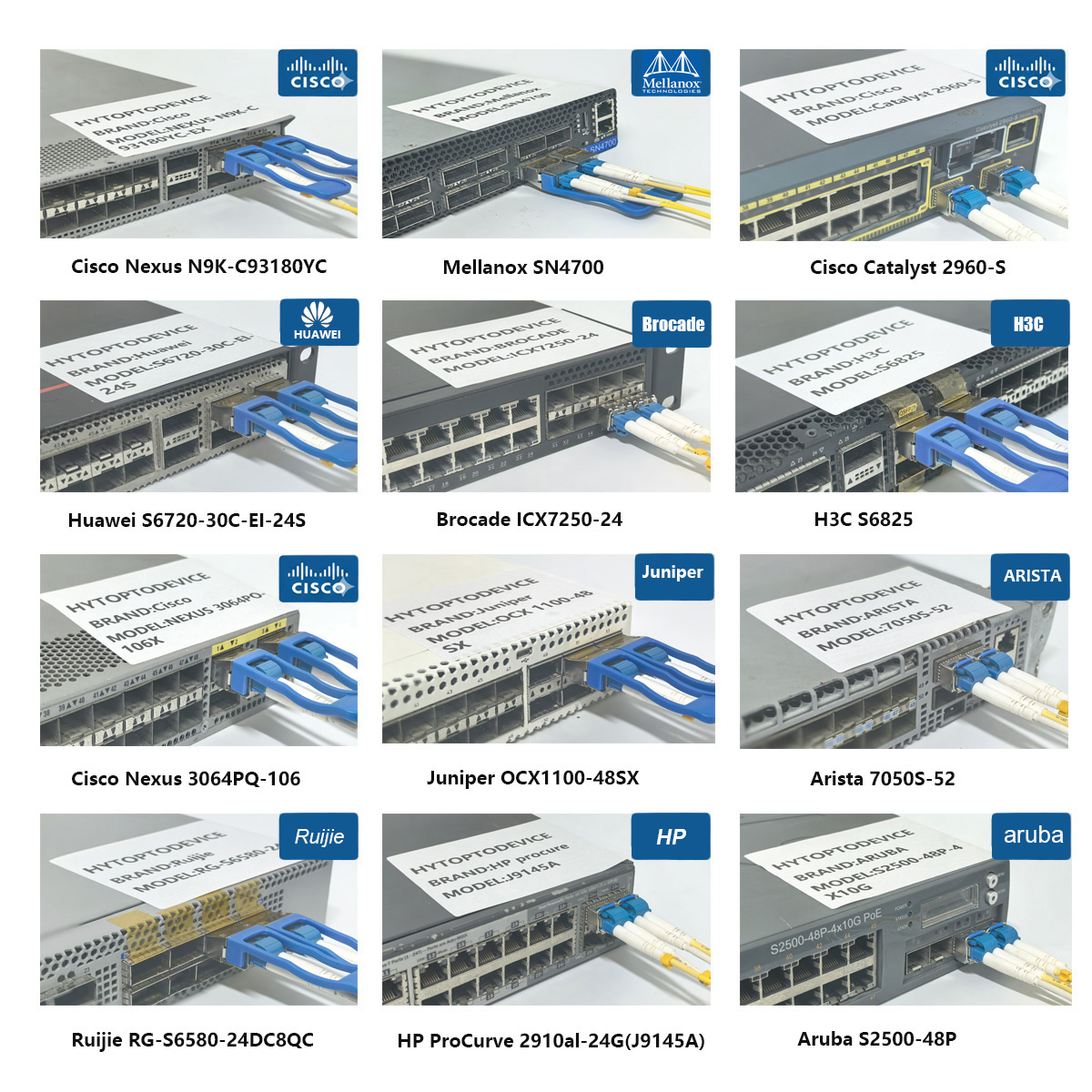
Full Compatibility List and Supported Devices
1. Supported Hardware & Firmware
Main Application Scenarios
• Short‑reach leaf‑spine inter‑switch links for Arista EOS data‑center fabric architectures
• 10G high‑speed core‑aggregation trunk expansion for Arista cloud‑data‑center environments, bulk project deployment
• 10G ToR switch uplinks for virtualization, AI‑compute and general‑purpose server clusters
• Intra‑building campus 10G multimode‑fiber transmission for enterprise computer‑room sites
• 40G‑to‑10G network migration via QSFP+ 4×10G breakout cables for wholesale leaf‑spine fabric refresh projects
• Multi‑vendor hybrid data‑center infrastructure deployment for large‑quantity purchase




FAQ
Q1: Can I use this transceiver in an SFP (1G) port? A: NO. SFP+ 10G SR is mechanically compatible with SFP physical slot but electrical interface does not support 1G‑only SFP port hardware; maximum supported rate will be limited by host port capability, it cannot run 10G speed inside native 1G SFP port. Deploy 1G SFP‑SX modules for pure‑1G ports; install this unit only on SFP+ capable ports to achieve full 10G performance.
Q2: Can I connect an SFP‑10G‑SR to an SFP28 (25G) port? A: YES. SFP28 ports provide backward compatibility for SFP+ modules per MSA specification; this SFP+ 10G SR will negotiate and lock to 10.3125Gbps speed on 25G SFP28 host port. Verify your switch/NIC firmware enables SFP+ down‑speed mode; most modern Arista EOS‑based platforms support this function out‑of‑box for mixed‑rate leaf‑spine rack deployment.
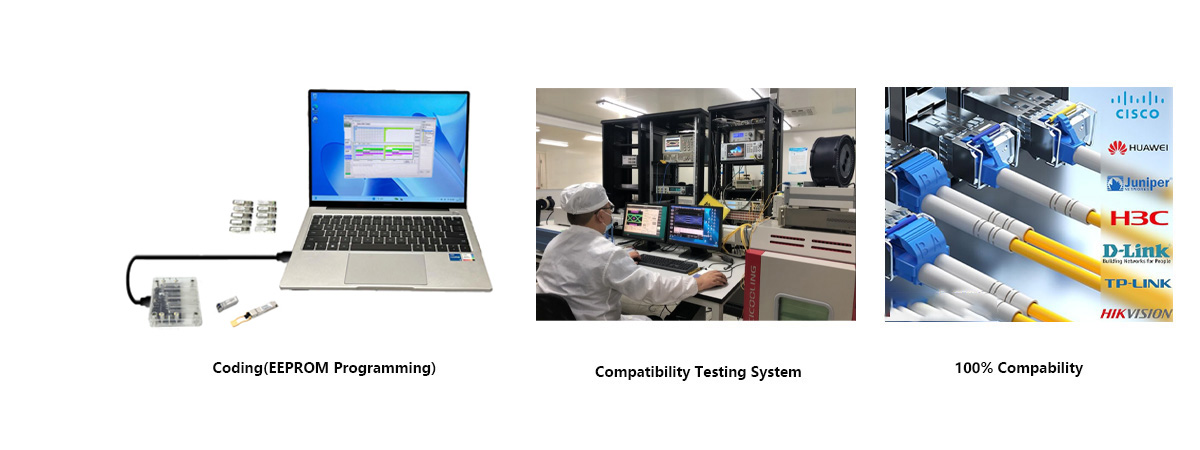
Q3: Why does my switch show "Unsupported Transceiver" upon insertion? A: This alarm indicates host device rejects module EEPROM profile. Arista EOS switches perform strict vendor‑specific EEPROM validation; generic MSA firmware will trigger alert even if optical hardware works normally. Use our pre‑flashed Arista‑SFP‑10G‑SR customized EEPROM version for zero‑alarm operation; avoid permanent CLI alarm‑masking on production leaf‑spine fabrics and upgrade switch EOS firmware to latest stable release.
Q4: Can I link an SFP‑10G‑SR to a 10GBASE‑T (copper RJ45) port? A: NO. Direct interconnection is not feasible. SFP‑10G‑SR is optical multimode 850nm transceiver while 10GBASE‑T is electrical copper signal; signal types are fundamentally different with no native conversion. Deploy a media converter or SFP‑10G‑T copper module to bridge optical SR link and RJ45 copper port for cross‑media interconnection scenarios.
Q5: Will this module work in Network Interface Cards (NICs) like Intel or Broadcom? A: YES. This SFP+ 10G SR follows SFP+ MSA hardware specification and works with most SFP+‑based Intel X710, X520 and Broadcom NetXtreme series NICs. Some NIC firmware locks to original branded optics; select our generic MSA firmware variant for third‑party NIC hardware and confirm NIC firmware version before bulk server cluster deployment for Arista fabrics.
Q6: What is the maximum transmission distance for SFP‑10G‑SR? A: Maximum distance depends on multimode fiber grade. It reaches 300 m over OM3 MMF and 400 m over OM4 MMF at 850nm wavelength under 10.3125Gbps 10GBASE‑SR standard. Always use OM3/OM4 multimode fiber within rated distance to maintain BER ≤1×10⁻¹²; exceeding reach will raise bit errors and trigger intermittent link flapping in Arista leaf‑spine data‑center environments.
Q7: How far can SFP‑10G‑SR reach using legacy OM1 or OM2 fiber? A: Limited short distance only. OM1 supports approx 33 m, OM2 supports approx 82 m for 10GBASE‑SR per IEEE 802.3ae standard. Legacy OM1 / OM2 have low modal bandwidth not designed for long‑reach 10G multimode transmission. Avoid OM1/OM2 for production 10G leaf‑spine links; upgrade cabling to OM3 or OM4 for full‑spec data‑center performance.
Q8: Do I need an optical attenuator if the fiber run is very short (e.g., 2 meters)? A: NO, extra attenuator is not required for typical 2‑meter short multimode patch‑cord links. 850nm VCSEL output power of SFP‑10G‑SR has built‑in overload margin for short MMF links. Attenuator shall only be added when receiving power exceeds maximum overload threshold observed via DDM readout; unnecessary attenuation will reduce optical budget and create potential link instability risk within Arista fabric deployments.
Q9: Can I use APC (Angled Physical Contact) green connectors with this module? A: NOT RECOMMENDED, use LC‑UPC only. This SFP‑10G‑SR transceiver is factory calibrated for Duplex LC‑UPC flat end‑face. APC angled end‑faces introduce unexpected return loss at 850nm multimode wavelength, increasing TDECQ distortion and bit‑error rate. Mixing APC patch cords with UPC module is a common root‑cause for random packet loss inside Arista leaf‑spine data‑center networks.
Q10: Can I break out a 40G QSFP+ SR4 port to four 10G SFP‑10G‑SR modules? A: YES, with proper breakout hardware. Use a 40G‑to‑4×10G SR4 passive breakout cable for QSFP+ SR4 port; each lane connects to one independent 10G SFP‑10G‑SR multimode transceiver. Your Arista switch must enable QSFP+ breakout mode in EOS CLI configuration; mismatched port mode setting will result in no‑link status for all four 10G channels during mixed‑speed leaf‑spine fabric deployment.
Q11: Will populating every slot in a 48‑port switch cause thermal issues? A: Potential thermal risk exists under full‑port loading. Each SFP‑10G‑SR max power consumption ≤1.0W; 48‑port full‑load creates cumulative heat load up to 48W. Maintain factory default fan speed profiles and ensure unblocked cabinet air flow; monitor module temperature via DDM. If DDM shows temperature approaching 70°C commercial grade limit, improve rack ventilation for dense Arista data‑center switch deployments.
Q12: What latency should I expect from an SFP‑10G‑SR connection? A: Very low fixed optical latency. Typical per‑module transceiver latency is around 10‑30 nanoseconds; overall link latency is dominated by switch ASIC processing and fiber propagation delay. SFP‑10G‑SR multimode optics add negligible overhead, well suited for low‑latency Arista leaf‑spine, virtualization and compute workloads. For ultra‑low‑latency requirements perform end‑to‑end latency validation in your actual EOS fabric environment.
Q13: How does heat output compare between SFP‑10G‑SR and 10G copper RJ45 optics? A: SFP‑10G‑SR generates significantly less heat. SFP‑10G‑SR max power ≤1.0W; typical 10GBASE‑T copper SFP module consumes 2.5‑4W per port. Large‑scale copper module deployment increases switch thermal load and rack PUE. For high‑density 48‑port Arista leaf‑spine racks, SFP+ 10G SR multimode optical modules reduce overall cooling burden compared with copper RJ45 transceivers.
Q14: Does SFP‑10G‑SR support FEC (Forward Error Correction)? A: NO, native FEC is not implemented inside SFP‑10G‑SR transceiver hardware. 10GBASE‑SR IEEE‑802.3ae specification does not define on‑module FEC function. Error correction must be implemented on switch ASIC side if required. Keep link loss within optical budget to maintain BER ≤1×10⁻¹²; do not rely on transceiver‑level FEC for compensating excessive fiber attenuation inside Arista data‑center fabrics.
Q15: Does SFP‑10G‑SR support hot‑swapping? A: YES. Compliant with SFP+ MSA hot‑plug specification. You can insert / remove SFP‑10G‑SR modules without powering‑down the Arista host switch or NIC. In production leaf‑spine fabric environment avoid frequent hot‑swap during critical east‑west compute traffic bursts; brief link interruption will occur during module replacement, plan maintenance window for Arista EOS fabric operational changes.
Packaging & Custom OEM Solutions
Every 10G SFP+ module comes individually sealed in standard anti-static (ESD-safe) packaging, pre-stocked and ready for immediate shipment. For bulk orders, we offer custom OEM packaging—including logo printing and private labeling—tailored for network distributors, system integrators, and enterprise deployments.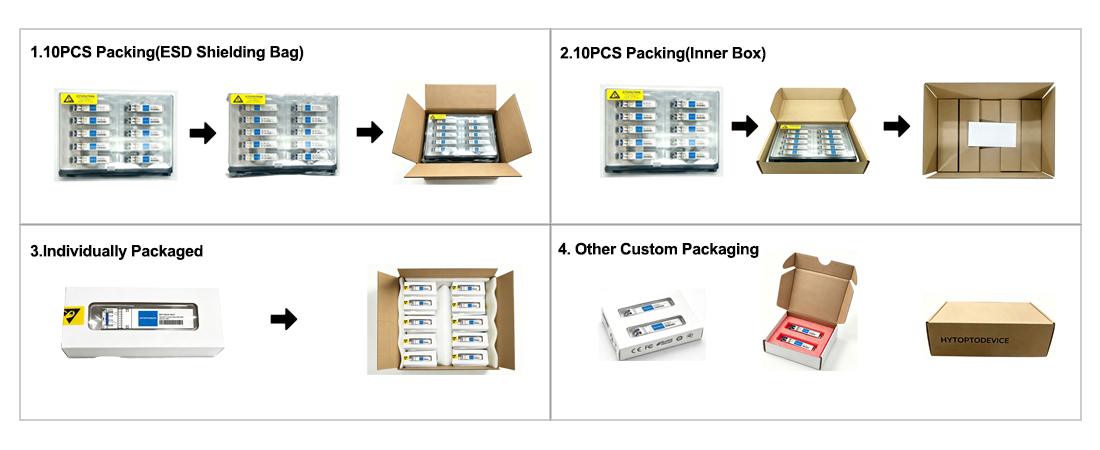
Why Network Engineers Choose HYTOPTODEVICE
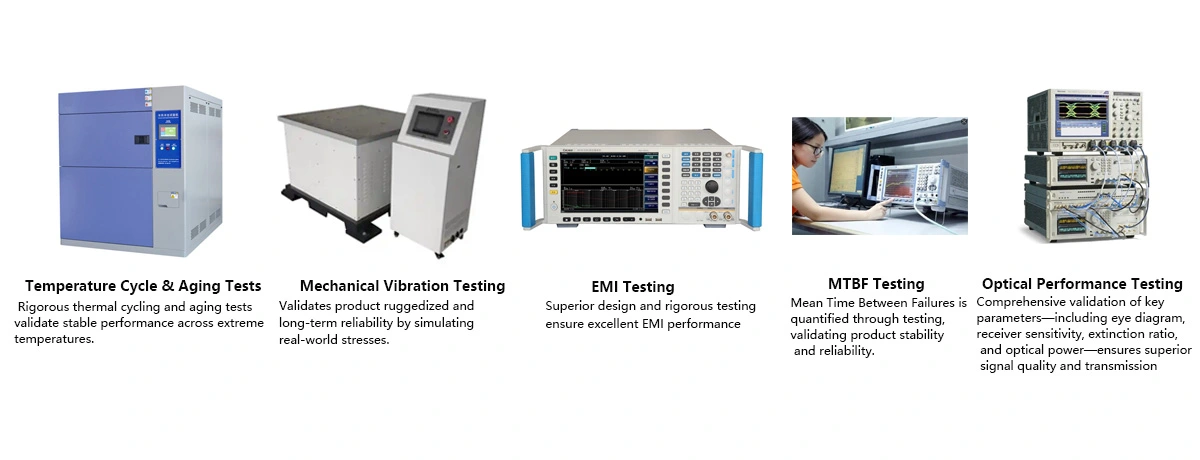
HYTOPTODEVICE has supplied over 5000,000 optical transceiver modules to data centers, ISPs, and enterprise networks across 100+ countries since 2011. Every module undergoes a 72-hour burn-in test and full DDM/DOM validation before shipment.
“Phenomenal performance. We deployed 200 HYTOPTODEVICE SFP+ modules to replace Cisco OEMs in our backbone network. Result? Zero compatibility issues and a 60% reduction in costs. Highly recommended for mission-critical networks."— Senior Network Engineer, Regional Telecom, Australia
Quality Certification & Compliance
At HYTOPTODEVICE, our quality commitment is backed by industry-standard validations. From fiber optical transceiver manufacturing to final visual inspection, from IQC、IPQC、FQC to OQC, our processes ensure global compliance and reliability.
We adhere to rigorous standards for our SFP modules and network solutions:
ISO 9001: Certified quality management and production consistency.
CE & FCC: Fully compliant for seamless Global Market Access.
RoHS: Committed to environmental responsibility and hazardous material control.
Proven Reliability: Rigorous testing to reduce compliance risk and ensure safety.
Certified Quality. Global Standards. Guaranteed Performance.