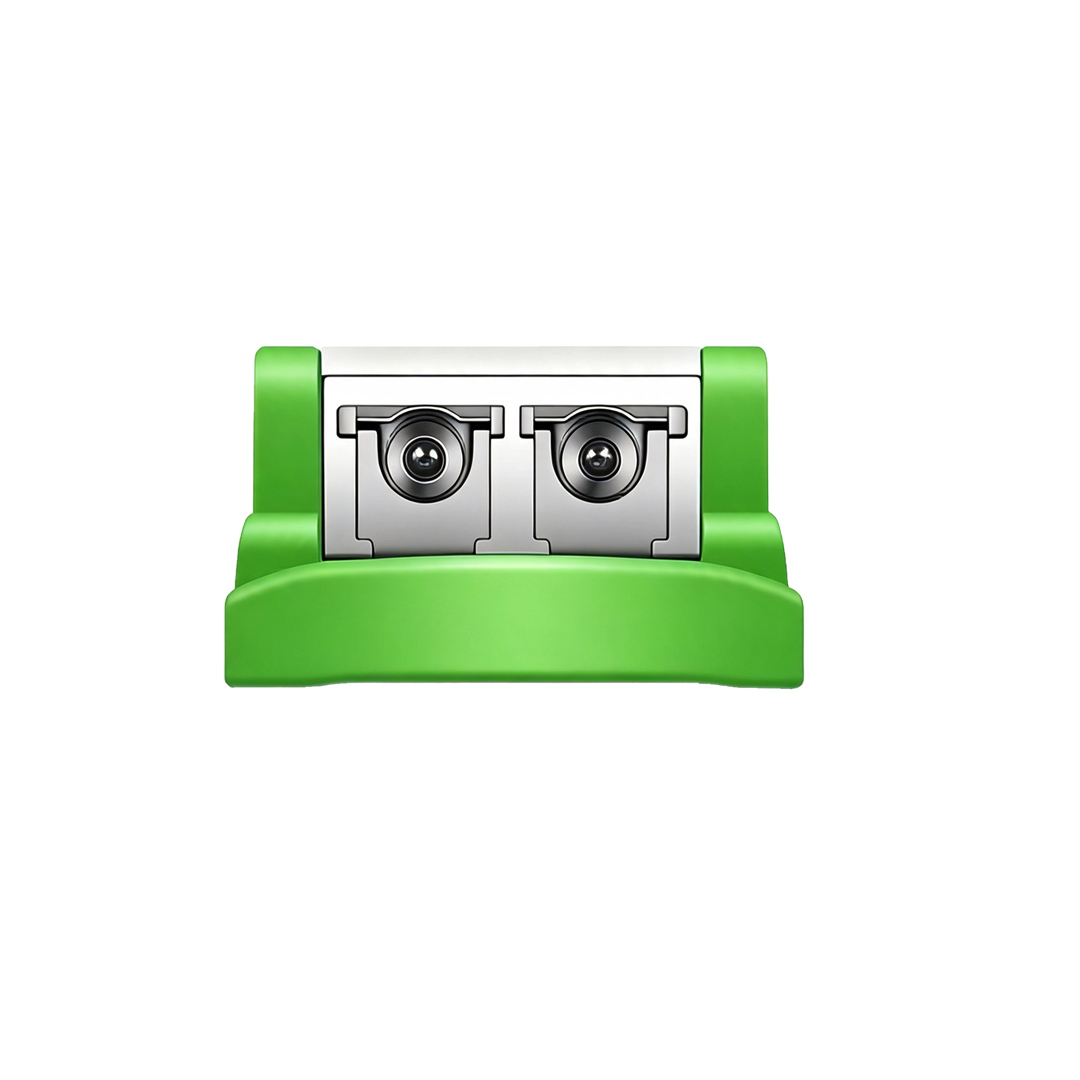
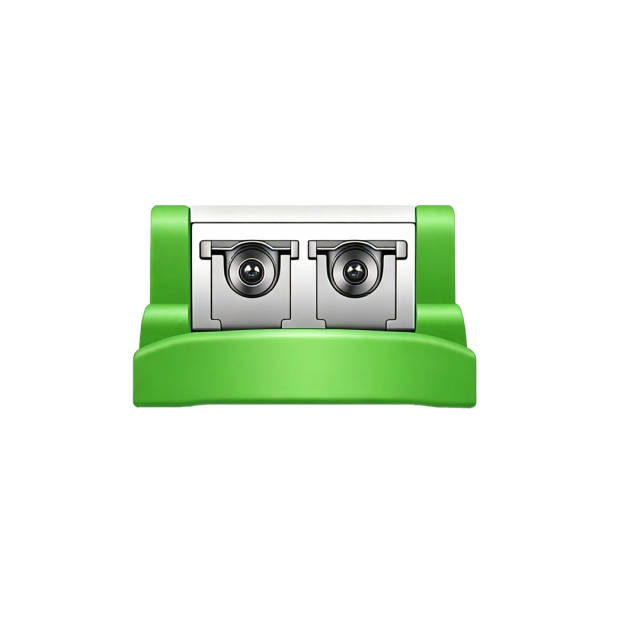
Huawei QSFP-100G-CWDM4 Compatible 100G QSFP28 Transceiver | 100GBASE-CWDM4, 4×25G NRZ, 2km Module SMF | HYTOPTODEVICE
Product Overview
HYTOPTODEVICE 100G QSFP28 CWDM4 transceiver serves as pin-to-pin compatible replacement for Huawei QSFP-100G-CWDM4.
It adopts four-channel CWDM wavelength architecture and transmits 100G traffic via 4×25G NRZ modulation.
This module targets short-range intra-data center interconnections.
It achieves stable 100G transmission up to 2km over OS2 single-mode fiber.
Duplex LC connectors simplify patch panel routing and routine fiber maintenance.
The design meets QSFP28 MSA and IEEE industry specifications.
Built-in DDM continuously monitors optical power, temperature, supply voltage and laser bias current.
Custom EEPROM firmware enables smooth identification on Huawei equipment without unauthorized transceiver alarms.
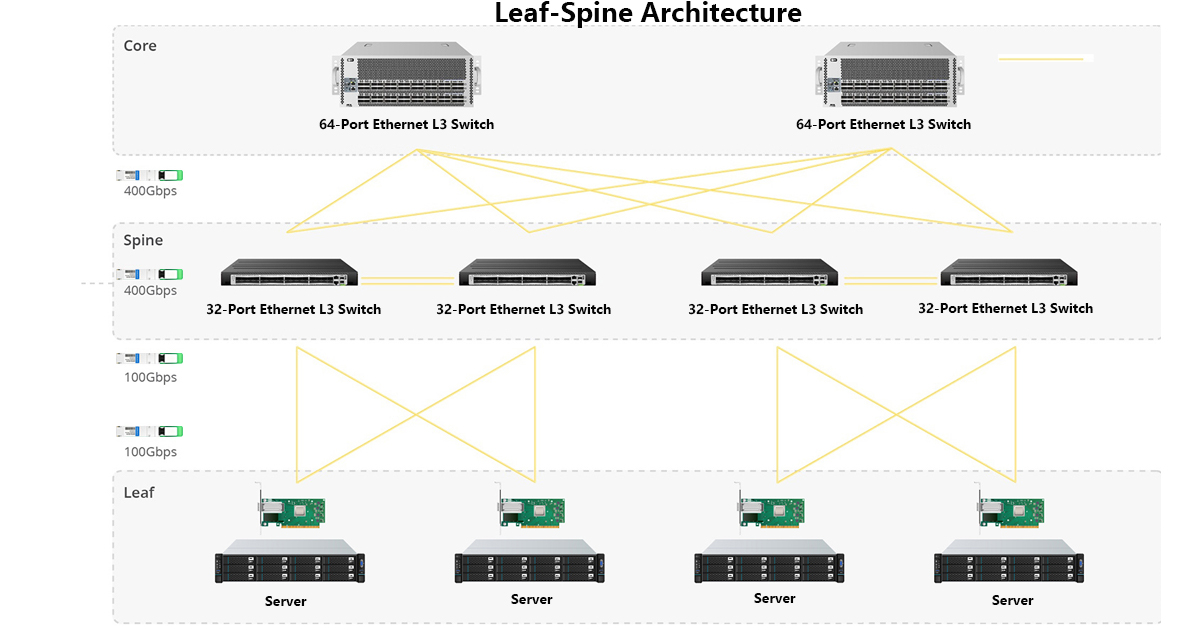
This cost-efficient module fits leaf-spine fabric, inter-switch trunking and ToR switch to server NIC uplinks.
We provide sample testing, customized firmware programming and flexible bulk pricing for system integrators and data center operators.
Key Technical Specifications
| Huawei Compatible |
QSFP-100G-CWDM4. |
Vendor Name |
HYTOPTODEVICE |
| Form Factor |
QSFP28 |
Max Data Rate |
103.125Gbps (4x 25.78Gbps) |
| Wavelength |
1271nm, 1291nm, 1311nm and 1331nm
|
Max Distance |
2km |
| Connector |
Duplex LC/UPC |
Transmitter Type |
4 x CWDM DML (DFB) |
| Cable Type |
SMF |
Receiver Type |
PIN |
| Modulation (Electrical) |
4x 25G-NRZ |
TX Power |
-6.5~+2.5dBm |
| Power Consumption |
< 3.5W |
Receiver Sensitivity |
< -11.5dBm |
| Protocols |
QSFP28 MSA, SFF-8636, IEEE 802.3ba, IEEE 802.3bm, CAUI-4 |
Operation Temperature |
0 to 70°C (32 to 158°F) |
For detailed technical specifications, please refer to the Datasheet
Usage Guidelines & Best Practices
1. Fiber Matching: Only support OS2 G.652D single-mode fiber. Multimode fiber cannot meet 2km transmission requirements and will cause signal attenuation or link down.
2. Port Configuration: Enable RS-FEC function on switch ports to guarantee error-free and stable full-distance 2km transmission.
3. Installation Specification: Support hot-plug operation. Insert and pull out modules gently to avoid pin damage; reserve bending space for fiber cables.
4. Scenario Restriction: This module is designed for 2km medium-distance transmission. For links over 2km, please choose 100G LR4 long-distance modules.
5. Operating Environment: Work stably at 0°C~70°C commercial temperature. Avoid high temperature, humid and dusty harsh environment for long-term operation.
For detailed operation instructions, please refer to the User Guide.
Full Compatibility List & Supported Network Hardware
1. Supported Hardware & Firmware
This CWDM4 transceiver is pre-flashed with Huawei matched identification code.
It runs plug-and-play on validated Huawei platforms.
It prevents persistent alarms, unstable negotiation and random link flapping across mainstream VRP firmware versions.
Validated Huawei Device Models:
- Huawei CE6850, CE6857 Data Center Switches
- Huawei CE5850 Enterprise Core Switches
- Huawei CE12700 High-Density 100G Leaf-Spine Switch Series
- All Huawei platforms equipped with standard QSFP28 100G ports
2.Cross-Brand Compatibility
The module complies with universal QSFP28 MSA specifications.
It supports interconnection with Cisco, Dell, Aruba, H3C and other vendor hardware in multi-brand network environments.
It works well during phased network upgrades and hybrid data center expansion projects.
3.Free Value-Added Services
We offer free EEPROM rewriting and private label customization.
Pre-shipment sample validation and dedicated engineering support are available.
Large-volume orders qualify for tiered pricing to reduce overall data center hardware expenditure.
Primary Application Scenarios
- Data Center Leaf-Spine Fabric: Short-range 100G interconnections inside Huawei VRP data center architectures.
- Inter-Switch Trunk Upgrade: Bandwidth expansion between core and aggregation switch layers.
- Switch-to-Server Uplink: High-capacity connections from ToR switches to server and storage NICs.
- Intra-Campus Short Links: Single-mode routes within one data center or campus building.
- Hybrid Multi-Vendor Fabric: Cost-effective 100G links in mixed Huawei and third-party switch environments.
Connectivity Solutions(Applications)
1.Leaf-Spine Architecture
2. 100G to 100G for Switch-Switch Interconnection
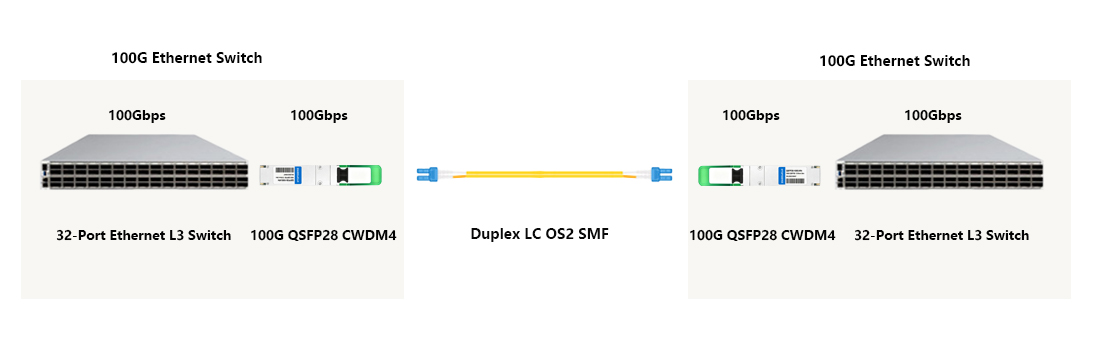
3.100G to 100G for Switch-NIC Connection
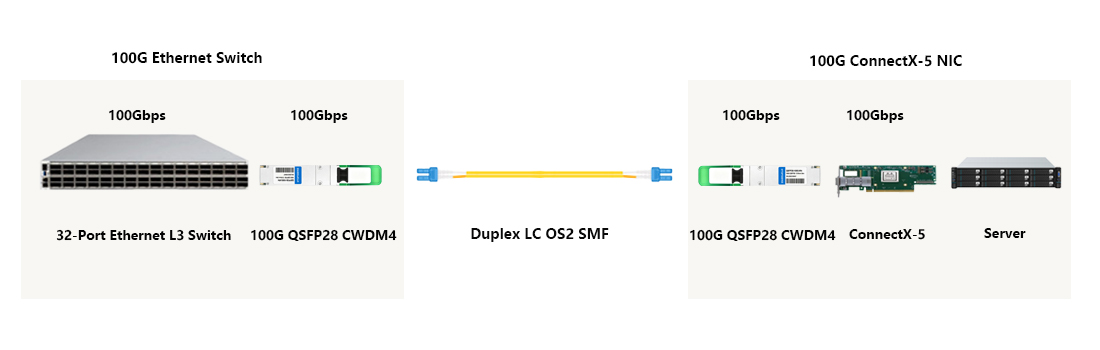
The Core Feature
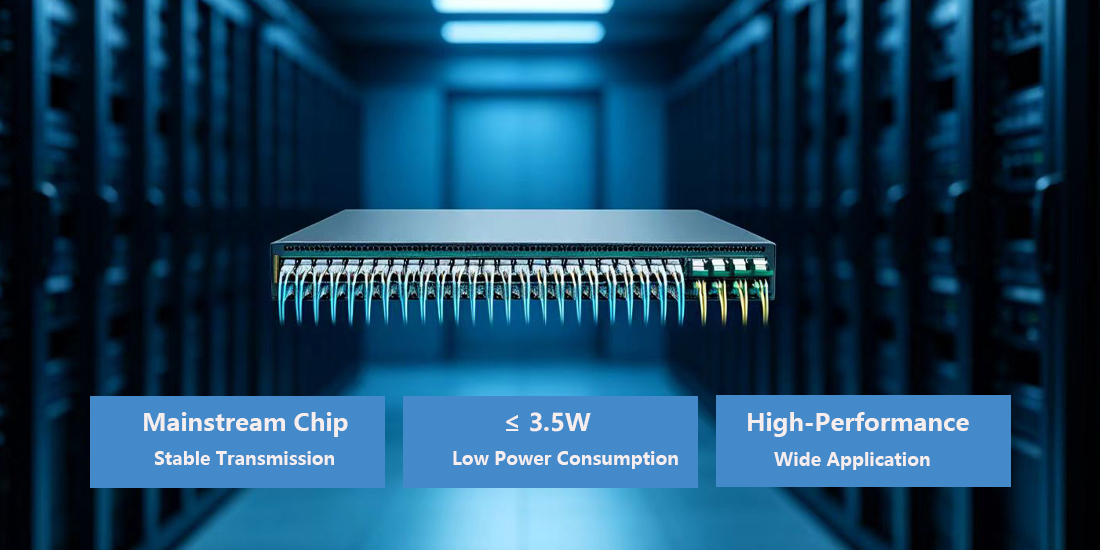
1.Low Power and High-Density Realize 100G Connectivity for Data Center
Ultra-low 3.5W max power consumption reduces data center power loss and PUE. Compact QSFP28 design supports high-density port deployment, realizing efficient 100G high-speed data center transmission.
2.Verified Host Interoperability
All modules pass real target device interoperability tests. Matched EEPROM ensures zero-alarm hot-swap and stable long-term operation on mainstream platforms.
Specific Compatibility Video available upon request.

3.Strict Full-Round Quality Testing
Every module undergoes optical calibration, wide temperature cycling,aging burn-in and BER testing. Strict quality control guarantees stable 24/7 commercial operation.Curious how? Tour the
Test Center.

FAQ
Q1: Can CWDM4 run over multimode fiber (OM3/OM4)?
A1: Standard 100G CWDM4 is designed exclusively for single-mode OS2 fiber. Multimode OM3 or OM4 cannot properly transmit CWDM4 wavelengths, which will lead to unstable negotiation or complete link failure. Our Huawei compatible 100G QSFP28 CWDM4 transceiver strictly follows single-mode design specifications to avoid such deployment mistakes.
Q2: Why is CWDM4 rated for 2km, but sometimes fails beyond 500m or 1km?
A2: The 2km rating assumes clean OS2 fiber, quality connectors and minimal splice loss. Dirty end faces, low-grade patch cords, excessive splice points or misaligned APC/UPC interfaces quickly consume optical budget. Our factory pre-tests every CWDM4 module under realistic loss conditions to reduce field link flapping.
Q3: Can I connect a 100G CWDM4 on one end and a 100G LR4 on the other?
A3: Interoperability between CWDM4 and LR4 is not supported. They use different wavelength grids and signal structures; a stable 100G link cannot establish. For reliable inter-switch connections, we recommend matching our compatible CWDM4 transceivers on both sides of the fiber route.
Q4: Will a Brand A CWDM4 module link up with a Brand B CWDM4 module?
A4: Cross-brand CWDM4 interoperability is not guaranteed even with matching wavelength grids. Differences in transmitter power, receiver sensitivity and firmware behavior may cause intermittent links. Our QSFP-100G-CWDM4 compatible modules maintain consistent optical parameters for predictable end-to-end performance.
Q5: What is the maximum allowed optical loss (power budget) for a link?
A5: Typical 100G CWDM4 power budget sits around 4.5 dB. Total loss from connectors, splices and fiber must stay below this threshold. Our product datasheets provide clear budget guidelines, and our engineering team can assist you with quick link loss calculation before deployment.
Q6: The module feels very hot to the touch. Is this normal?
A6: Moderate warmth under normal load is expected, but excessive heat indicates poor airflow or dense port stacking. Our CWDM4 modules adopt optimized thermal design and strict power control to keep operating temperatures stable, lowering long-term failure risks in densely populated racks.
Q7: What are the risks behind unusually cheap CWDM4 modules?
A7: Low-cost modules often use unqualified optical chips, skip calibration testing and lack stable EEPROM coding. They frequently trigger switch alarms, suffer high BER and fail early. Our factory performs full optical and compatibility validation, offering balanced pricing without cutting critical quality control steps.
Q8: How should I sample-test a bulk shipment of CWDM4 transceivers?
A8: Sample testing should verify DDM readouts, link negotiation at rated distance, error-free traffic and target switch compatibility. We can provide standard test scripts and reference setups. Every batch we ship includes test records, and we support pre-shipment sample evaluation for bulk buyers.
Q9: What should I do if a module freezes or stops responding on the switch?
A9: First reseat the module and check fiber cleanliness and port configuration. Confirm the switch firmware supports your transceiver model and that FEC settings match. If issues persist, our technical support helps identify coding or hardware faults and provides fast replacement for defective units.
Q10: What precautions are needed in high-humidity or coastal environments?
A10: Coastal and humid locations demand anti-corrosion connector care, sealed patch panels and regular end-face cleaning to prevent salt contamination and oxidation. Our modules use robust metal housings and stable internal components, but proper cable management and dust caps remain essential for long service life.
Packaging & Custom OEM Solutions
-
ESD Protection & Fast Shipping: Every module is sealed in an ESD-safe bag and ready for same-day dispatch from stock.
-
Custom OEM & Branding: We provide logo printing, private labeling, and custom packaging to help distributors and integrators build their brand—no factory investment required.

Why Network Engineers Choose HYTOPTODEVICE
HYTOPTODEVICE has supplied over 5000,000 optical transceiver modules to data centers, ISPs, and enterprise networks across 100+ countries since 2011. Every module undergoes a 72-hour burn-in test and full DDM/DOM validation before shipment.
- Up to 70% cost savings vs OEM, transparent pricing & flexible bulk rates, supported quality returns
- 100% real-device compatible with Cisco, Huawei,Dell,Juniper, and Arista
- ISO 9001:2015 Shenzhen factory, full lineup: 1.25G/10G/25G/40G/100G/200G/400G/800G/1.6T transceivers
- Ample stock, fast global DHL/FedEx shipping in 3–5 working days
- Free pre-sales engineering support for custom EEPROM & private label firmware
- Real switch test videos available for pre-purchase review; inspection & shipping videos provided per order
“Phenomenal performance. We deployed 200 HYTOPTODEVICE SFP modules to replace Cisco OEMs in our backbone network. Result? Zero compatibility issues and a 60% reduction in costs. Highly recommended for mission-critical networks."— Senior Network Engineer, Regional Telecom, Australia
Quality Certification & Compliance
At HYTOPTODEVICE, our quality commitment is backed by industry-standard validations. From fiber optical transceiver manufacturing to final visual inspection, from IQC、IPQC、FQC to OQC, our processes ensure global compliance and reliability.
We adhere to rigorous standards for our SFP modules and network solutions:
-
ISO 9001: Certified quality management and production consistency.
-
CE & FCC: Fully compliant for seamless Global Market Access.
-
RoHS: Committed to environmental responsibility and hazardous material control.
-
Proven Reliability: Rigorous testing to reduce compliance risk and ensure safety.
Certified Quality. Global Standards. Guaranteed Performance.

Rigorous Industrial Product Testing

100% 3rd Party Compatible

Partial Test Demonstration