Q1: Which delivers better TCO, 100G CWDM4 or 100G PSM4 for Brocade data center networking?
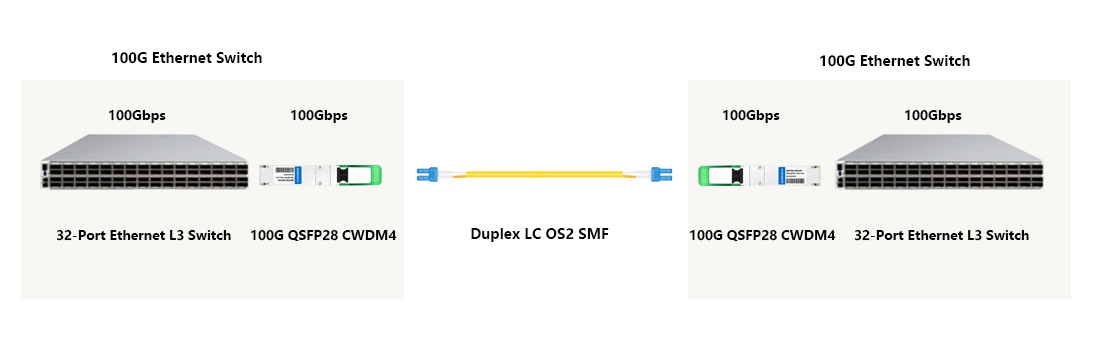
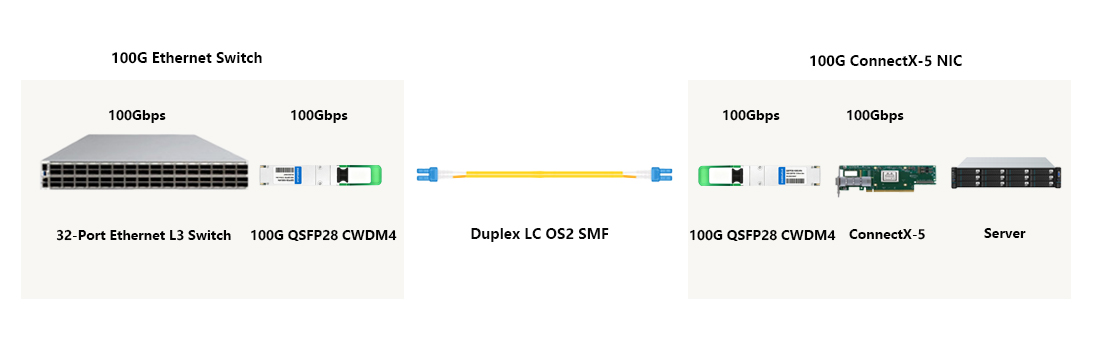
A1: Our HYTOPTODEVICE 100G CWDM4 transceiver delivers far higher long-term cost performance than PSM4. PSM4 only supports 500m ultra-short transmission and requires multimode fiber, limiting network layout flexibility. Our Brocade-compatible CWDM4 module extends transmission distance to 2km over standard single-mode fiber. It covers cross-cabinet, cross-row and short inter-building scenarios, eliminating repeated fiber reconstruction and hardware replacement costs for enterprise data center upgrades.
Q2: Why is FEC function mandatory for stable 100G CWDM4 link operation?
A2: FEC is essential for full-distance, error-free CWDM4 transmission. Our 100G IR4 CWDM4 modules adopt strict optical power budget design. Enabling RS-FEC effectively offsets signal loss from fiber splicing, patch cords and long-time aging. It greatly reduces random bit errors and ensures 2km full-load stable operation on all Brocade switch platforms.
Q3: Can Brocade 100G CWDM4 QSFP28 modules support 4×25G breakout mode?
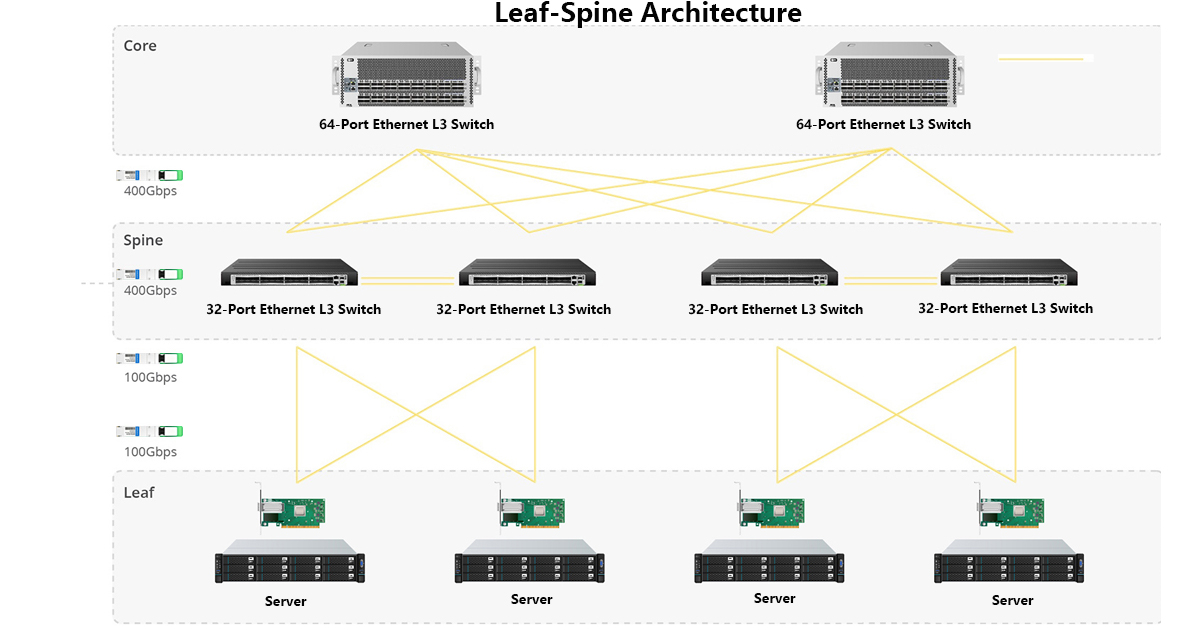
A3: Our standard Brocade 100G CWDM4 transceiver does not support 4×25G breakout mode. It is designed for standard 100G full-rate single-channel transmission, focusing on stable leaf-spine uplink and core trunk networking. For 25G breakout scene requirements, we provide customized breakout-specific optical module solutions to match diverse network deployment needs.
Q4: How to solve module alarm and unrecognized issues on mainstream brand switches?
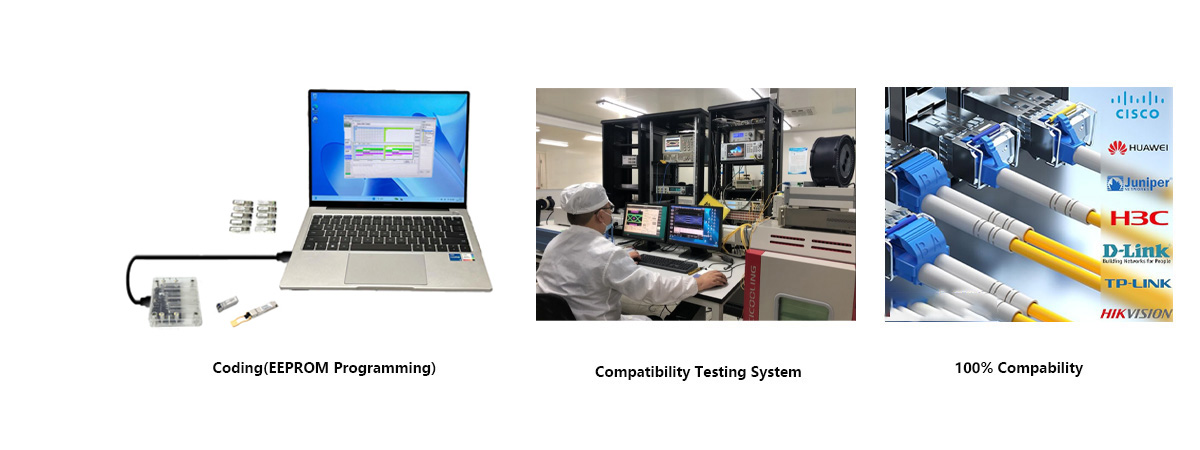
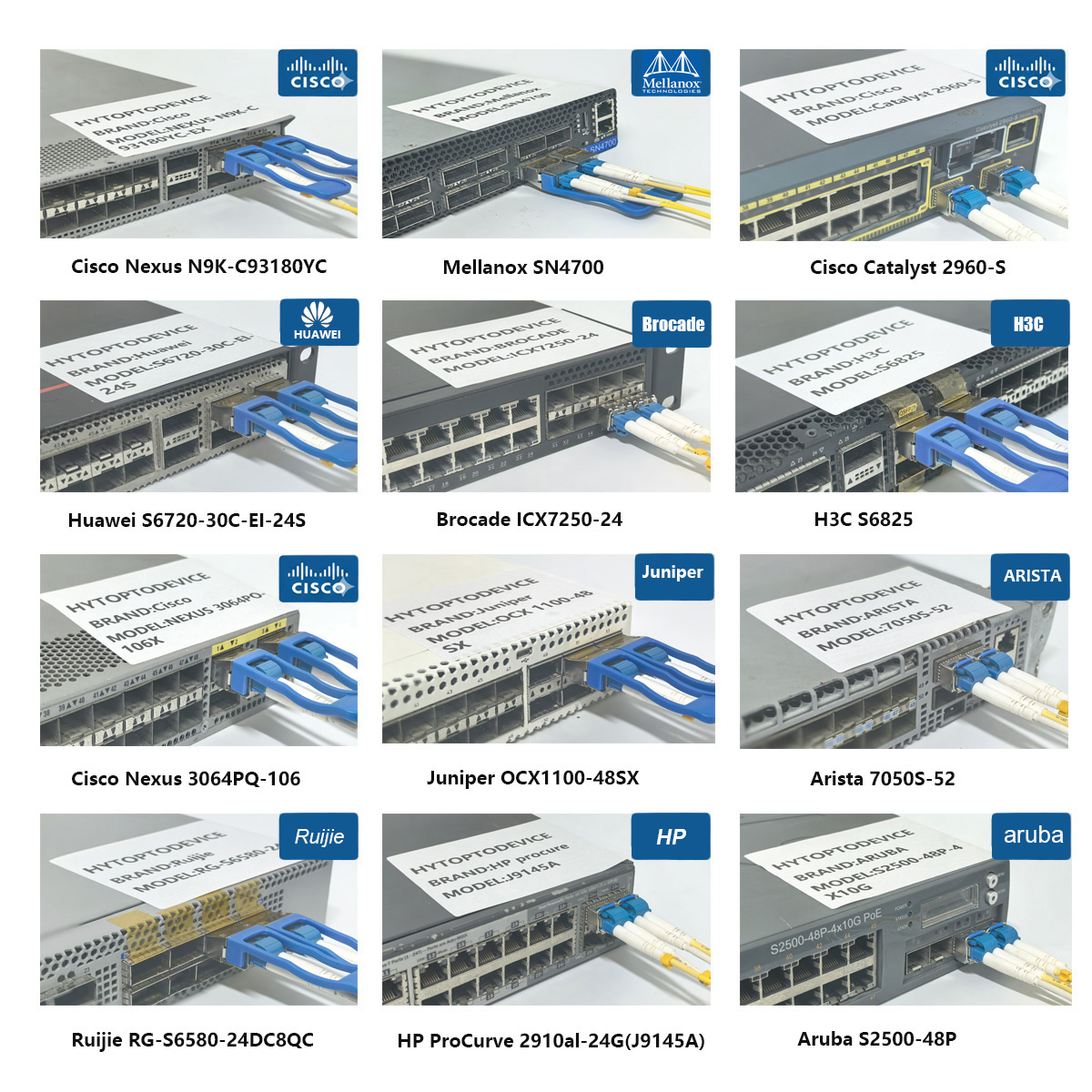
A4: Most identification errors come from mismatched EEPROM firmware. Our HYTOPTODEVICE modules are pre-flashed with brand-specific customized codes for Brocade, Cisco, Arista and Huawei devices. We support free one-click firmware modification and real-machine testing. It achieves zero-alarm plug-and-play and completely solves port recognition failure and log alarm problems.
Q5: Why do DOM monitoring wavelengths show minor deviations from standard CWDM4 values?
A5: Slight wavelength offset is a normal industry physical feature within MSA standard tolerance. All our Brocade-compatible CWDM4 modules undergo high-precision factory calibration and aging screening. Tiny DOM data fluctuations will not affect actual link speed, transmission stability and equipment service life, ensuring consistent 24/7 commercial operation.
Q6: Are optical attenuators required for ultra-short 100G CWDM4 fiber links?
A6: Ultra-short connections within 3 meters do not require attenuators in most scenarios. Our modules feature optimized optical power output design with strong overload resistance. Only in extreme high-power overload scenarios that cause intermittent link flapping, we provide free matching attenuator configuration guidance to guarantee link stability.
Q7: How to fix persistent low Rx power after standard fiber cleaning?
A7: If fiber cleaning fails to restore normal receiving power, abnormal fiber bending, aging fiber cores or loose port contact are the main causes. Our factory-tested CWDM4 modules maintain ultra-high receiving sensitivity. We provide professional one-on-one technical troubleshooting for bulk clients to quickly locate faults and restore normal 100G link transmission.
Q8: What does -40dBm Rx power in DOM monitoring indicate?
A8: -40dBm means the switch port receives no optical signal, resulting from disconnected fiber, damaged jumpers or remote module failure. Our professional after-sales team provides rapid fault diagnosis. We guide customers in line inspection and module testing to quickly restore data center network business.
Q9: Is there a quality gap between third-party compatible modules and original OEM transceivers?
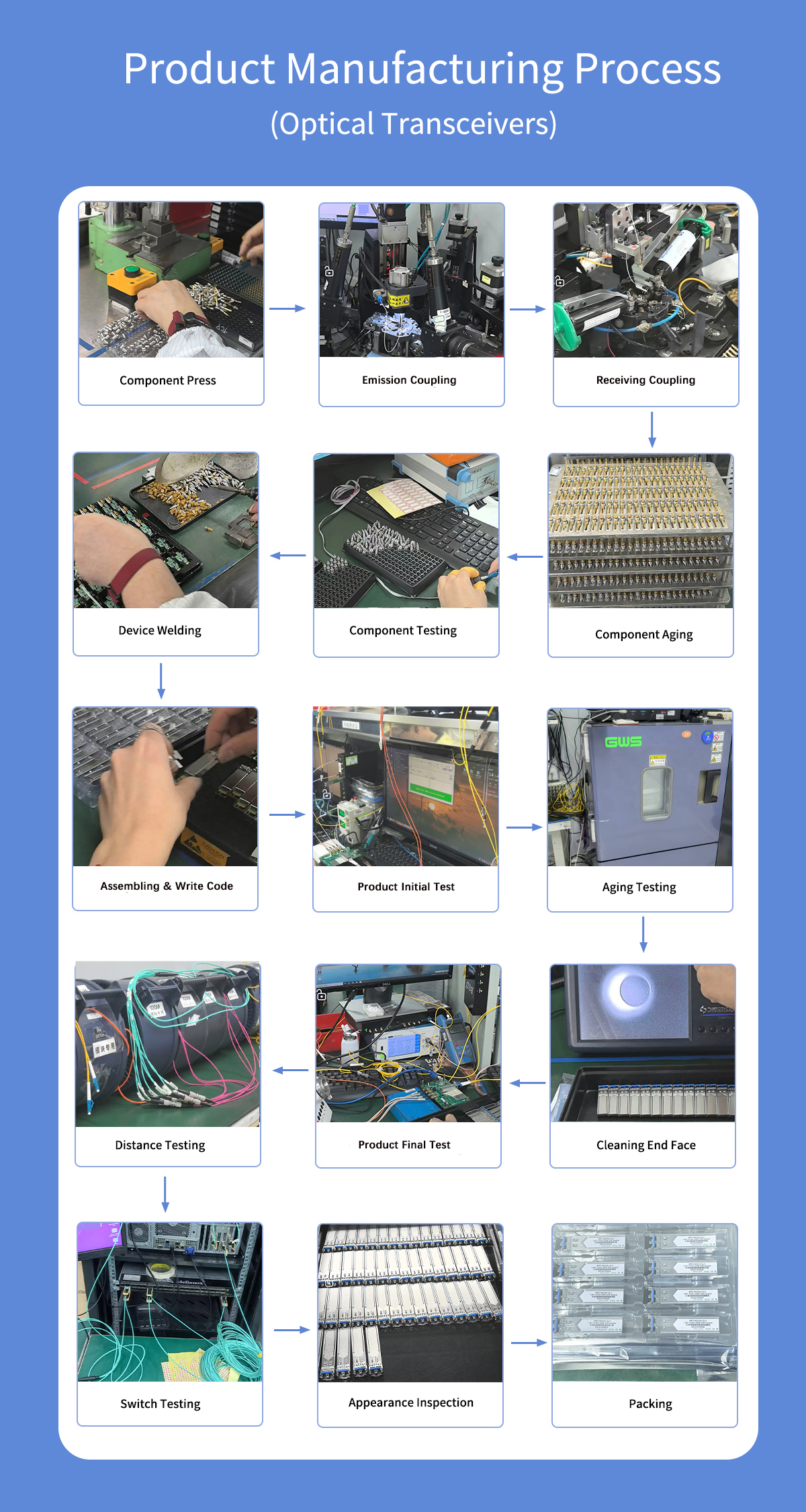
A9: No actual performance or stability gap exists. Our HYTOPTODEVICE Brocade-compatible modules use industrial-grade laser chips and fully compliant industry protocols. Each batch passes real-machine compatibility testing and full optical parameter calibration. It achieves the same operating effect as original OEM modules with more competitive bulk procurement costs.
Q10: What qualification certifications should be confirmed when purchasing 100G CWDM4 transceivers?
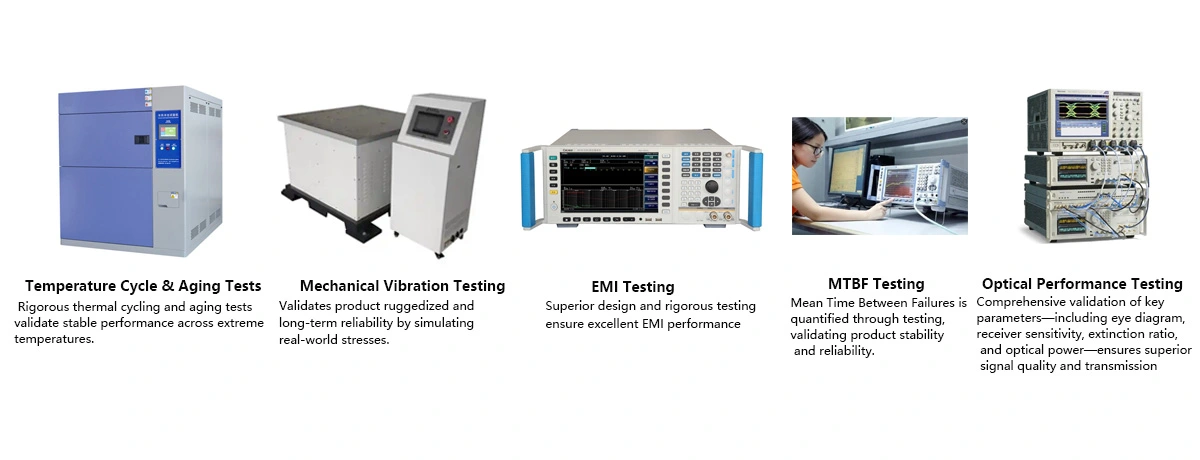
A10: As a professional optical module manufacturer, we provide complete official qualification documents including RoHS environmental certification, MSA/IEEE standard compliance report, high and low temperature cycling test report and real-machine compatibility test records. All products support full-file traceability, ensuring compliant and stable deployment for enterprise and data center projects.