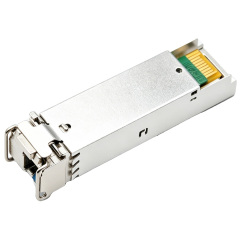
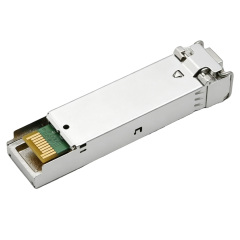
Q1: Are optical attenuators mandatory for short-range fiber transmission scenarios?
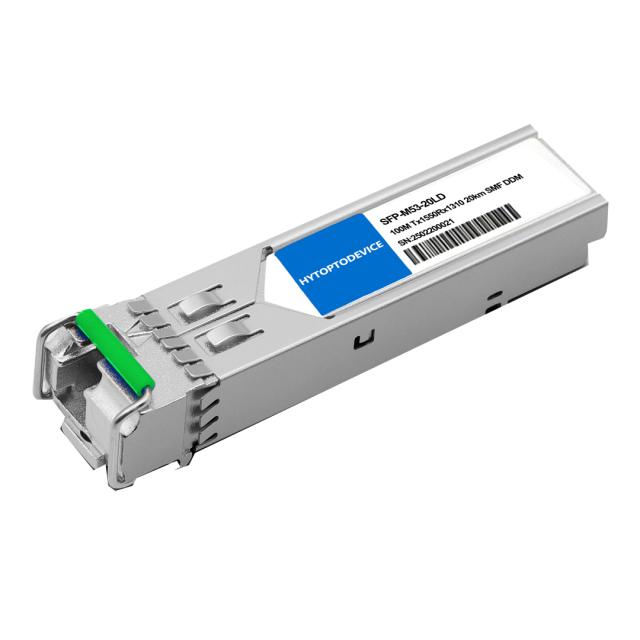
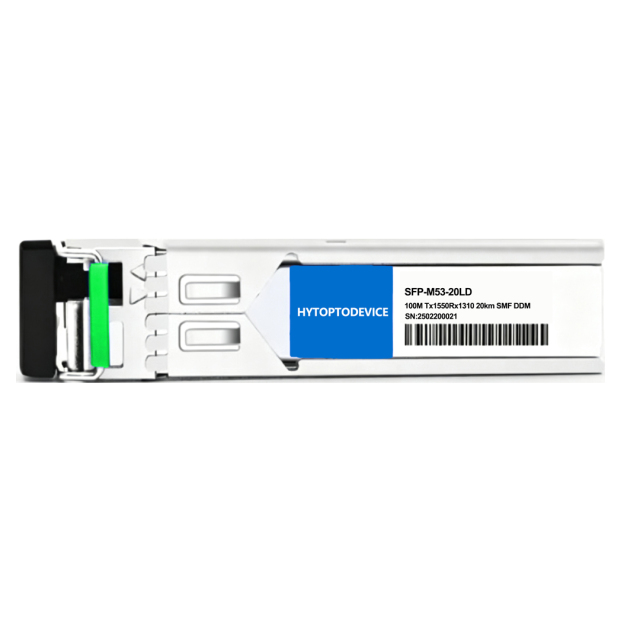
A: No optical attenuator is required for short-distance deployment. This SFP BIDI module features low transmit power (-14 ~ -8dBm) and -8dBm receiver overload threshold, preventing signal overload for short-range links. Always verify parameters with the official datasheet.
Q2: How do fiber splicing joints and multiple connectors impact 10km optical link performance?
A: Each fiber splice adds ~0.1dB loss and each connector adds 0.3–0.5dB loss. Ensure total cumulative loss does not exceed the module’s 12dB optical power budget to maintain stable 10km error-free transmission.
Q3: What core issues lead to unstable links and data packet loss on BIDI optical networks?
A: Packet loss and high BER are mainly caused by dirty end faces, improper APC connectors, excessive fiber loss beyond 12dB budget, over-distance deployment or high-temperature operation. Clean ports and use standard UPC single-mode fiber to resolve issues.
Q4: Why traditional loopback tests fail on single-fiber BIDI SFP transceivers?
A: Local loopback testing does not work for SFP BIDI modules due to fixed Tx/Rx wavelength separation. Test module validity via end-to-end pairing with a complementary 100BASE-BX-U SFP BIDI module.
Q5: Can this Netgear-certified SFP BIDI work with ordinary fiber media converters?
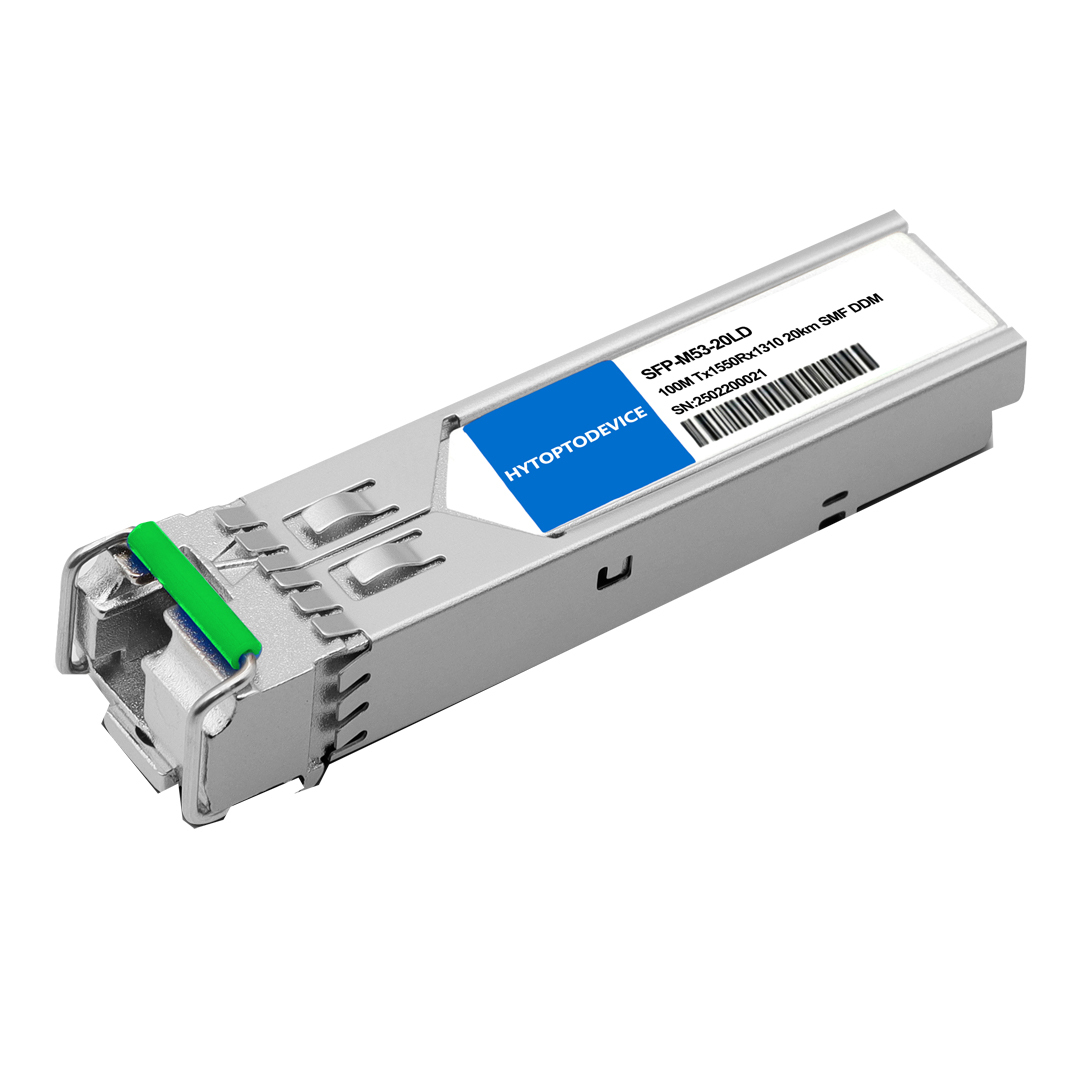
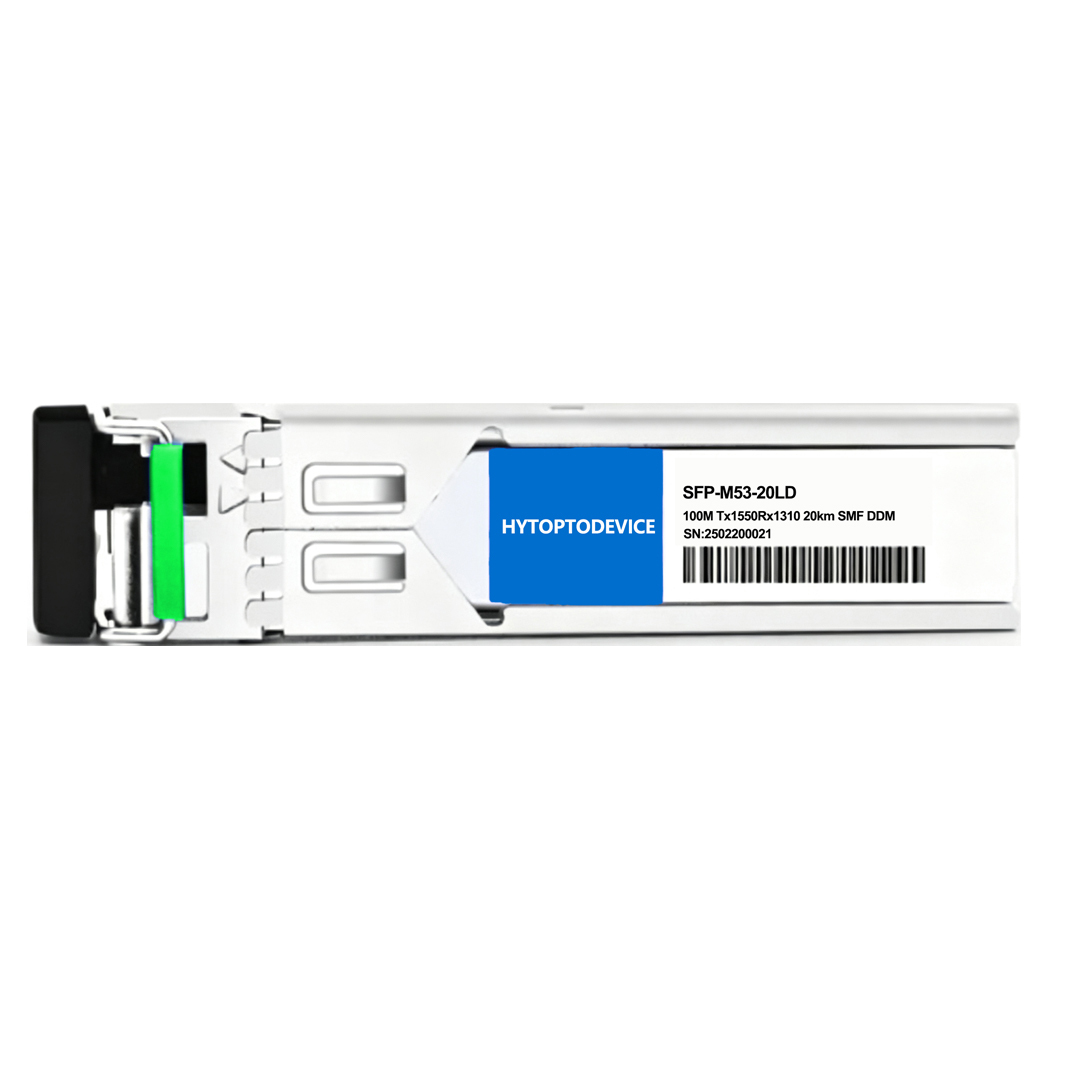
A: Yes. This Netgear compatible SFP BIDI module works with all standard 100Mbps unmanaged media converters. Plug-and-play and fully IEEE/MSA compliant for stable short and long-range networking.
Q6: How to effectively protect idle SFP BIDI module ports from failure risks?
A: Always cover idle SFP ports with dust caps. Exposed ports accumulate dust and moisture, increasing optical loss and causing intermittent packet loss or premature module failure.
Q7: What is the continuous operation lifespan of this batch of SFP BIDI modules?
A: These SFP BIDI modules feature industrial-grade build quality with anMTBF of 1,000,000 hours, supporting reliable 7×24-hour continuous operation under standard commercial temperatures.
Q8: Is cross-distance pairing of BIDI optical modules feasible for network communication?
A: Yes. 10km and 20km 100BASE-BX transceivers can interwork if they use complementary 1310nm/1550nm wavelengths and receive optical power stays within safe thresholds.
Q9: What causes intermittent link drops when working under extreme temperature environments?
A: Extreme temperature fluctuations cause laser wavelength and power drift, triggering intermittent link drops. Standard modules work 0°C–70°C; choose industrial-grade (-40°C–85°C) versions for harsh outdoor environments.
Q10: Is cross-brand module pairing recommended for formal enterprise network deployment?
A: Technically interoperable but not recommended. Different vendors have inconsistent power calibration and DDM thresholds, which may cause unstable long-term links. Use same-brand paired SFP BIDI modules for best stability.
Q11: How to quickly diagnose fiber cable faults through module DDM monitoring data?
A: Check port status and DDM data. Zero or extremely low received power indicates fiber breakage. Severe power fluctuation suggests poor connections or hidden fiber damage.
Q12: What standard accessories are included with this Netgear SFP BIDI module?
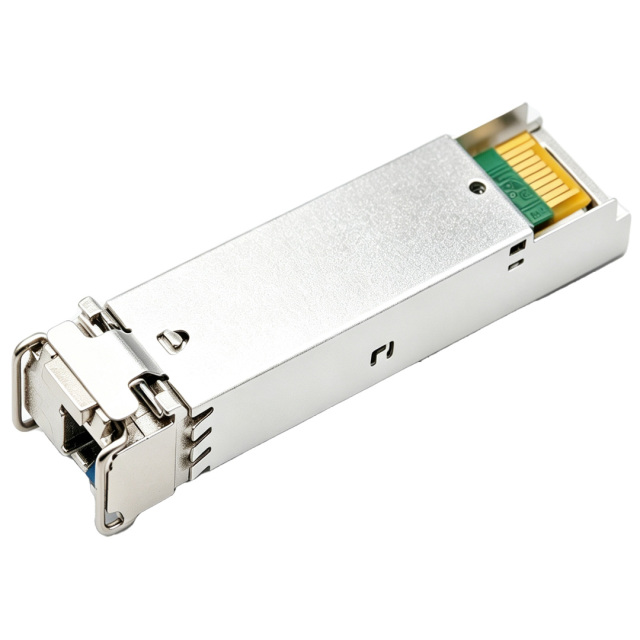
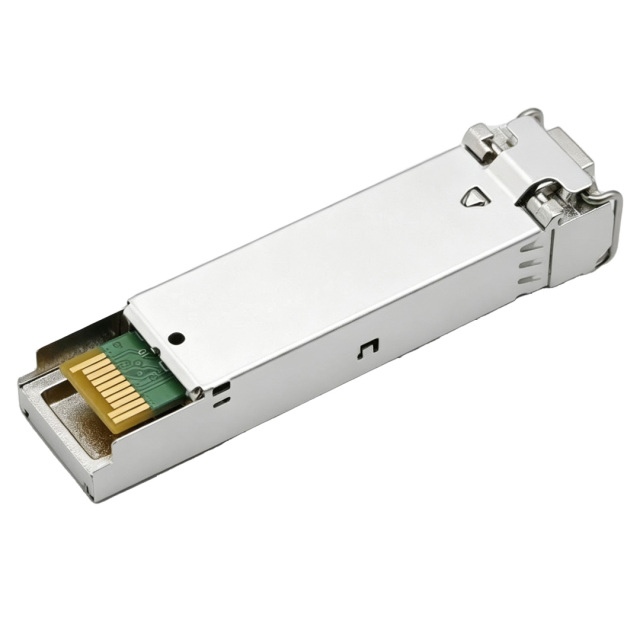
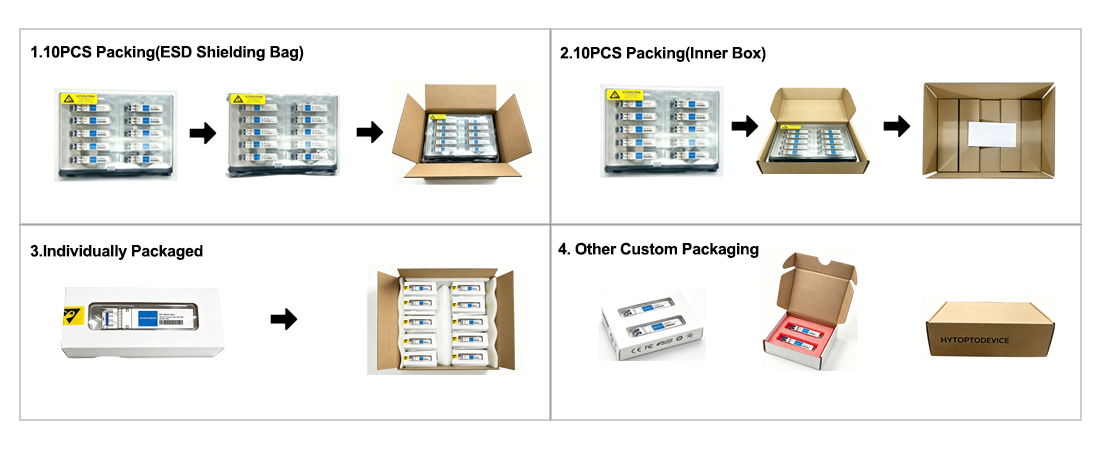
A: Each SFP BIDI module comes with a protective dust cap and is packaged in an anti-static bag. No extra accessories are included.
Packaging & Custom OEM Solutions
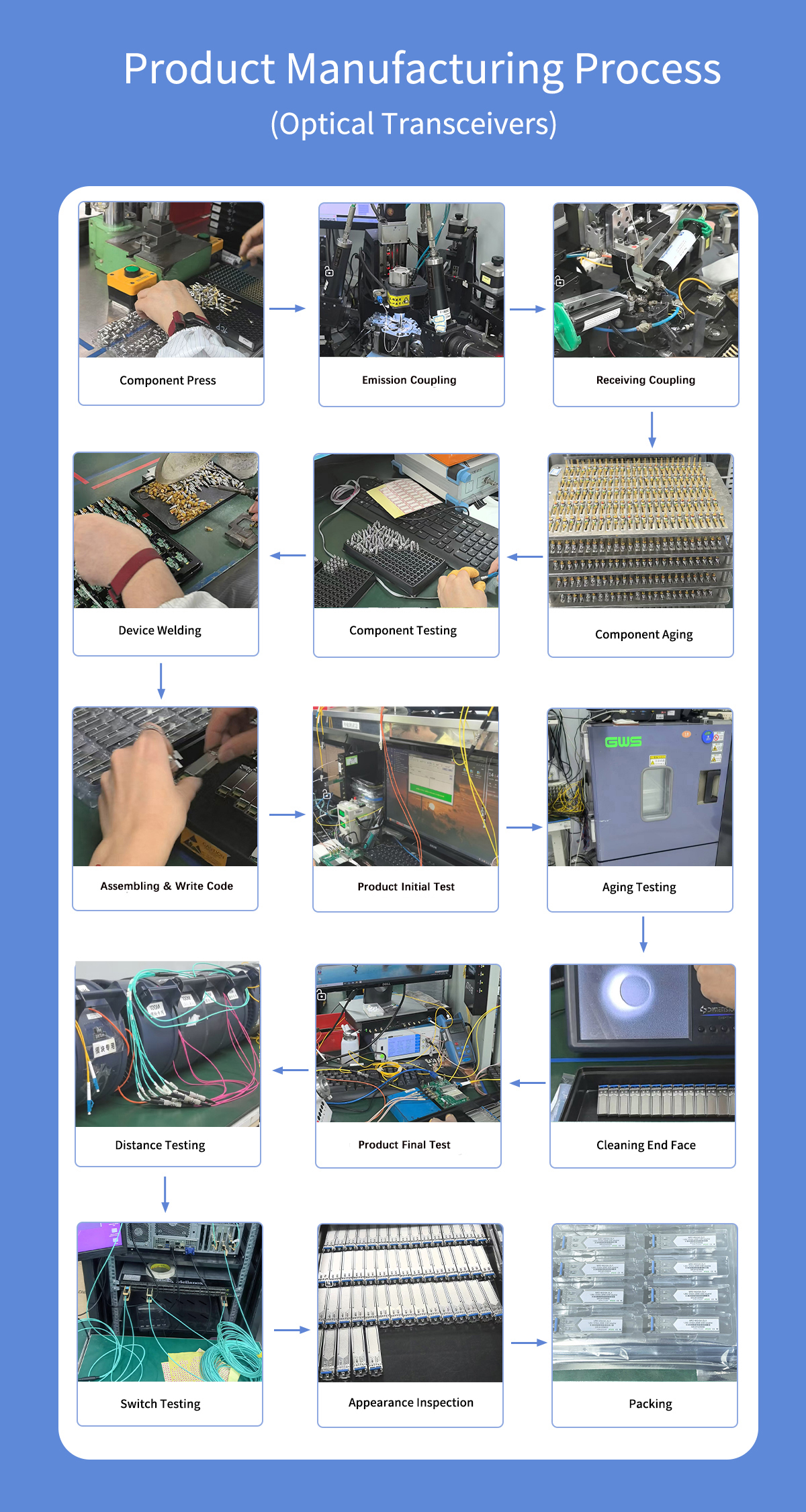
Each Bidi module is factory-sealed in ESD-shielding, anti-static packaging—individually protected, quality-checked, and ready to ship the moment you place your order. We understand that distributors, wholesalers, and system integrators need more than just a product. That's why our flexible OEM and ODM programs include custom branding, private-label packaging, and your own logo on every unit—so you can grow your brand with confidence, without compromising on quality or lead time.
 Why Network Engineers Choose HYTOPTODEVICE