Q1: Why cannot two identical Tx1550/Rx1310 BiDi transceivers establish a valid 10km fiber link?
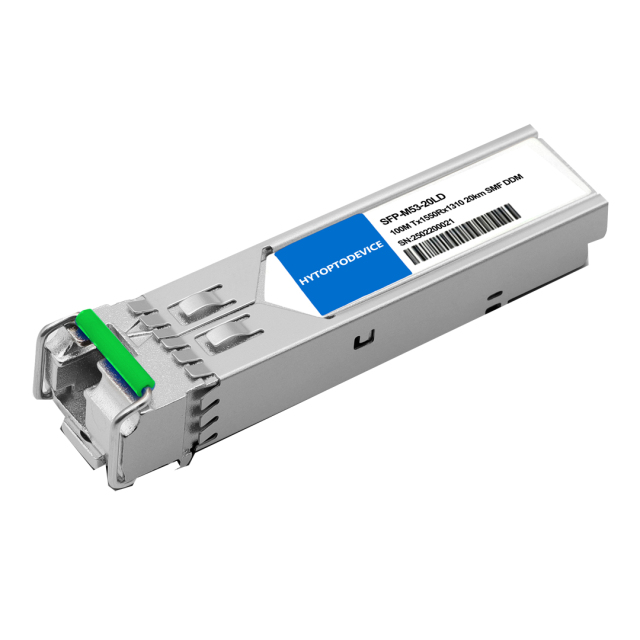
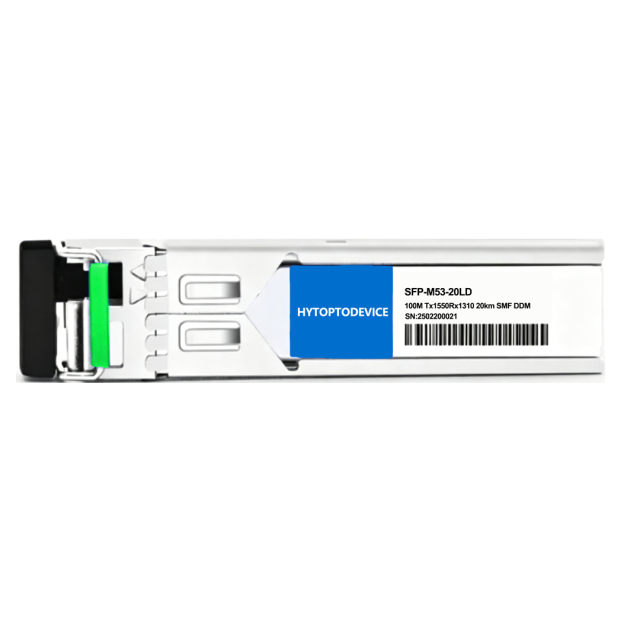
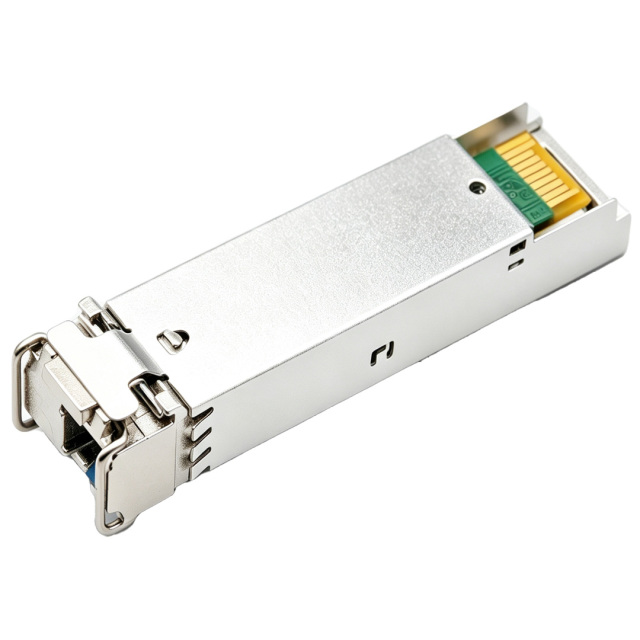
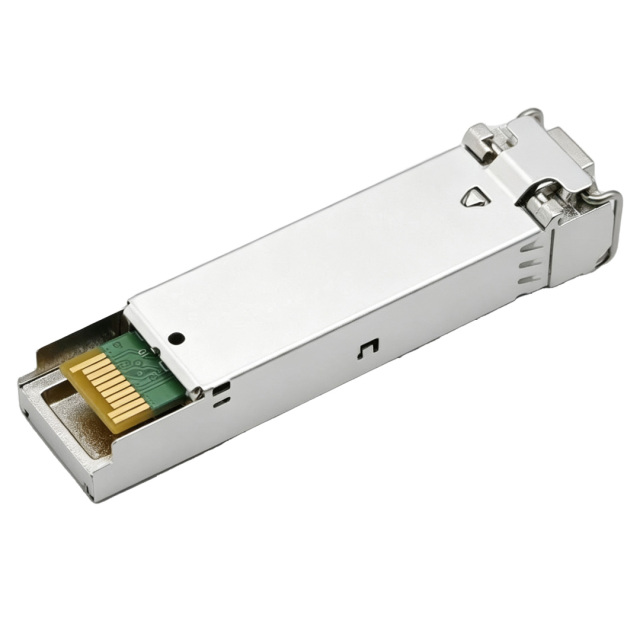
A: Pairing two same Tx1550/Rx1310 100BASE-BX-D modules leads to conflicting send and receive wavelengths, resulting in complete link failure with no data transmission. HYTOPTODEVICE’s Avaya AA1419083-E5 compatible 10km BiDi transceiver follows standard WDM wavelength partitioning rules, requiring strict pairing with Tx1310/Rx1550 100BASE-BX-U modules. We offer pre-matched paired module sets for Avaya network projects, eliminating on-site pairing errors for bulk deployments.
Q2: Can Avaya 100BASE-BX single-fiber BiDi transceivers interconnect with traditional dual-fiber LX optical modules?
A: Cross-connection between single-fiber 100BASE-BX-D BiDi modules and dual-fiber 100BASE-LX transceivers is not feasible. The two types of modules adopt different optical transmission mechanisms and wavelength protocols and cannot identify each other’s signal data. Our Avaya AA1419083-E5 compliant BiDi modules are dedicated single-fiber networking components, exclusively applicable to matched BiDi link systems for Avaya enterprise network upgrades and renovations.
Q3: What causes unsupported transceiver alerts when inserting third-party SFP modules into Avaya switches?
A: Most generic optical modules carry unrecognized EEPROM code and non-official signature data, triggering compatibility warning prompts on Avaya and Nortel switching devices. HYTOPTODEVICE’s AA1419083-E5 replacement transceivers are pre-programmed with Avaya-certified firmware and complete verification data, achieving zero-warning identification. Optimized for large-scale engineering bulk procurement, our modules fully resolve third-party compatibility anomalies.
Q4: Is manual adjustment of port speed and duplex mode required for Avaya-compatible 100BASE-BX-D SFP modules?
A: No manual parameter tuning is necessary for normal operation. All HYTOPTODEVICE 10km 100BASE-BX-D BiDi transceivers support intelligent auto-negotiation, automatically matching the 100Mbps full-duplex working mode of Avaya Fast Ethernet ports. The plug-and-play design greatly simplifies batch network deployment and daily equipment maintenance for enterprise users.
Q5: Is it safe to deploy 10km-rated Avaya BiDi transceivers for short-distance fiber links under 1km?
A: This Avaya AA1419083-E5 compatible BiDi module supports flexible adaptive operation for both short and medium-distance scenarios. It can work stably for link distances from 500 meters up to the rated 10km without optical attenuators. The built-in intelligent power protection circuit effectively prevents receiver saturation and hardware damage, adapting to diverse on-site wiring scenarios for engineering construction and batch deployment.
Q6: What optical power budget ensures stable 10km signal transmission for Avaya 100BASE-BX-D fiber links?
A: Our Avaya AA1419083-E5 matching SFP BiDi modules feature a standard 12dB optical power budget, professionally calibrated for 10km single-mode fiber transmission scenarios. This sufficient margin effectively offsets signal loss caused by fiber transmission, joint splicing and connector docking, ensuring stable, error-free 100Mbps data transmission for enterprise park cross-building and medium-range networking projects.
Q7: What interface specification is adopted by Avaya simplex single-fiber BiDi SFP transceiver modules?
A: This 100BASE-BX-D dedicated transceiver for Avaya devices is equipped with a standard simplex LC interface. Different from dual-port LC modules, it realizes bidirectional signal transmission through only one single-mode fiber core, effectively saving half of fiber cable resources. It is a high-cost-performance solution for fiber-resource-scarce network reconstruction and large-scale wholesale deployment projects.
Q8: Which LC fiber patch cord is more suitable for Avaya AA1419083-E5 BiDi modules, UPC or APC type?
A: It is recommended to use standard blue UPC simplex LC patch cords for matching connection. This Avaya-specific BiDi module is designed for flat UPC end-face optical links. Green APC end-face jumpers will cause excessive insertion loss, resulting in unstable link signals and random packet loss. We provide supporting optical accessory packages to support one-stop procurement for network engineering projects.
Q9: Does the 100BASE-BX-D specification support full-duplex synchronous 100Mbps data transmission?
A: Yes, it supports true full-duplex synchronous transmission. Leveraging advanced WDM wavelength division multiplexing technology, our Avaya-compatible BiDi modules isolate upstream and downstream signals via different wavelengths on a single fiber. This design enables simultaneous sending and receiving of 100Mbps data without bandwidth compression or delay, meeting the stable transmission requirements of enterprise monitoring and ISP broadband access networks.
Q10: Do Avaya 100BASE-BX-D BiDi SFP modules support hot-swap replacement?
A: All HYTOPTODEVICE AA1419083-E5 compatible transceivers strictly comply with MSA international hot-swap specifications. The modules support online hot plugging and replacement without shutting down switches or interrupting ongoing network services. This low-interruption maintenance feature is ideal for 7×24-hour uninterrupted enterprise network operation and large-scale batch equipment deployment.
Q11: Do laser signals emitted by 100BASE-BX-D SFP transceivers pose safety risks to the human body?
A: This series of Avaya dedicated BiDi optical modules adopts Class 1 ultra-safe laser chips that meet international safety certification standards. The low-power laser signal will not cause damage to human eyes or skin during daily installation, debugging and use. All finished products pass strict safety testing, supporting long-term safe use in commercial, industrial and campus network batch procurement projects.
Q12: How to maintain idle SFP transceiver ports to extend Avaya module service life?
A: For unused idle module ports, users need to install the matched dust-proof rubber caps in a timely manner. This practice effectively blocks dust, moisture and oil pollution in the air, avoids optical channel contamination and signal attenuation, and reduces equipment failure rates. All bulk-ordered HYTOPTODEVICE Avaya compatible modules come with complete dust-proof accessories, ensuring long-term stable operation of batch deployed equipment.