Q1: Will this 1.25G 1550nm 80km SFP module work with my specific switch brand (e.g., Cisco, Juniper, Huawei)?
A: This Cisco GLC-ZX-SMD compatible 1000BASE-ZX optical transceiver features universal multi-brand interoperability. It achieves zero-alarm plug-and-play operation on all mainstream Cisco switches and routers with customized EEPROM firmware. It also runs stably on Juniper, Huawei and other network devices compliant with SFP MSA standards, ideal for mixed-brand network projects.
Q2: Can I use this 1.25G module on a multi-speed or auto-negotiating port?
A: This high-performance Cisco GLC-ZX-SMD optical transceiver is a fixed 1.25Gbps gigabit module without speed auto-negotiation function. It cannot adapt to multi-speed switch ports or downgrade to 100Mbps. For stable links, please use it on ports forced to 1000Mbps gigabit mode only.
Q3: Why does my switch display an "unrecognized SFP" alarm upon insertion?
A: Unrecognized SFP alarms mostly result from mismatched default firmware data. Our Cisco GLC-ZX-SMD optical transceiver supports exclusive firmware customization. We can adjust EEPROM codes to match different device firmware versions, completely solving module recognition and alarm issues for long-term stable operation.
Q4: Will this 1.25G SFP work in a 10G SFP+ port for network expansion?
A: Yes. This 1000BASE-ZX Cisco GLC-ZX-SMD optical transceiver supports backward compatibility with standard 10G SFP+ ports. It operates stably at 1.25Gbps gigabit speed without link errors or compatibility conflicts, perfectly fitting mixed-rate port network expansion scenarios.
Q5: Do I need an optical attenuator for short-distance deployment of 80km SFP transceiver?
A: Yes. This Cisco GLC-ZX-SMD optical transceiver features a maximum TX optical power up to +5dBm. For short-distance links, excessive optical power causes signal saturation and packet loss. A 10-15dB optical attenuator is mandatory to ensure stable short-range transmission performance.
Q6: How to calculate accurate optical link budget for 80km long-haul fiber spans?
A: This Cisco GLC-ZX-SMD optical transceiver has a TX optical power range of 0~+5dBm and receiver sensitivity lower than -26dBm, delivering a standard 26dB link budget. Calculated by 1550nm fiber loss of 0.25dB/km, plus duplex LC connector and splice loss, the 26dB budget is fully sufficient for stable 80km long-distance transmission.
Q7: How does long-term laser power drift affect 80km fiber transmission quality?
A: Minor laser power drift will cause unstable signal attenuation and random link jitter. Every Cisco GLC-ZX-SMD optical transceiver undergoes strict high-temperature aging calibration. It effectively controls laser power drift, maintaining consistent transmission quality for long-term 80km network operation.
Q8: What attenuator size matches 30km medium-range fiber links?
A: For 30km links deployed with this Cisco GLC-ZX-SMD optical transceiver, a 5dB~7dB optical attenuator is the optimal choice. It efficiently reduces excessive transmit power, avoids signal saturation, and keeps the receiving power within the standard working range for stable link output.
Q9: What fiber connector type is required for 1.25G 80km ZX optical transceiver?
A: This Cisco GLC-ZX-SMD optical transceiver adopts standard duplex LC UPC fiber connectors. The low-loss LC interface matches G.652 single-mode fiber perfectly, ensuring low insertion loss and stable physical connection for 80km long-haul gigabit transmission.
Q10: Is APC LC connector compatible with Cisco GLC-ZX-SMD 1000BASE-ZX module?
A: Not recommended. This Cisco GLC-ZX-SMD optical transceiver is strictly designed for UPC connectors. APC connectors will cause extra signal reflection and high insertion loss, leading to unstable long-distance transmission and increased packet loss rate in 80km fiber links.
Q11: Does bulk ordered GLC-ZX-SMD transceiver come with protective dust caps?
A: Yes. Every bulk and sample unit of this Cisco GLC-ZX-SMD optical transceiver is equipped with standard protective dust caps. They effectively shield laser ports from dust and contamination, preventing performance attenuation during transportation and long-term inventory storage.
Q12: How to clean contaminated LC ports on long-haul SFP transceiver?
A: Clean the LC ports of this Cisco GLC-ZX-SMD optical transceiver with professional fiber cleaning sticks only. Ordinary cloth or water will leave residues and damage the laser port. Standard cleaning eliminates port contamination-caused signal attenuation and link instability.
Q13: What temperature options are available for Cisco GLC-ZX-SMD optical transceiver?
A: This standard Cisco GLC-ZX-SMD optical transceiver supports 0℃~70℃ commercial temperature range for conventional network deployment. We also supply customized industrial-grade modules that adapt to extreme high and low temperature environments for industrial network projects.
Q14: Will thermal drift affect 1550nm wavelength stability of long-haul module?
A: Slight thermal drift exists in all optical transceivers, but this Cisco GLC-ZX-SMD 1550nm optical transceiver undergoes professional temperature aging calibration. It limits wavelength drift within industry standards, causing no negative impact on 80km long-distance transmission stability.
Q15: Does 80km ZX transceiver generate more heat than short-reach SFP modules? A: This long-haul Cisco GLC-ZX-SMD optical transceiver adopts high-power 1550nm laser chips, generating slightly more heat than short-range modules. With optimized internal heat dissipation design, it maintains safe and stable temperature during long-term high-load network operation.
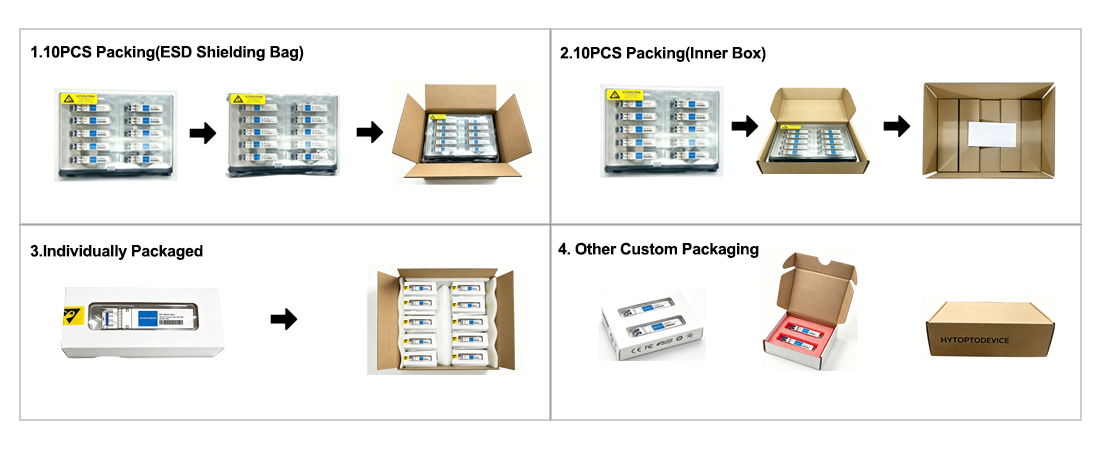
Packaging Options & Custom‑Packaging Solutions
Every transceiver module gets reliable ESD‑safe packaging out of the box. Standard packing is ready for immediate shipment, while custom‑printed packaging with your logo is available for bulk orders.
Why Network Engineers Choose HYTOPTODEVICE