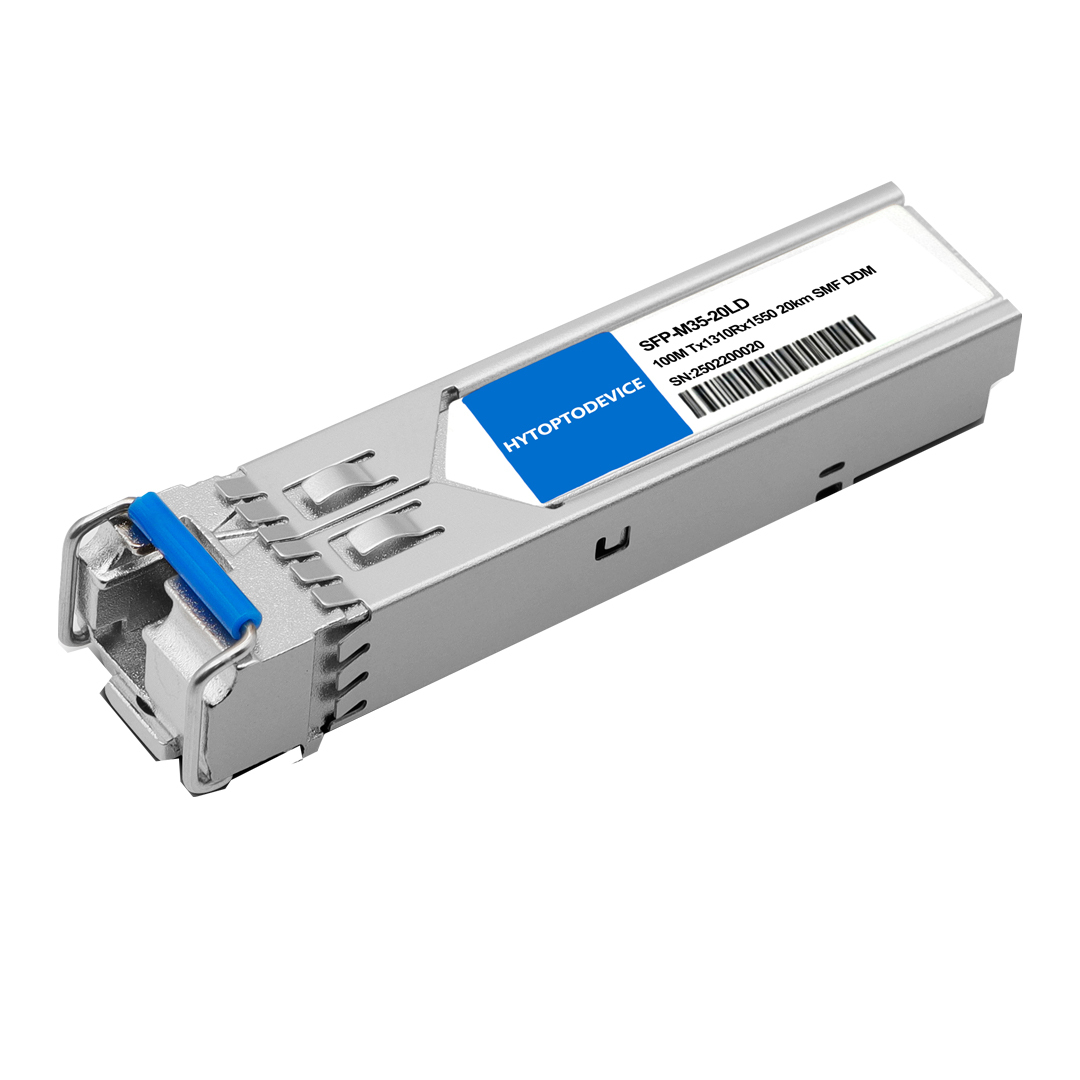
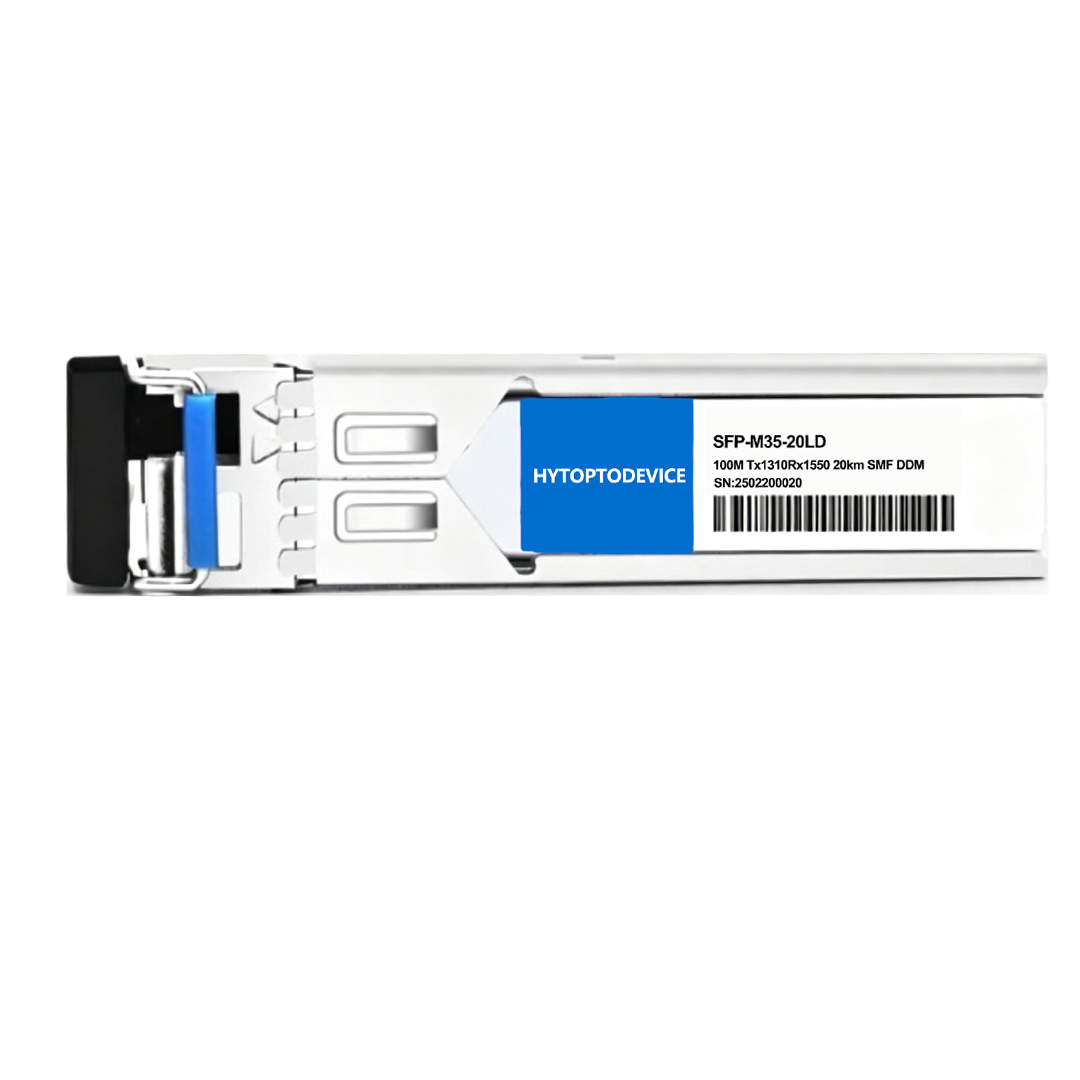
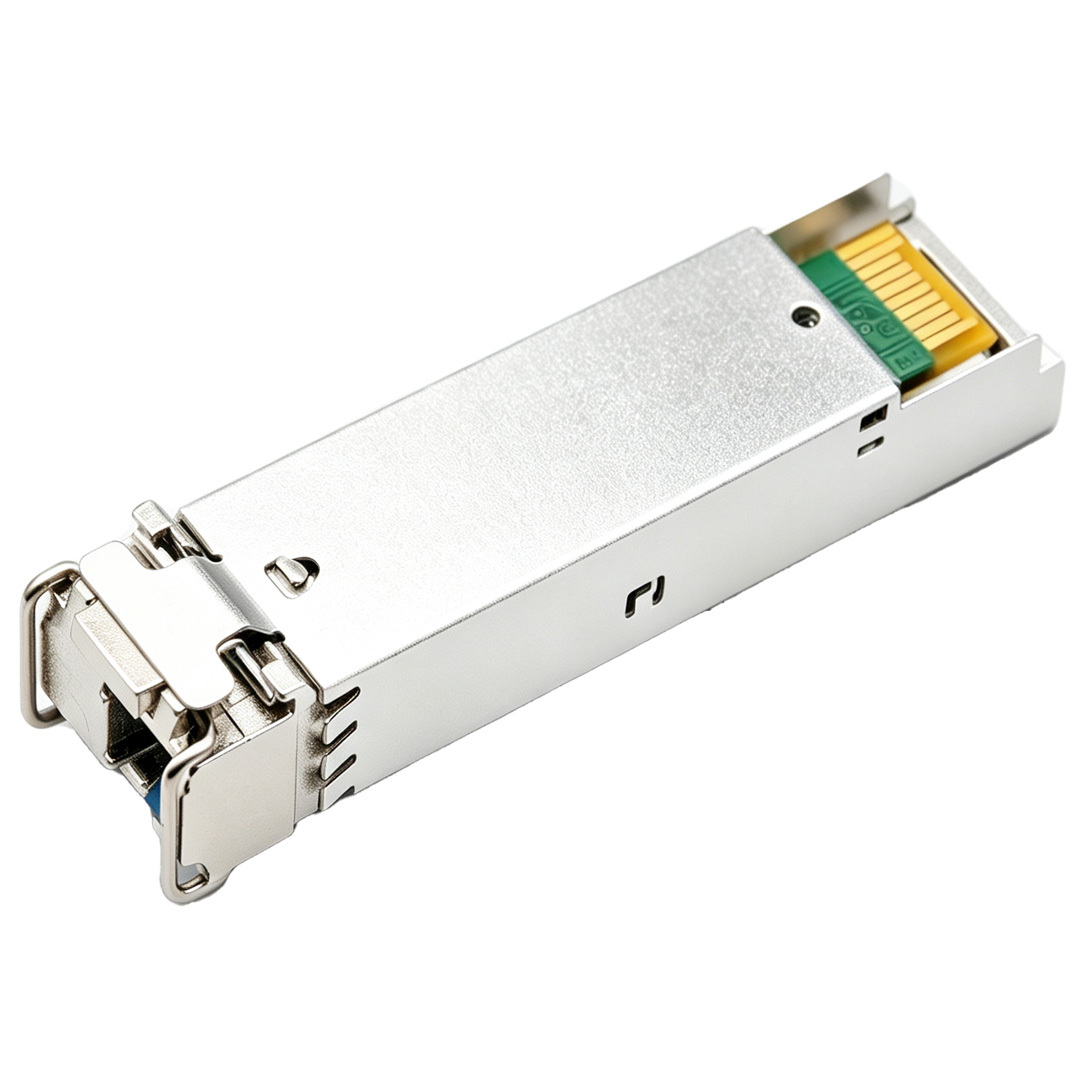
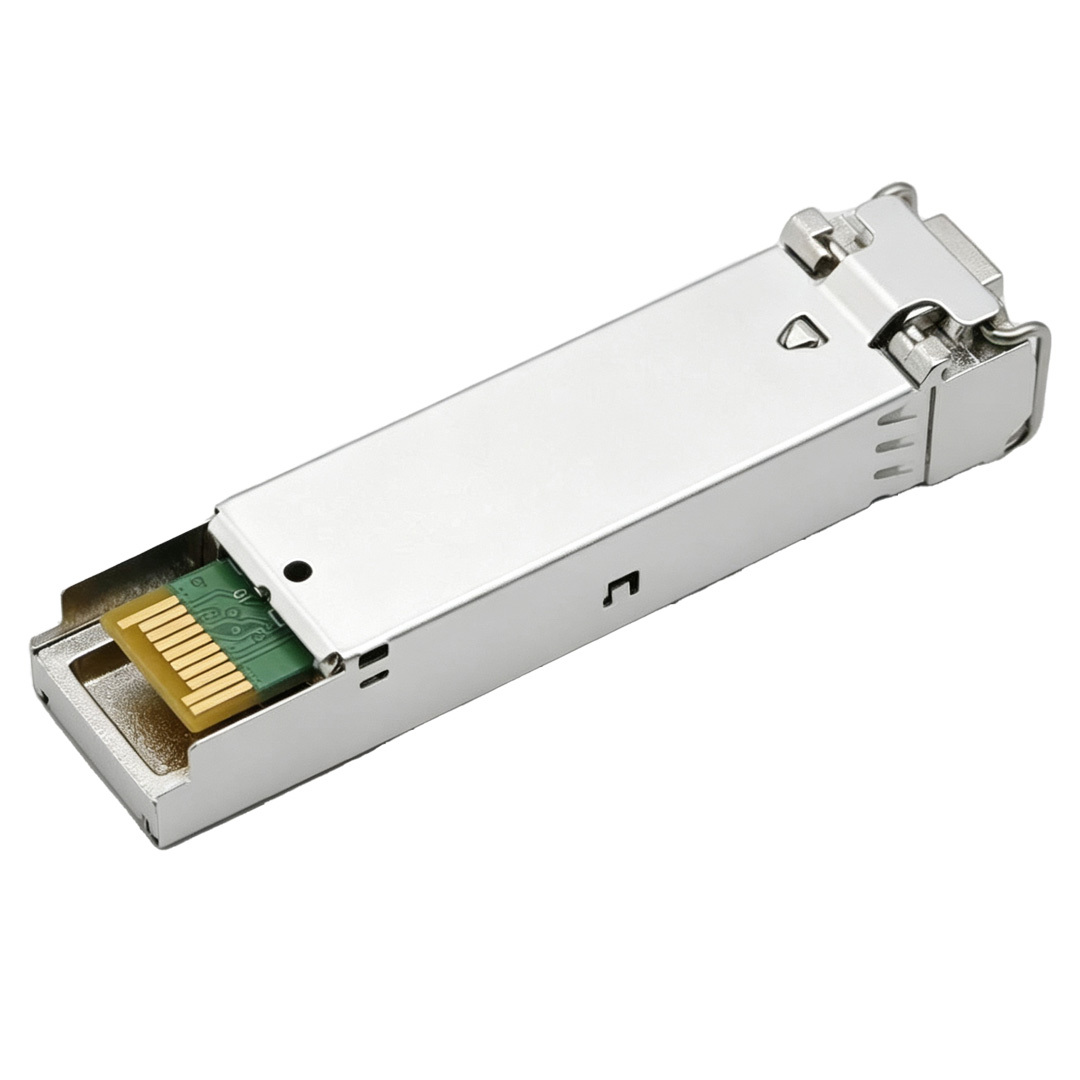
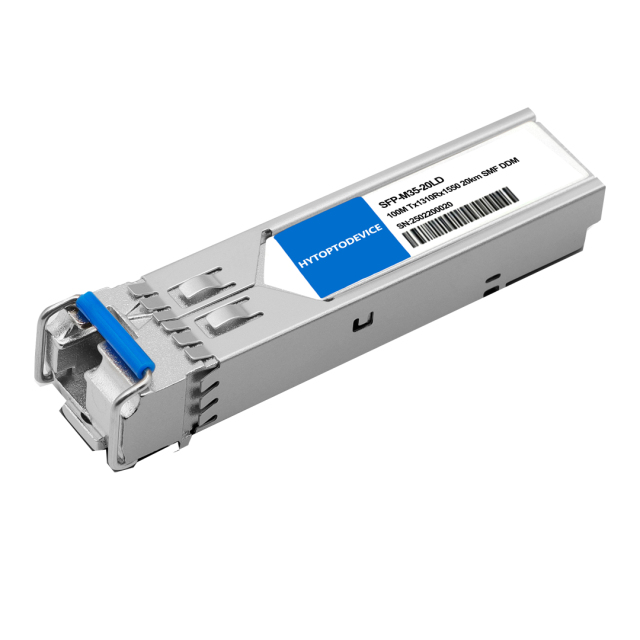
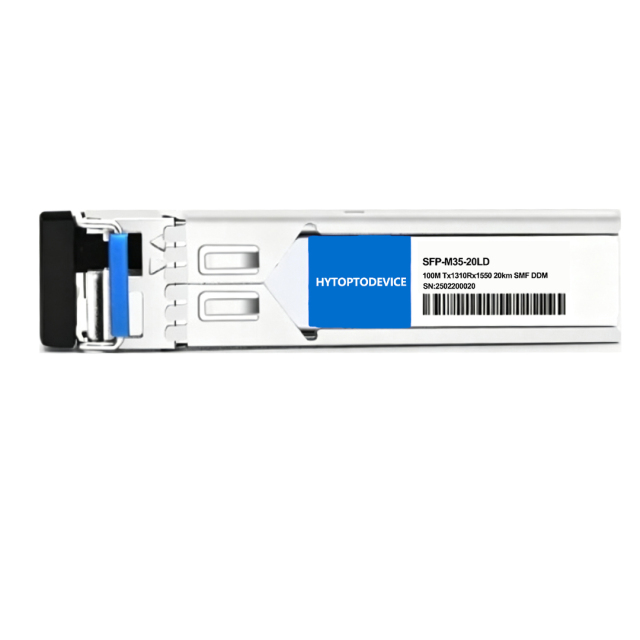
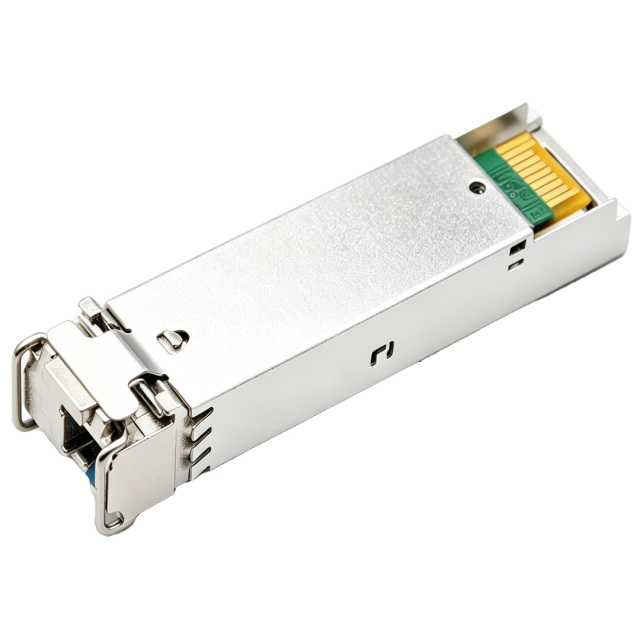
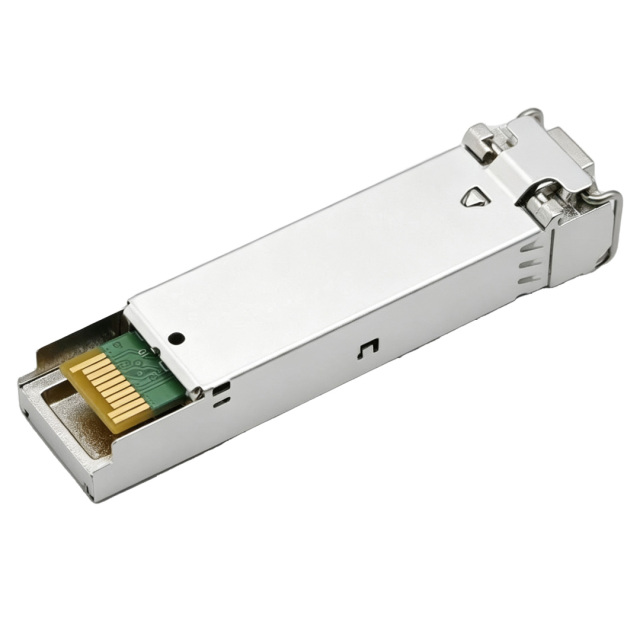
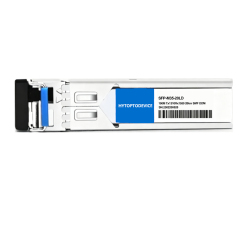
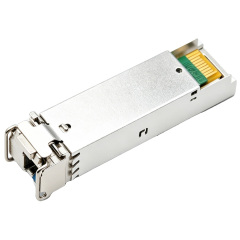
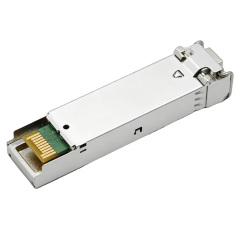
A: Field technicians can quickly distinguish these two bidi sfp module types by using distinct bail latch colors (e.g., Blue for TX1310nm and Green for TX1550nm) and printed wavelength marking on label. Our 100BASE-BX-U module is clearly labeled Tx1310/Rx1550, while the paired BX-D module is marked Tx1550/Rx1310. Physical identification avoids wrong-module deployment and eliminates wavelength mismatch link failures on single-fiber BiDi connections.
Q2: How does a Simplex (Single-Strand) BiDi transceiver transmit and receive on one fiber?
A: This simplex bidi sfp module adopts built-in WDM wavelength filtering technology. It transmits dedicated wavelength signals and receives opposite-band wavelengths on the same single fiber core. The 1310nm transmit and 1550nm receive wavelengths operate independently without signal interference, enabling bidirectional 100Mbps communication over only one fiber strand.
Q3: Why does my switch console throw an "Unsupported Transceiver" warning?
A: Unsupported transceiver warnings are mainly caused by unmatched internal EEPROM vendor coding. Our customizable bidi sfp module supports pre-programmed Brocade-specific firmware and multi-brand vendor profiles. Specify your exact switch model before ordering, and we will flash matched firmware to eliminate console alarms and ensure full device recognition.
Q4: Is this transceiver fully compliant with IEEE 802.3ah 100BASE-BX10 standards?
A: Yes. This 20km 100BASE-BX-U bidi sfp module fully complies with IEEE 802.3ah industry standards and MSA specifications. Though rated for 20km long-range transmission, it strictly follows standard 100BASE-BX electrical and optical protocol definitions, ensuring standardized interoperability with all compliant network devices.
Q5: Do I need an optical attenuator for short-distance deployment?
A: Generally no attenuator is required for short-distance deployment (500m and above). This 20km Fast Ethernet bidi sfp module features low default transmit power (-14~-8dBm) and a -8dBm receiver overload threshold. Its adaptive optical power design supports safe short-range operation without signal overload or hardware damage.
Q6: What is the typical optical power budget for a 100BASE-BX 20km link?
A: This Brocade compatible bidi sfp module features a standard 18dB optical power budget, perfectly matching 20km single-mode fiber transmission requirements. The sufficient power budget offsets natural fiber attenuation and joint loss, ensuring stable, error-free 100Mbps long-distance link transmission.
Q7: Can near-end optical crosstalk (NEXT) occur inside the WDM filter of a BiDi optic?
A: No obvious NEXT crosstalk occurs on our premium bidi sfp module. The high-isolation WDM filter effectively isolates transmit and receive wavelength bands, preventing internal signal crosstalk. Strict factory component calibration guarantees pure signal transmission and avoids BER fluctuations caused by near-end interference.
Q8: Why am I getting high Bit Error Rate (BER) or packet loss on my 20km link?
A: High BER and packet loss on 20km BiDi links mainly stem from unbalanced wavelength attenuation. The 1310nm transmission direction brings slightly higher path loss than 1550nm over long distances. Additional factors include dirty fiber ports, unqualified jumpers and excessive link loss; precise link loss calculation and port cleaning can effectively solve the issue.
Q9: Why does DDM show normal Tx power but zero Rx power on one end?
A: Zero DDM Rx power with normal Tx power indicates a one-way signal interruption, usually caused by reversed wavelength pairing, broken fiber strands or dirty receiver ports. It also occurs if two identical Tx1310/Rx1550 bidi sfp modules are deployed at both ends, leading to complete receive signal failure.
Q10: Can I run a local physical loopback test on a BiDi SFP?
A: Standard physical loopback tests are not applicable for simplex bidi sfp module. BiDi modules use separate transmit/receive wavelength paths on one fiber, and conventional loopback cannot form valid signal return. Professional wavelength-matched loopback tools or end-to-end link testing is required for accurate module verification.
Q11: How does extreme heat affect 1310nm and 1550nm FP/DFB lasers?
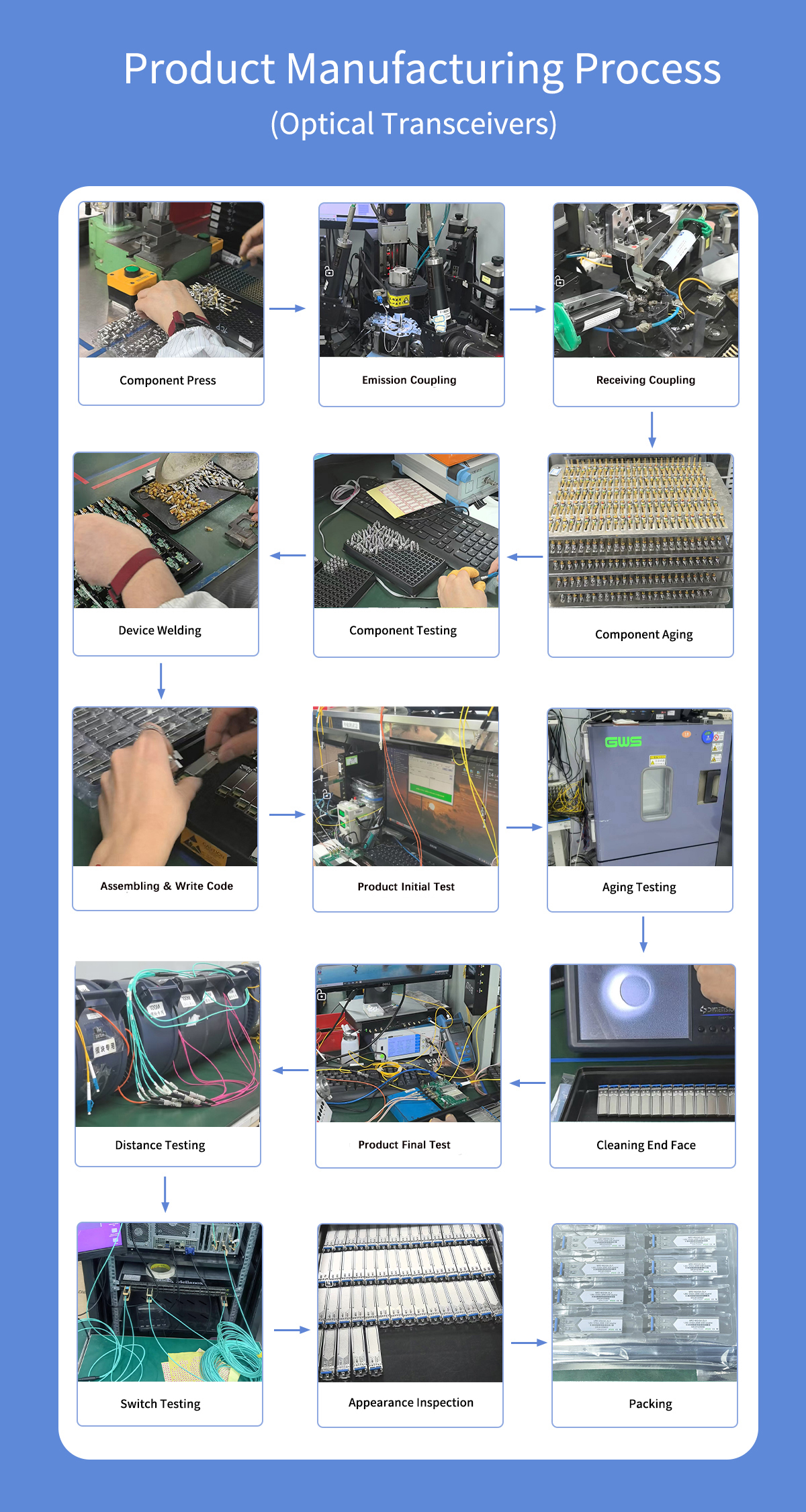
A: High temperature will slightly shift laser wavelength and reduce output power, potentially raising link attenuation errors. Our industrial-grade bidi sfp module (-40°C~+85°C) undergoes high-low temperature aging calibration, stabilizing laser performance and ensuring consistent Tx/Rx power in extreme hot or cold outdoor and industrial environments.
Q12: Why choose Simplex BiDi over standard Duplex fiber optics?
A: Simplex BiDi bidi sfp module cuts fiber resource usage by 50% compared with traditional duplex optics, requiring only one single-mode fiber strand for bidirectional transmission. It lowers cabling material and construction costs, simplifies network deployment, and is the most cost-effective solution for fiber-scarce long-range network renovation and expansion projects.