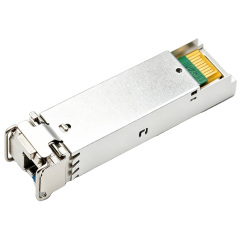
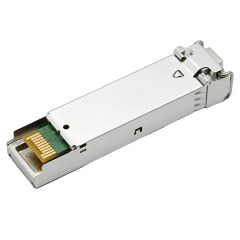
Q1: Are paired wavelength modules required for 100BASE-BX single fiber BiDi network operation?
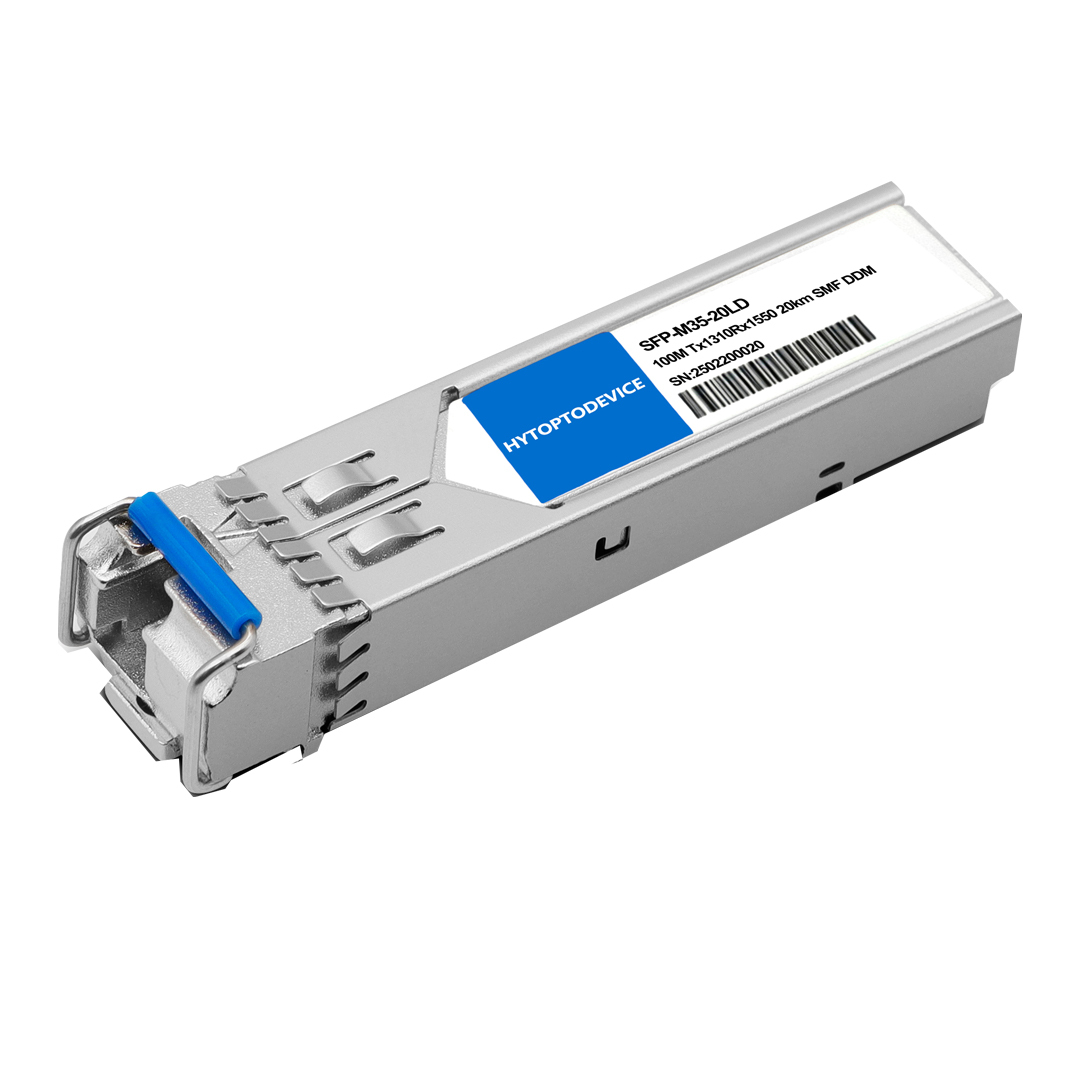
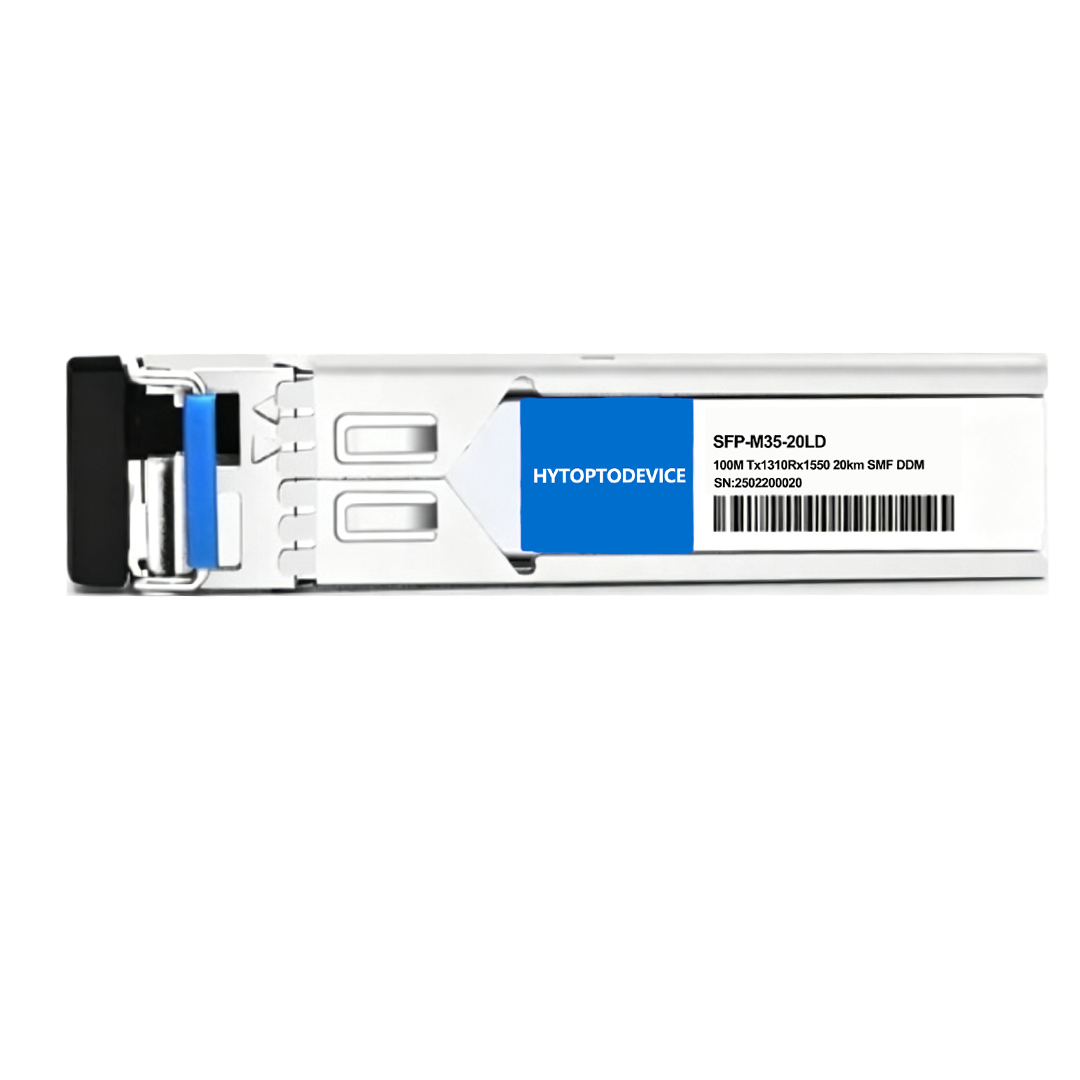
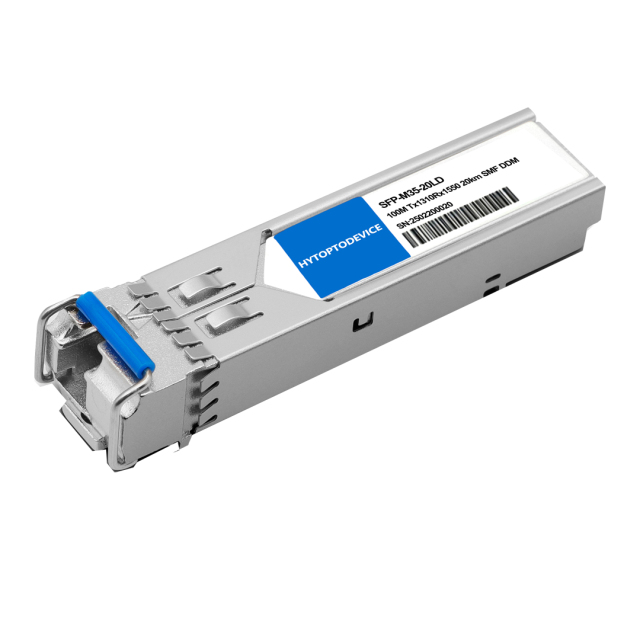
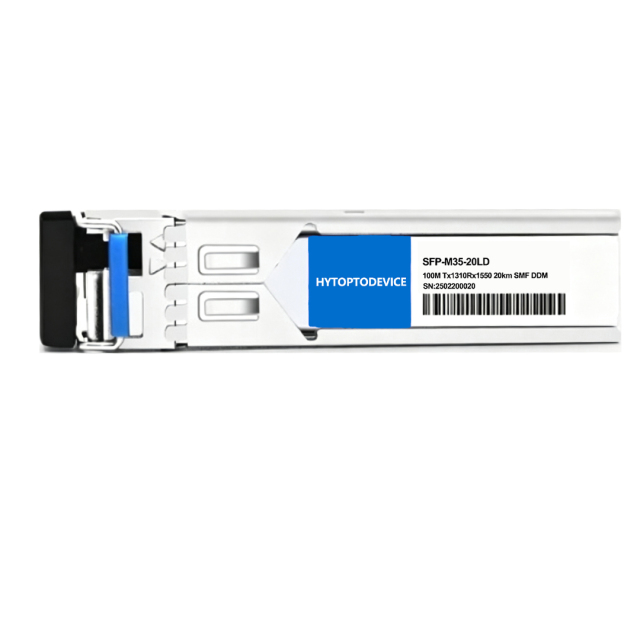
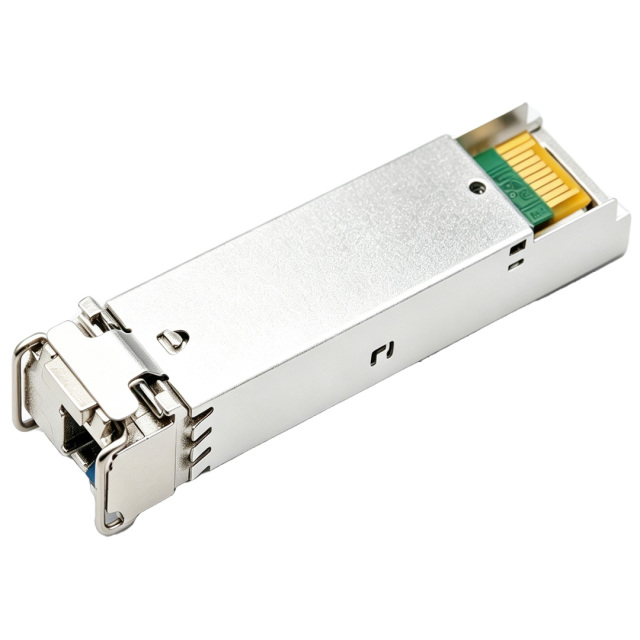
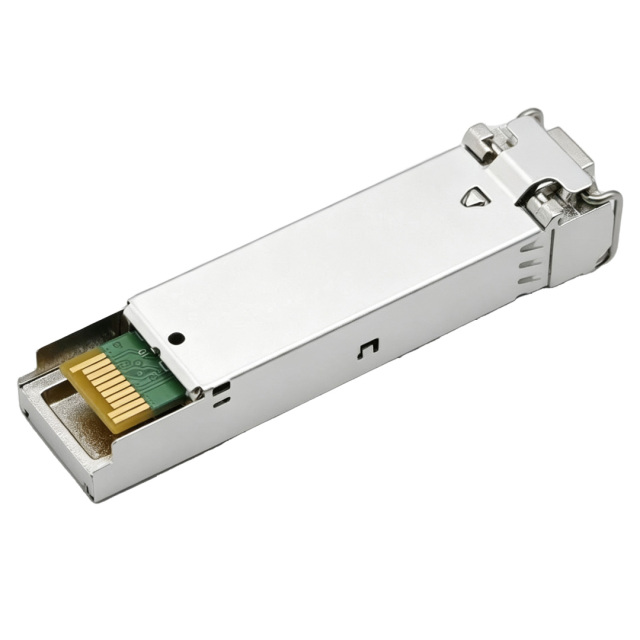
A: Yes, complementary wavelength pairing is mandatory for all single-fiber BiDi SFP transceiver links. Our Avaya-compatible 100BASE-BX-U (Tx1310/Rx1550) BiDi SFP transceiver needs a matched 100BASE-BX-D (Tx1550/Rx1310) transceiver at the peer end to establish complete bidirectional fiber communication, complying with standard WDM transmission principles.
Q2: What network issues arise when deploying identical Tx1310/Rx1550 BiDi modules on both link ends?
A: Deploying two identical BX-U BiDi SFP transceiver modules on both fiber ends will cause complete link failure. Both ends transmit 1310nm signals and receive 1550nm signals simultaneously, resulting in wavelength mismatch and zero signal reception. Reasonable complementary pairing is the premise of normal BiDi network operation.
Q3: Can this Avaya-specific BiDi SFP transceiver work on third-party brand network devices?
A: Compatibility depends on the internal EEPROM coding. Ensure you specify your switch brand so the correct vendor-specific firmware is programmed before deployment. Our customizable BiDi SFP transceiver supports targeted firmware flashing, realizing zero-alarm plug-and-play compatibility with Cisco, Juniper, Huawei, HP and other mainstream devices for mixed-brand networking.
Q4: Can 100BASE-BX BiDi modules be inserted into common 1G SFP or 10G SFP+ switch ports?
A: Most 10G SFP+ ports do not support 100Mbps speeds. Some 1G SFP ports support 100M if the switch ASIC allows forcing the port speed down to 100Mbps Full-Duplex. This 100BASE-BX-U BiDi SFP transceiver adapts to 100M/1G dual-rate SFP ports with correct configuration, while 10G SFP+ slots are incompatible due to hardware and protocol limitations.
Q5: Is multimode fiber suitable for 100BASE-BX BiDi transceiver transmission?
A: No. This 100BASE-BX-U BiDi SFP transceiver is exclusively designed for single-mode fiber transmission. Multimode fiber has large core dispersion and high signal loss, which will cause severe packet loss and unstable links, failing to support normal 10km BiDi data transmission.
Q6: Is it safe to deploy this 10km long-range BiDi module for short-distance fiber transmission scenarios?
A: Generally yes for 10km Fast Ethernet optics, as their output power is relatively low. However, you should check the receiver overload threshold in the datasheet to confirm. Our BiDi SFP transceiver features calibrated parameters (Tx: -14~-8dBm, Sensitivity: ≤-32dBm, Overload: -8dBm, Budget: 18dB), supporting safe adaptive deployment from 500m to 10km without receiver burnout or signal overload.
Q7: What are the attenuation differences between 1310nm and 1550nm wavelengths on standard single-mode fiber?
A: Yes. In standard single-mode fiber environments, the 1550nm receiving window of this BiDi SFP transceiver delivers inherently lower optical attenuation than the 1310nm transmitting wavelength. This low-loss wavelength characteristic ensures stable signal transmission for 10km short and medium-range fiber links.
Q8: Will wavelength attenuation differences trigger uplink and downlink asymmetry on BiDi fiber links?
A: Yes, the 1310nm direction will experience slightly higher path loss over 10km than the 1550nm direction, which must be factored into the link loss calculation. Our factory precision optical calibration compensates for wavelength attenuation gaps, effectively reducing link asymmetry and maintaining balanced bidirectional transmission performance.
Q9: Does this 10km 100BASE-BX-U BiDi SFP transceiver support intelligent DDM/DOM monitoring?
A: Yes. This Avaya compatible BiDi SFP transceiver fully complies with SFF-8472 standards and supports real-time D
working voltage and laser current, facilitating daily network operation and quick fault diagnosis.
Q10: What DDM Rx power range ensures stable operation of this 10km BiDi SFP transceiver?
A: A healthy Rx power level typically ranges between -8 dBm and -28 dBm for stable error-free transmission. Readings below -32 dBm indicate a risk of link drops due to weak signal, while readings higher than -8dBm exceed the receiver overload threshold and cause signal distortion.
Q11: Are industrial-grade wide-temperature BiDi SFP transceiver versions available for harsh working conditions?
A: Yes. HYTOPTODEVICE offers customized industrial-grade BiDi SFP transceiver with a -40°C~+85°C wide temperature range. Optimized for extreme temperature environments, the industrial version is suitable for outdoor cabinets, industrial workshops and other harsh networking scenarios.
Q12: What is the operating power consumption of a standard 100BASE-BX-U BiDi SFP transceiver?
A: Our 100BASE-BX-U BiDi SFP transceiver adopts energy-efficient chip design, with ultra-low operating power consumption below 1W. It effectively reduces long-term network operating energy costs, realizing energy-saving and stable continuous operation for fiber access links.
Packaging & Custom OEM Solutions
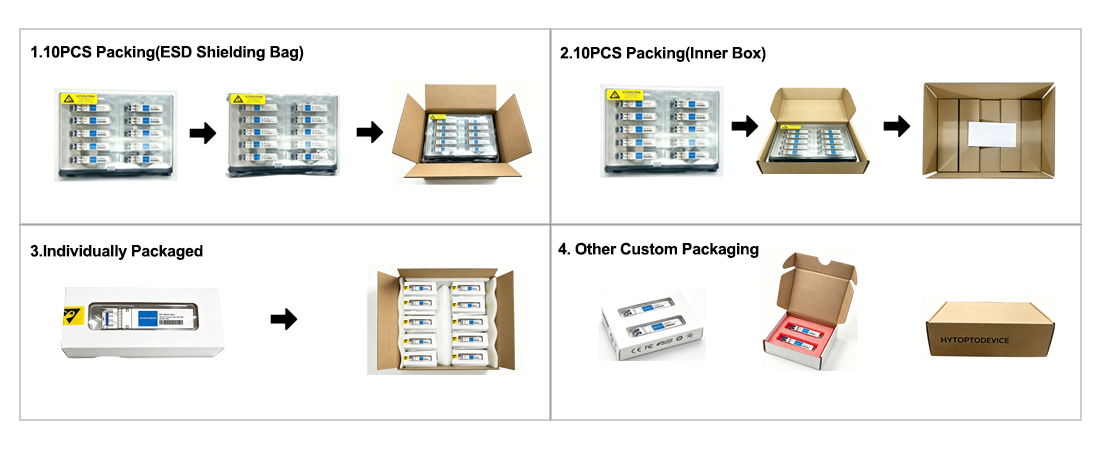
Each Bidi module is factory-sealed in ESD-shielding, anti-static packaging—individually protected, quality-checked, and ready to ship the moment you place your order. We understand that distributors, wholesalers, and system integrators need more than just a product. That's why our flexible OEM and ODM programs include custom branding, private-label packaging, and your own logo on every unit—so you can grow your brand with confidence, without compromising on quality or lead time.
Why Network Engineers Choose HYTOPTODEVICE
HYTOPTODEVICE has supplied over 5000,000 optical transceiver modules to data centers, ISPs, and enterprise networks across 100+ countries since 2011. Every module undergoes a 72-hour burn-in test and full DDM/DOM validation before shipment.