Q1: Do 100BASE-BX single fiber optical modules require matched wavelength pairs for operation?
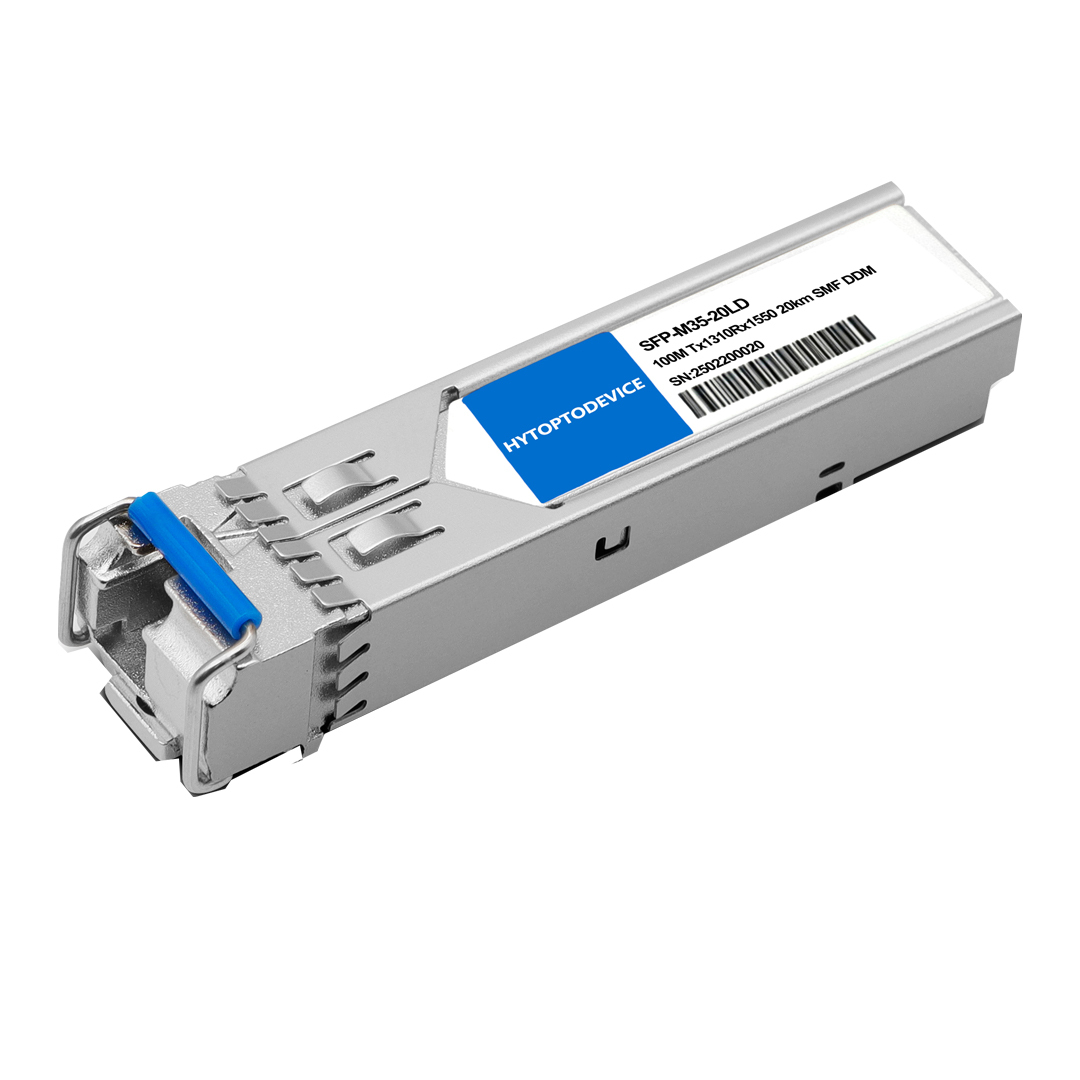
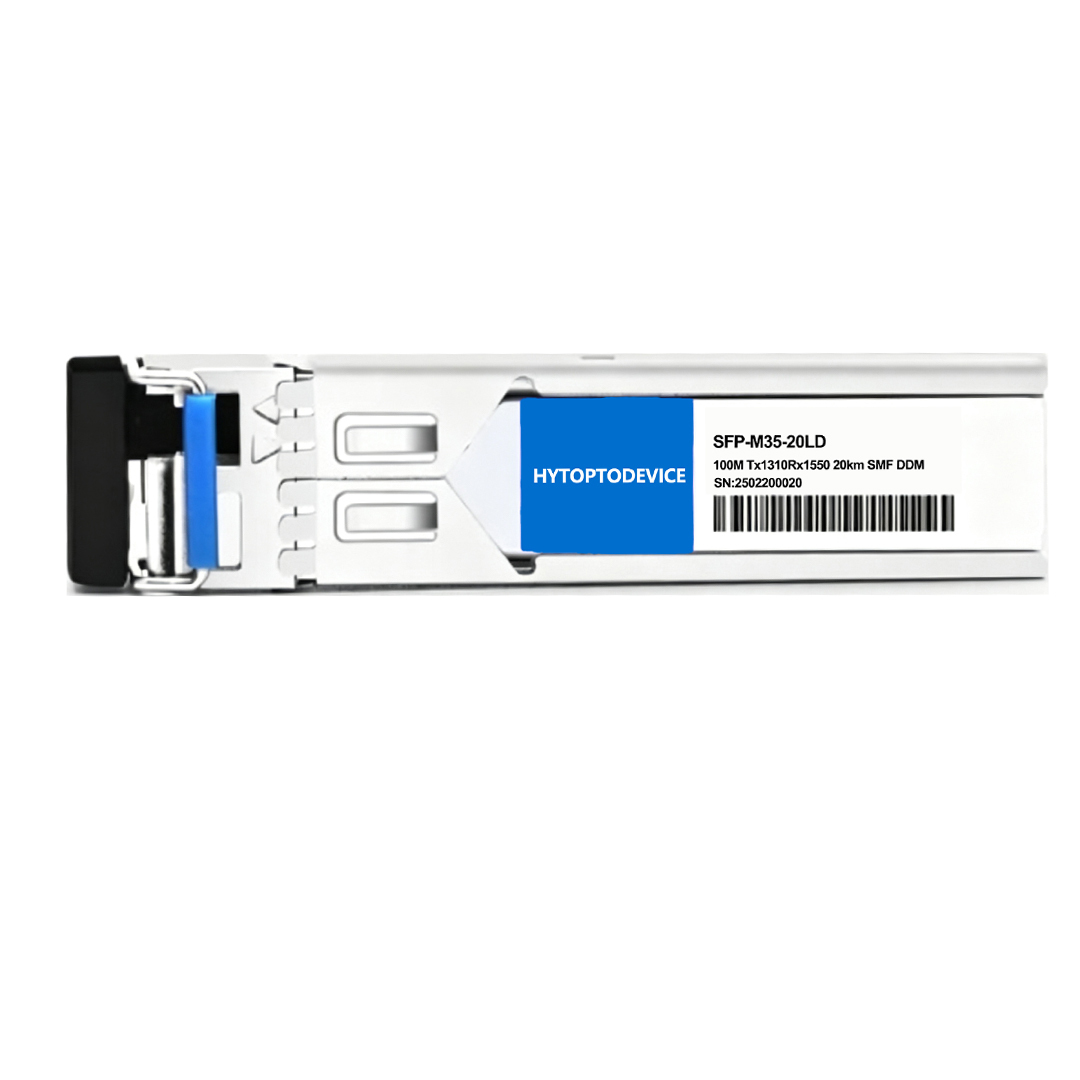
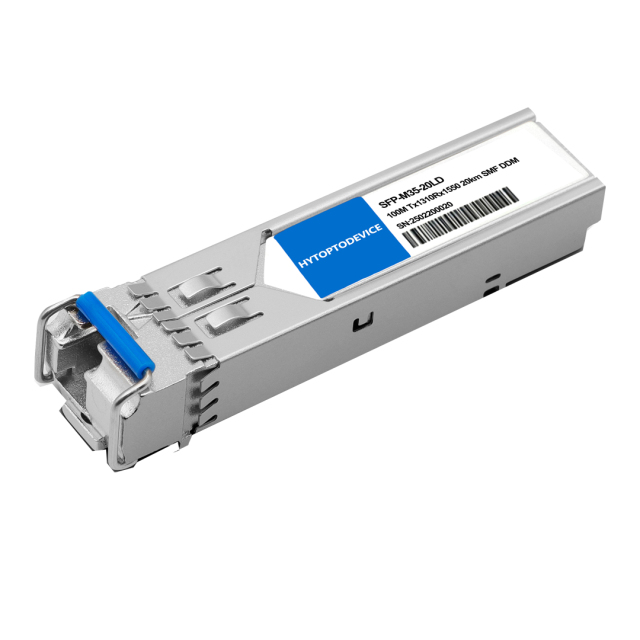
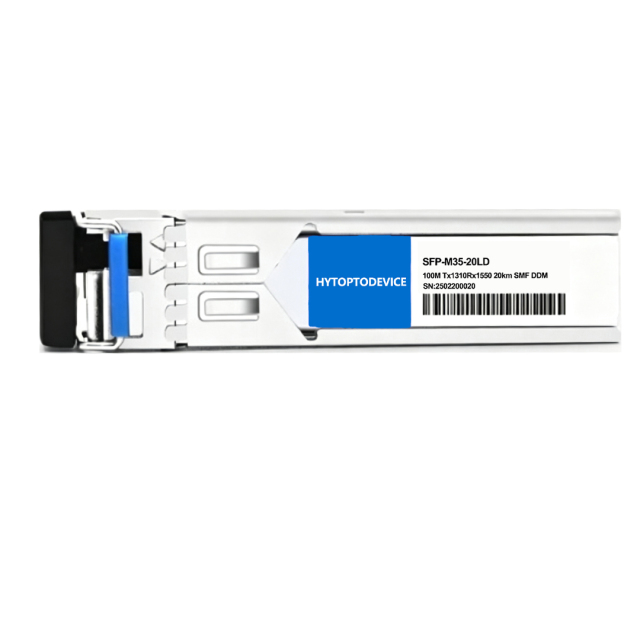
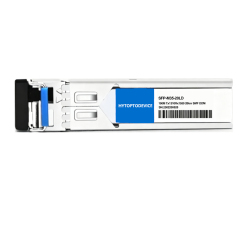
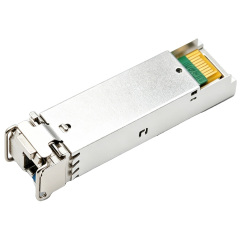
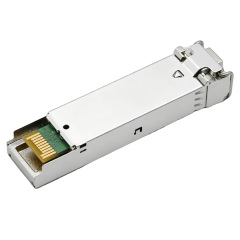
A: Yes, complementary wavelength pairing is mandatory for all single-fiber BiDi SFP transceiver links. Our Allied Telesis compatible 100BASE-BX-U (Tx1310/Rx1550) BiDi SFP transceiver requires a matching 100BASE-BX-D (Tx1550/Rx1310) transceiver at the opposite end to establish complete bidirectional fiber communication, complying with standard WDM single-fiber transmission principles.
Q2: What network failure occurs when deploying identical Tx1310/Rx1550 BiDi modules at both link ends?
A: Installing identical BX-U BiDi SFP transceiver modules on both ends leads to total link failure. Both sides transmit 1310nm signals and receive 1550nm signals simultaneously, causing severe wavelength mismatch and zero signal reception. Correct complementary pairing is essential for normal BiDi network operation.
Q3: Is this Allied Telesis compatible BiDi SFP transceiver interoperable with third-party brand network switches?
A: Compatibility depends on the internal EEPROM coding. Ensure you specify your switch brand so the correct vendor-specific firmware is programmed before deployment. Our customizable BiDi SFP transceiver supports pre-flashing brand-matched firmware, enabling zero-alarm plug-and-play compatibility with Cisco, Juniper, Huawei, HP and other mainstream switch platforms for multi-brand mixed networking.
Q4: Is it possible to install a 100BASE-BX SFP transceiver into standard 1G or 10G network switch ports?
A: Most 10G SFP+ ports do not support 100Mbps speeds. Some 1G SFP ports support 100M if the switch ASIC allows forcing the port speed down to 100Mbps Full-Duplex. This 100BASE-BX-U BiDi SFP transceiver can run on adaptive 100M/1G dual-rate SFP ports with correct speed configuration, while 10G SFP+ slots are incompatible due to protocol and hardware rate limitations.
Q5: Can 100BASE-BX BiDi transceiver modules operate over multimode fiber cabling systems?
A: No. This 100BASE-BX-U BiDi SFP transceiver is strictly designed for G.652/G.657 single-mode fiber. Multimode fiber features large core dispersion and high signal attenuation, which triggers serious packet loss and link breakdown, unable to support stable long-distance BiDi transmission.
Q6: Can this 15km long-range BiDi SFP module be safely used for short-distance fiber transmission scenarios?
A: Generally yes for 15km Fast Ethernet optics, as their output power is relatively low. However, you should check the receiver overload threshold in the datasheet to confirm. Our BiDi SFP transceiver features calibrated parameters (Tx: -14~-8dBm, Sensitivity: ≤-32dBm, Overload: -8dBm, Budget: 18dB), supporting safe adaptive deployment from 500m to 15km without receiver burnout or signal overload.
Q7: How do signal attenuation levels differ between 1310nm and 1550nm wavelengths on single-mode fiber?
A: Yes. In standard single-mode fiber environments, the 1550nm receiving window of this BiDi SFP transceiver delivers inherently lower optical attenuation than the 1310nm transmitting wavelength. This low-loss wavelength design optimizes long-distance signal stability for 15km end-to-end links.
Q8: Do wavelength attenuation gaps cause uplink and downlink link asymmetry on BiDi fiber connections?
A: Yes, the 1310nm direction will experience slightly higher path loss over 15km than the 1550nm direction, which must be factored into the link loss calculation. Our factory precision calibration compensates for wavelength attenuation gaps, minimizing link asymmetry and maintaining balanced uplink and downlink transmission performance.
Q9: Does this 100BASE-BX-U BiDi SFP transceiver support real-time DDM/DOM optical monitoring functions?
A: Yes. This Allied Telesis compatible BiDi SFP transceiver fully supports SFF-8472 compliant DDM/DOM real-time monitoring. It tracks transmit/receive optical power, operating temperature, working voltage and laser current, enabling real-time network status observation and fast fault location.
Q10: What is the ideal DDM Rx power range for stable operation of this 15km BiDi SFP transceiver?
A: A healthy Rx power level typically ranges between -8 dBm and -28 dBm for stable error-free transmission. Readings below -32 dBm indicate a risk of link drops due to weak signal, while readings higher than -8dBm exceed the receiver overload threshold and cause signal distortion.
Q11: Are industrial wide-temperature grade versions of this BiDi SFP transceiver available for harsh environments?
A: Yes. HYTOPTODEVICE provides customized industrial-grade BiDi SFP transceiver with -40°C~+85°C wide temperature range, based on the standard commercial 15km module. The industrial version adapts to outdoor cabinets, industrial workshops and harsh extreme-temperature networking environments.
Q12: How much power does a standard 100BASE-BX-U BiDi SFP transceiver consume during operation?
A: Our 100BASE-BX-U BiDi SFP transceiver features ultra-low power consumption below 1W. The energy-efficient chip design reduces long-term network operating power consumption, delivering eco-friendly, low-cost and stable continuous operation for fiber access links.