| NO. | Brand | Compatible P/N | Transceiver Type |
| 1 | Cisco | GLC-T | SFP-GE-T |
| 2 | Alcatel-Lucent | SFP-GIG-T | SFP-GE-T-I |
| 3 | Brocade | E1MG-TX | 10/100/1000BASE-T |
| 4 | Cisco Meraki | MA-SFP-1GB-TX | SFP-10G-T-30 |
| 5 | Huawei | SFP-1000BaseT | SFP-10G-T-30I |
| 6 | IBM | 00FE333 | SFP-10G-T-80 |
| 7 | Juniper Networks | JX-SFP-1GE-T | SFP-10G-T-100 |
| 8 | HPE | JD089A | |
| 9 | HPE Procurve | J8177B | |
| 10 | Palo Alto Networks | PAN-SFP-CG | |
| 11 | Ruijie | MINI-GBIC-GT |
Product Overview
HYTOPTODEVICE IBM 00FE333 compatible RJ-45 copper SFP transceiver module delivers reliable 1000BASE-T pure gigabit Ethernet transmission over twisted-pair copper cabling. This hot-swappable SFP copper module with RJ45 connector supports transmission distances up to 100 meters for IBM RackSwitch data center and enterprise switch deployments. Built per IEEE 802.3ab and SFP MSA standards, pre-flashed 00FE333 EEPROM enables automatic detection on IBM switch firmware without unsupported transceiver warning alerts. This RJ-45 copper SFP transceiver module is pure gigabit, only works at 1000Mbps, no 10/100Mbps fallback. HYTOPTODEVICE manufactures this RJ-45 copper SFP transceiver module for network wholesalers, system integrators and bulk purchasers.
Key Technical Specifications
| IBM Compatible | 00FE333 | Vendor Name | HYTOPTODEVICE |
| Form Factor | SFP | Data Rate | 1000Mbps |
| Connector | RJ-45 | Cable Distance | 100m |
| Media | Copper | Cable Type | Cat 5e/6/6a (UTP) |
| Max. Power Consumption | ≤1.2W | DDM Support | YES |
| Protocols | MSA Compliant, IEEE STD 802.3 and 802.3ab | Operation Temperature | 0 to 70°C (32 to 158°F) |
Standard: Cat5e or Cat6 twisted-pair cable is required to achieve full 100-meter Gigabit performance.
Note: Standard Cat5 cable may limit link stability at full 1G speed and is not recommended.
Live Insertion: The SFP RJ45 transceiver supports live insertion and removal.
Precaution: Avoid repeated hot swapping under continuous heavy traffic loads to ensure optimal hardware longevity.
Heat Dissipation: This 1Gbps copper module generates mild heat during operation.
Deployment Advice: Verify the switch thermal budget and ensure adequate ventilation before fully populating all SFP ports.
Fixed Rate: This RJ45 transceiver operates at a fixed 1000Mbps speed only.
Compatibility Warning: It cannot auto-negotiate down to 100Mbps or 10Mbps. The connected peer device must support 1G speed to successfully establish a link.
Storage Environment: Keep unused transceivers stored in dry, ESD-safe packaging.
Dust Protection: Always fit dust caps onto the RJ45 port when the module is not in service.
Built on SFP MSA and IEEE industry standards, this RJ45 SFP Transceiver module also works with Fortinet, Dell, Extreme and other mainstream network hardware, suitable for mixed-brand enterprise and campus network renovation projects.
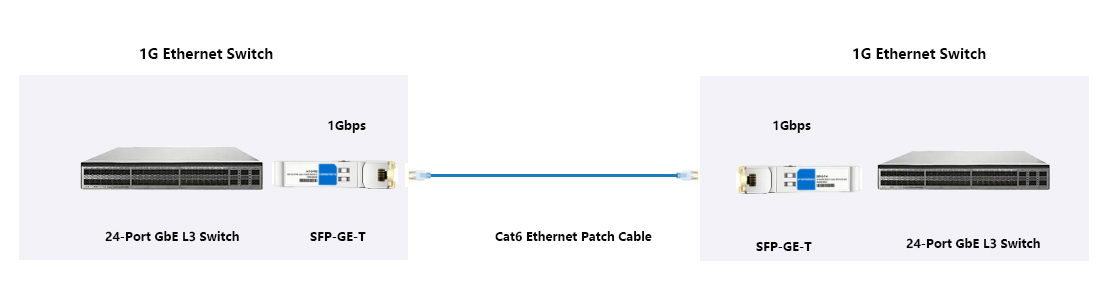
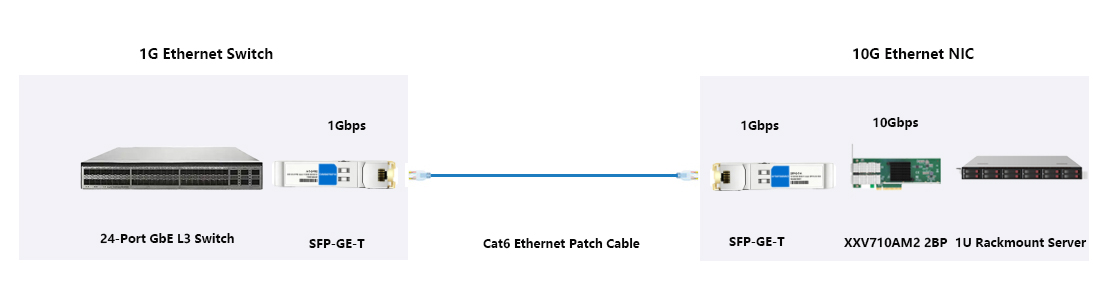
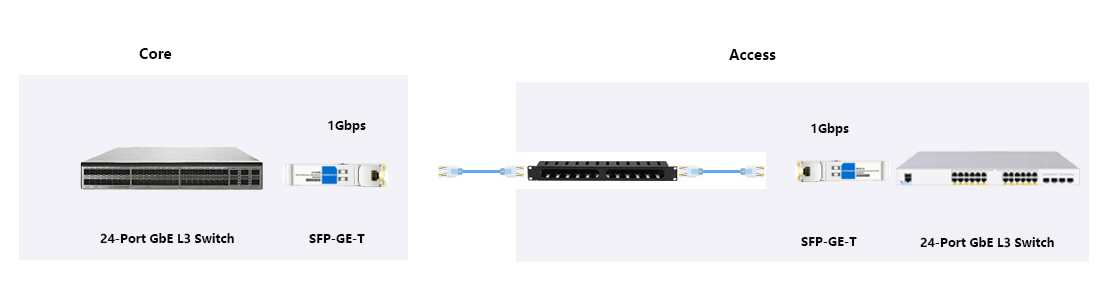
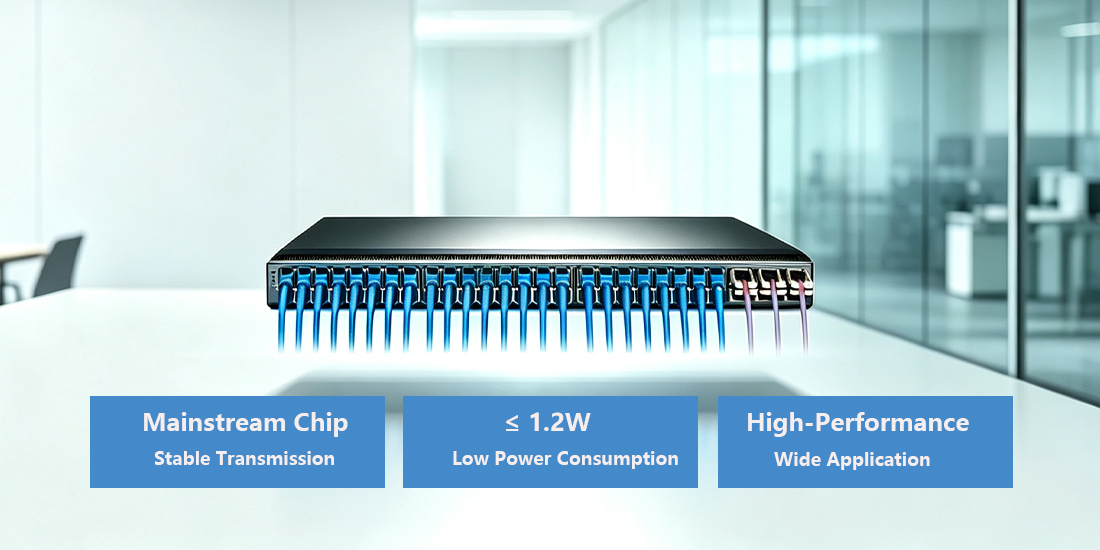
The Core Features

FAQ
Q1: How does 1000BASE-T perform under saturated traffic from multiple concurrent users?
A: 1000BASE-T leverages CSMA/CD and Ethernet flow control to mitigate congestion under multi-user loads. HYTOPTODEVICE IBM 00FE333 compatible RJ-45 copper SFP transceiver module cooperates with switch QoS queues to prioritize mission-critical data. When per-port traffic exceeds the 1Gbps limit, packets enter buffer storage and latency rises slightly. Proper QoS tuning on IBM RackSwitch minimizes packet drops inside busy enterprise LAN environments.
Q2: Do I have to install STP shielded cables, or can standard UTP cabling work for 1000BASE-T links?
A: Standard Cat5e/Cat6 UTP works well for most indoor enterprise deployments. This HYTOPTODEVICE RJ-45 copper SFP transceiver module meets IEEE 1000BASE-T requirements over regular unshielded twisted pair. STP cabling is only necessary near strong EMI sources like power distribution panels to suppress electromagnetic interference and prevent random link bouncing.
Q3: Will fluctuating temperature and humidity inside ceiling plenum spaces degrade 1000BASE-T cable performance?
A: Extreme temperature swings and high humidity gradually degrade cable characteristics, while typical indoor ceiling conditions create minimal impact. HYTOPTODEVICE 1000BASE-T copper SFP transceiver maintains stable links within its 0~70°C operating range. Excess moisture inside cable conduits can damage insulation and trigger intermittent link faults, so adequate ventilation for cable pathways is recommended.
Q4: What benefits make 1000BASE-T preferable over newer multi-gigabit standards such as 2.5G and 10G copper?
A: 1000BASE-T delivers an optimal balance of cost and compatibility with existing Cat5e cabling infrastructure. Our HYTOPTODEVICE IBM 00FE333 compatible RJ-45 copper SFP transceiver module operates on widely deployed Cat5e wiring without recabling. 2.5G/10G copper demands higher-grade cables and pricier hardware; 1G is ideal for legacy data centers, surveillance and office LANs where 1G bandwidth fully satisfies business requirements.
Q5: Are 1000BASE-T network switches heavy consumers of electrical power?
A: No, 1000BASE-T copper ports feature relatively low power draw. Each HYTOPTODEVICE RJ-45 copper SFP transceiver module consumes roughly 1.2W only. Compared with multi-gigabit copper ports, 1000BASE-T hardware reduces total rack power consumption and helps enterprise clients cut recurring electricity costs within data centers.
Q6: Is the extra cost of enterprise-class 1000BASE-T switches justified compared with low-cost unmanaged consumer switches?
A: Yes, enterprise switches deliver stable long-run operation for business-critical networks. When paired with HYTOPTODEVICE IBM 00FE333 compatible RJ-45 copper SFP transceiver module, enterprise IBM RackSwitch supports VLAN, QoS and link diagnostics. Consumer switches lack enterprise management capabilities and fail much faster under 24/7 heavy loads, introducing expensive downtime risks for businesses.
Q7: What is the typical failure frequency for 1000BASE-T NICs and switch Ethernet ports?
A: Using high-quality components, failure rates remain low under normal indoor operating conditions. HYTOPTODEVICE copper SFP transceiver modules undergo complete burn-in testing before shipment to reduce early failure risks. Most port failures come from static discharge, cable damage or overheating rather than inherent flaws of the 1000BASE-T standard. ESD protection and temperature control can greatly extend service lifespan.
Q8: Can USB-based 1000BASE-T Ethernet adapters match the performance of native PCIe server network cards?
A: No, PCIe NICs provide more consistent and superior performance. HYTOPTODEVICE RJ-45 copper SFP transceiver module connects directly with switch SFP ports via PCIe server NIC for low-latency stable links. USB gigabit adapters share the USB bus bandwidth, leading to higher latency and occasional packet loss during large file transfer tasks.
Q9: Can 1000BASE-T switch ports deliver PoE power to IP cameras and VoIP phones on the same copper cable?
A: The 1000BASE-T data standard supports PoE transport, yet PoE power delivery is determined by switch hardware instead of HYTOPTODEVICE RJ-45 copper SFP transceiver module. This copper SFP module only handles 1G data transmission. If your IBM RackSwitch port supports PoE, it can supply power to IP cameras and VoIP phones over the same Cat5e/Cat6 copper wiring.
Q10: How simple is it to scale a 1000BASE-T LAN when your business network expands?
A: Yes, scaling a 1000BASE-T network is flexible and straightforward. HYTOPTODEVICE IBM 00FE333 compatible RJ-45 copper SFP transceiver module fills empty SFP slots on existing IBM RackSwitch hardware to add extra gigabit RJ45 ports. This mature standard supports switch daisy-chaining or new access switch deployment, letting businesses add LAN ports incrementally without replacing existing cabling infrastructure.
Q11: Can 1000BASE-T copper links integrate smoothly with pre-existing fiber backbone networks?
A: Yes, seamless integration is achievable. HYTOPTODEVICE 1000BASE-T copper SFP transceiver modules serve as access layer RJ45 ports, while fiber SFP transceivers connect to the core fiber backbone on the same IBM RackSwitch. This setup allows copper edge devices such as PCs and cameras to communicate across long-distance single-mode or multi-mode fiber backbones without complicated network redesign work.
Q12: Can 1000BASE-T networks implement 802.1X port authentication for network access control?
A: 1000BASE-T supports 802.1X authentication; this security function runs on the host switch firmware. When inserted inside IBM RackSwitch, HYTOPTODEVICE RJ-45 copper SFP transceiver module transports 802.1X authentication traffic normally. You can enforce port-level security policies and block unauthorized devices from accessing the 1G copper LAN.
Q13: What happens to network traffic if one power supply unit fails on a 1000BASE-T switch?
A: Without redundant power supplies, the whole switch will go offline, dropping all links including connections using HYTOPTODEVICE RJ-45 copper SFP transceiver module. Enterprise IBM RackSwitch equipped with dual power supplies avoid downtime caused by a single PSU fault. For critical business segments, deploy redundant power supplies and redundant uplinks to contain failure impact on the 1000BASE-T LAN.
Q14: How can port mirroring on 1000BASE-T switches assist IT teams with network traffic monitoring?
A: Port mirroring copies data traffic from selected source ports to a dedicated monitoring port on the switch. The HYTOPTODEVICE RJ-45 copper SFP transceiver module supports transmission of mirrored 1000BASE-T traffic. IT engineers can attach network analyzers to the mirror port, inspect packets, identify bottlenecks or detect threats without interrupting normal data transmission on production ports.
Q15: Will mixing different brands of 1000BASE-T switches and NICs create interoperability problems?
A: Interoperability remains reliable when all hardware follows IEEE 802.3ab specifications. HYTOPTODEVICE IBM 00FE333 compatible RJ-45 copper SFP transceiver module complies with MSA and IEEE standards to operate across multi-brand network hardware. Rare firmware-related transceiver detection alerts may pop up; HYTOPTODEVICE can customize EEPROM coding to eliminate these warning messages for mixed-brand deployments.
Packaging & Custom OEM Solutions
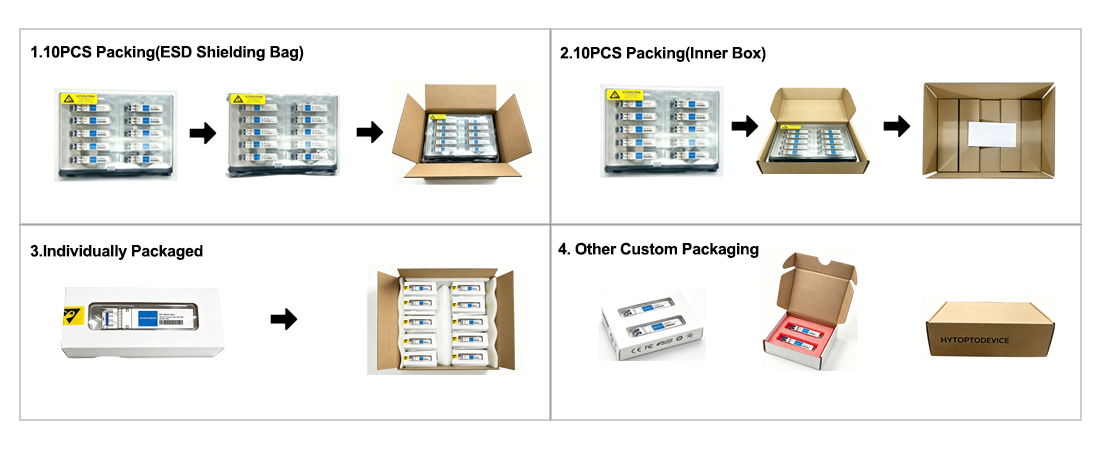
ESD Protection & Fast Shipping: Every module is sealed in an ESD-safe bag and ready for same-day dispatch from stock.
Custom OEM & Branding: We provide logo printing, private labeling, and custom packaging to help distributors and integrators build their brand—no factory investment required.
Why Network Engineers Choose HYTOPTODEVICE
HYTOPTODEVICE has supplied over 5000,000 optical transceiver modules to data centers, ISPs, and enterprise networks across 100+ countries since 2011. Every module undergoes a 72-hour burn-in test and full DDM/DOM validation before shipment.
“Phenomenal performance. We deployed 200 HYTOPTODEVICE SFP modules to replace Cisco OEMs in our backbone network. Result? Zero compatibility issues and a 60% reduction in costs. Highly recommended for mission-critical networks."— Senior Network Engineer, Regional Telecom, Australia
Quality Certification & Compliance
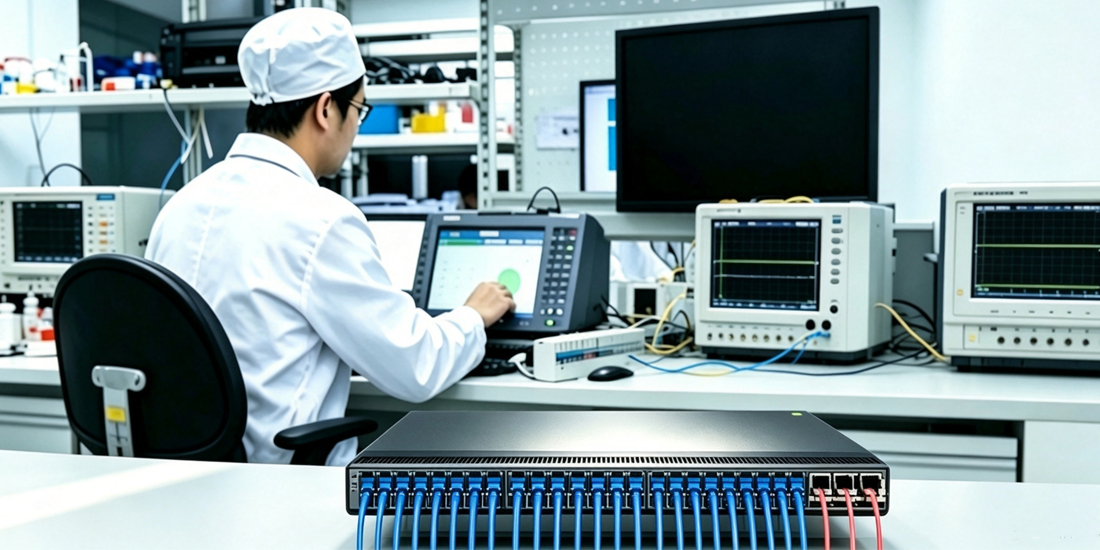
At HYTOPTODEVICE, our quality commitment is backed by industry-standard validations. From fiber optical transceiver manufacturing to final visual inspection, from IQC、IPQC、FQC to OQC, our processes ensure global compliance and reliability.
We adhere to rigorous standards for our SFP modules and network solutions:
ISO 9001: Certified quality management and production consistency.
CE & FCC: Fully compliant for seamless Global Market Access.
RoHS: Committed to environmental responsibility and hazardous material control.
Proven Reliability: Rigorous testing to reduce compliance risk and ensure safety.
Certified Quality. Global Standards. Guaranteed Performance.