| NO. | Brand | Compatible P/N | Transceiver Type |
| 1 | Cisco | GLC-BX120-D | SFP-G45-1BLD |
| 2 | Juniper | SFP-GE120KT15R14 | SFP-G43-10LD |
| 3 | Brocade | E1MG-1G-BXD-120 | SFP-G43-20LD |
| 4 | Dell | SFP-GE-BX120D-1550 | SFP-G53-10LD |
| 5 | Extreme | MGBIC-BX120-D | SFP-G53-20LD |
| 6 | H3C | SFP-GE-120-SM1550-A | SFP-G43-40LD |
| 7 | HPE H3C | SFP-1G-BXD-120 | SFP-G53-40LD |
| 8 | Netgear | SFP-GE-BX120-D | SFP-G54-80LD |
| H3C Compatible | SFP-GE-120-SM1550-A | Vendor Name | HYTOPTODEVICE |
| Form Factor | SFP | Max Data Rate | 1.25Gbps |
| Wavelength | TX1550nm/RX1490nm | Max Distance | 120km |
| Connector | Simplex LC | Transmitter Type | 1550nm DFB |
| Cable Type | SMF | Receiver Type | APD |
| TX Power | 1~5dBm | Receiver Sensitivity | < -32.0dBm |
| Protocols | SFF-8472 MSA Compliant, IEEE 802.3ah-2004 | Operation Temperature | 0 to 70°C (32 to 158°F) |
Complementary Pairing: BiDi transceivers must be deployed in matched pairs (e.g., TX1490/RX1550 with TX1550/RX1490). Mismatched wavelengths cannot establish a link.
Fiber Choice: Use Single-Mode Fiber (SMF) only. Do NOT use MMF.
Connector Match: Simplex LC (UPC/PC polish only). Do NOT use Duplex LC or APC.
Laser Safety: Class 1 Laser. Never look directly into optical ports or fiber end-faces.
ESD Safety: Wear an anti-static wrist strap before handling the transceiver.
Cleanliness & Dust: Keep dust caps installed on all unused ports. Clean fiber connectors with an optical cleaning pen before insertion; dust causes over 80% of link failures.
Optical Attenuator Required: For short-distance testing or links (<30 km), connect a 10dB–15dB attenuator to the RX port to prevent receiver damage.
Installation & Hot-Swap: MSA compliant. Insert and remove gently without powering down the device.
High Loss / Packet Drops: Ensure fiber bend radius exceeds 30 mm, inspect optical power levels, and clean connectors.
No Link: Verify complementary BIDI wavelength pairing requirement; clean Simplex LC end-faces; check port speed configuration.
1. Supported Hardware & Firmware


Q1: Can I install this simplex BIDI transceiver into H3C 10G SFP+ uplink ports?
A: Yes, this HYTOPTODEVICE BIDI transceiver works on most SFP+ ports, but manually set port speed to 1Gbps. SFP+ ports support SFP backward compatibility, auto negotiation cannot downshift automatically from 10G to 1G.
Q2: If I deploy this 120km BiDi optic, can it run at 100Mbps for legacy low-speed network hardware?
A: This HYTOPTODEVICE BIDI transceiver supports speed auto-adaptation, yet it is not recommended. Certain H3C switch models may encounter compatibility mismatches and trigger unexpected link anomalies when running at lower speeds.
Q3: What can I do if my H3C Comware OS fails to detect the purchased BIDI transceiver?
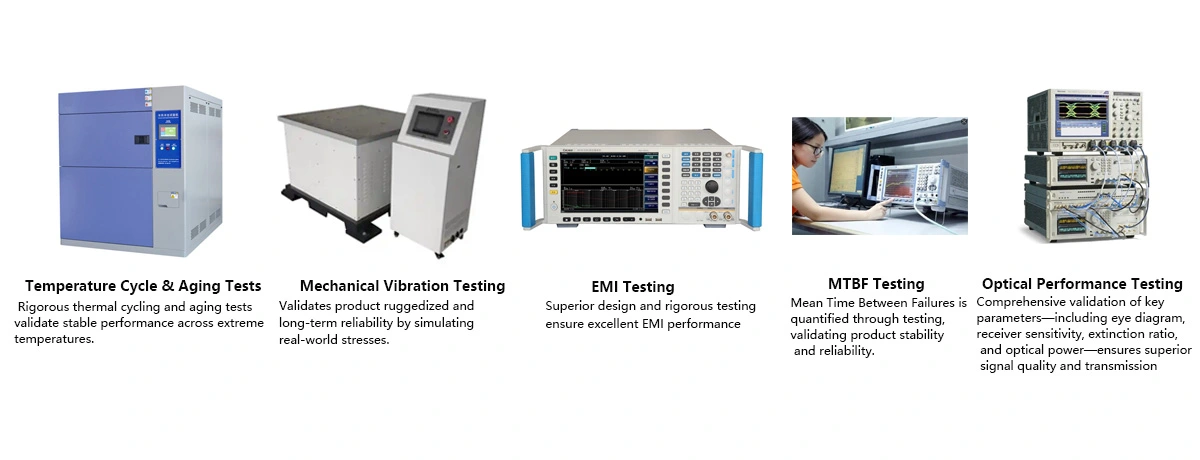
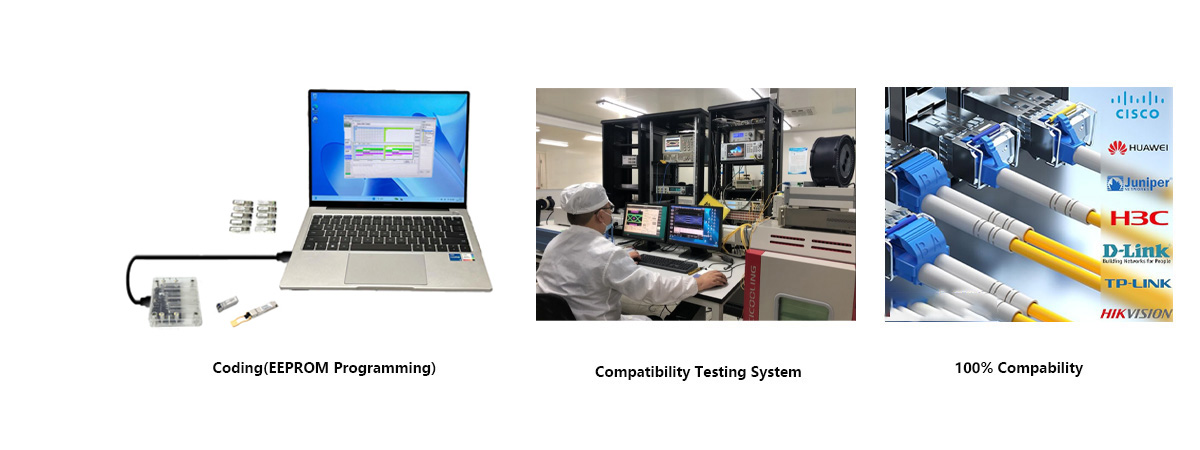
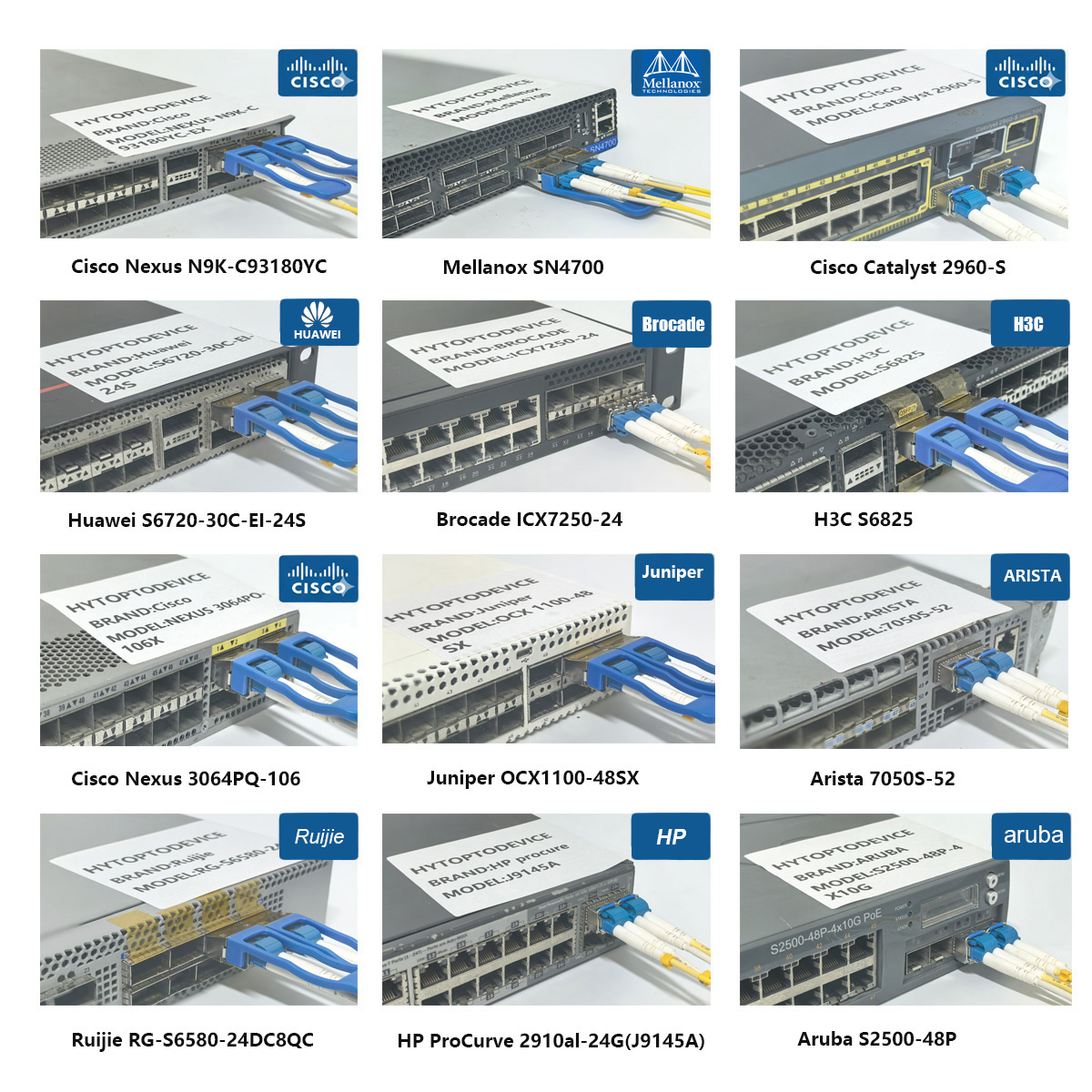
A: Firmware updates are normally unnecessary for this HYTOPTODEVICE BIDI transceiver. Our pre-calibrated EEPROM matches H3C hardware; only very old firmware may trigger module unrecognized warnings.
Q4: Do I need to buy matched wavelength pairs when sourcing BIDI transceiver for single fiber point to point links?
A: Yes, BiDi communication requires paired transceivers with complementary wavelengths. This Tx1550/Rx1490 transceiver must pair with Tx1490/Rx1550 module on the opposite fiber end to build a working single-fiber connection.
Q5: Is it a typical field mistake to connect a BIDI transceiver with conventional dual-fiber SFP optics via fiber splitter?
A: No, this setup cannot establish a stable network link. BiDi uses wavelength multiplexing over one fiber core while duplex SFP transmits and receives over separate fibers; wavelength mismatch blocks normal data transfer.
Q6: What receiver component is integrated in this 120km long reach BIDI transceiver for metro networking projects?
A: This HYTOPTODEVICE 120km BIDI transceiver adopts APD receiver. APD delivers much higher receiving sensitivity than PIN diodes, which is essential to achieve 120km long-reach single-mode fiber transmission.
Q7: Do I need optical attenuators to protect hardware when deploying purchased BIDI transceiver over short fiber distances?
A: Attenuators are required for fiber links shorter than 30km. High launch power of 120km optics will overload APD receiver over short distances; use 10~15dB attenuator to protect the optical receiver.
Q8: Will splice loss and aged G.652 fiber reduce maximum reach after installing this BIDI transceiver?
A: Yes, aged G.652 fiber with high loss or splice loss will shorten maximum working distance. Extra attenuation from old fiber reduces optical power budget and may break the 120km link margin.
Q9: What signal integrity risks should buyers assess for 120km single fiber links when sourcing BIDI transceiver?
A: Chromatic dispersion has limited impact at 1.25G speed over 120km. Low gigabit rate is less sensitive to dispersion, but excessive dispersion will widen optical pulses and cause bit errors at the maximum 120km distance.
Q10: Why do H3C switches show inaccurate DDM optical power readings after fitting this BIDI transceiver?
A: BiDi wavelength filtering causes occasional DDM reading deviation. The reported RX power may be slightly inaccurate on some switch platforms, even if the actual fiber link remains stable.
Q11: Does high density installation of 120km BIDI transceiver cause overheating inside H3C racks?
A: Yes, long-reach 120km BiDi transceivers generate slightly more heat. However, HYTOPTODEVICE BIDI transceiver features optimized power consumption design, and thermal output is barely noticeable under normal operation, compared to low-power 10km short-range SFP transceivers.
Q12: What long term reliability risks does high cabinet temperature bring to installed BIDI transceiver?
A: Yes, continuous high operating temperature accelerates laser aging. HYTOPTODEVICE BIDI transceiver passes temperature burn-in test, but prolonged over-temperature operation will reduce the service life of DFB laser and APD receiver.
Q13: What power planning should buyers complete before ordering multiple BIDI transceiver to fully populate H3C SFP slots?
A: Most modern H3C switch power supplies support full populated ports. Each HYTOPTODEVICE BIDI transceiver consumes ≤1W, you still need to calculate total power budget when fully filling all SFP slots.
Q14: Does HYTOPTODEVICE perform individual optical testing for every BIDI transceiver before bulk shipment to prevent quality issues?
A: Yes, every HYTOPTODEVICE BIDI transceiver undergoes independent optical testing before shipment. We test optical power, sensitivity and link performance to guarantee 120km reach performance for bulk orders.
Q15: Are these wholesale BIDI transceiver RoHS and MSA certified for cross-border network project procurement?
A: Yes, all HYTOPTODEVICE BIDI transceiver follow SFP MSA specifications and RoHS compliance. Standardized design ensures mechanical and electrical interoperability with most brand network hardware.
Why Network Engineers Choose HYTOPTODEVICE
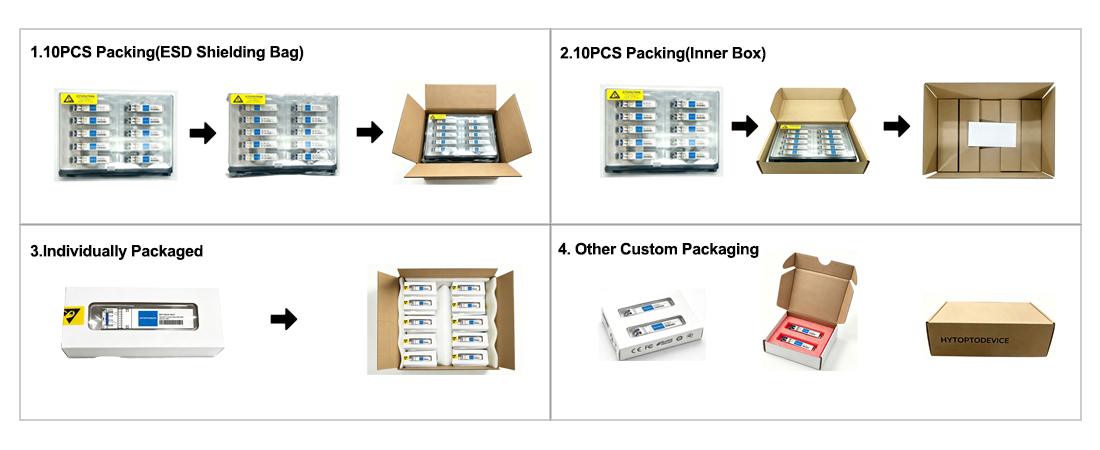
HYTOPTODEVICE has supplied over 5000,000 optical transceiver modules to data centers, ISPs, and enterprise networks across 100+ countries since 2011. Every module undergoes a 72-hour burn-in test and full DDM/DOM validation before shipment.
“Phenomenal performance. We deployed 200 HYTOPTODEVICE SFP modules to replace Cisco OEMs in our backbone network. Result? Zero compatibility issues and a 60% reduction in costs. Highly recommended for mission-critical networks."— Senior Network Engineer, Regional Telecom, Australia
Quality Certification & Compliance
At HYTOPTODEVICE, our quality commitment is backed by industry-standard validations. From fiber optical transceiver manufacturing to final visual inspection, from IQC、IPQC、FQC to OQC, our processes ensure global compliance and reliability.
We adhere to rigorous standards for our SFP modules and network solutions:
ISO 9001: Certified quality management and production consistency.
CE & FCC: Fully compliant for seamless Global Market Access.
RoHS: Committed to environmental responsibility and hazardous material control.
Proven Reliability: Rigorous testing to reduce compliance risk and ensure safety.
Certified Quality. Global Standards. Guaranteed Performance.