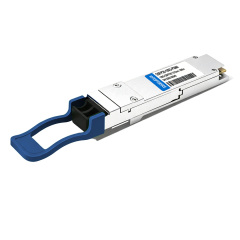
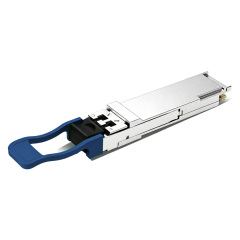
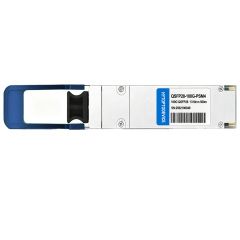
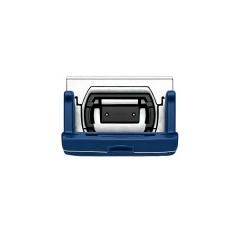
Juniper JNP-QSFP-100G-PSM4 Compatible 100G QSFP28 Transceiver | PSM4 1310nm 500m Module MPO-12/APC SMF | HYTOPTODEVICE
Product Overview
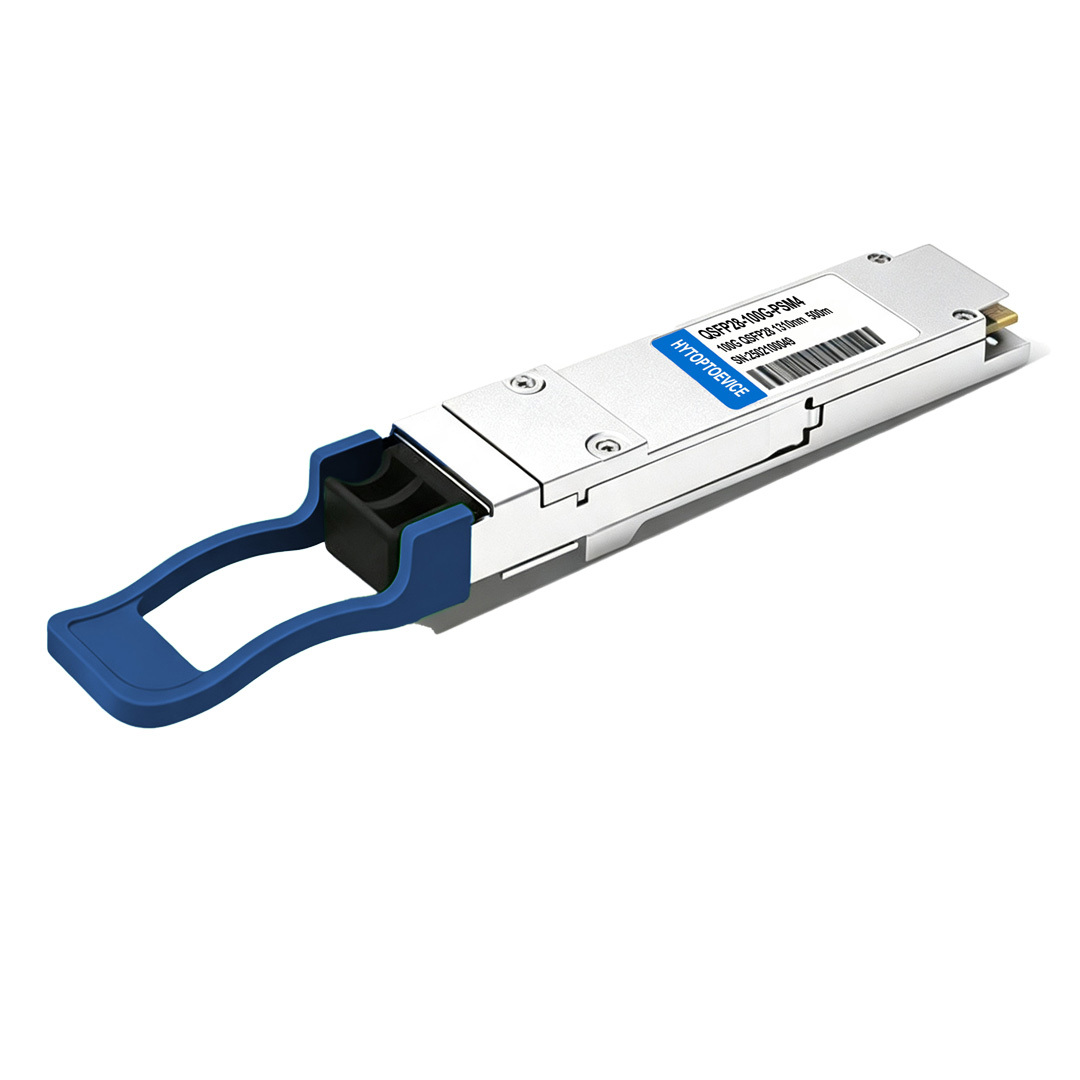
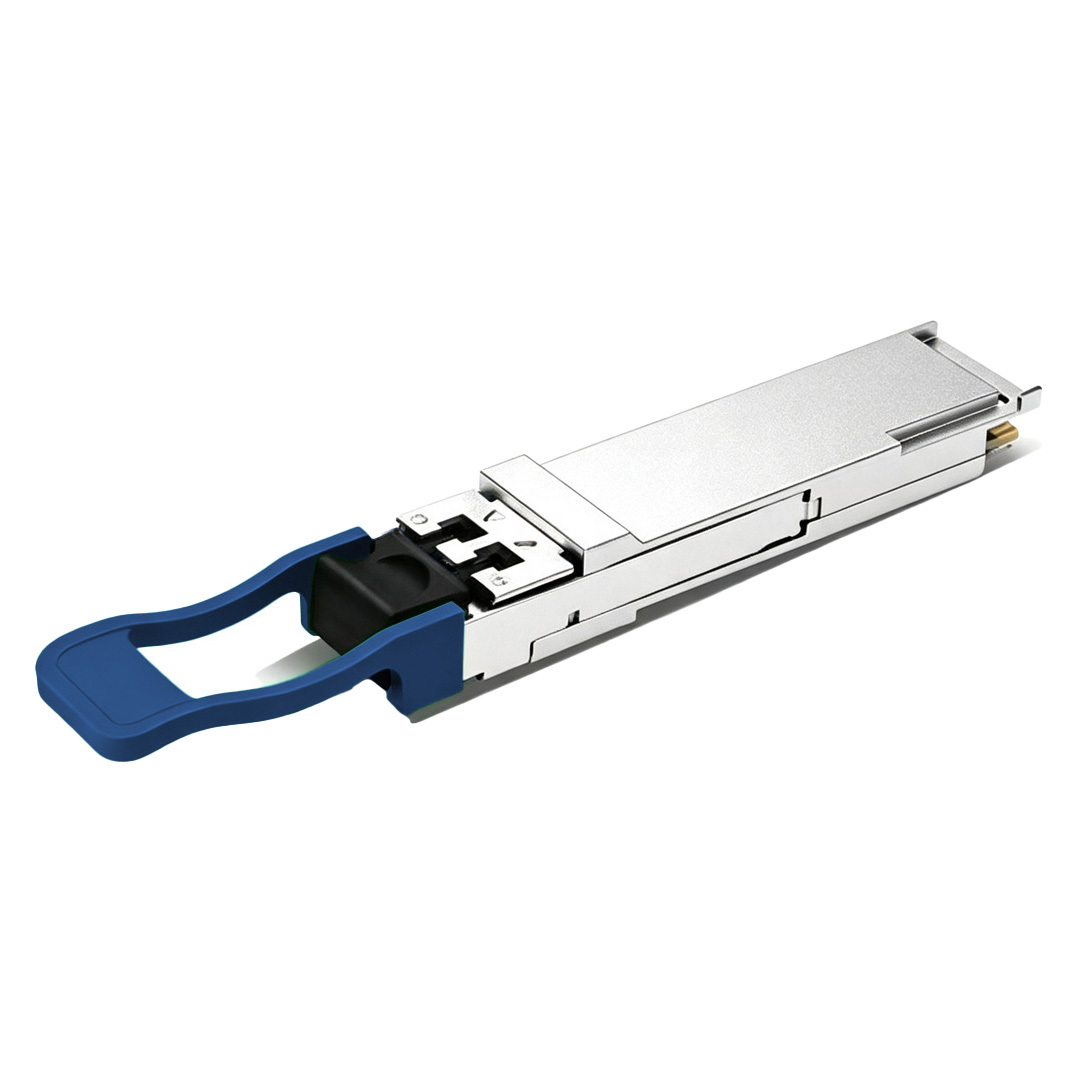
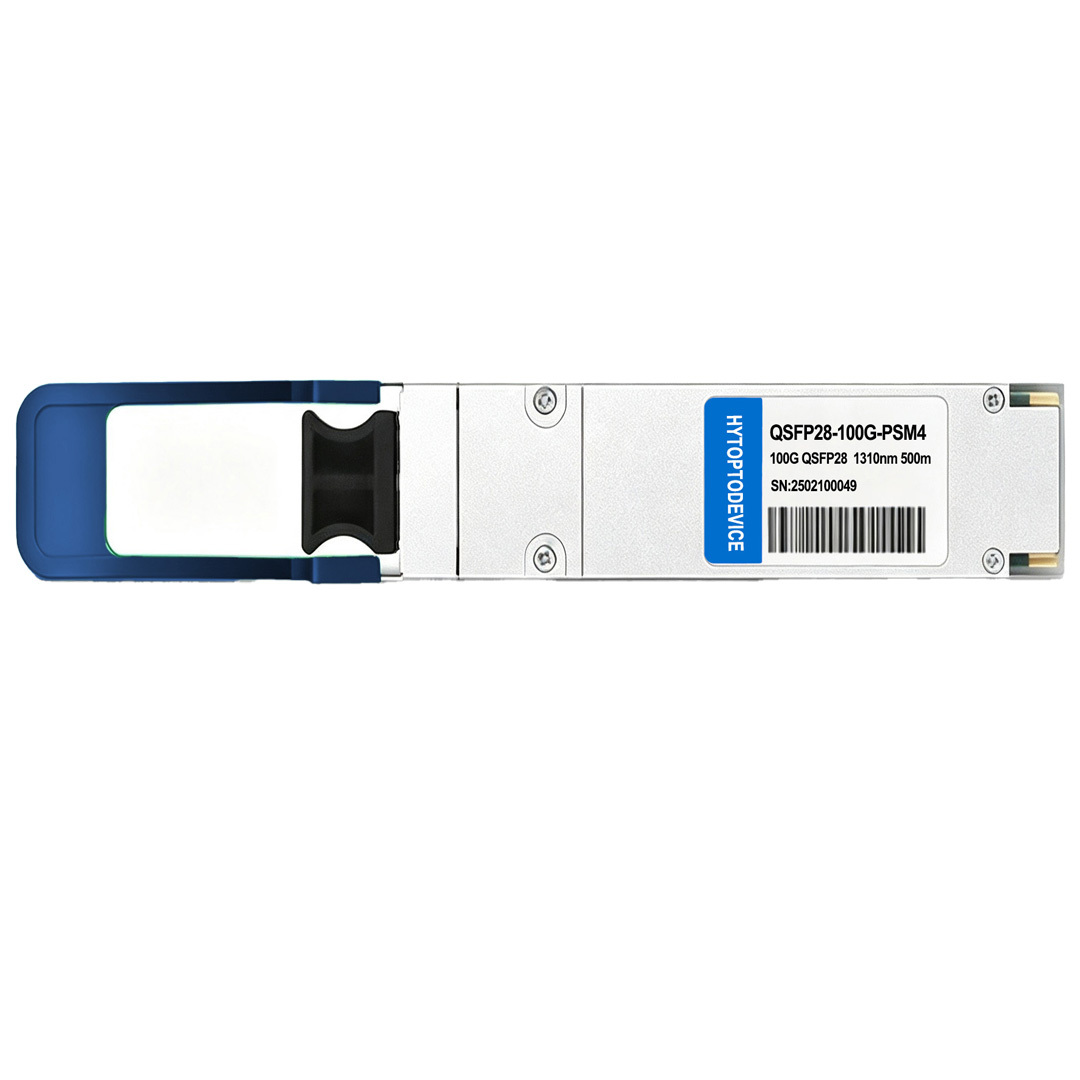
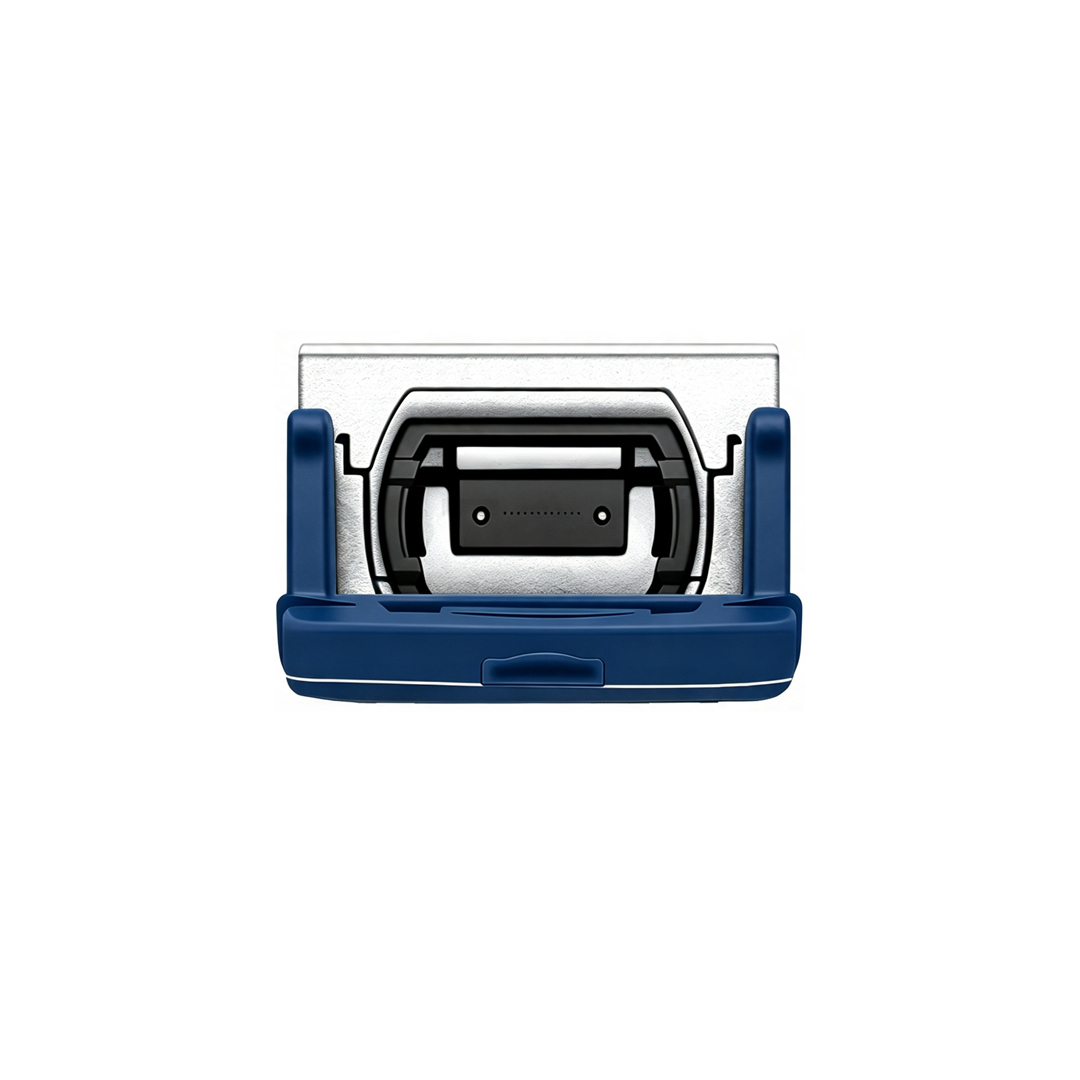
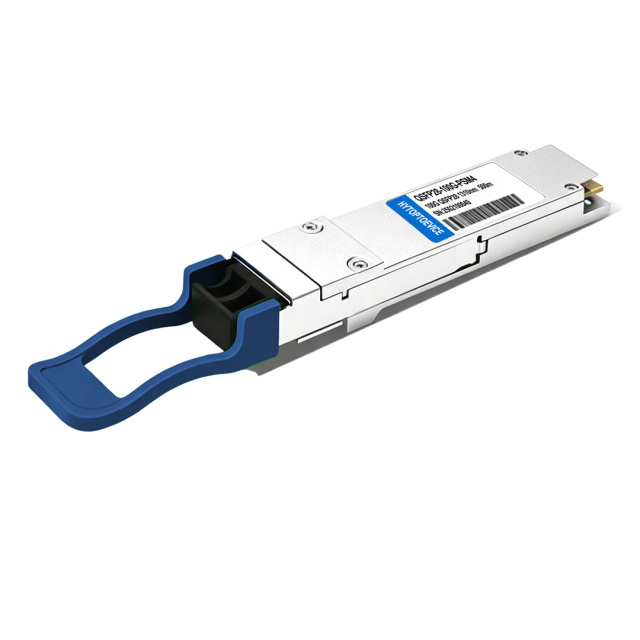
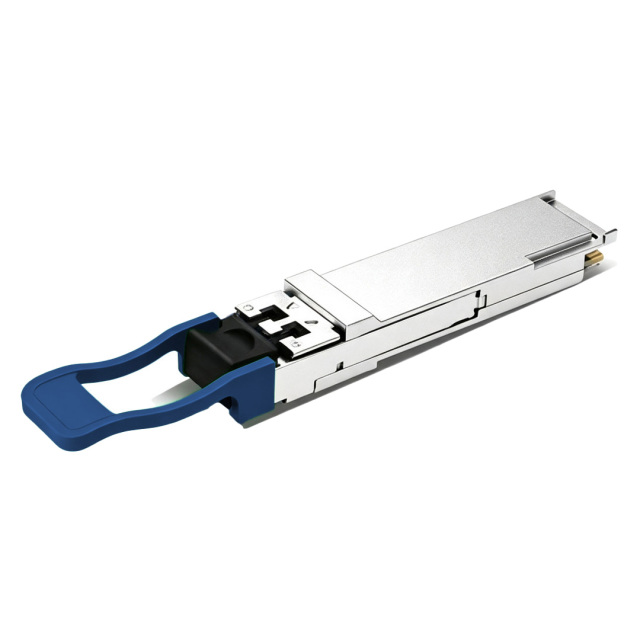
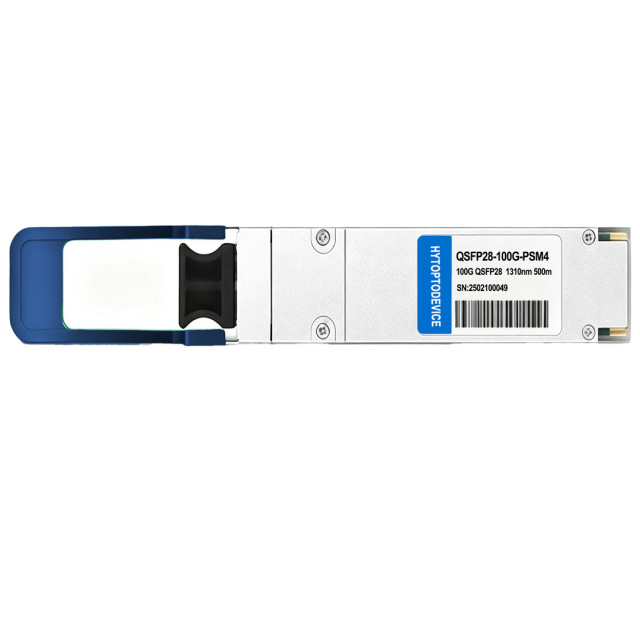
HYTOPTODEVICE 100G QSFP28 PSM4 transceiver serves as drop-in replacement for Juniper JNP-QSFP-100G-PSM4. Built following QSFP28 MSA and 100GBASE-PSM4 standards, this module delivers 100Gbps (4×25G NRZ) transmission up to 500m over OS2 single-mode fiber at 1310nm wavelength with MPO-12/APC connector. It is ideal for leaf-spine fabric, rack trunk, server uplink and 100G to 4×25G breakout deployment inside data centers.
Pre-programmed with Juniper-specific EEPROM data, it supports plug-and-play deployment and avoids unrecognized transceiver alarms on Juniper Junos OS platforms. As a trusted optical module manufacturer and supplier, HYTOPTODEVICE provides factory bulk stock, sample trial orders and OEM customization for wholesalers, distributors and system integrators building leaf-spine data center networks.
Key Technical Specifications
| Juniper Compatible |
JNP-QSFP-100G-PSM4 |
Vendor Name |
HYTOPTODEVICE |
| Form Factor |
QSFP28 |
Max Data Rate |
103.125Gbps (4x 25.78Gbps) |
| Wavelength |
1310nm
|
Max Distance |
500m@OS2 |
| Connector |
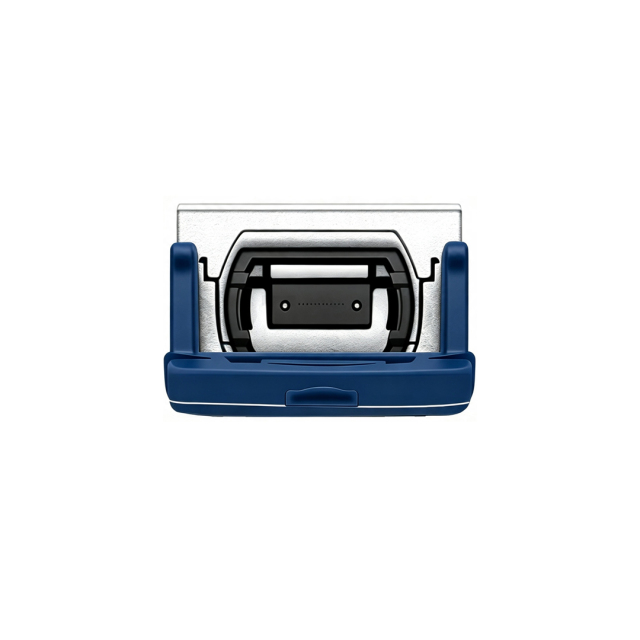
MTP/MPO-12 APC |
Transmitter Type |
4xDFB |
| Cable Type |
SMF |
Receiver Type |
PIN |
| FEC Support |
Yes |
TX Power |
-6.0~+2dBm |
| Power Consumption |
<3.5W |
Receiver Sensitivity |
< -10.2dBm |
| Protocols |
QSFP28 MSA, SFF-8636, IEEE 802.3‑2012,CAUI-4 |
Operation Temperature |
0 to 70°C (32 to 158°F) |
Usage Guidelines & Best Practices
• Fiber Matching Rule: Only MPO-12 APC 8° angled OS2 single-mode ribbon fiber can be used; OM3/OM4 multimode fiber or UPC polished MPO cables will trigger link failure and hardware damage.
• Lane Polarity Control: Confirm MPO fiber lane sequence and polarity match before powering on ports; misaligned lanes lead to severe receive power imbalance and continuous packet loss.
• Distance Restriction: Stable performance is only guaranteed within the standard 500m MSA rated range; extended fiber routes bring excess lane skew and optical attenuation.
• Hot-Plug Support: Modules support live insertion and removal; regularly clean MPO APC end faces to eliminate dust-induced signal distortion.
• Operating Environment: Limit deployment to indoor 0°C–70°C data center environments; avoid fully sealed cabinets with poor ventilation causing persistent overheating.
For detailed operation instructions, please refer to the User Guide.
Full Compatibility List & Supported Network Hardware
1. Supported Hardware & Firmware
HYTOPTODEVICE JNP-QSFP-100G-PSM4 precisely matches Juniper’s mechanical outline and optical index parameters.
Custom Junos EEPROM coding blocks all third-party module warning notifications.
Each batch undergoes physical machine testing to avoid lane power imbalance and intermittent link flapping.
Validated Juniper QFX Platforms:
• QFX10008 / QFX10016 modular core fabric switches
• QFX5120 / QFX5200 leaf-spine data center switches
• QFX5100 medium-density aggregation switches
• QFX3500 low-latency storage switching hardware
• Juniper rack servers with QSFP28 100G parallel NIC adapters
2. Multi-Brand Cross Compatibility
Built on universal QSFP28 MSA open industry standards.
This Juniper replacement PSM4 optic interoperates with Cisco, Huawei, Dell, H3C, Arista and Mellanox switches.
It fits multi-vendor hybrid cloud fabric and cross-pod colocation interconnection projects.
3. Free Value-Added Services
We offer free Juniper-specific EEPROM reprogramming for all bulk QSFP28 orders.
Custom private label printing and one-step data center deployment support are available.
Every 100G PSM4 transceiver finishes calibration, thermal cycle and 72-hour aging test.
Volume wholesale buyers enjoy tiered discounts to cut overall data center CAPEX cost.
Primary Application Scenarios
• 500m intra-fabric rack-to-rack interconnections inside Huawei leaf-spine architectures
• High-density aggregation trunk links for enterprise cloud and multi-tenant colocation data centers
• Low-latency 100G uplinks connecting ToR switches to AI, HPC and virtualization server clusters
• Inter-pod parallel optical transmission using MPO single-mode ribbon fiber
• Network upgrade projects from legacy 40G parallel optics to 100G PSM4
• Standard 100G to 4×25G breakout network deployment for segmented server bandwidth expansion
• Multi-brand hybrid fabric short-distance interconnection built on MPO cabling infrastructure
Connectivity Solutions(Applications)
1.Leaf-Spine Architecture

2. 100G to 100G for Switch-Switch Interconnection

3.100G to 100G for Switch-NIC Connection

4.100G to 4x25G Breakout Connectivity

The Core Feature
1.Low Power and High-Density 100G Connectivity for Data Center
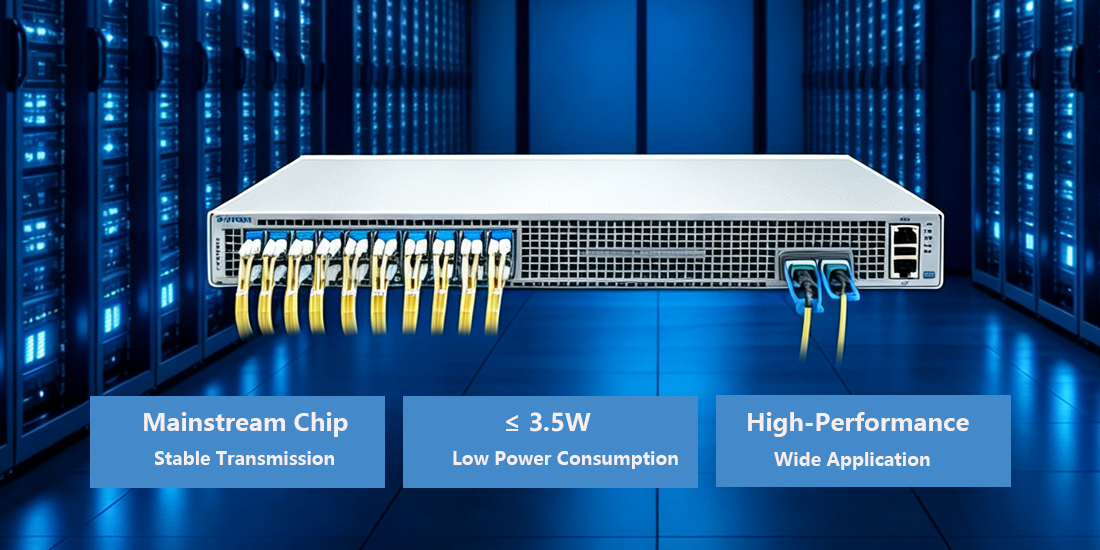
Max power ≤3.5W cuts thermal load on fully populated line cards. Compact QSFP28 form factor fits high-density racks, lowering data center PUE and supporting long-term 24/7 operation.
2.Verified Host Interoperability
Custom EEPROM programming enables plug-and-play operation and avoids transceiver alarms across multiple network vendor platforms.
Specific Compatibility Video available upon request.

3.Comprehensive Factory Testing & Reliable Performance
Each unit undergoes optical calibration, wide temperature cycling and burn-in testing. Integrated DDM enables remote real-time monitoring for proactive fault troubleshooting.Curious how? Tour the
Test Center.

FAQ
Q1: Can HYTOPTODEVICE JNP-QSFP-100G-PSM4 run without unauthorized module alarms on Juniper QFX Junos switches?
A: HYTOPTODEVICE pre-flashes Junos-matched EEPROM identities for this PSM4 optic. Plug-and-play on all QFX series hardware without "unsupported transceiver" warning logs, no manual port policy edits required.
Q2: Can this Juniper compatible PSM4 QSFP28 connect optically with CWDM4 or LR4 duplex LC modules?
A: Direct fiber interconnection cannot work normally. PSM4 uses four parallel MPO single-mode lanes, while CWDM4/LR4 multiplex wavelengths on two LC fibers; their optical architectures are incompatible.
Q3: Is HYTOPTODEVICE JNP-QSFP-100G-PSM4 usable on older 40G QSFP+ switch ports?
A: Normal communication is impossible despite identical outer shape. QSFP+ hardware lacks dedicated DSP chips to process 4×25G PSM4 parallel signals, causing port initialization failure.
Q4: Does HYTOPTODEVICE JNP-QSFP-100G-PSM4 support complete real-time DDM diagnostic monitoring?
A: Yes, standard-compliant PSM4 modules include real-time DDM/DOM to monitor transmit power, receive power, operating temperature, laser bias current, and supply voltage.
Q5: Will this Juniper PSM4 automatically adjust bandwidth down to 40G or 10G for low-speed ports?
A: No. QSFP28 PSM4 operates strictly at fixed 100Gbps (4x 25.78Gbps lanes) or 4x25Gbps in breakout mode. It does not downshift to 40G or 10G automatically.
Q6: Is it allowed to use blue UPC MPO cables on the APC port of HYTOPTODEVICE Juniper PSM4?
A: UPC patch cords are forbidden. Flat UPC polish creates heavy light back-reflection, distorting four parallel lanes and permanently scratching internal laser components.
Q7: Do optical attenuators need to be added for short 1–5m MPO fiber runs with this Juniper optic?
A: No extra attenuators are needed. HYTOPTODEVICE factory calibrates transmit power with wide safety margins, short cables won’t trigger receiver chip overload.
Q8: What MPO fiber type must I use to pair with HYTOPTODEVICE JNP-QSFP-100G-PSM4?
A: It requires a female MPO/MTP APC (Angle Polished Connector) single-mode cable.
Q9: Can I run stable PSM4 links over fiber longer than 500m with ultra-low-loss OS2 ribbon fiber?
A: Not advised for production QFX fabric environments. Exceeding 500m exceeds MSA optical budget and lane skew tolerance, leading to fluctuating BER and random port flapping.
Q10: What MPO polarity cable do I need for direct Juniper transceiver-to-transceiver PSM4 links?
A: A standard Type-B (Key-Up to Key-Up) crossover MPO-12 APC cable is required for direct connection.
Q11: How important is regular MPO end-face cleaning for consistent Juniper leaf-spine PSM4 links?
A: Extremely critical. An MPO connector has 8 or 12 exposed fiber ends; a single particle of dust can block an entire 25G lane or cause high optical return loss.
Q12: Which breakout patch cord matches HYTOPTODEVICE JNP-QSFP-100G-PSM4 for 25G server uplinks?
A: You need an MPO-APC (Female) to 4x Duplex LC (APC/UPC) Single-Mode breakout patch cable.
Q13: What fundamental optical difference exists between 100G PSM4 and 100G SR4 transceivers?
A: SR4 uses Multimode Fiber (OM3/OM4, 850nm) up to 100m. PSM4 uses Single-Mode Fiber (OS2, 1310nm) up to 500m.
Q14: What is the typical and maximum power draw of HYTOPTODEVICE Juniper JNP-QSFP-100G-PSM4?
A: Power consumption is typically ≤ 2.5W (maximum 3.5W), making it cooler and more power-efficient than CWDM4 or LR4 modules.
Q15: What temperature operating ranges are offered for HYTOPTODEVICE Juniper PSM4 modules?
A: Standard Commercial Temperature range is 0°C to 70°C (32°F to 158°F). Industrial grade (-40°C to 85°C) is available for special applications.
Q16: Does HYTOPTODEVICE offer volume discounts and custom services for bulk Juniper PSM4 orders?
A: Yes, bulk buyers enjoy tiered pricing, free Junos EEPROM rework, OEM private labeling and complete factory test reports for all JNP-QSFP-100G-PSM4 lots.
Q17: Why choose HYTOPTODEVICE PSM4 over LR4 for under-500m Juniper rack interconnections?
A: This PSM4 module features simplified internal architecture, lower unit pricing and ultra-low power draw, making it the most economical high-density solution for QFX leaf-spine intra-fabric links.
Q18: In which network projects will CWDM4 duplex optics beat mass MPO PSM4 on total deployment cost?
A: CWDM4 delivers lower overall expenses for cross-building long-distance links or small fiber-count projects; expensive MPO ribbon cables erase PSM4 module cost advantages.
Packaging & Custom OEM Solutions
-
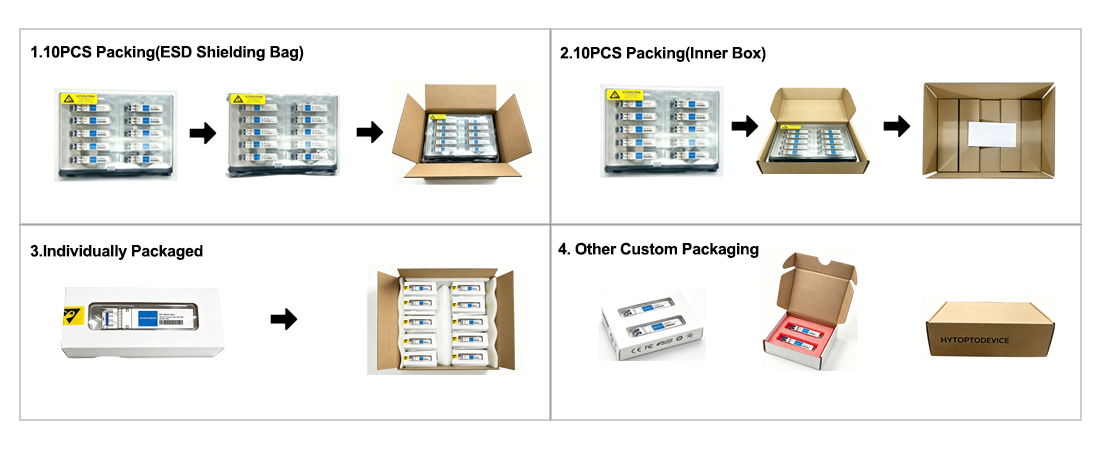
ESD Protection & Fast Shipping: Every module is sealed in an ESD-safe bag and ready for same-day dispatch from stock.
-
Custom OEM & Branding: We provide logo printing, private labeling, and custom packaging to help distributors and integrators build their brand—no factory investment required.
Why Network Engineers Choose HYTOPTODEVICE
HYTOPTODEVICE has supplied over 5000,000 optical transceiver modules to data centers, ISPs, and enterprise networks across 100+ countries since 2011. Every module undergoes a 72-hour burn-in test and full DDM/DOM validation before shipment.
- Up to 70% cost savings vs OEM, transparent pricing & flexible bulk rates, supported quality returns
- 100% real-device compatible with Cisco, Huawei,Dell,Juniper, and Arista
- ISO 9001:2015 Shenzhen factory, full lineup: 1.25G/10G/25G/40G/100G/200G/400G/800G/1.6T transceivers
- Ample stock, fast global DHL/FedEx shipping in 3–5 working days
- Free pre-sales engineering support for custom EEPROM & private label firmware
- Real switch test videos available for pre-purchase review; inspection & shipping videos provided per order
“Phenomenal performance. We deployed 200 HYTOPTODEVICE SFP modules to replace Cisco OEMs in our backbone network. Result? Zero compatibility issues and a 60% reduction in costs. Highly recommended for mission-critical networks."— Senior Network Engineer, Regional Telecom, Australia
Quality Certification & Compliance
At HYTOPTODEVICE, our quality commitment is backed by industry-standard validations. From fiber optical transceiver manufacturing to final visual inspection, from IQC、IPQC、FQC to OQC, our processes ensure global compliance and reliability.
We adhere to rigorous standards for our SFP modules and network solutions:
-
ISO 9001: Certified quality management and production consistency.
-
CE & FCC: Fully compliant for seamless Global Market Access.
-
RoHS: Committed to environmental responsibility and hazardous material control.
-
Proven Reliability: Rigorous testing to reduce compliance risk and ensure safety.
Certified Quality. Global Standards. Guaranteed Performance.

Rigorous Industrial Product Testing

100% 3rd Party Compatible

Partial Test Demonstration