| NO. | Brand | Compatible P/N | Transceiver Type |
| 1 | Cisco | SFP-10G45-BX80 | SFP-10G54-BX80 |
| 2 | Arista | SFP-10G45-BX80 | SFP-10G23-BX10 |
| 3 | Brocade | 10G-SFPP-BXU-80K | SFP-10G23-BX20 |
| 4 | Dell | GP-SFP-10GBX-U-80 | SFP-10G23-BX40 |
| 5 | Extreme | 10GB-BX80-U | SFP-10G23-BX60 |
| 6 | Juniper | SFP-10G45-BX80 | SFP-10G32-BX60 |
| 7 | D-Link | SFP-10G-BX80-U | SFP-10G45-BX100 |
| 8 | Fortinet | SFP-10G45-BX80 | SFP-10G54-BX100 |
| Fortinet Compatible | SFP-10G45-BX80 | Vendor Name | HYTOPTODEVICE |
| Form Factor | SFP+ | Max Data Rate | 10.7Gbps |
| Wavelength | TX1490nm/RX1550nm | Max Distance | 80km |
| Connector | Simplex LC | Transmitter Type | 1490nm EML |
| Cable Type | SMF | Receiver Type | APD |
| TX Power | -1.0~+4dBm | Receiver Sensitivity | < -23dBm |
| Max. Power Consumption | ≤1.8W | Receiver Overload | -7dBm |
| Protocols | IEEE 802.3ae, SFF-8472, SFF-8431, SFF-8432, SFP+ MSA Compliant, CPRI, eCPRI | Operation Temperature | 0 to 70°C (32 to 158°F) |
For detailed technical specifications, please refer to the Datasheet
Full Compatibility List & Supported Network Hardware
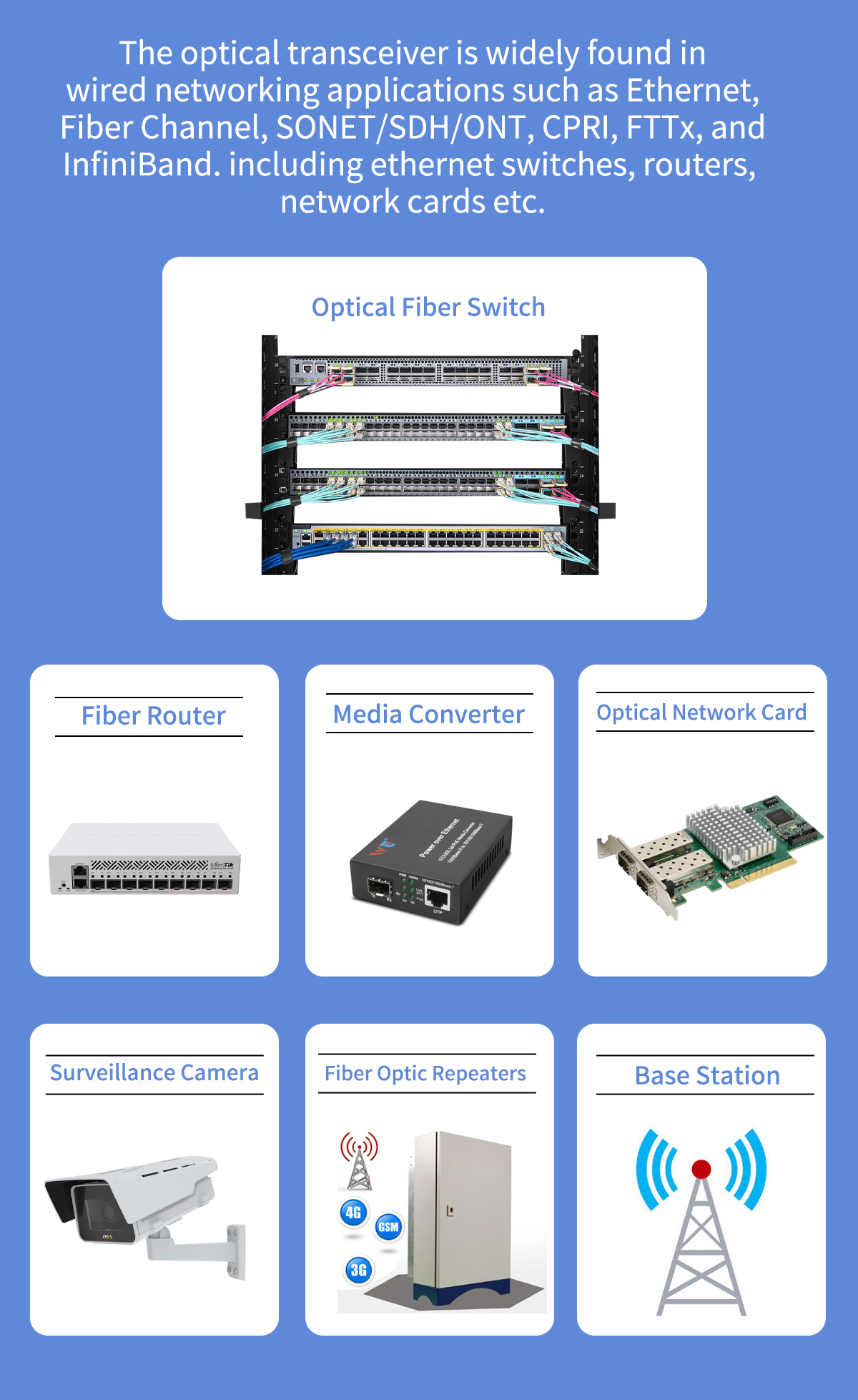
Primary Application Scenarios
Connectivity Solutions(Applications)




Q1: What happens if I install this BiDi optic into a 1G SFP slot on my Fortinet firewall? A: No, this 10G BiDi SFP+ transceiver cannot auto-negotiate down to 1G speed. It is fixed at 10.3125Gbps following the 10GBASE-BX80-U standard, and inserting it into a 1G SFP port will result in link failure. HYTOPTODEVICE 10G BiDi modules require native 10G-capable SFP+ ports for normal operation.
Q2: Can I pair this 1490/1550nm BiDi module with conventional 1310/1550nm bidirectional transceivers on the same fiber? A: No, cross-wavelength combination of 1490/1550 BiDi and 1310/1550 optics cannot establish a valid connection. BiDi modules require matched transmit and receive wavelengths; you must use the complementary 1550/1490 BiDi partner module at the opposite end. HYTOPTODEVICE supplies matched BiDi pairs for 80km single-fiber deployments.
Q3: Does this 80km BiDi transceiver operate using a single OS2 single-mode fiber strand only? A: Yes, this 10GBASE-BX80-U module is engineered exclusively for simplex single-strand OS2 fiber. It uses WDM technology to transmit and receive signals over one fiber core and cuts fiber consumption by half. HYTOPTODEVICE BiDi transceivers are widely chosen by integrators to save fiber resources for long-distance point-to-point links.
Q4: Will multimode fiber work when deploying this 10G 80km BiDi transceiver? A: No, this 80km BiDi transceiver only supports OS2 single-mode fiber and cannot run over multimode fiber. MMF features large core size and high chromatic dispersion, which cannot sustain 80km 10G long-haul transmission. HYTOPTODEVICE recommends simplex LC OS2 SMF cables for all 10G BX80-U installations.
Q5: Why is the 1490/1550nm wavelength set selected instead of 1270/1330nm for 80km BiDi links? A: The 1490/1550nm window delivers lower fiber attenuation for long-distance transmission. 1490nm brings ~0.25dB/km loss and 1550nm ~0.20dB/km, better than 0.35dB/km at 1270/1330nm. HYTOPTODEVICE adopts this wavelength combination to achieve stable 80km reach on OS2 single fiber for metro networking projects.
Q6: Am I able to use this 80km BiDi optic for fiber links shorter than 10km? A: Yes, but optical attenuation must be added to protect the APD receiver. The high transmit power of this 80km BiDi module will overload the APD chip for links below 10km; a 12–15dB simplex LC attenuator is mandatory. HYTOPTODEVICE can provide matching attenuators together with bulk module orders for short-range testing.
Q7: What influence will chromatic dispersion bring to my 80km 10G single-fiber link performance? A: Chromatic dispersion broadens optical pulses and raises bit error rate on 80km 10G links. OS2 single-mode fiber is optimized to reduce dispersion within the 1490/1550nm window, keeping signal distortion within acceptable limits for 10GBASE-BX80-U. HYTOPTODEVICE pre-tests all modules to satisfy dispersion budget requirements for 80km single-fiber connections.
Q8: Can excessive incoming optical power burn the APD receiver inside this BiDi transceiver? A: The APD receiver is vulnerable to excessive incoming optical power above -7dBm. Overpowered input will permanently damage the APD chip, which commonly occurs during short-link testing without attenuators. HYTOPTODEVICE marks this risk in product guidelines and shares technical advice for integrators during bulk procurement.
Q9: What operating temperature range can this Fortinet compatible BiDi transceiver withstand? A: The standard commercial-grade model runs from 0°C to 70°C for indoor cabinet deployment. Industrial grade (-40°C ~ +85°C) is available as custom OEM order. HYTOPTODEVICE supports temperature customization for wholesalers requiring modules for outdoor or harsh environment projects.
Q10: Does this BiDi optic comply with IEEE and SFF industry specifications? A: Yes, this 10GBASE-BX80-U BiDi transceiver meets IEEE 802.3ae, SFF-8472, SFF-8431 and SFF-8432 standards. These specifications define 10G Ethernet, SFP+ mechanical form factor and digital diagnostic monitoring rules. HYTOPTODEVICE strictly follows these industry specs to guarantee stable interoperability for wholesalers and integrators.
Q11: Are international compliance certificates available for this 10G BiDi transceiver? A: Yes, HYTOPTODEVICE 10G BX80-U BiDi transceiver passes RoHS, CE and FCC certification. All raw materials and assembly processes comply with global environmental and EMC regulations. We can supply complete certification documents for distributors and buyers for customs clearance and project audits.
Q12: What warranty and replacement support can I get if modules fail in live production networks? A: Yes, HYTOPTODEVICE maintains stocked inventory for fast replacement shipment. Failed modules within warranty can be returned for replacement or refund following our terms. Global wholesalers and system integrators can reserve stock for critical network projects via bulk purchase contracts.
Q13: What maintenance cycle should I adopt for simplex LC optical ports on these 80km BiDi modules? A: Clean simplex LC optical interfaces before installation and re-clean every 6–12 months for continuously running 80km links. Dust and oil residue increase insertion loss and degrade long-distance signal quality. HYTOPTODEVICE recommends LC fiber cleaning pens for regular maintenance by network O&M teams.
Q14: Is this 80km BiDi transceiver suitable for connecting two remote data centers separated by 60km? A: Yes, this 80km-rated BiDi module delivers reliable performance for 60km point-to-point single-fiber data center interconnection. It has sufficient power budget to cover 60km OS2 fiber plus normal splice and connector loss. HYTOPTODEVICE provides bulk pricing for data center interconnection projects for global buyers.
Q15: Can this transceiver work on leased dark fiber circuits provided by telecom service providers? A: Yes, this 10GBASE-BX80-U BiDi transceiver works on leased dark OS2 single-mode fiber. You only need to confirm fiber type and total link loss before deployment. HYTOPTODEVICE’s technical team can help integrators complete link budget calculation for leased dark fiber projects.

Why Network Engineers Choose HYTOPTODEVICE
HYTOPTODEVICE has supplied over 5000,000 optical transceiver modules to data centers, ISPs, and enterprise networks across 100+ countries since 2011. Every module undergoes a 72-hour burn-in test and full DDM/DOM validation before shipment.
“Phenomenal performance. We deployed 200 HYTOPTODEVICE SFP modules to replace Cisco OEMs in our backbone network. Result? Zero compatibility issues and a 60% reduction in costs. Highly recommended for mission-critical networks."— Senior Network Engineer, Regional Telecom, Australia
Quality Certification & Compliance
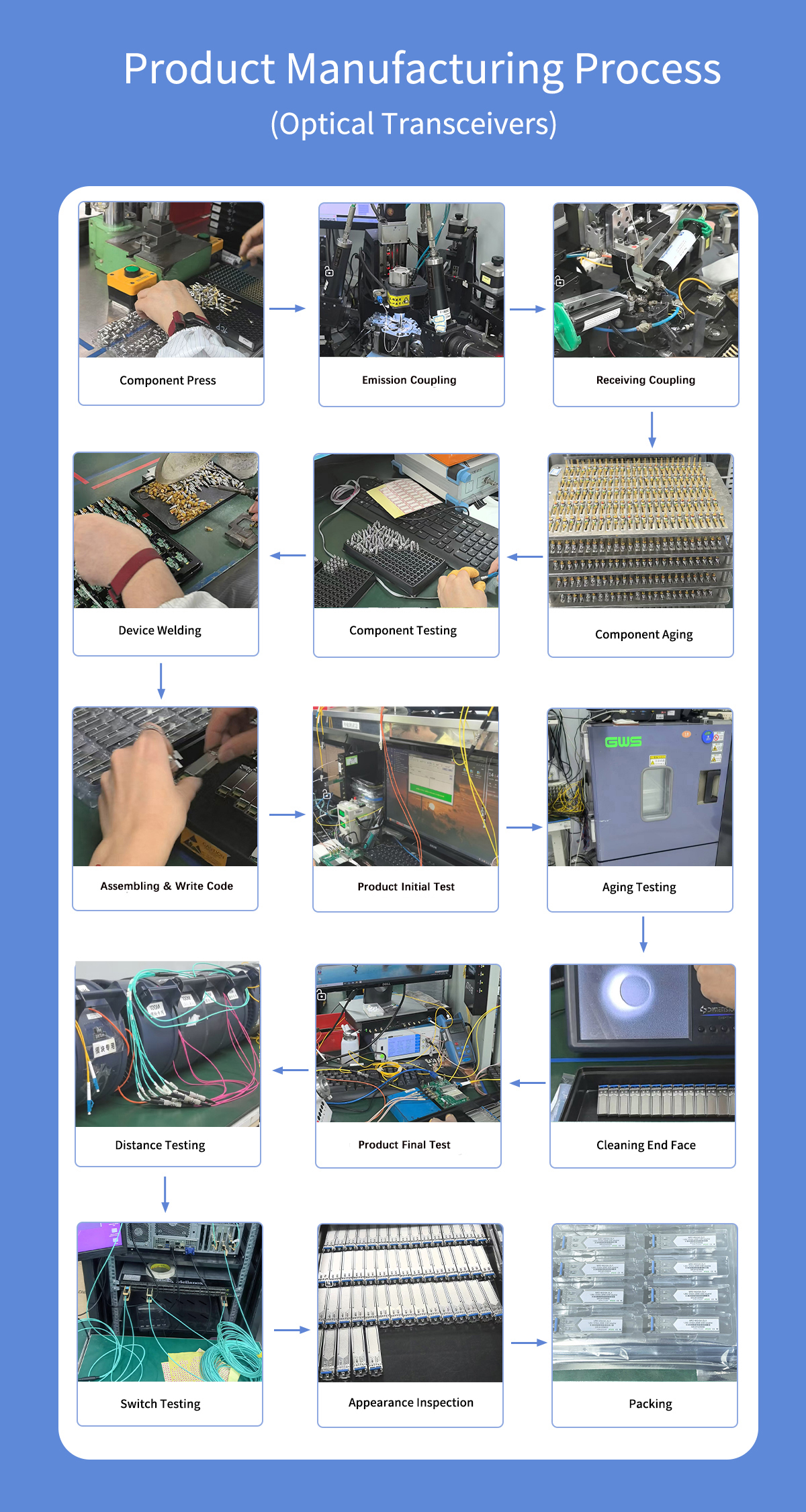
At HYTOPTODEVICE, our quality commitment is backed by industry-standard validations. From fiber optical transceiver manufacturing to final visual inspection, from IQC、IPQC、FQC to OQC, our processes ensure global compliance and reliability.
We adhere to rigorous standards for our SFP modules and network solutions:
ISO 9001: Certified quality management and production consistency.
CE & FCC: Fully compliant for seamless Global Market Access.
RoHS: Committed to environmental responsibility and hazardous material control.
Proven Reliability: Rigorous testing to reduce compliance risk and ensure safety.
Certified Quality. Global Standards. Guaranteed Performance.