


| NO. | Brand | Compatible P/N | Transceiver Type |
| 1 | Cisco | QSFP-4SFP10G-CU1M | |
| 2 | Arista Networks | CAB-Q-S-1M | |
| 3 | Juniper | QFX-QSFP-DACBO-1M | |
| 4 | Brocade | 40G-QSFP-4SFP-C-0101 | |
| 5 | Dell | 331-8149 | |
| 6 | Intel | X4DACBL1 | |
| 7 | NVIDIA/Mellanox | MC2609130-001 | |
| 8 | IBM | BN-QS-SP-CBL-1M |
| IBM Compatible |
BN-QS-SP-CBL-1M
|
Vendor Name | HYTOPTODEVICE |
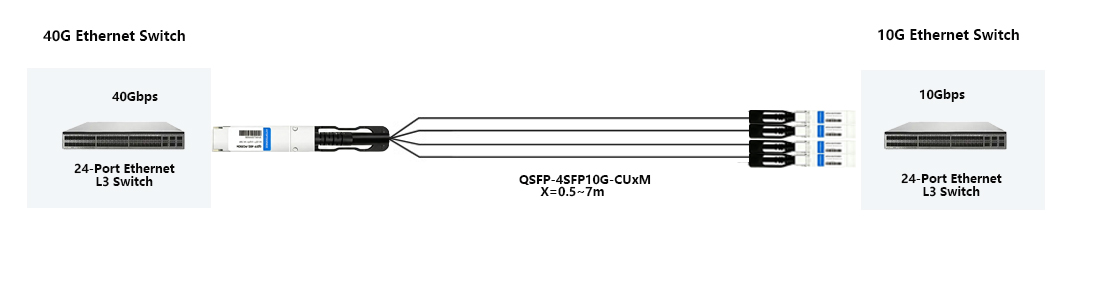
| Connector | QSFP+ to 4 x SFP+ | Max Data Rate | 40Gbps |
| Cable Length | 1m (3ft) | Wire AWG | AWG 30 |
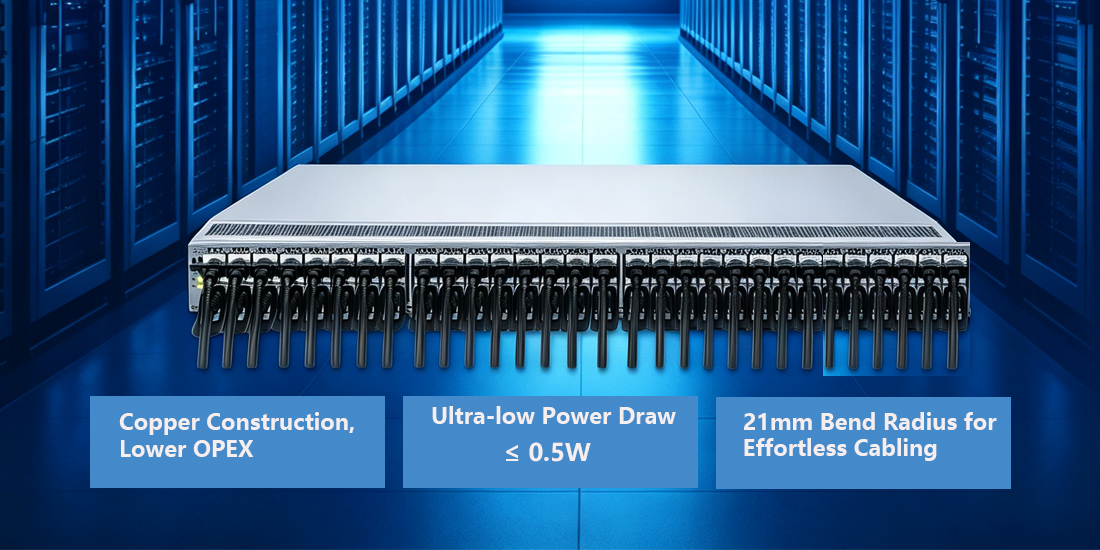
| Cable Type | Passive Twinax | Power Consumption | ≤0.5W |
| Media | Copper | Operation Temperature | 0~ 70 °C (32 to 158°F) |
| Jacket Material | PVC(OFNR) | Protocols | SFF-8436, SFF-8431 and QSFP+ MSA |
| Minimum Bend Radius | 21mm | Application | 40G InfiniBand 8x DDR, 4x QDR, 10/40 Gigabit Ethernet, Fibre Channel |
Usage Guidelines & Best Practices
Mandatory Port Breakout Configuration: Ensure the host QSFP+ port supports channelization. Enable breakout mode (4x10G) via the switch CLI before connecting the cable.
Cabling Requirements: Do not exceed the minimum 21mm bend radius, avoid sharp folding, heavy extrusion or long-term tension on the cable assembly.
Port Installation Standard: Do not mix this breakout DAC with straight QSFP+ to QSFP+ DAC configuration.
Hot‑swap rule:Never pull or tug directly on the individual breakout legs. Always use the integrated pull-tab or bale latch when inserting or removing connectors.
Operating Environment: 0‑70℃, indoor cabinet deployment only.
For detailed operation instructions, please refer to the User Guide.
Full Compatibility List & Supported Devices
Built on universal MSA open standards, this 40G QSFP+ DAC breakout cable can interoperate with mainstream network brands including Arista, Intel, Juniper, Dell, NVIDIA Mellanox and IBM, for mixed-vendor rack stacking and server fabric expansion.


Q1: Which IBM RackSwitch firmware releases support this passive copper breakout twinax cable for 40G to 4x10G split? A: It works reliably with IBM RackSwitch latest ONIE and ENOS stable firmware builds. HYTOPTODEVICE validates each batch on IBM enterprise hardware to lower deployment risk for IBM partners placing stock orders.
Q2: Can this passive copper breakout twinax cable work on older IBM BladeCenter switches without breakout profile support? A: Legacy BladeCenter switches lack native QSFP+ breakout capability. Confirm switch firmware feature set before purchasing this splitter cable.
Q3: Will IBM RackSwitch ONIE firmware automatically identify this pre-flashed passive copper breakout twinax cable on boot-up? A: Yes, valid EEPROM signature enables automatic port recognition. This simplifies rack deployment for system integrators building IBM storage and Power server fabrics.
Q4: Can I order this passive copper breakout twinax cable with custom EEPROM for mixed IBM and open SONiC switch environments? A: Yes, HYTOPTODEVICE provides cross-platform EEPROM flashing for bulk orders. It helps integrators standardize cabling specs across hybrid enterprise networks.
Q5: Will IBM switch OS log continuous transceiver alerts if this passive copper breakout twinax cable is used together with IBM SFP+ optical transceivers? A: No, DAC copper cable and optical modules run on separate logical ports. Correct breakout mapping avoids repeated warning messages.
Q6: Is this passive copper breakout twinax cable suitable for low-latency RoCE storage traffic on IBM Power Systems? A: Yes, passive twinax brings minimal added latency for RDMA traffic. Many IBM resellers source this breakout cable to scale affordable 10G storage access ports.
Q7: Will breakout subinterface settings remain intact after IBM RackSwitch firmware upgrade? A: Breakout configurations save to startup-config. Major firmware upgrades still require spot checking for stocked passive copper breakout twinax cable inventory.
Q8: What is the typical delivery lead time for bulk procurement of this passive copper breakout twinax cable for global IBM distributors? A: Ready stock orders ship within 3–5 working days. HYTOPTODEVICE holds inventory and supports expedited delivery for urgent IBM storage and Power server projects.
Q9: Can this passive copper breakout twinax cable carry PFC lossless traffic for IBM Elastic Storage Server backends? A: Yes, passive copper does not block priority flow control frames. It works reliably for buyers building lossless storage fabrics for IBM ESS.
Q10: What troubleshooting action should I take first if one SFP+ breakout lane stays down on IBM G8264CS RackSwitch? A: First confirm the breakout port profile and reseat the SFP+ connector. Inactive lanes usually come from missing breakout config or loose cable insertion.
Q11: What warehouse humidity range should wholesalers follow for long-term storage of this passive copper breakout twinax cable? A: Store inventory at 10–60% RH dry indoor conditions. High-grade twinax copper used by HYTOPTODEVICE resists oxidation and preserves stable signal performance.
Q12: Do I need a separate license key to activate breakout mode on IBM G8332 RackSwitch QSFP+ ports? A: Breakout is a base feature for supported G8332 ports and requires no extra license. Always verify official IBM switch datasheet limitations before ordering.
Q13: Can the four SFP+ tails of this passive copper breakout twinax cable connect directly to standard 10G top-of-rack SFP+ switch ports? A: Yes, SFP+ branches interoperate seamlessly with mainstream 10G leaf switches. It is a budget-friendly cabling option for IBM enterprise rack interconnection.
Q14: What compliance and test paperwork can HYTOPTODEVICE supply for tender projects needing this passive copper breakout twinax cable? A: We can provide batch TDR test reports, RoHS and REACH certificates. These documents help wholesalers complete audit checks for IBM enterprise bidding.
Q15: Can the EEPROM data of this passive copper breakout twinax cable be reprogrammed after migrating away from IBM RackSwitch hardware? A: Yes, HYTOPTODEVICE offers EEPROM rewrite service. This allows resellers to repurpose stocked breakout cables for other vendor platforms and improve inventory turnover.
Packaging & Custom OEM Solutions
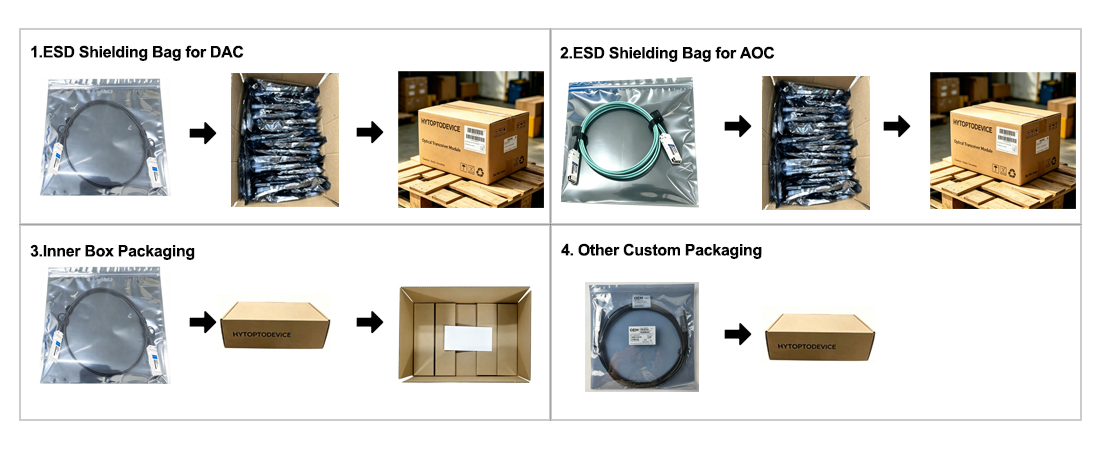
ESD Protection & Fast Shipping: Every transceiver is sealed in an ESD-safe bag and ready for same-day dispatch from stock.
Custom OEM & Branding: We provide logo printing, private labeling, and custom packaging to help distributors and integrators build their brand—no factory investment required.
Why Network Engineers Choose HYTOPTODEVICE
HYTOPTODEVICE has supplied over 5000,000 optical transceiver modules to data centers, ISPs, and enterprise networks across 100+ countries since 2011. Every module undergoes a 72-hour burn-in test and full DDM/DOM validation before shipment.
“Phenomenal performance. We deployed 200 HYTOPTODEVICE SFP modules to replace Cisco OEMs in our backbone network. Result? Zero compatibility issues and a 60% reduction in costs. Highly recommended for mission-critical networks."— Senior Network Engineer, Regional Telecom, Australia
Quality Certification & Compliance
At HYTOPTODEVICE, our quality commitment is backed by industry-standard validations. From fiber optical transceiver manufacturing to final visual inspection, from IQC、IPQC、FQC to OQC, our processes ensure global compliance and reliability.
We adhere to rigorous standards for our SFP modules and network solutions:
ISO 9001: Certified quality management and production consistency.
CE & FCC: Fully compliant for seamless Global Market Access.
RoHS: Committed to environmental responsibility and hazardous material control.
Proven Reliability: Rigorous testing to reduce compliance risk and ensure safety.
Certified Quality. Global Standards. Guaranteed Performance.







