| NO. | Brand | Compatible P/N | Transceiver Type |
| 1 | Cisco | SFP-10G45-BX80 | SFP-10G54-BX80 |
| 2 | Arista | SFP-10G45-BX80 | SFP-10G23-BX10 |
| 3 | Brocade | 10G-SFPP-BXU-80K | SFP-10G23-BX20 |
| 4 | Dell | GP-SFP-10GBX-U-80 | SFP-10G23-BX40 |
| 5 | Extreme | 10GB-BX80-U | SFP-10G23-BX60 |
| 6 | Juniper | SFP-10G45-BX80 | SFP-10G32-BX60 |
| 7 | D-Link | SFP-10G-BX80-U | SFP-10G45-BX100 |
| 8 | Fortinet | SFP-10G45-BX80 | SFP-10G54-BX100 |
| Arista Compatible | SFP‑10G45‑BX80 | Vendor Name | HYTOPTODEVICE |
| Form Factor | SFP+ | Max Data Rate | 10.7Gbps |
| Wavelength | TX1490nm/RX1550nm | Max Distance | 80km |
| Connector | Simplex LC | Transmitter Type | 1490nm EML |
| Cable Type | SMF | Receiver Type | APD |
| TX Power | -1.0~+4dBm | Receiver Sensitivity | < -23dBm |
| Max. Power Consumption | ≤1.8W | Receiver Overload | -7dBm |
| Protocols | IEEE 802.3ae, SFF-8472, SFF-8431, SFF-8432, SFP+ MSA Compliant, CPRI, eCPRI | Operation Temperature | 0 to 70°C (32 to 158°F) |
For detailed technical specifications, please refer to the Datasheet
HYTOPTODEVICE 10G BiDi SFP+ modules use Arista‑tuned EEPROM profiles for seamless plug‑and‑play on Arista EOS platforms. Each unit passes real‑machine validation, temperature cycling and 72‑hour burn‑in. Free EEPROM re‑flash and OEM branding are offered for bulk distributors and integrators.
Validated Arista‑oriented Platforms:
• Arista 7050 / 7060 / 7280 series data‑center switches
• Arista 7300 series modular chassis switches
• All Arista network devices with standard SFP+ ports supporting 10GBASE‑BX80‑U BiDi specification
Built on MSA open standards, this 10G BiDi SFP+ works with Arista, Huawei, H3C, Juniper, Dell, Palo Alto, Brocade hardware. Well‑suited for mixed‑vendor long‑haul metro and wide‑area network expansion projects for enterprise, carrier clients, wholesalers and integrators.
Primary Application Scenarios
• Long‑Haul Single‑Fiber Metro Networking: 80km point‑to‑point single‑fiber links for carrier‑grade metro aggregation and remote site interconnection
• Wide‑Area Enterprise Branch Interconnection: Cost‑saving single‑fiber links connecting geographically dispersed enterprise branches up to 80km
• Carrier Access & FTTO Long‑Reach Deployment: 10G single‑fiber long‑distance transmission for service‑provider FTTO access services
• Cost‑Effective Hardware Upgrade: Direct drop‑in replacement for expensive original Arista SFP‑10G45‑BX80 modules to reduce long‑haul network procurement costs for bulk purchase
• OEM Wholesale Resale: Stable bulk supply for global optical transceiver distributors and network equipment vendors for private label resale business
1.Switch-to-Switch

2.Core to Access (With Structured Cabling)
The Core Features

2.2x Capacity, Half the Cabling
A single fiber strand carries two wavelengths, enabling full-duplex 10G over one link. Double capacity per port, cut fiber cabling costs in half — no extra cables, no extra ports.
3.High-density, Low Power for Data Centers
Full 10G performance at just 1.8W. This SFP+ transceiver keeps high-density racks stable and cool, lowering both energy and cooling costs without compromising transmission quality.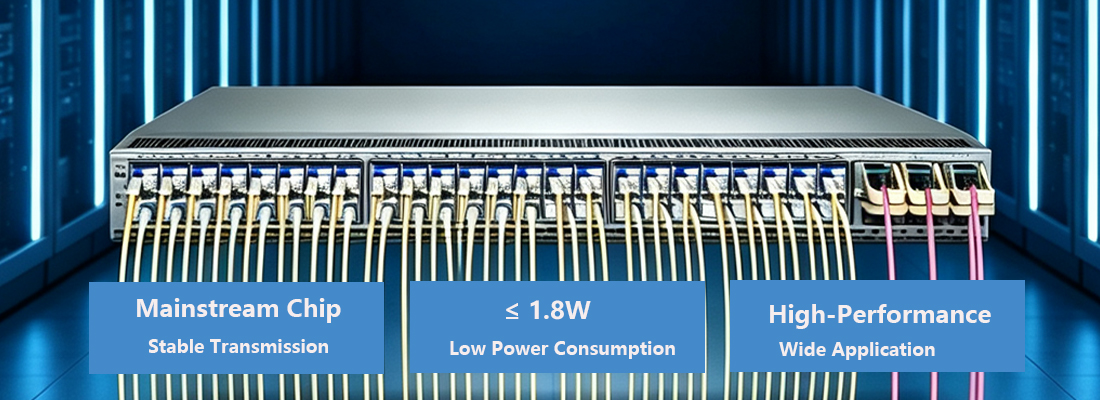
4.Plug-and-Play Across Leading Brands
Drop into any multi-vendor environment with confidence. Every single unit is rigorously compatibility-tested on original switches from major vendors, so you get seamless, worry-free performance across Cisco, Juniper, Huawei and more. Real products, real switches, real results—Specific Compatibility Video available upon request.
5.Every Module Tested, Every Link Reliable
Reliability isn't a claim — it's engineered. Each 10G BiDi 80km SFP+ module clears signal integrity checks, full-distance runs, and extreme temperature cycling before leaving our Test Center, guaranteeing stable, packet-loss-free performance under any network load.
FAQ
Q1: Will this 10G SFP+ module be compatible with my Cisco/Juniper/MikroTik/Ubiquiti switches?
A: Compatibility depends on correct EEPROM profile and host‑port transceiver‑lock policy. HYTOPTODEVICE pre‑configures custom EEPROM for Cisco, Arista, Juniper; for MikroTik / Ubiquiti generic MSA mode is applied. Provide exact hardware model & firmware version for pre‑deployment verification to avoid unexpected port rejection for integrator deployments.
Q2: Will using a third‑party SFP+ module void my switch/router hardware warranty?
A: Normally third‑party transceivers do NOT void the base hardware warranty of network hardware. Hardware manufacturers’ warranty typically covers device hardware defects only; it does not extend to third‑party optics faults. Confirm your vendor’s official warranty statement before large‑scale bulk purchase.
Q3: Is this module hot‑swappable in live production networks?
A: Yes, this SFP+ BiDi transceiver supports standard hot‑swap per SFF‑8472 specification. Always disconnect fiber cables before inserting / removing modules to avoid laser eye risk and physical optical‑port damage during live production‑network maintenance.
Q4: Will DOM/DDM (Digital Optical Monitoring) work properly on my device?
A: Full DDM/DOM is implemented complying with SFF‑8472. Read‑out availability relies on host‑system firmware support; some low‑cost MikroTik / Ubiquiti platforms have limited DOM display capability. We can supply real DDM test reports for bulk buyers’ pre‑project evaluation.
Q5: Why is 1490/1550nm chosen instead of 1270/1330nm for 80km reaches?
A: 1490‑1550nm windows feature far lower optical attenuation over single‑mode fiber compared with 1270/1330nm. Lower fiber loss enables 80km long‑haul BiDi transmission. 1270/1330nm BiDi is reserved for short‑reach 10‑40km applications only.
Q6: What value of optical attenuator do I need for short‑distance bench testing?
A: For lab short‑range bench test with 80km high‑power BiDi optics, use 10‑15dB simplex LC attenuator to prevent receiver overload. Without attenuation, excessive input optical power may saturate APD receiver and cause unstable link during short‑fiber testing.
Q7: What if my fiber line has multiple splices and dirty connectors? Will it still reach 80km?
A: Multiple splices or contaminated connectors add extra insertion loss and reduce real‑world maximum reach. Rated 80km performance assumes clean, low‑loss OS2 fiber links. Calculate total link budget and do on‑site loss test before bulk deployment if many splices exist.
Q8: What receiver type is built into this module: PIN or APD?
A: This 80km‑class 10G BiDi SFP+ module adopts APD (Avalanche Photodiode) receiver. APD provides higher receiving sensitivity required for 80km long‑haul single‑mode transmission; PIN receivers cannot meet the sensitivity requirement for this reach class.
Q9: How are these modules tested before shipment?
A: Every unit goes through full optical‑parameter test, DDM calibration, 72‑hour continuous burn‑in and temperature‑cycle screening. Serial‑number‑linked test records can be provided to wholesalers and integrators for incoming quality audit after bulk order delivery.
Q10: Does this 80km transceiver generate significantly more heat than a 10km module?
A: 80km BiDi consumes higher transmit power than short‑reach 10km BiDi, so heat output is moderately higher. Ensure adequate rack ventilation, avoid high‑temperature enclosure to stay within 0‑70°C commercial operating temperature range.
Q11: Is this module suitable for outdoor unconditioned cabinets or remote cell towers?
A: This is commercial‑grade (0°C‑70°C) transceiver, NOT industrial‑grade. It is not recommended for unconditioned outdoor cabinets / cell‑tower sites with extreme temperature swings; select industrial‑temp option if you require outdoor cabinet deployment.
Q12: Does this module support FEC (Forward Error Correction)?
A: This physical BiDi optic has no built‑in FEC chip. FEC function must be enabled on your host switch / router hardware if you require forward error correction for marginal‑loss long‑haul fiber links.
Q13: Can I use this optic for 10G OTN (OTU2/OTU2e) or SONET/SDH (OC‑192) protocols?
A: This transceiver is designed for 10GBASE‑Ethernet. It is not qualified for OTN OTU2/OTU2e or SONET OC‑192 transport protocols. Using it for non‑Ethernet transport may trigger link instability even if bit‑rate matches.
Q14: Why are 80km BiDi modules substantially more expensive than standard 10km optics?
A: 80km BiDi requires high‑power laser transmitter plus sensitive APD receiver, strict component screening and complex calibration processes. Low market production volume for long‑reach BiDi further raises component cost compared with mature short‑reach 10km BiDi transceivers.
Q15: Why does my link fail to establish even though optical power levels are within normal limits?
A: Valid optical‑power readings do not guarantee link‑up. Common root‑causes: wrong BiDi transmit/receive wavelength pairing, host‑port speed negotiation issue, FEC‑mode mismatch, bad patch‑cable polarity, or host transceiver‑security blocking. Follow our troubleshooting checklist for on‑site fault isolation.

Why Network Engineers Choose HYTOPTODEVICE
HYTOPTODEVICE has supplied over 5000,000 optical transceiver modules to data centers, ISPs, and enterprise networks across 100+ countries since 2011. Every module undergoes a 72-hour burn-in test and full DDM/DOM validation before shipment.
“Phenomenal performance. We deployed 200 HYTOPTODEVICE SFP modules to replace Cisco OEMs in our backbone network. Result? Zero compatibility issues and a 60% reduction in costs. Highly recommended for mission-critical networks."— Senior Network Engineer, Regional Telecom, Australia
Quality Certification & Compliance
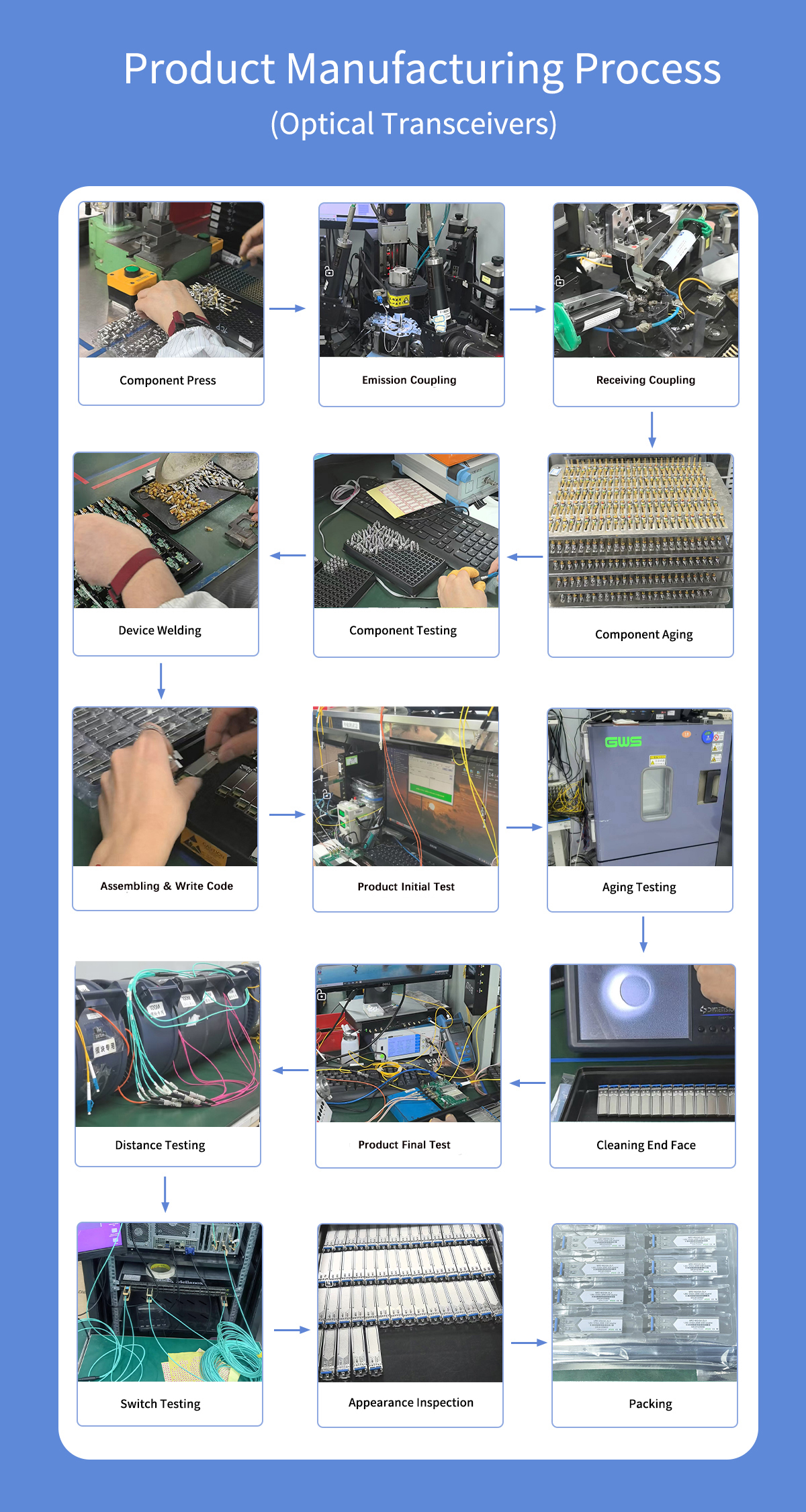
At HYTOPTODEVICE, our quality commitment is backed by industry-standard validations. From fiber optical transceiver manufacturing to final visual inspection, from IQC、IPQC、FQC to OQC, our processes ensure global compliance and reliability.
We adhere to rigorous standards for our SFP modules and network solutions:
ISO 9001: Certified quality management and production consistency.
CE & FCC: Fully compliant for seamless Global Market Access.
RoHS: Committed to environmental responsibility and hazardous material control.
Proven Reliability: Rigorous testing to reduce compliance risk and ensure safety.
Certified Quality. Global Standards. Guaranteed Performance.