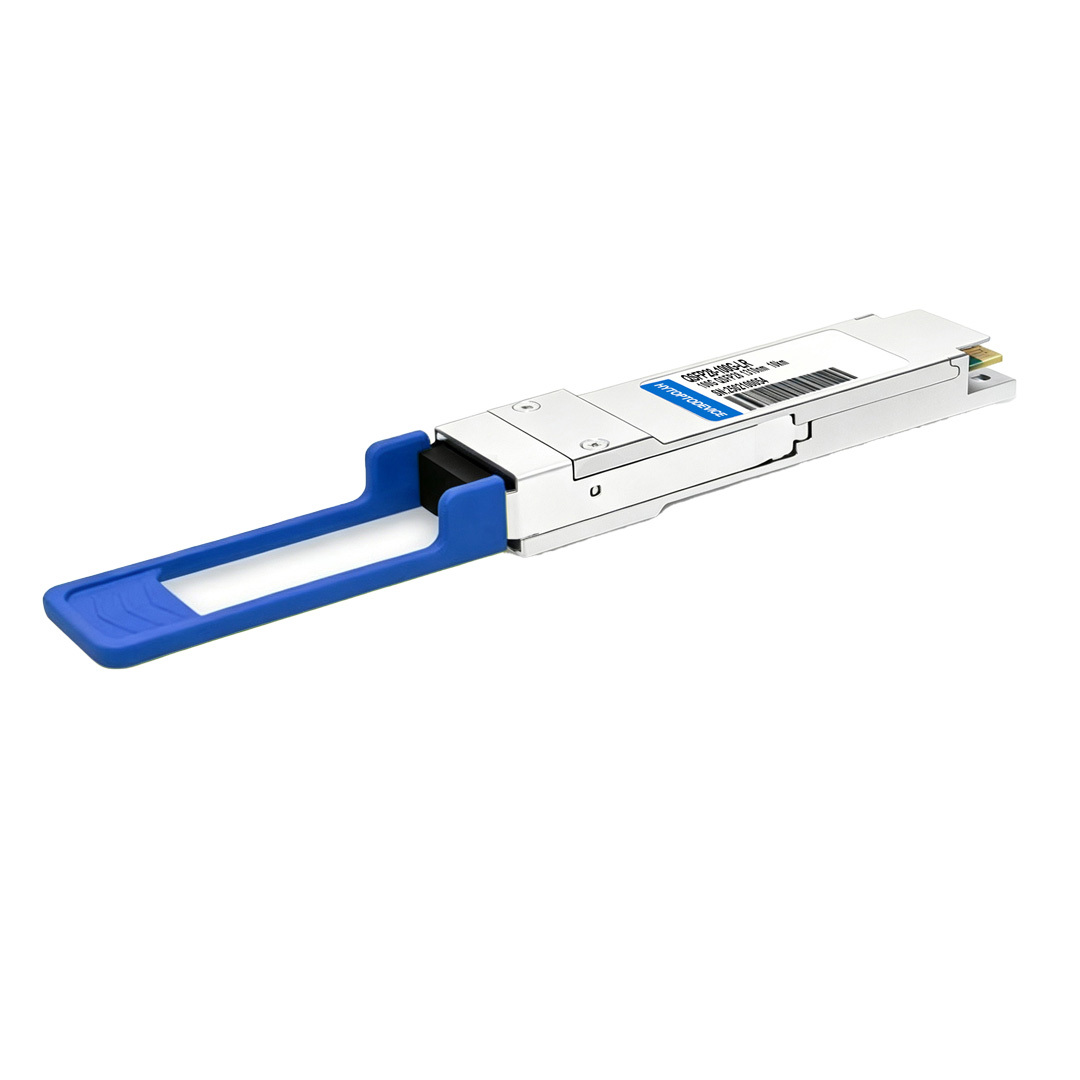
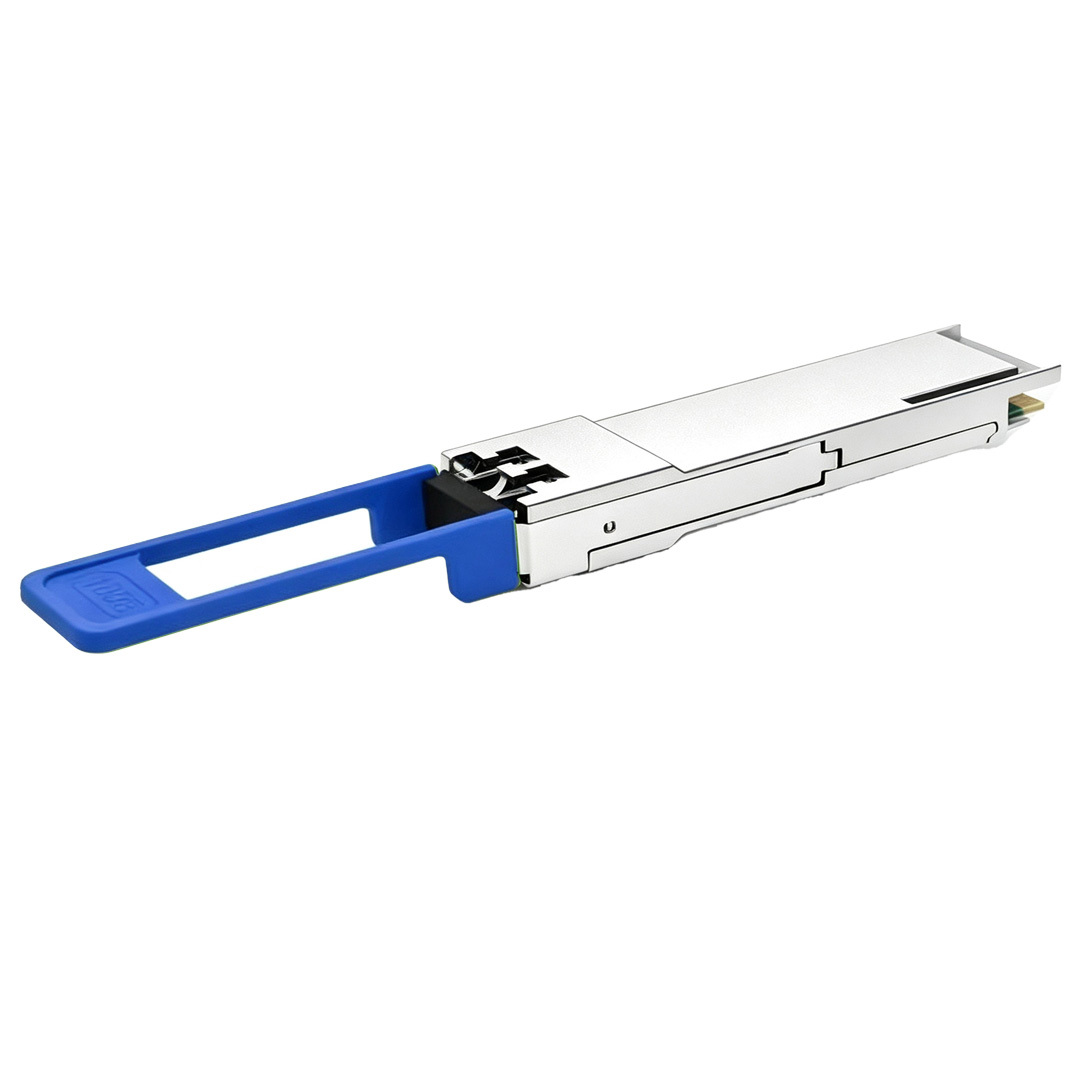
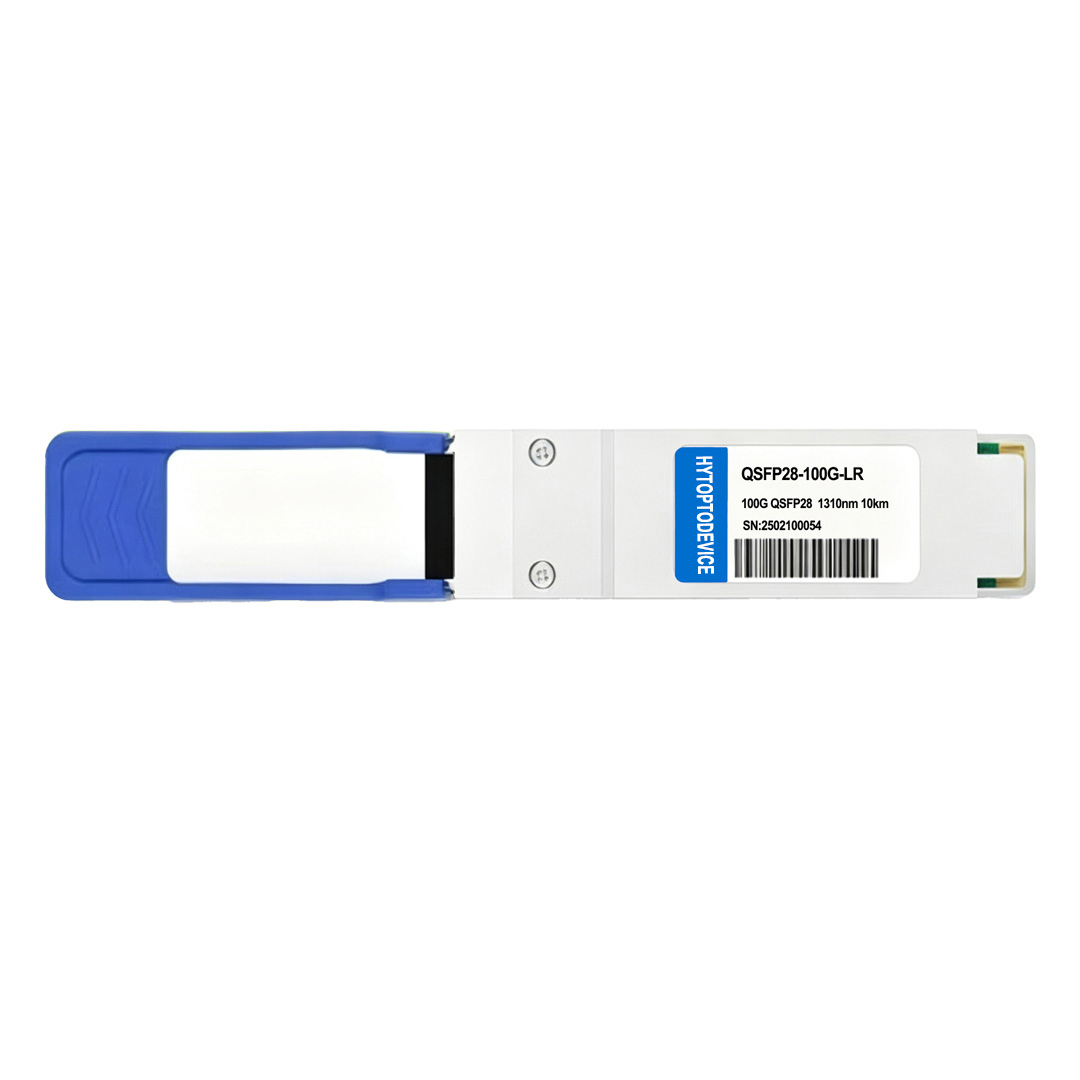
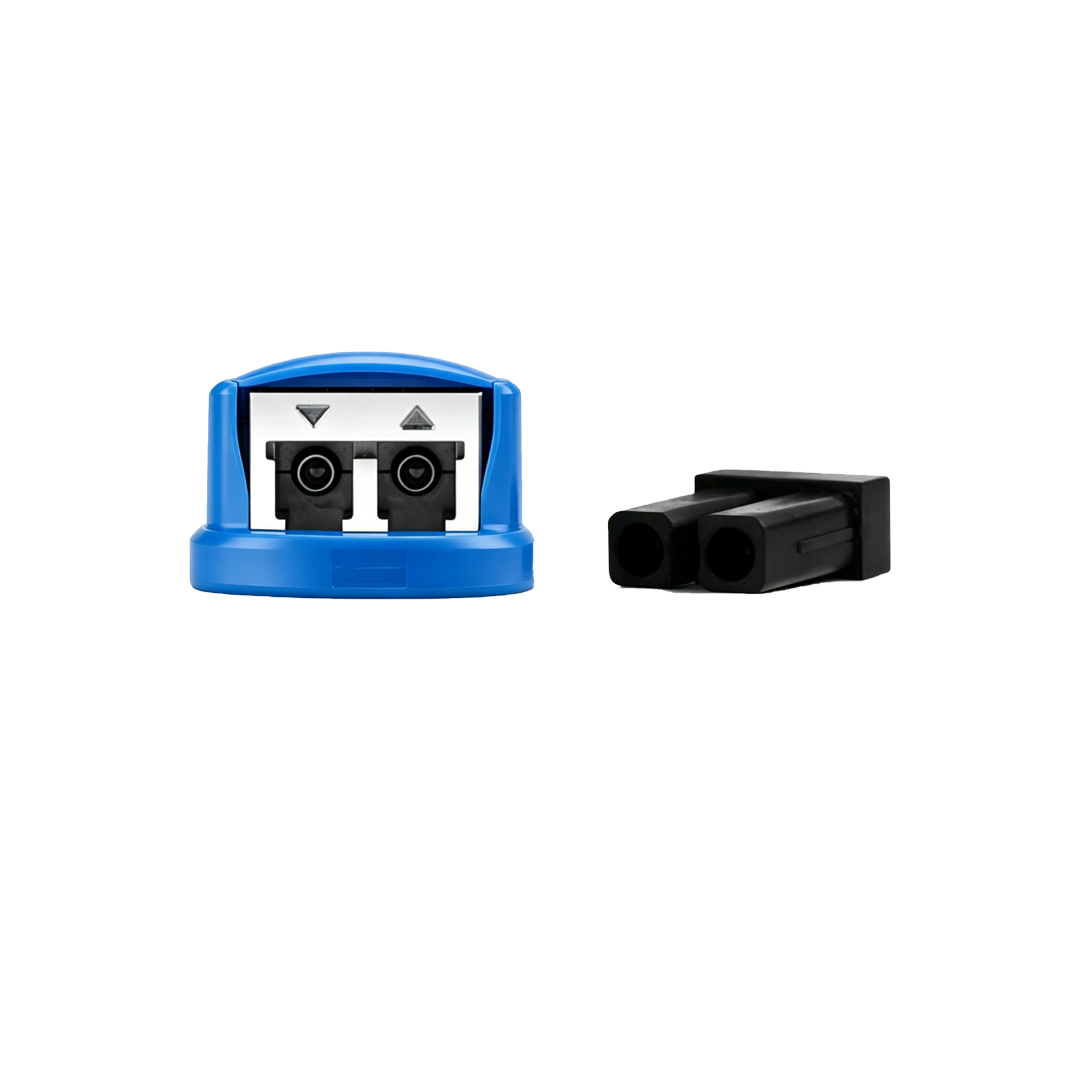
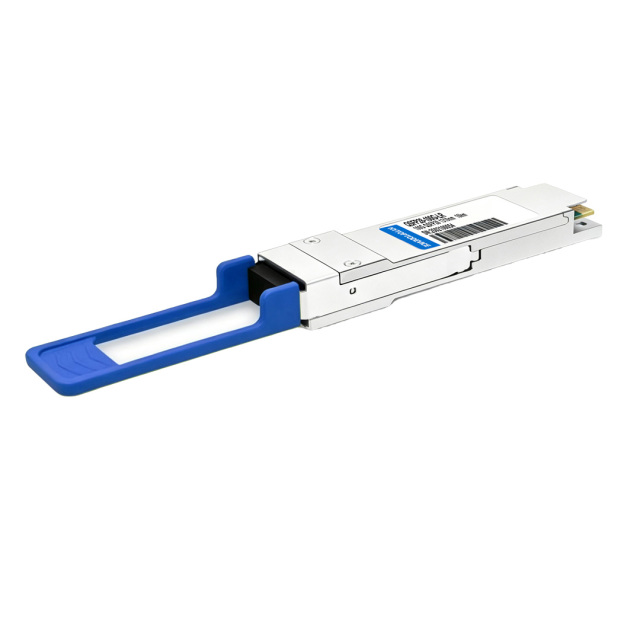
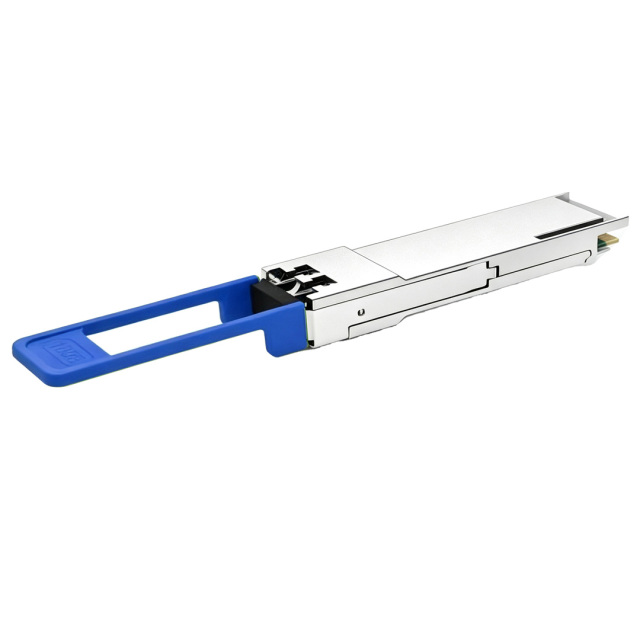
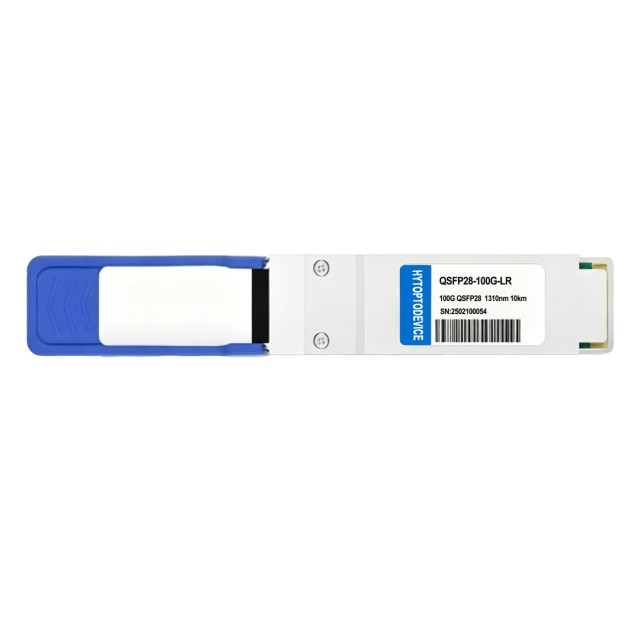
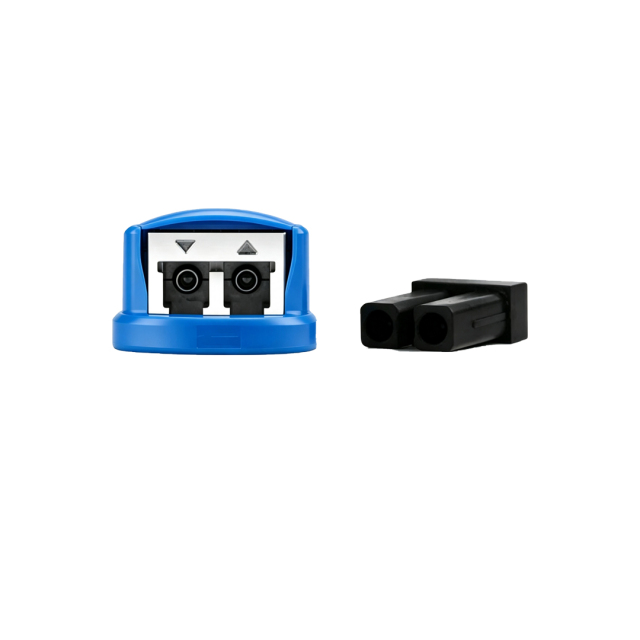
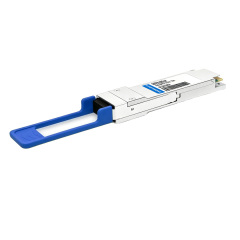
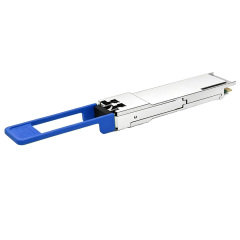
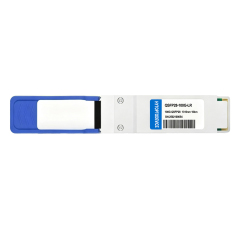
Brocade 100G-QSFP28-LR-10KM Compatible 100G QSFP28 LR Transceiver Module Single Lambda | 100GBASE-LR 1310nm 10km SMF Duplex LC | HYTOPTODEVICE
Product Overview
This 100G QSFP28 transceiver serves as a field-proven replacement for Brocade 100G-QSFP28-LR-10KM, engineered to eliminate compatibility alarms and link instability on Brocade enterprise and data center hardware.
It adopts single-lambda PAM4 modulation paired with built-in KP4 FEC, delivering consistent 100G Ethernet traffic up to 10km over OS2 single-mode fiber. The onboard DSP converts four 25G electrical lanes into one unified 100G optical channel, maintaining clean signal performance across cross-floor, campus and inter-building long-haul links.
Designed to satisfy IEEE 802.3cd, QSFP28 MSA and 100G Lambda MSA standards, the module supports DDM/DOM real-time optical monitoring. Tuned EEPROM profiles enable hot-plug operation on Juniper equipment with minimal warning logs. It fits leaf-spine fabrics, long-distance aggregation trunks and phased bandwidth expansion via valid 400G PLR4 optical breakout.
Key Technical Specifications
| Brocade Compatible |
100G-QSFP28-LR-10KM |
Vendor Name |
HYTOPTODEVICE |
| Form Factor |
QSFP28 |
Max Data Rate |
100Gbps Single Lambda |
| Wavelength |
1310nm
|
Max Distance |
10km |
| Connector |
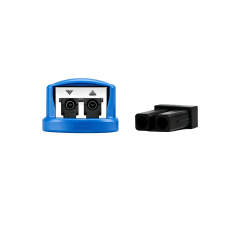
Duplex LC/UPC |
Transmitter Type |
EML |
| Cable Type |
SMF |
Receiver Type |
PIN |
| FEC Support |
Yes |
TX Power |
-1.4~+4.5dBm |
| Power Consumption |
<4.5W |
Receiver Sensitivity |
< -6.1dBm |
| Protocols |
QSFP28 MSA, SFF-8636,IEEE 802.3cu,CAUI-4 |
Operation Temperature |
0 to 70°C (32 to 158°F) |
Usage Guidelines & Best Practices
- Fiber Requirement: Only OS2 single-mode fiber; OM3/OM4 multimode fiber cannot support 1310nm PAM4 transmission and will cause link failure.
- FEC Configuration: Enable KP4 FEC on Target switch ports to maximize 10km link margin and sustain low BER stability.
- Installation Specification: Hot-plug supported; keep LC end faces clean and maintain proper bend radius to avoid extra attenuation.
- Distance Limit: Rated for 10km OS2 SMF; excessive splices, contaminated connectors or tight bends reduce effective transmission distance.
- Optical Attenuator Required for Short Links: For testing or short‑distance connections (<5km), connect a 2dB optical attenuator to the RX port to prevent damaging the receiver,ensuring the received power between -6.1~+4.5dBm.
- Operating Environment: Commercial temperature 0°C–70°C; keep ports dry and dust-free to extend QSFP28 transceiver service life.
For detailed operation instructions, please refer to the User Guide.
Full Compatibility List & Supported Network Hardware
1. Supported Hardware & Firmware
HYTOPTODEVICE 100G-QSFP28-LR-10KM compatible QSFP28 transceivers match original mechanical dimensions and optical parameters. Purpose-built EEPROM configuration enables plug-and-play operation on Brocade VDX series switches. Every unit undergoes lab interoperability testing to suppress unknown module alarms, port flapping and random session interruptions.
Validated Brocade Platforms:
- Brocade VDX leaf and spine data center switches
- Brocade enterprise core and aggregation switching hardware
- Rack servers equipped with QSFP28 100G NIC ports
- All hardware with standard QSFP28 ports supporting 100GBASE-LR1 single lambda
2. Multi-Brand Cross Compatibility
Built on universal MSA specifications, these QSFP-100G-LR-S replacement QSFP28 transceivers support broad multi-vendor interoperability. They work seamlessly with Arista, Cisco, Juniper, H3C, Huawei,Dell, NVIDIA/Mellanox hardware and other more, supporting multi‑vendor hybrid networking and flexible long‑reach 100G data‑center deployment.
3. Free Value-Added Services
-
Custom firmware for multi-device compatibility
-
Support sample testing before bulk orders for project pre-verification
-
Private-label customization and professional deployment guidanc
-
Strict batch consistency quality control
- Free custom EEPROM programming for special and legacy network environments
- Free EEPROM rewriting (Tools Included) with 24/7 Tech Support
Primary Application Scenarios
- Leaf-spine fabric inter-switch connections for Brocade rack-scale data centers
- Long-haul 100G Ethernet links across multi-building enterprise campuses
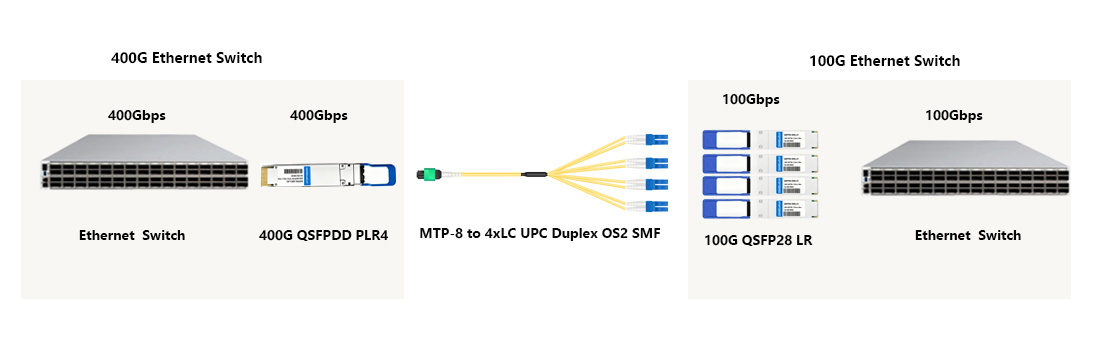
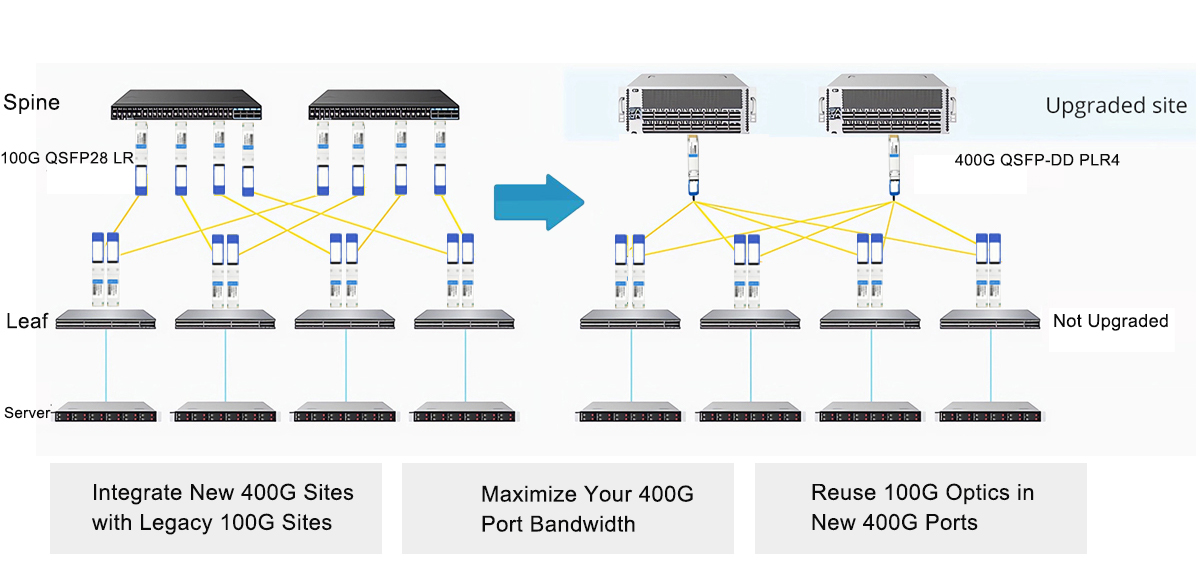
- 400G PLR4 to 4×100G optical breakout for gradual bandwidth expansion
- 100G uplinks between top-of-rack switches and Brocade GPU, HPC and virtualization servers
- Enterprise core and aggregation backbone extension over 10km single-mode fiber
- Multi-vendor hybrid infrastructure long-distance interconnection
Connectivity Solutions(Applications)
1. 100G to 100G for Switch-Switch Interconnection

2.100G to 100G for Switch-NIC Connection

3.100G to 400G Smooth Network Migration
The Core Feature
1.Phased upgrade without full infrastructure replacement
Single-lambda PAM4 design and standard KP4 FEC enable seamless 400G FR4 breakout migration. Customers scale bandwidth batch by batch while reusing target switching and fiber assets, maximizing hardware utilization and cutting total TCO.
2.Verified Host Interoperability
EEPROM firmware pre-coded to your target host. Every QSFP28 is real-machine verified across host generations. Plug in, power up — zero alarms, zero re-work. No link flapping. No port lockdowns. No compatibility errors. Legacy or current hardware, same clean result.

3.Comprehensive Factory Testing & Reliable Performance
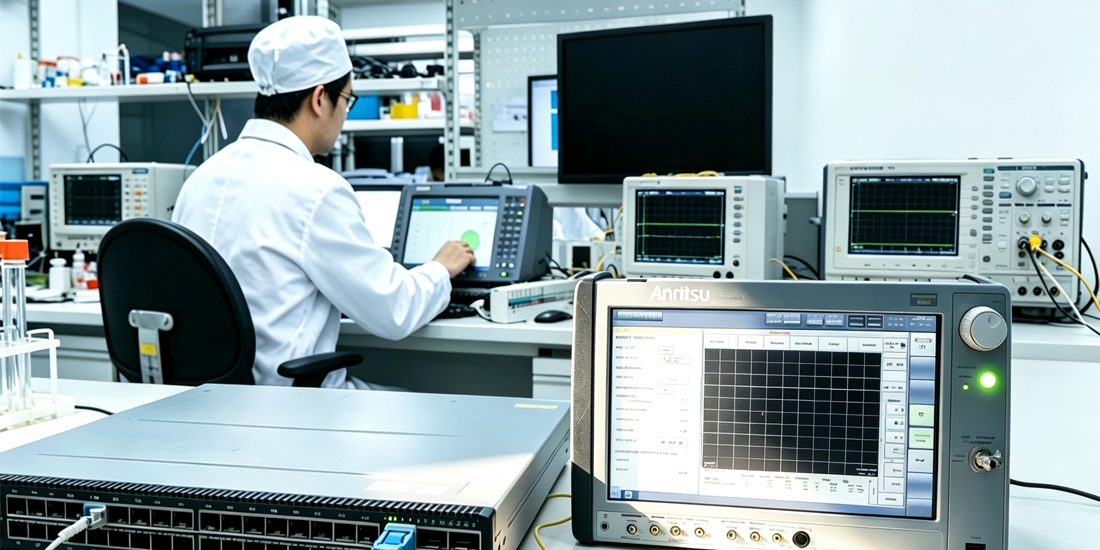
100% factory tested, not sampled. Optical eye, TX/RX power, wavelength, sensitivity, EEPROM/DDM. Full burn-in plus wide-temp testing. Traceable test data. Reliable now, reliable years on.
Curious how? Tour the Test Center.
FAQ
Q1: Is 100G Single Lambda LR1 capable of automatic speed downgrade to 40G?
A: HYTOPTODEVICE 100G LR1 runs purely under 100GBASE-LR1 and cannot auto-negotiate down to 40G. Its electrical layer adopts 4×25G PAM4 signaling, which does not match the signal structure of standard 40G optical interfaces. If your infrastructure requires 40G connectivity, please deploy dedicated 40G transceivers.
Q2: What differentiates 100G LR1 from FR1 and DR single-lambda modules?
A: These three single-lambda products are built for distinct distance tiers. DR handles short rack connections up to 500m, FR1 serves building-level distribution at 2km, and LR1 targets campus or inter-building links up to 10km. Even with the same 1310nm principle, they differ in transmit power, receiver sensitivity and dispersion tolerance; stable cross-model interoperation cannot be guaranteed.
Q3: Will third-party 100G LR1 trigger module authentication alarms on mainstream enterprise switches?
A: The outcome depends on switch firmware and access control policies. HYTOPTODEVICE programs EEPROM to match target OEM part codes, which greatly reduces generic module warning messages. Nevertheless, strict anti-counterfeit or port security modes may still block third-party optics. We provide customized coding and test records to lower on-site deployment risks.
Q4: Can older generation QSFP28 switches properly recognize 100G LR1?
A: Many legacy QSFP28 switches physically accept the module, yet protocol compatibility varies by operating system version. Outdated firmware may lack 100GBASE-LR1 identification or fail to parse DDM data accurately. Verify the exact switch model and firmware release before bulk installation; upgrading firmware often solves detection and FEC configuration problems.
Q5: Can 100G LR1 reliably operate beyond its rated 10km distance?
A: The 10km specification is the officially validated operating boundary. Extending links to 12km or longer exceeds the designed optical budget and dispersion margin. Such deployments may experience unstable BER, fluctuating DDM values or intermittent link drops. For longer distances, use amplified transmission, dispersion compensation or longer-reach optical modules.
Q6: What level of chromatic dispersion can 100G LR1 tolerate?
A: 100GBASE-LR1 works within a limited dispersion window centered at 1310nm. Practical tolerance varies by DSP and laser design, generally close to ±220 ps/nm for the 10km class. Going beyond this range distorts signal waveforms and weakens transmission performance. Dispersion factors should be calculated during fiber route planning for non-standard paths.
Q7: How does the power draw of 100G LR1 compare to traditional 100G LR4?
A: 100G LR1 usually consumes less power than legacy 100G LR4. LR4 requires four independent laser channels plus multiplexing components, while LR1 uses a single laser with simplified optical structure. HYTOPTODEVICE LR1 modules maintain power below 4.0W, easing thermal load in high-density leaf-spine racks.
Q8: Are standard 100G LR1 modules suitable for outdoor industrial temperature environments?
A: Our regular commercial LR1 supports 0°C to 70°C. Industrial temperature versions are available upon request with enhanced components and stricter thermal testing. Commercial units should not be placed in unconditioned outdoor cabinets or edge sites unless you confirm the industrial-grade part number.
Q9: What financial benefit does 100G LR1 bring compared with 100G LR4?
A: LR1 removes three lasers and extra multiplexing parts, simplifying the bill of materials. This streamlined architecture cuts unit cost and reduces spare stock expenses. For campus links under 10km, LR1 achieves similar transmission reach over standard duplex LC fiber with lower total ownership cost than LR4.
Q10: Can 100G LR1 be directly inserted into standard WDM transmission systems?
A: Direct deployment inside WDM channels is not recommended. LR1 emits broadband 1310nm light instead of precise grid-aligned DWDM wavelengths. Direct insertion into DWDM channels causes filtering issues and crosstalk. For WDM transport, choose DWDM-specific transceivers or pair LR1 with suitable passive CWDM/DWDM multiplexers designed for the 1310 band.
Packaging & Custom OEM Solutions
-
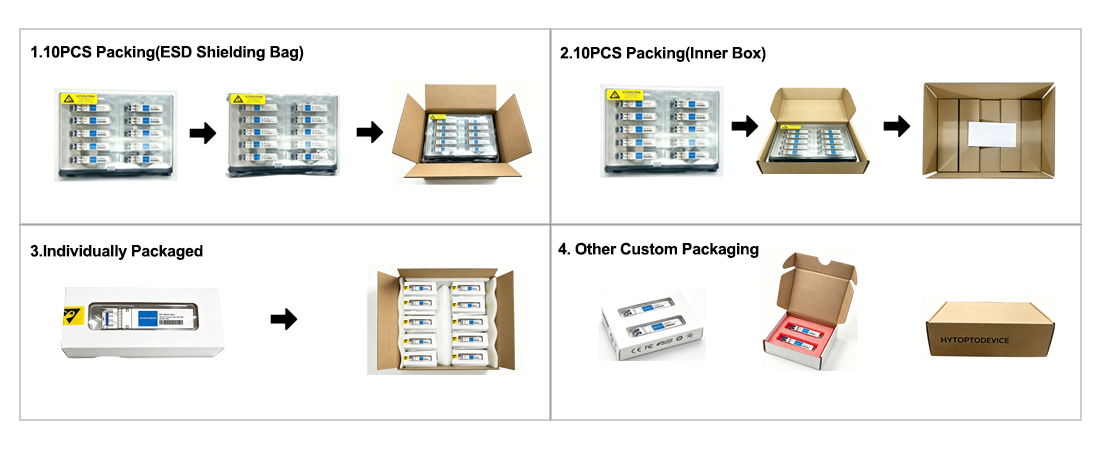
ESD Protection & Fast Shipping: Every module is sealed in an ESD-safe bag and ready for same-day dispatch from stock.
-
Custom OEM & Branding: We provide logo printing, private labeling, and custom packaging to help distributors and integrators build their brand—no factory investment required.
Why Network Engineers Choose HYTOPTODEVICE
HYTOPTODEVICE has supplied over 5000,000 optical transceiver modules to data centers, ISPs, and enterprise networks across 100+ countries since 2011. Every module undergoes a 72-hour burn-in test and full DDM/DOM validation before shipment.
- Up to 70% cost savings vs OEM, transparent pricing & flexible bulk rates, supported quality returns
- 100% real-device compatible with Cisco, Huawei,Dell,Juniper, and Arista
- ISO 9001:2015 Shenzhen factory, full lineup: 1.25G/10G/25G/40G/100G/200G/400G/800G/1.6T transceivers
- Ample stock, fast global DHL/FedEx shipping in 3–5 working days
- Free pre-sales engineering support for custom EEPROM & private label firmware
- Real switch test videos available for pre-purchase review; inspection & shipping videos provided per order
“Phenomenal performance. We deployed 200 HYTOPTODEVICE SFP modules to replace Cisco OEMs in our backbone network. Result? Zero compatibility issues and a 60% reduction in costs. Highly recommended for mission-critical networks."— Senior Network Engineer, Regional Telecom, Australia
Quality Certification & Compliance
At HYTOPTODEVICE, our quality commitment is backed by industry-standard validations. From fiber optical transceiver manufacturing to final visual inspection, from IQC、IPQC、FQC to OQC, our processes ensure global compliance and reliability.
We adhere to rigorous standards for our SFP modules and network solutions:
-
ISO 9001: Certified quality management and production consistency.
-
CE & FCC: Fully compliant for seamless Global Market Access.
-
RoHS: Committed to environmental responsibility and hazardous material control.
-
Proven Reliability: Rigorous testing to reduce compliance risk and ensure safety.
Certified Quality. Global Standards. Guaranteed Performance.

Rigorous Industrial Product Testing

100% 3rd Party Compatible

Partial Test Demonstration