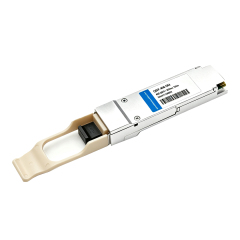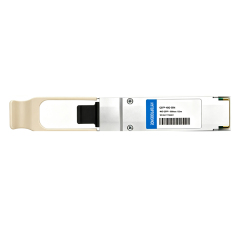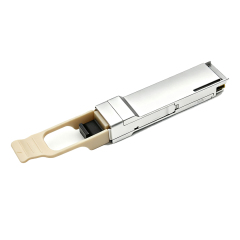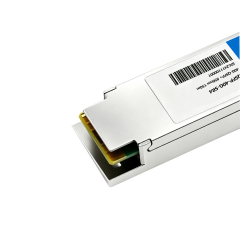
| NO. | Brand | Compatible P/N | Transceiver Type |
| 1 | Huawei | QSFP-40G-iSR4 | QSFP-40G-SR4(Cisco) |
| 2 | Juniper | QSFPP-40GBASE-SR4 | QSFP-40G-SR4(Dell) |
| 3 | IBM | 00D9865 | QSFP-40G-IR4 |
| 4 | NVIDIA(Mellanox) | MC2210411-SR4 | QSFP-40G-LG4 |
| 5 | MikroTik | Q+85MP01D | QSFP-40G-ER4 |
| 6 | Fortinet | FG-TRAN-QSFP+SR | QSFP-40G-ZR4 |
| 7 | Gigamon | QSF-502 | QSFP-40G-CSR4 |
| 8 | Palo Alto Networks | PAN-QSFP-40GBASE-SR4 |
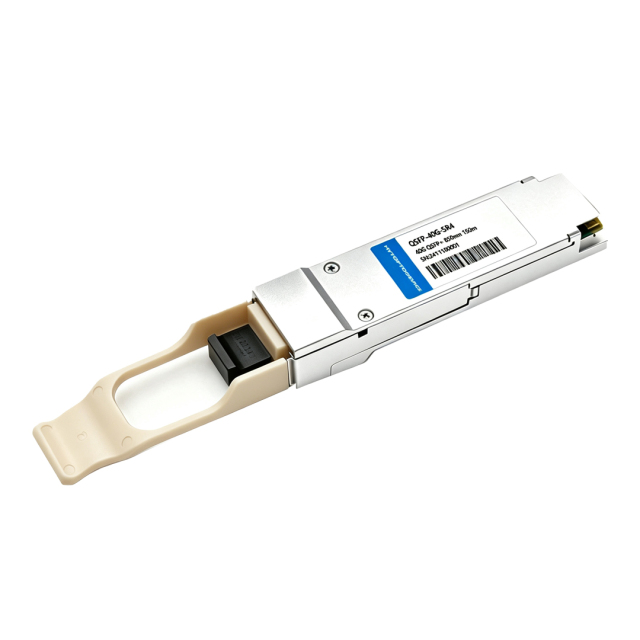
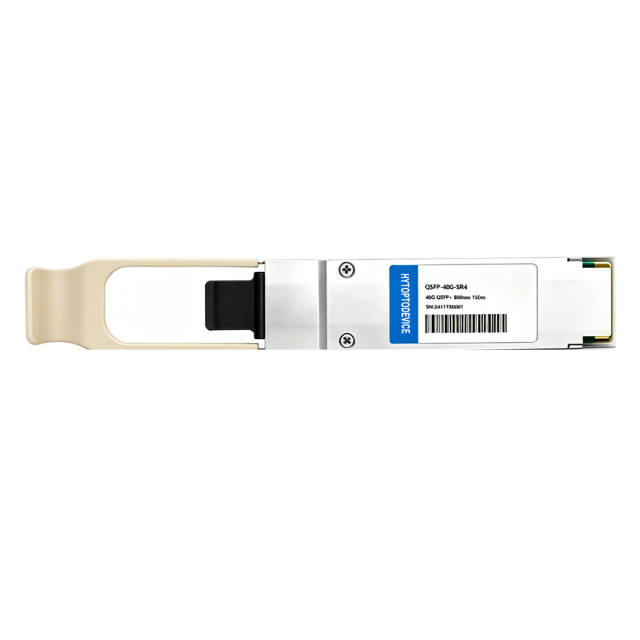
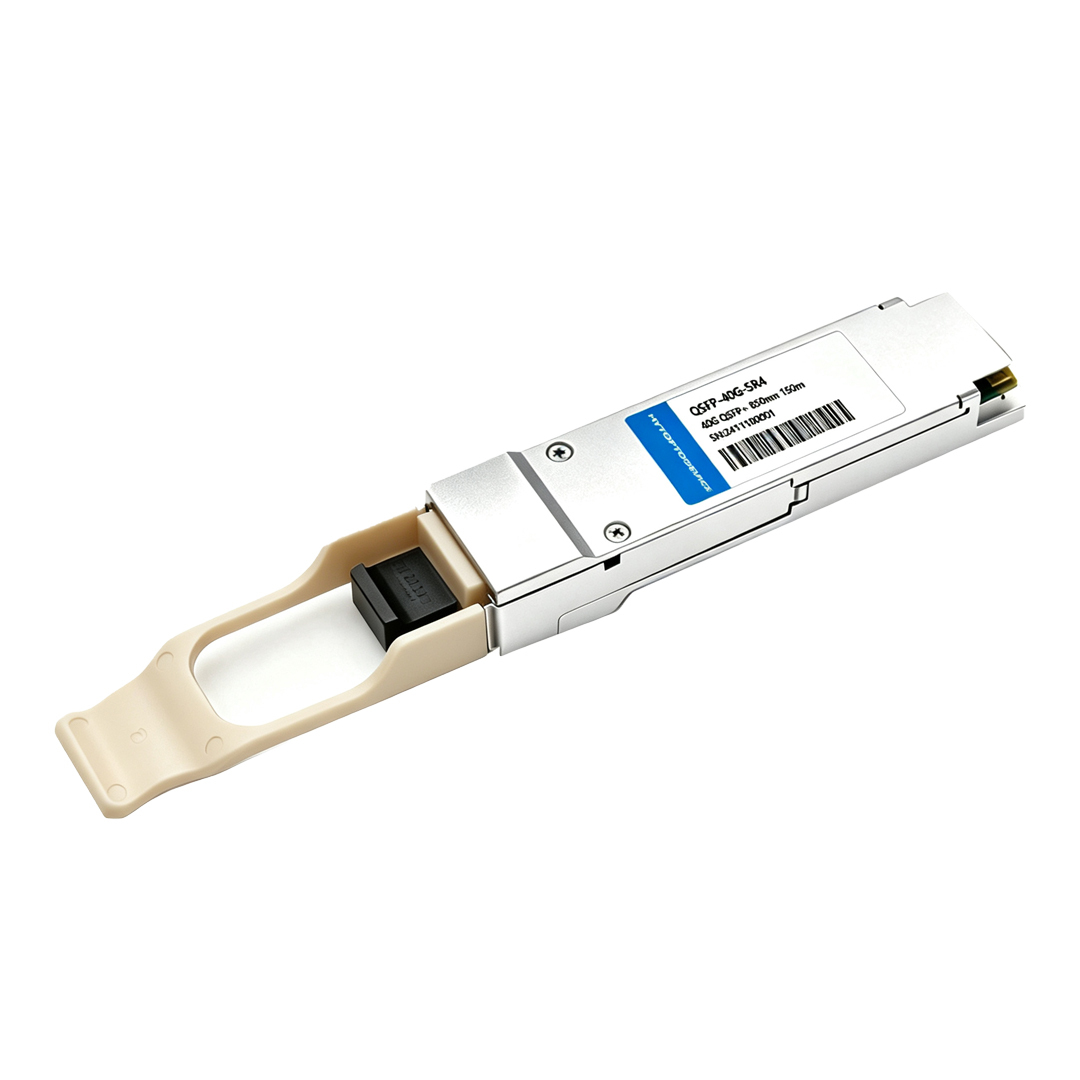
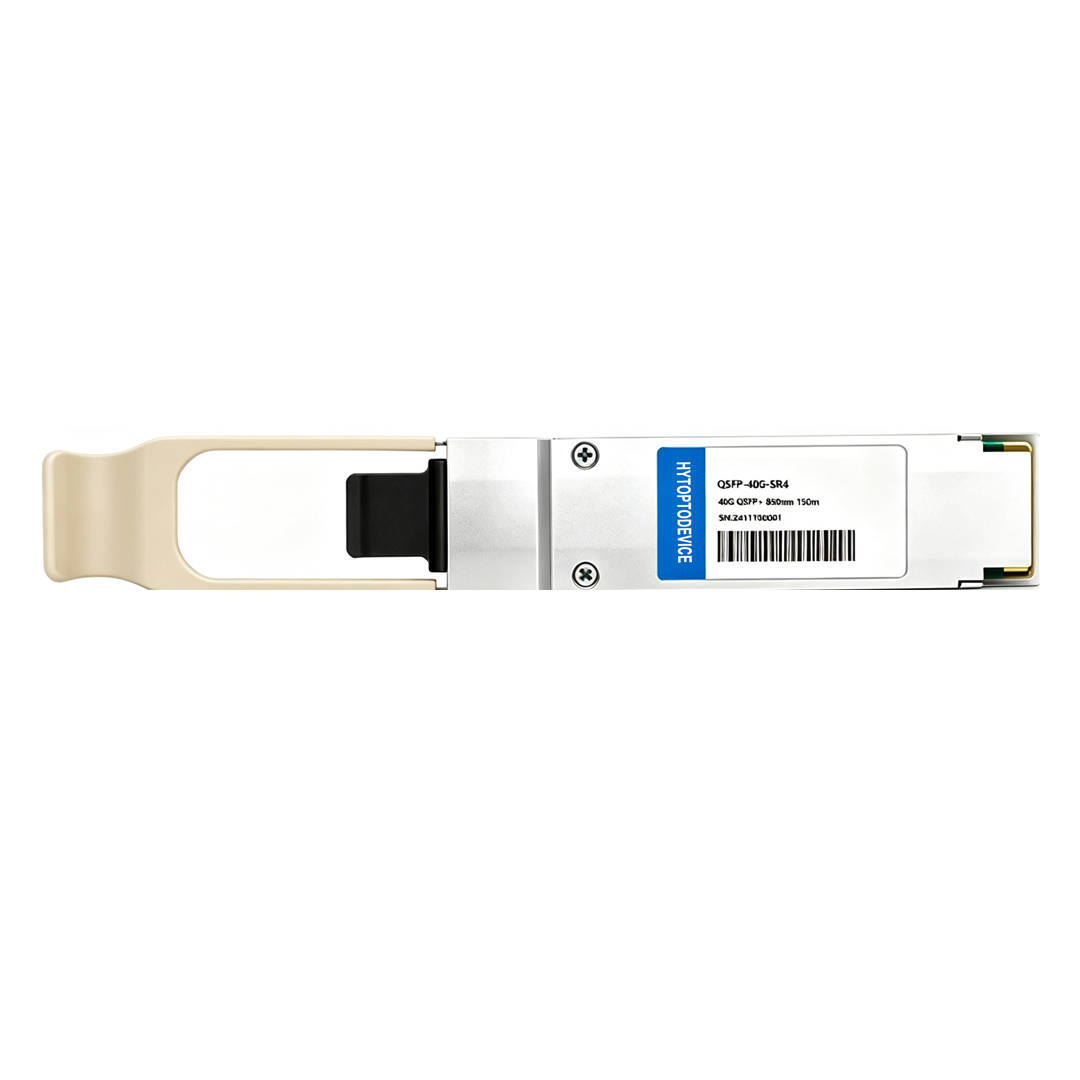
| MikroTik Compatible | Q+85MP01D | Vendor Name | HYTOPTODEVICE |
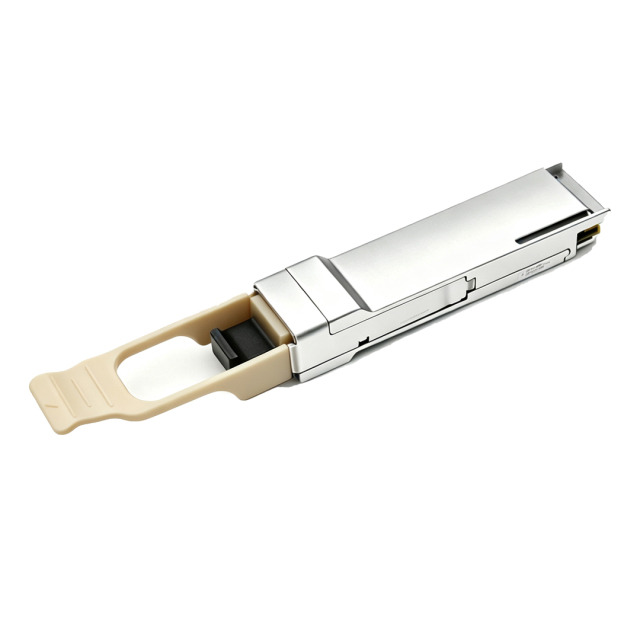
| Form Factor | QSFP+ | Max Data Rate | 41.25Gbps |
| Wavelength | 850nm | Max Distance | 150m@OM4/100m@OM3 |
| Connector | MTP/MPO | Transmitter Type | VCSEL 850nm |
| Cable Type | MMF | Receiver Type | PIN |
| TX Power | -8.0~1.0dBm | Receiver Sensitivity | < -13dBm |
| Power Consumption | ≤1.5W | Modulation | NRZ |
| Protocols | IEEE 802.3 40GBASE-SR4, SFF-8436 | Operation Temperature | 0 to 70°C (32 to 158°F) |
Usage Guidelines & Best Practices
Fiber Choice: Only compatible with OM3 / OM4 multi‑mode MPO‑12 trunk cabling; single‑mode fiber cannot facilitate 850 nm SR4 operation and will produce link failure.
Distance Limit: 100‑metre maximum operating reach on OM3, 150‑metre maximum on OM4; excessive splice joints, dirty connector end‑faces or sharp fiber bends degrade practical transmission distances.
Cleanliness & Dust: Keep dust caps on whenever unattached. Clean fiber end-faces with a optical cleaning pen before insertion; dust causes over 80% of optical link failures.
Installation Specification: Hot‑plug supported; keep MPO connector end‑faces clean, observe minimum fiber‑bend radius requirements.
Operating Environment: Designed for commercial‑grade 0°C‑70°C ambient conditions; maintain adequate cabinet‑level airflow to prevent excessive module temperature build‑up.
Full Compatibility List and Supported Devices
1. Supported Hardware & Firmware
Primary Application Scenarios
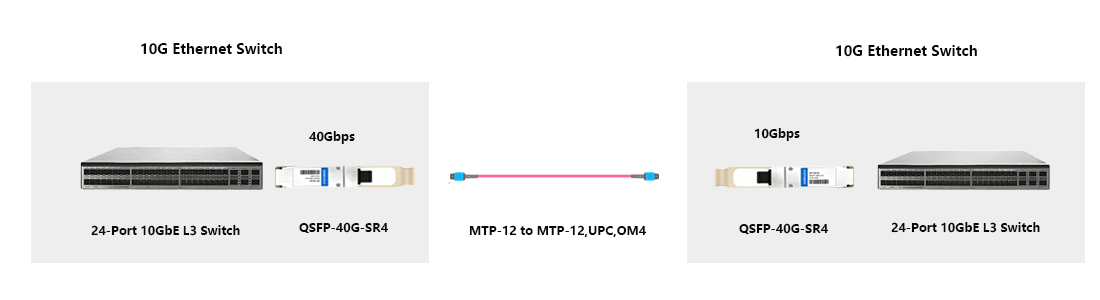
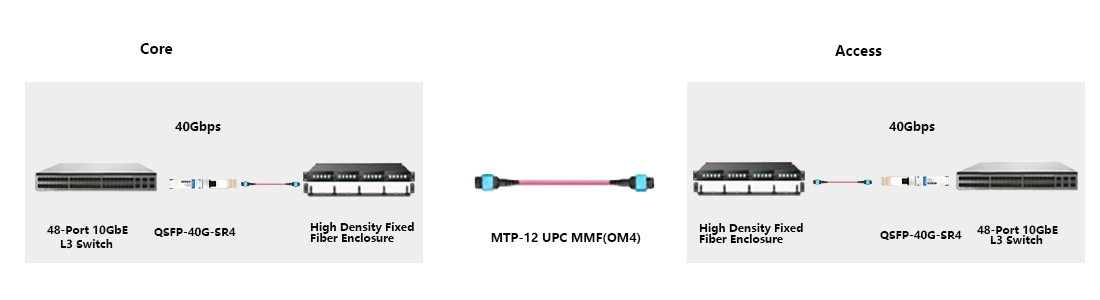
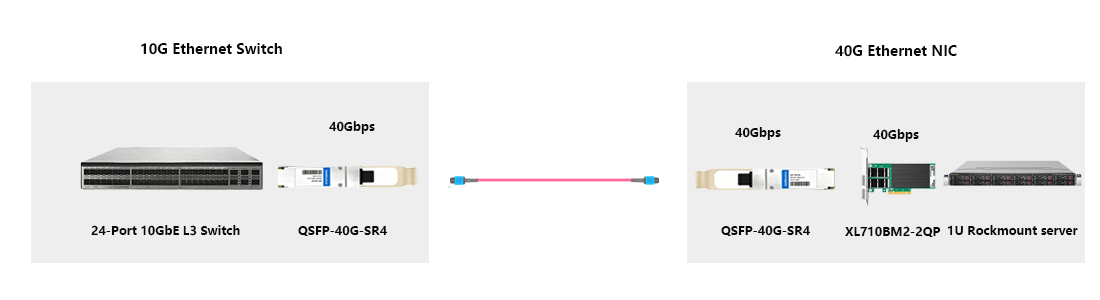
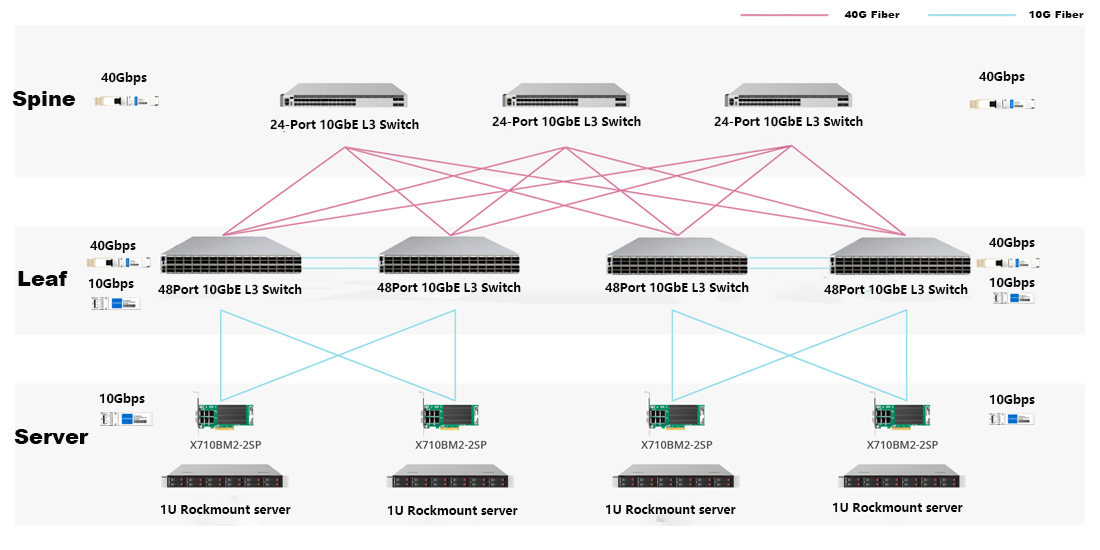
1. 40G Connectivity for Data Center
High speed, low overhead. The QSFP+ 40G module brings gigabit-class throughput to dense data center racks while drawing less power and taking up less space.



FAQ
Q1: What causes MikroTik RouterOS to show transceiver unsupported warnings once I plug in this 40G QSFP SR4 module?
A: This transceiver warning can be fully eliminated via professional EEPROM recoding. The error is triggered by mismatched vendor coding between the module and MikroTik host platform lock mechanism. HYTOPTODEVICE preloads platform-specific codes for Q+85MP01D compatible 40G QSFP SR4 modules to enable seamless recognition; persistent issues can be fixed via port configuration adjustment, firmware update or our free recoding service.
Q2: Can I mix this MikroTik-compatible 40G QSFP SR4 optic with SR4 transceivers from other manufacturers on opposite ends of one fiber link?
A: Cross-brand pairing of 40G SR4 optics works properly for qualified fiber links. The 40GBASE-SR4 standard defines unified parallel multimode transmission parameters. HYTOPTODEVICE 40G QSFP SR4 modules can interoperate with third-party SR4 transceivers as long as both sides use OM3 or OM4 multimode fiber and standard MPO cabling.
Q3: Can I view real-time optical power and temperature readings from this 40G QSFP SR4 within MikroTik RouterOS?
A: This module fully supports DDM/DOM real-time monitoring and threshold detection. It complies with SFF-8436 digital diagnostic specification to read module temperature, supply voltage, transmit and receive optical power plus factory alarm thresholds. All HYTOPTODEVICE 40G QSFP SR4 modules retain complete diagnostic functions for real-time enterprise link health inspection.
Q4: What is the maximum acceptable total channel loss for stable 40GBASE-SR4 data transmission?
A: The 40G SR4 link must keep total insertion loss controlled under 1.9 dB to maintain stable operation. IEEE 40GBASE-SR4 standard sets 1.9 dB as the maximum channel loss including connectors, splices and patch panels. Test the loss of your on-site fiber plant before deploying HYTOPTODEVICE modules to avoid packet loss and link dropouts.
Q5: Can I hot swap this 40G QSFP SR4 transceiver without rebooting MikroTik routers or switches?
A: This 40G QSFP SR4 transceiver supports safe hot swap while host hardware remains powered on. It meets QSFP+ MSA mechanical and electrical hot-plug requirements. HYTOPTODEVICE modules integrate built-in ESD protection to support convenient online replacement and maintenance within live MikroTik network environments.
Q6: Can this 40G QSFP SR4 module split a single 40G port into four separate 10G SFP+ ports?
A: This 40G QSFP SR4 module cannot support breakout for 4×10G SFP+ connections. 40G to 10G breakout requires dedicated breakout-capable transceivers, while this standard SR4 module only works for native 40G parallel transmission. Contact HYTOPTODEVICE if you need alternate breakout-compatible QSFP+ models for your 10G migration project.
Q7: How will unclean MPO connector end faces affect 40G QSFP SR4 multimode link performance?
A: MPO connector cleanliness directly determines long-term reliability of your 40G SR4 fiber link. Contaminated ferrules rank as the top root cause of multimode 40G link failures and may permanently damage VCSEL laser components. Always inspect and clean MPO ports before installing HYTOPTODEVICE 40G QSFP SR4 modules to maintain error-free transmission.
Q8: What minimum bend radius should I follow when routing multimode fiber for 40G QSFP SR4 links?
A: Multimode fiber cables must maintain a defined minimum bend radius during routing and installation. Industry best practice recommends a bend radius equal to roughly 10 times the cable outer diameter. Sharp bends increase optical loss and gradually degrade fiber cores, hurting long-term stability of HYTOPTODEVICE 40G QSFP SR4 optical links.
Q9: What warranty and RMA workflow do you offer for bulk orders of MikroTik compatible 40G QSFP SR4 modules?
A: We provide exclusive 5-year official warranty and standardized RMA service for all wholesale customers. All HYTOPTODEVICE bulk 40G QSFP SR4 modules undergo strict factory testing and quality screening. Customers can follow our standardized RMA process including problem feedback, product return and official replacement/repair services; detailed warranty rules are published on our official website.
Q10: What MTBF rating can I expect from these factory-tested 40G QSFP SR4 optical transceivers?
A: Robust industrial component design delivers extended service life for these 40G SR4 modules. Qualified modules achieve MTBF ratings of several million hours under normal operating conditions. HYTOPTODEVICE uses premium VCSEL laser arrays and core chips with slow, predictable aging to support multi-year continuous operation in enterprise networks.
Q11: Does long-time continuous operation cause gradual optical performance drop for this 40G QSFP SR4 module?
A: No obvious performance degradation appears during long-term normal operation of our modules. Minor laser aging is a natural physical effect and can be tracked continuously via DDM readings. HYTOPTODEVICE precise component calibration and burn-in testing maintain consistent link performance; sudden failures originate from external factors instead of natural aging.
Q12: What support do you provide if a 40G QSFP SR4 module arrives dead on arrival after shipment?
A: HYTOPTODEVICE strictly regards product quality as enterprise core competitiveness and guarantees zero-DOA delivery for qualified orders. We implement a 30-day free replacement and return policy for all standard products. Once DOA situations occur, we provide fast free replacement services to fully protect customers’ enterprise network deployment.
Q13: What is the proper installation procedure to insert this 40G QSFP SR4 module into MikroTik QSFP+ ports?
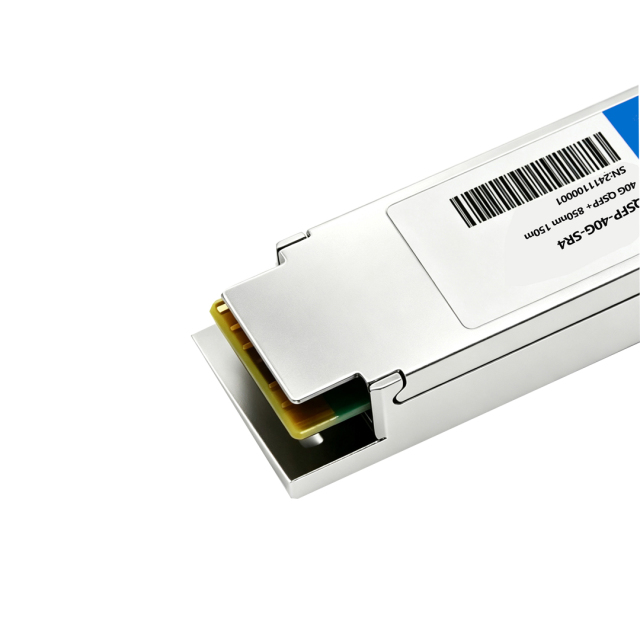
A: Gentle aligned insertion guarantees safe and proper module installation. Align the module keyway with the port slot, insert smoothly and lock the latch in place. Forcing misaligned insertion will bend gold pins and damage both the module and MikroTik port hardware; follow these steps when deploying HYTOPTODEVICE transceivers.
Q14: What fiber inspection and cleaning tools are needed for regular MPO connector maintenance on 40G SR4 fiber links?
A: Specialized fiber optic tools are required for regular MPO connector maintenance. A standard tool kit includes an MPO inspection scope, professional cleaning sticks and one-click fiber cleaners. Fully clean both module ferrules and cable connectors before each connection to remove contaminants and protect HYTOPTODEVICE 40G QSFP SR4 links.
Q15: Can your engineering team supply datasheets and technical guidance for enterprise projects deploying these 40G QSFP SR4 transceivers?
A: We provide complete one-stop technical documents and full-cycle technical support for all clients. Support materials include official datasheets, compatibility lists and quick installation guides. HYTOPTODEVICE professional technical team provides pre-sales selection guidance and after-sales deployment troubleshooting to support bulk enterprise project implementation.
Packaging & Custom OEM Solutions
Every 40G QSFP+ SR4 module ships in sealed ESD-safe packaging, ready for same-day dispatch. Bulk orders offer OEM customization—logo printing and private labeling—tailored for network distributors, integrators, and enterprise deployments.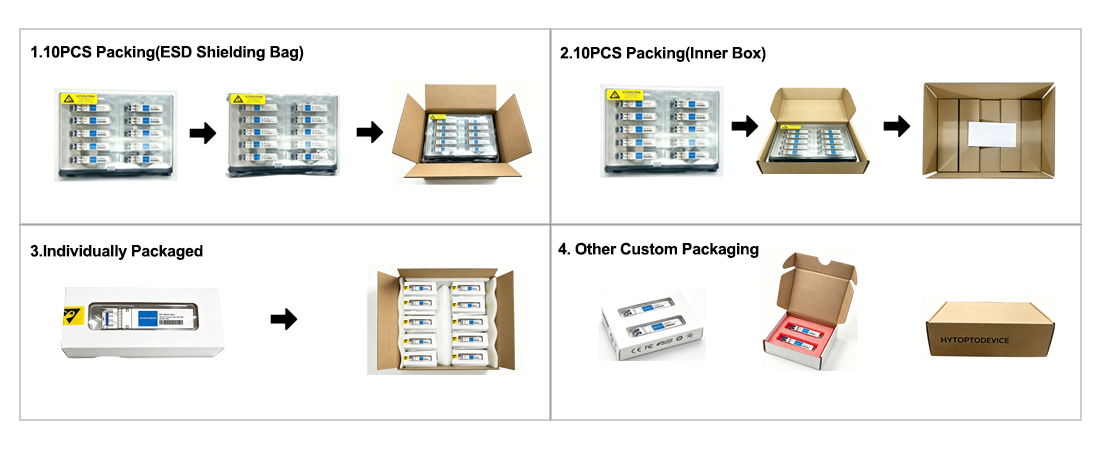
Why Network Engineers Choose HYTOPTODEVICE
HYTOPTODEVICE has supplied over 5000,000 optical transceiver modules to data centers, ISPs, and enterprise networks across 100+ countries since 2011. Every module undergoes a 72-hour burn-in test and full DDM/DOM validation before shipment.
“Phenomenal performance. We deployed 200 HYTOPTODEVICE SFP+ modules to replace Cisco OEMs in our backbone network. Result? Zero compatibility issues and a 60% reduction in costs. Highly recommended for mission-critical networks."— Senior Network Engineer, Regional Telecom, Australia
Quality Certification & Compliance
At HYTOPTODEVICE, our quality commitment is backed by industry-standard validations. From fiber optical transceiver manufacturing to final visual inspection, from IQC、IPQC、FQC to OQC, our processes ensure global compliance and reliability.
We adhere to rigorous standards for our SFP modules and network solutions:
ISO 9001: Certified quality management and production consistency.
CE & FCC: Fully compliant for seamless Global Market Access.
RoHS: Committed to environmental responsibility and hazardous material control.
Proven Reliability: Rigorous testing to reduce compliance risk and ensure safety.
Certified Quality. Global Standards. Guaranteed Performance.