Q1: What core chip solution supports 100G single-lambda FR signal conversion for Juniper networks?
A1: HYTOPTODEVICE Juniper-compatible 100G FR transceivers adopt premium Broadcom dedicated signal processing chips as the core hardware. It stably converts 4×25G NRZ electrical signals into high-speed 1×100G PAM4 optical signals. Combined with onboard independent PAM4 modulation and FEC error correction technology, it solves signal attenuation and distortion problems during 2km medium-reach transmission, ensuring stable bandwidth output for Juniper data center links.
Q2: What industry standards govern HYTOPTODEVICE 100GBASE-FR single-lambda transceivers?
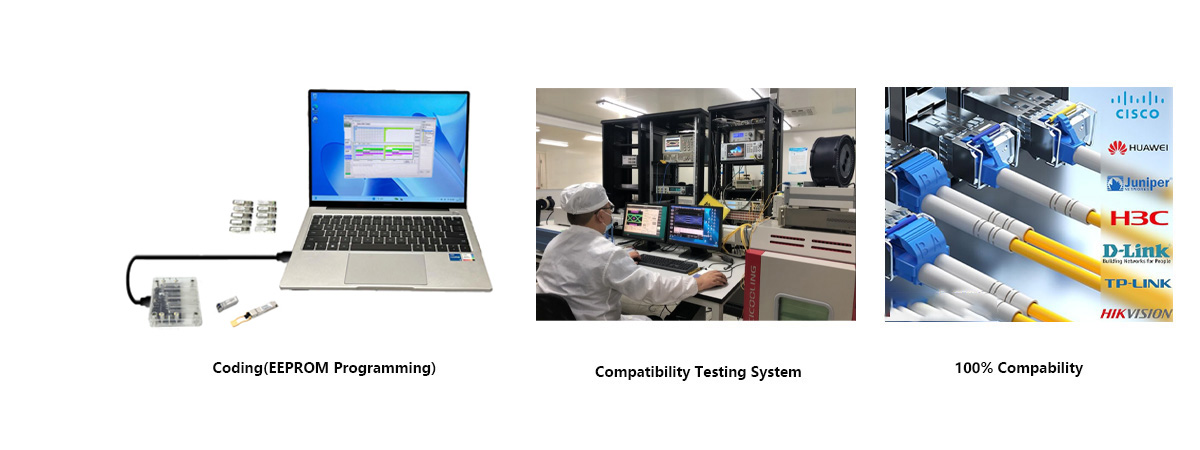
A2: Our 100G FR modules fully comply with three authoritative industry specifications: QSFP28 MSA mechanical standard, IEEE 802.3cd Ethernet protocol standard, and 100G Lambda MSA single-lambda optical transmission standard. Full standard compatibility guarantees universal interoperability, and our customized Juniper firmware further ensures zero-alarm plug-and-play operation on official Juniper switching devices.
Q3: What transmission distance can HYTOPTODEVICE 100GBASE-FR modules achieve in actual data center deployment?
A3: Calibrated strictly per industry standards, HYTOPTODEVICE 100G FR single-lambda transceivers support a maximum stable transmission distance of 2km over standard OS2 single-mode fiber. The built-in FEC error correction mechanism reserves sufficient link loss margin, adapting to medium-reach interconnection scenarios such as large data center floors and inter-building network links.
Q4: Why is single-lambda 100G FR better than traditional multi-channel 100G optical modules?
A4: Different from traditional multi-wavelength parallel 100G modules, HYTOPTODEVICE 100G FR adopts single-lambda PAM4 transmission architecture with fewer optical components and lower failure rates. Equipped with Broadcom chip optimization, it achieves longer 2km transmission distance, simpler duplex LC cabling, and lower overall TCO, making it more suitable for modern leaf-spine data center and 400G breakout migration scenarios.
Q5: Can 100GBASE-FR modules realize 400G FR4 breakout interconnection for network upgrades?
A5: Yes, HYTOPTODEVICE 100G FR single-lambda modules support 400G FR4 breakout networking. It enables one 400G FR4 port to split into four independent 100G FR links, helping enterprises reuse existing 400G switch hardware and fiber resources for phased 100G-to-400G upgrades without full network reconstruction.
Q6: Do your Juniper 100G FR replacement modules support real-time optical monitoring?
A6: All HYTOPTODEVICE 100GBASE-FR transceivers integrate standard DDM/DOM digital diagnostic monitoring function. After installation on Juniper switches, users can remotely monitor real-time data including module temperature, working voltage, transmit/receive optical power and laser bias current, facilitating daily operation maintenance and rapid fault location.
Q7: Is onboard FEC necessary for stable 2km transmission of 100G PAM4 FR links?
A7: Absolutely necessary. HYTOPTODEVICE 100G FR’s built-in FEC error correction technology is customized for 2km medium-reach PAM4 transmission. It effectively compensates signal loss caused by fiber splicing, connector gaps and minor interference, reducing bit error rate and eliminating link flapping, ensuring long-term stable operation of medium-distance 100G links.
Q8: Can 100GBASE-FR transceivers work with OM3/OM4 multimode fiber infrastructure?
A8: Not supported. HYTOPTODEVICE 100G FR modules are exclusively designed for OS2 single-mode fiber. The 1310nm PAM4 modulation signal is extremely sensitive to modal dispersion of multimode fiber, which will cause serious signal distortion, link negotiation failure and continuous packet loss. We strictly recommend matching standard OS2 SMF for deployment.
Q9: Will Broadcom chip-based 100G FR modules cause overheating in high-density Juniper switches?
A9: No. HYTOPTODEVICE optimizes the power consumption of Broadcom chip solution, controlling the total power below 4.0W. Compared with traditional high-power 100G modules, our single-lambda design generates lower heat, will not cause local temperature overheating in high-density switch ports, and effectively reduces data center PUE.
Q10: How does HYTOPTODEVICE guarantee the yield and stability of bulk 100G FR modules?
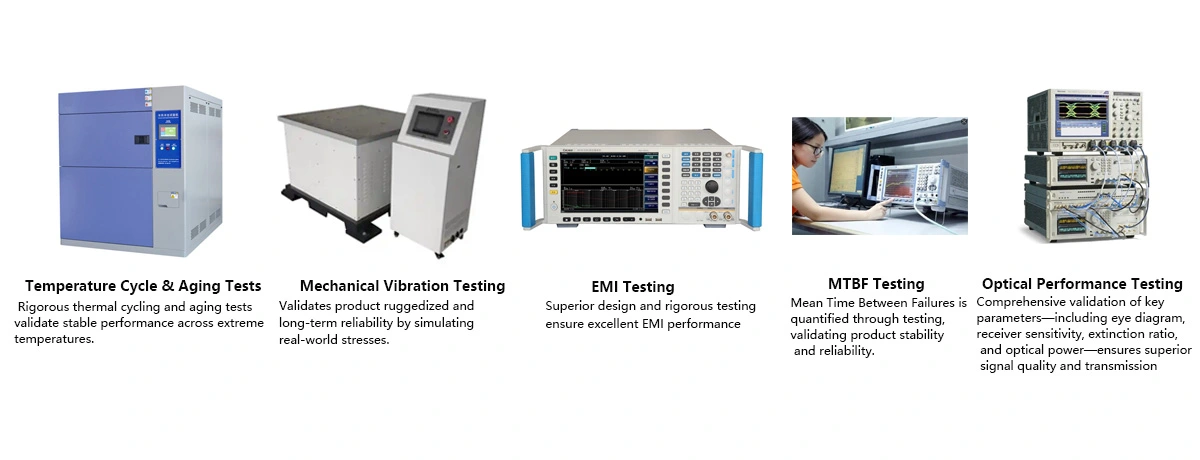
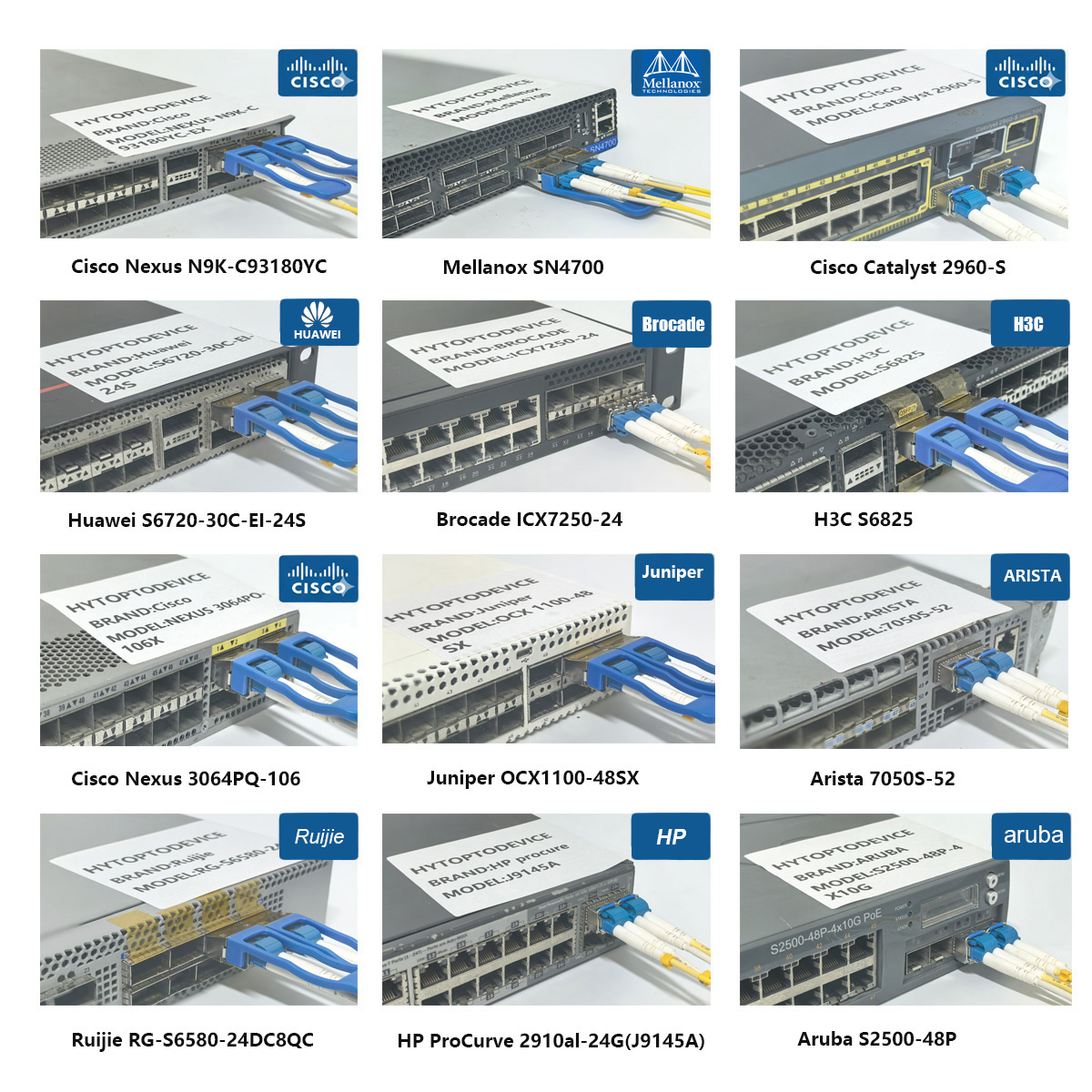
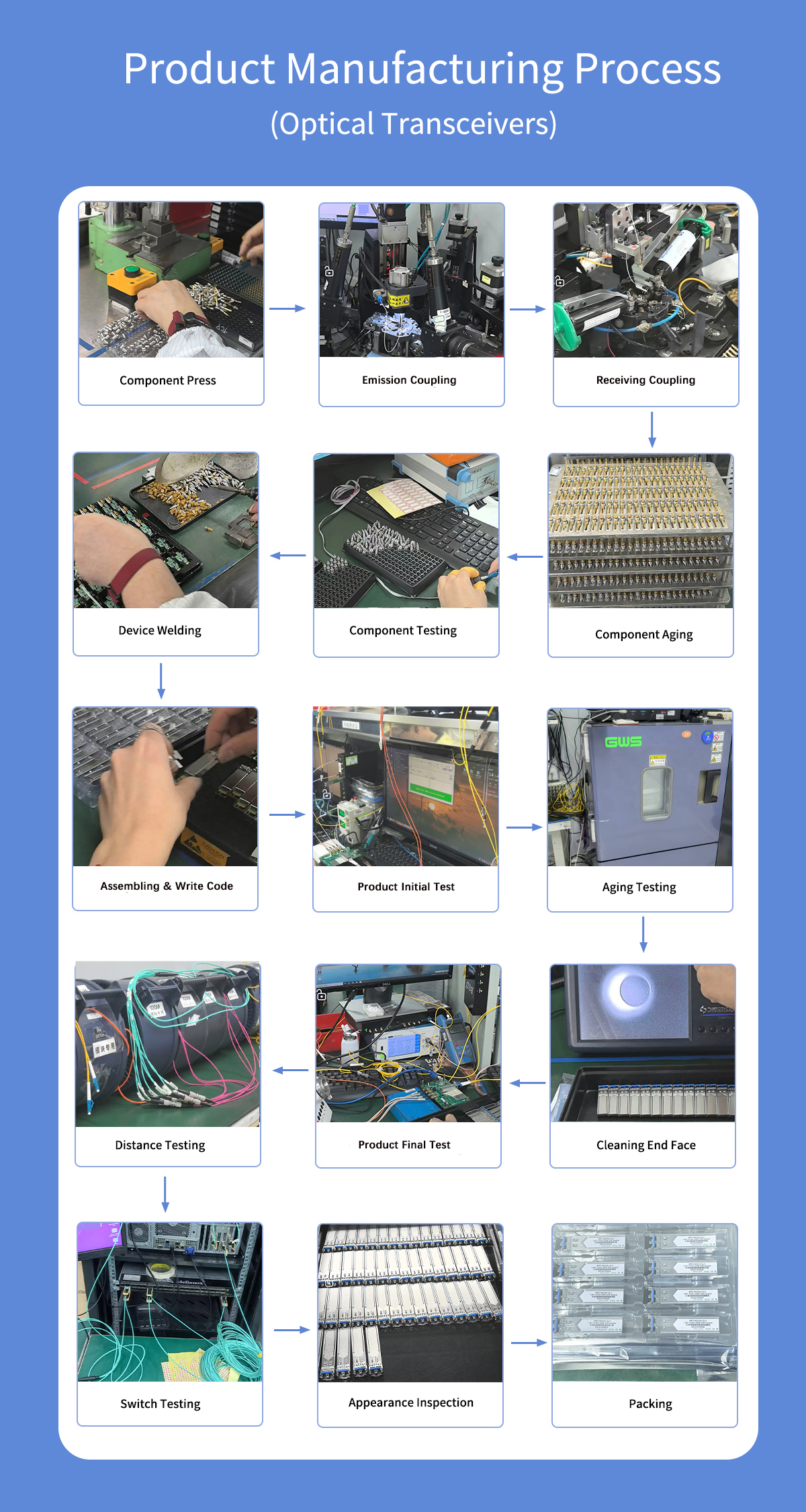
A10: Every HYTOPTODEVICE 100G FR transceiver undergoes strict factory testing: professional optical power calibration, temperature cycle aging, 72-hour full-rate traffic pressure test and real Juniper hardware compatibility verification. All unqualified products are eliminated before delivery, ensuring bulk shipment consistency and long-term stable operation for enterprise projects.