Q1: Which industry standards does 100G FR1 comply with?
A1: HYTOPTODEVICE 100G FR1 transceivers strictly comply with a full set of authoritative industry standards, including IEEE 802.3cd and IEEE 802.3cu 100GBASE-FR1 Ethernet protocols, 100G Lambda MSA single-lambda optical specification, QSFP28 MSA mechanical and electrical interoperability standards, as well as RoHS environmental certification. All optical parameters, signal modulation definitions and hot-swap specifications follow universal industry norms, ensuring excellent compatibility and stable performance for Dell and multi-vendor network deployments.
Q2: What are the electrical and optical lane rates of 100G FR1?
A2: Electrically, 100G FR1 adopts four independent 25.78125 Gbps NRZ electrical lanes for signal input. Through the built-in high-performance DSP gearbox chip, the four-channel electrical signals are aggregated and converted into a single optical lane. Optically, it operates at 53.125 GBd PAM4 modulation rate, delivering a total effective throughput of 103.125 Gbps, which fully meets the standard 100G Ethernet bandwidth requirement.
Q3: What laser technology is used in 100G FR1?
A3: HYTOPTODEVICE 100G FR1 modules adopt high-quality 1310nm EML (Electro-absorption Modulated Laser) laser technology. Compared with traditional DFB lasers, EML lasers feature higher modulation bandwidth, lower TDECQ distortion and better signal linearity, which perfectly adapts to high-speed 53.125 GBd PAM4 modulation. It provides stable, low-noise optical output, effectively reducing signal attenuation and error codes during 2km medium-reach transmission.
Q4: Can 100G FR1 directly interoperate with a 100G DR (500m) module?
A4: Yes, 100G FR1 and 100G DR1 modules support full, seamless direct interoperation. Both share identical 1310nm wavelength, single-lambda PAM4 modulation, 53.125 GBd baud rate and KP4 FEC mechanism with completely consistent electrical and optical signal definitions. The only difference is link budget design: FR1 reserves higher optical margin for 2km transmission, while DR1 is optimized for 500m short-reach scenarios. Mixed interconnection achieves zero negotiation failure and zero packet loss.
Q5: What hidden issues can occur in multi-vendor switch interconnects using 100G FR1?
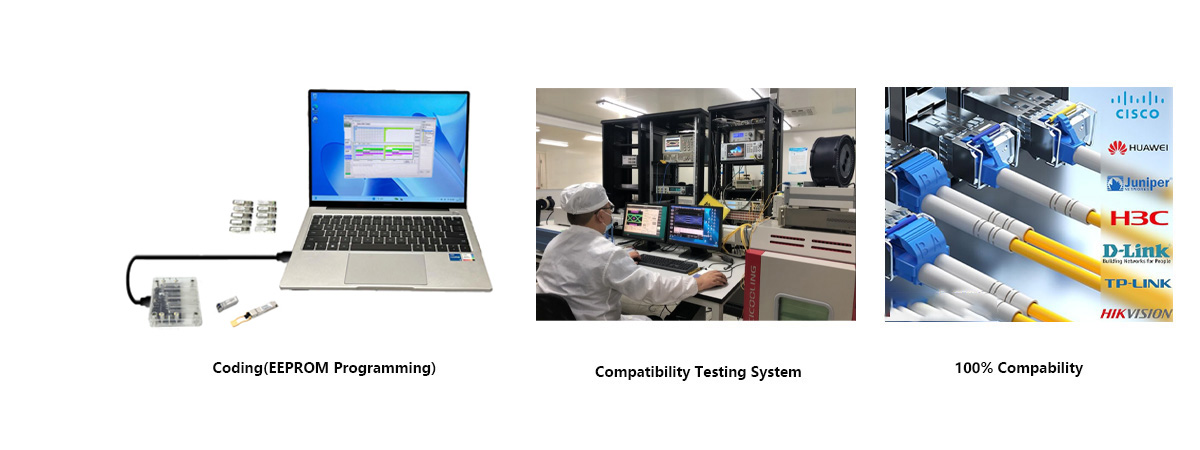
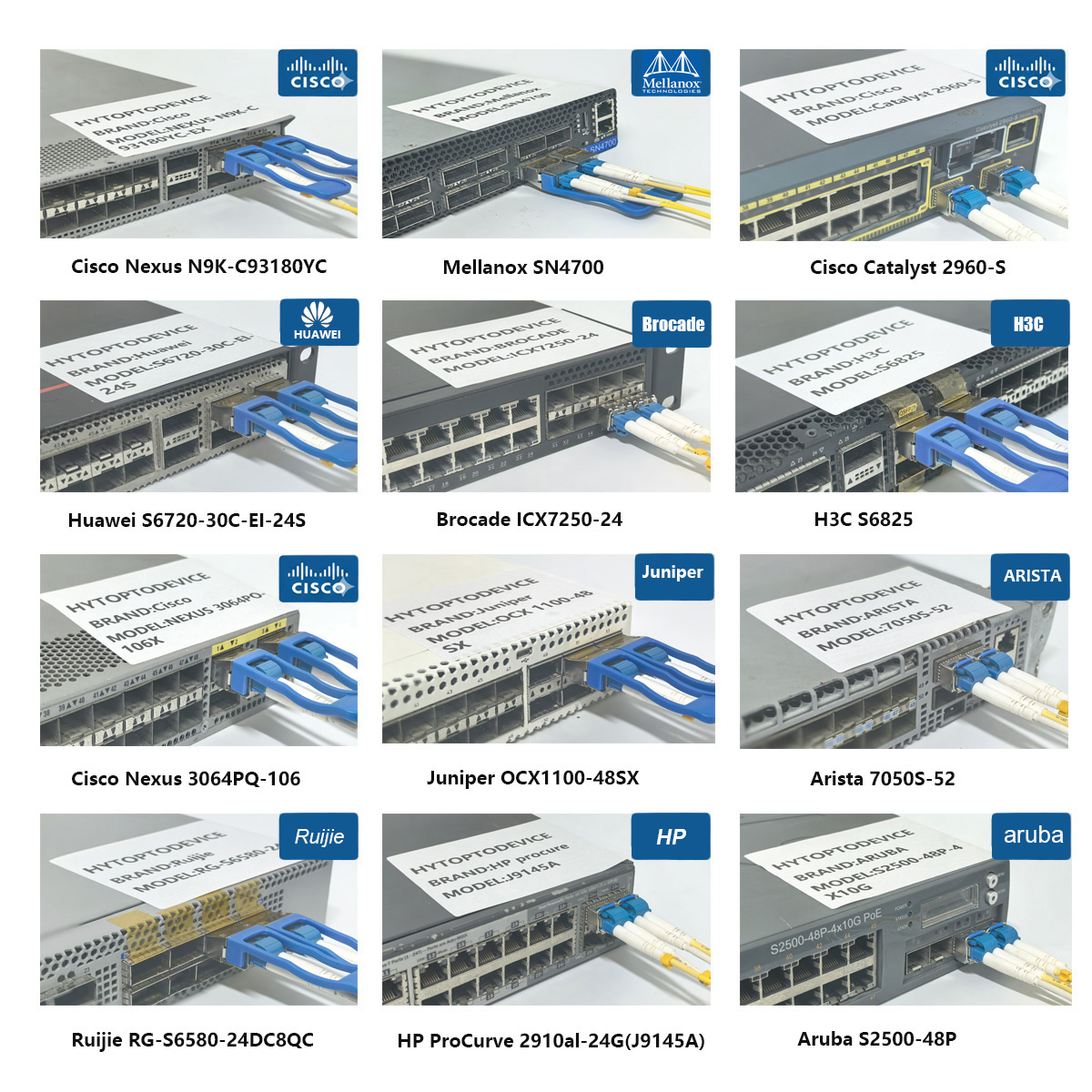
A5: Multi-vendor 100G FR1 interconnections commonly have hidden compatibility risks. These include mismatched default KP4 FEC auto/forced modes causing intermittent link flapping, vendor-specific EEPROM lock rules triggering third-party module alarm prompts, inconsistent DSP signal equalization algorithms leading to bandwidth jitter, and minor optical power parameter deviations resulting in long-term hidden packet loss. HYTOPTODEVICE modules pass multi-brand real-machine calibration to eliminate all above cross-vendor compatibility risks.
Q6: Does 100G FR1 support Industrial Temperature (-40°C to 85°C)?
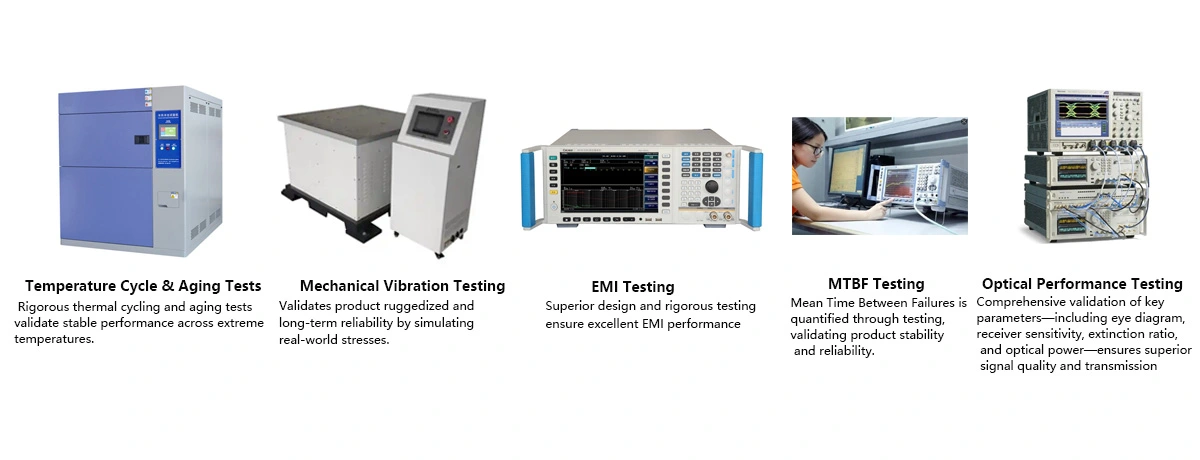
A6: The standard HYTOPTODEVICE Dell Q28-100G-FR compatible module supports commercial temperature range of 0°C to 70°C, suitable for standard indoor data center and enterprise room-temperature environments. Industrial temperature (-40°C to 85°C) version is optional on request. Standard commercial modules cannot operate normally in extreme low or high temperature industrial scenarios, which will cause unstable optical power, increased BER or port link down.
Q7: What are the airflow and cooling requirements when fully populating switches with 100G FR1?
A7: When fully populating Dell switches with 100G FR1 modules, stable front-to-back airflow is required to ensure uniform heat dissipation. Although single module power consumption is ≤4.0W, full-port operation will generate cumulative heat. It is necessary to maintain standard switch fan speed operation, avoid blocked air vents and dense rack stacking without gaps. Sustained poor airflow will cause module temperature rise, reduced link margin and accelerated component aging.
Q8: What happens if the module operates at excessively high temperatures?
A8: Long-term high-temperature operation will cause multiple performance failures of 100G FR1 modules. The EML laser output power will drift, optical signal attenuation increases, and PAM4 signal distortion aggravates, leading to rising BER and intermittent packet loss. In severe cases, DDM temperature alarms will be triggered, causing port link flapping or automatic link down. Persistent overheating will also permanently reduce laser service life and cause irreversible module aging.
Q9: What is the link budget for 100G FR1? Is it sufficient for 2km?
A9: Standard 100G FR1 link budget provides sufficient optical power margin for 2km OS2 single-mode fiber transmission. With 1310nm low-loss window characteristics and optimized EML laser output power, the module can fully cover the optical loss generated by 2km fiber transmission, conventional fiber splicing and connector insertion loss. It maintains stable receiving optical power and ultra-low BER, fully meeting the standard 2km transmission distance specification with redundant power margin.
Q10: Can 100G FR1 be used for distances beyond 2km (e.g., 2.5km or 3km)?
A10: It is not recommended to use 100G FR1 for distances exceeding 2km. Although short over-distance transmission may be temporarily online, the optical power margin will be severely insufficient. Excess fiber loss will lead to increased PAM4 signal error rate, frequent packet loss and unstable links. Long-term over-distance operation will trigger DDM optical power low alarms. For 2–10km scenarios, 100G LR1 modules are the standard and stable solution.
Q11: Why are fiber end-face cleanliness requirements particularly strict for 100G FR1?
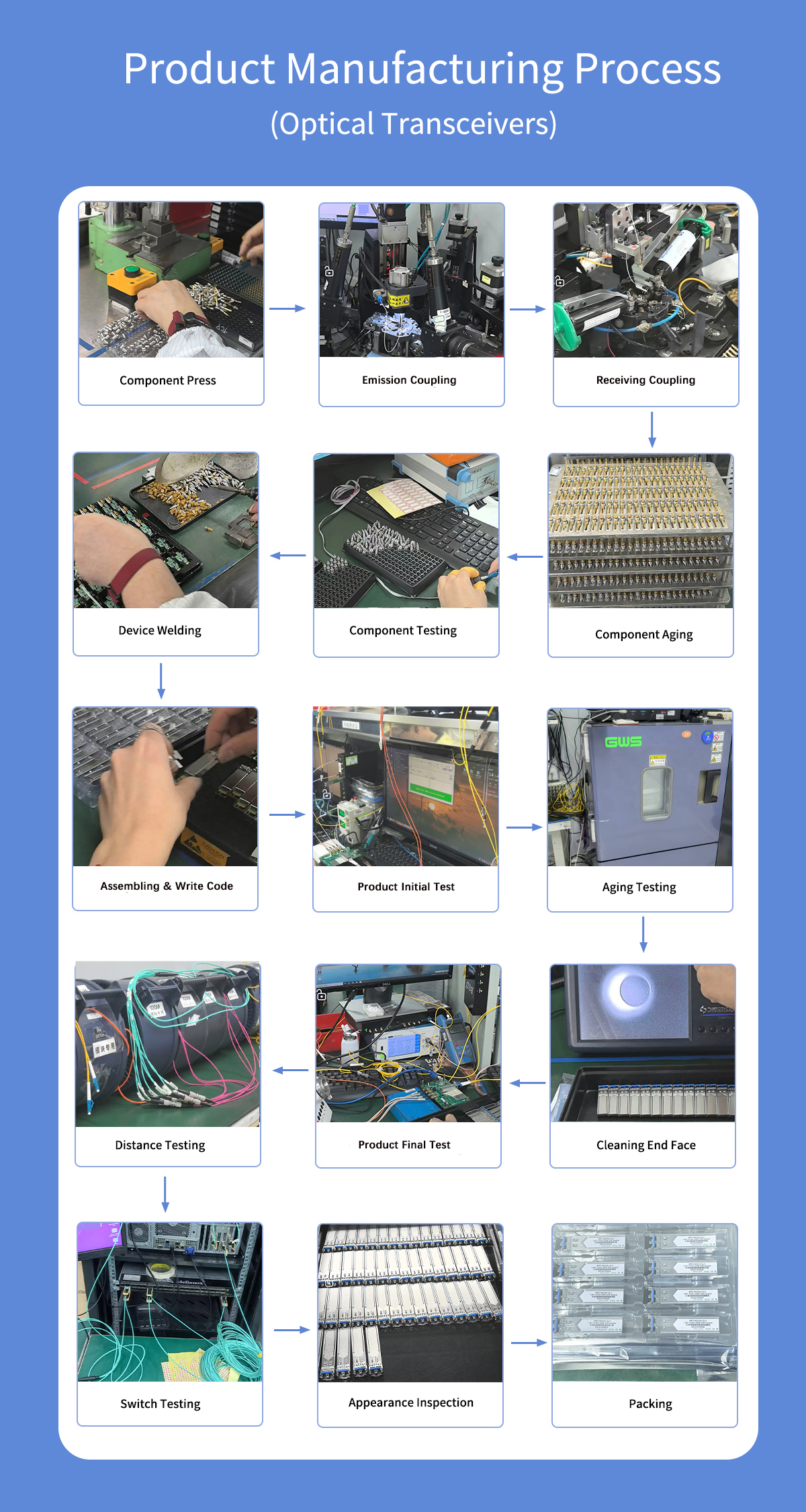
A11: 100G FR1 adopts high-sensitivity PAM4 high-order modulation technology, which is far more sensitive to optical signal interference than traditional NRZ modulation. Dust, scratches and oil stains on the fiber end face will cause uneven optical transmission, signal reflection and attenuation mutation, directly leading to PAM4 waveform distortion, increased TDECQ value and sharp rise in error codes. Therefore, ultra-clean end-face processing is mandatory to ensure long-term stable 2km high-speed transmission.