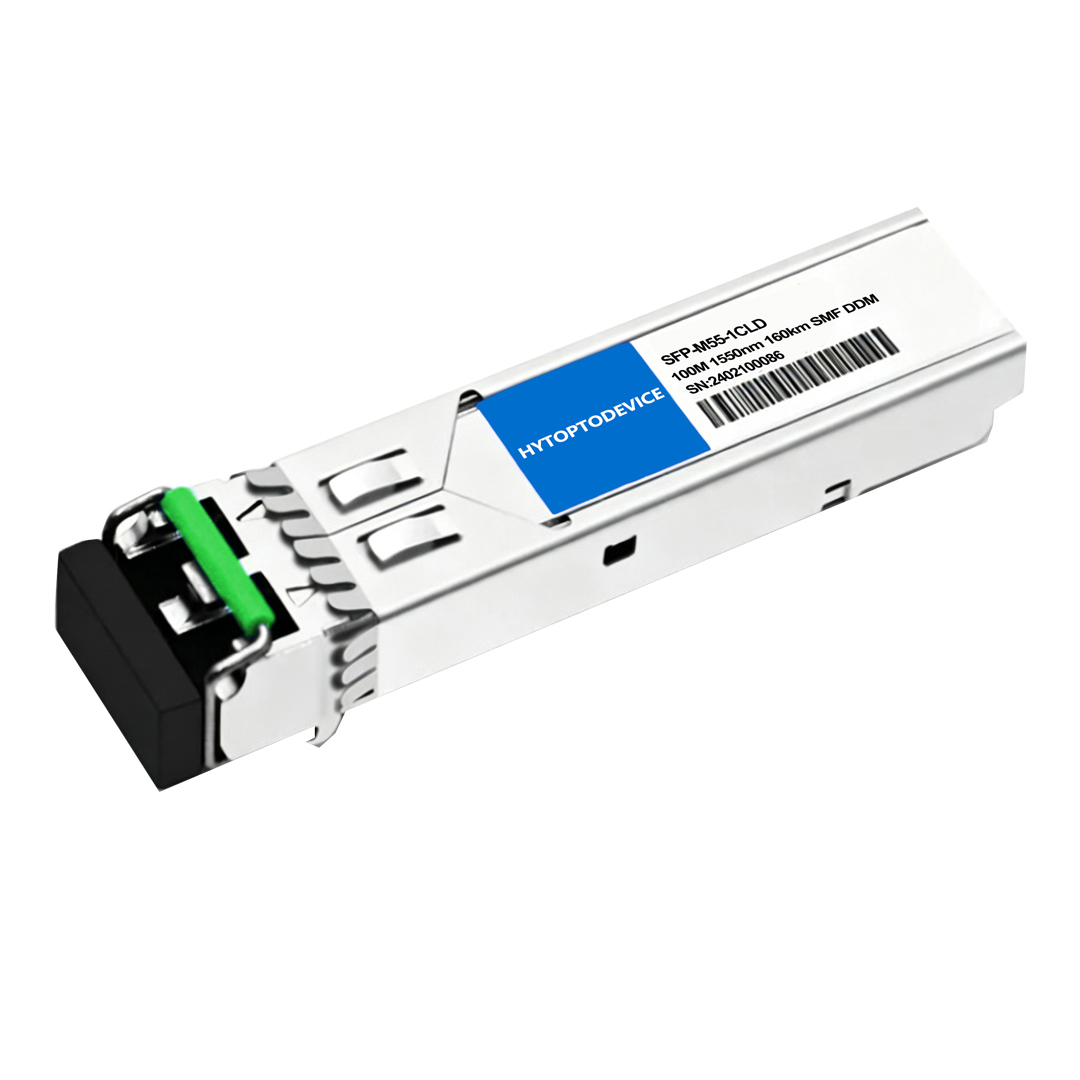
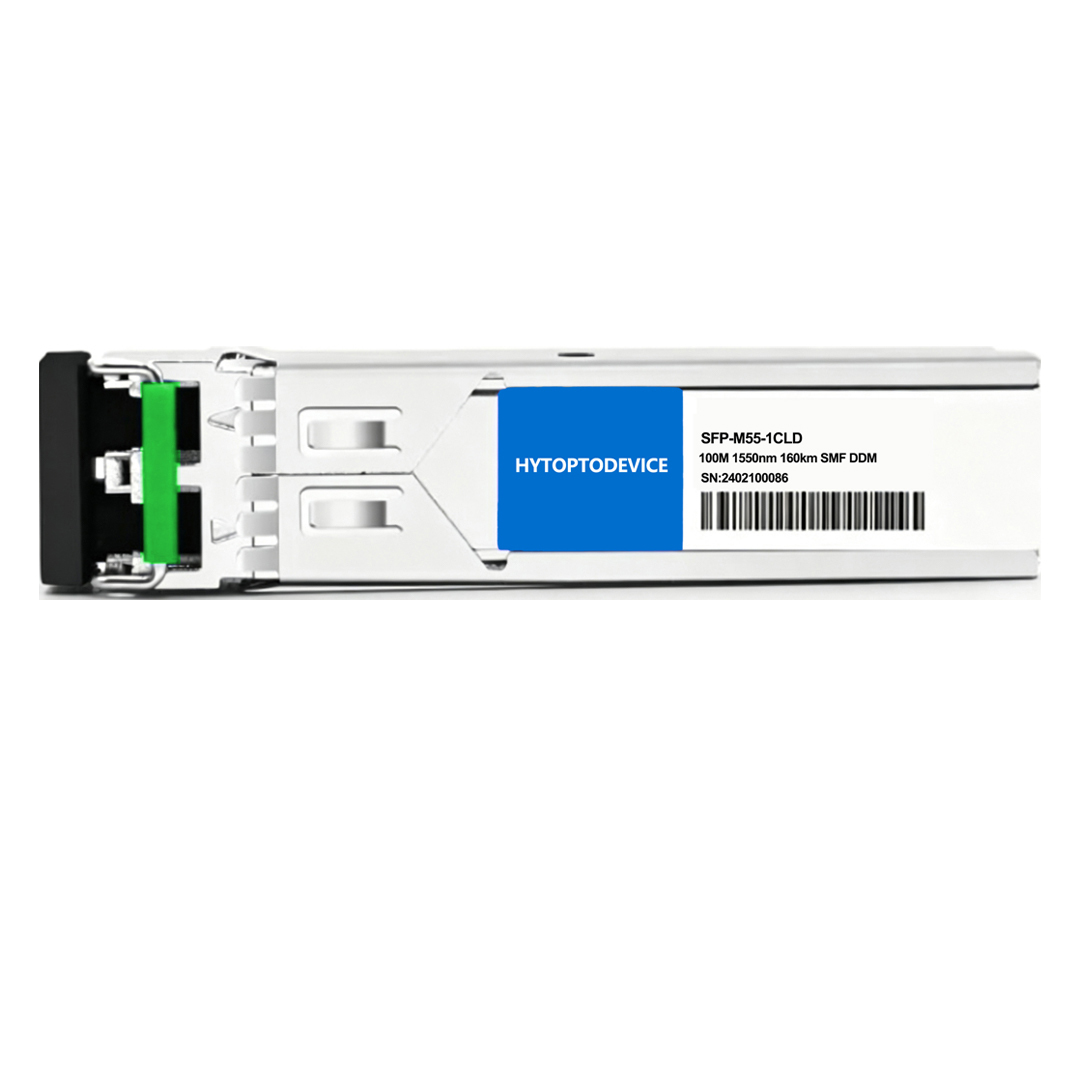
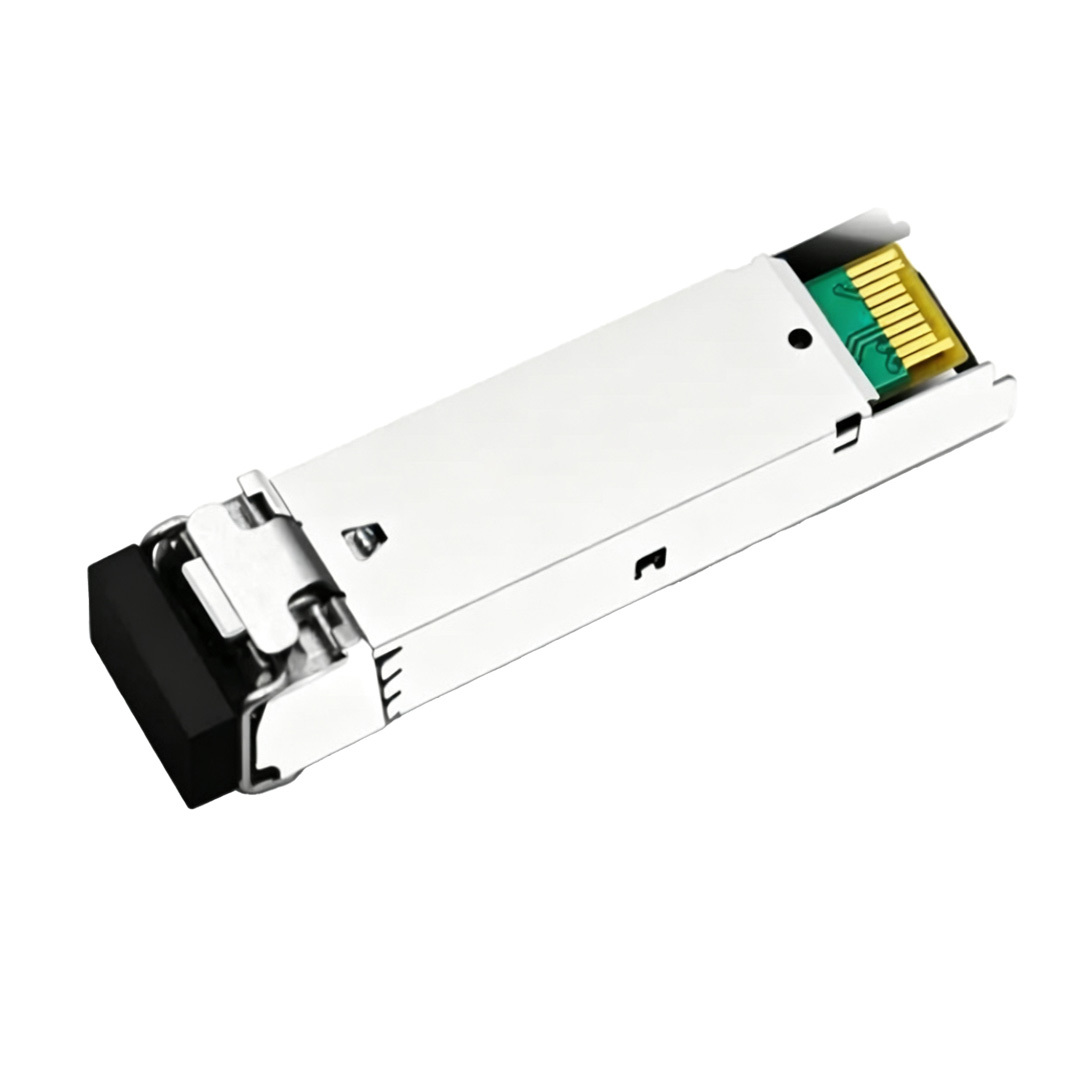
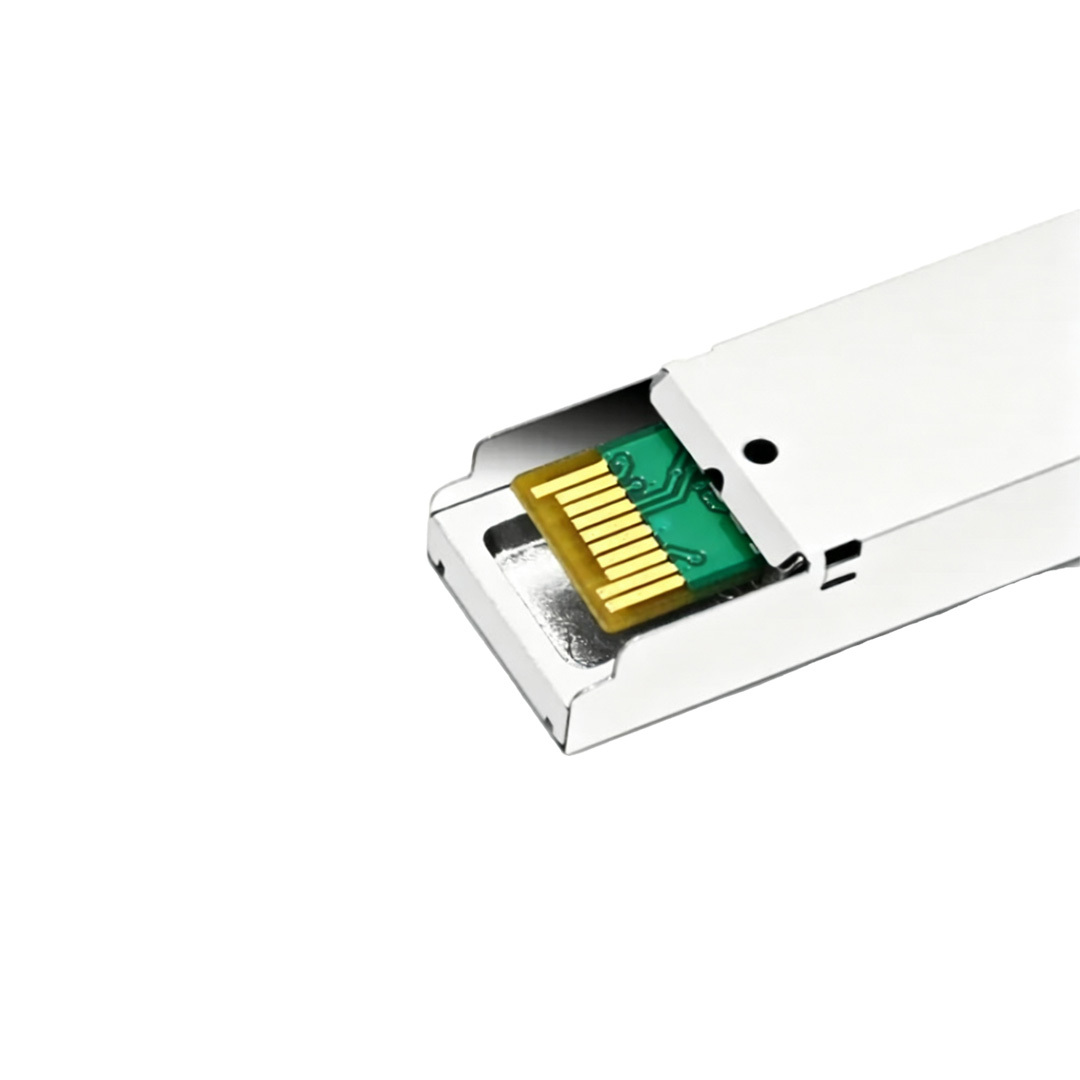
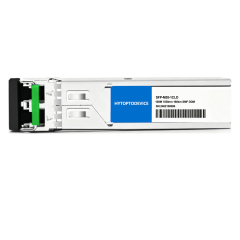
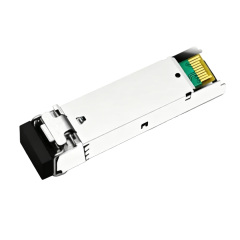
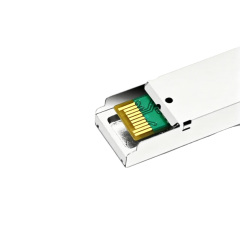
A: Fully compatible with mainstream network brands including Cisco, Huawei, Juniper, Arista and Brocade. Designed with standard MSA-compliant firmware, it delivers true plug-and-play performance with zero errors or system alarms. Custom compatibility verification videos are available upon request for customer confirmation.
Q2: What benefits does the 160km ultra-long module offer over 80km and 120km models?
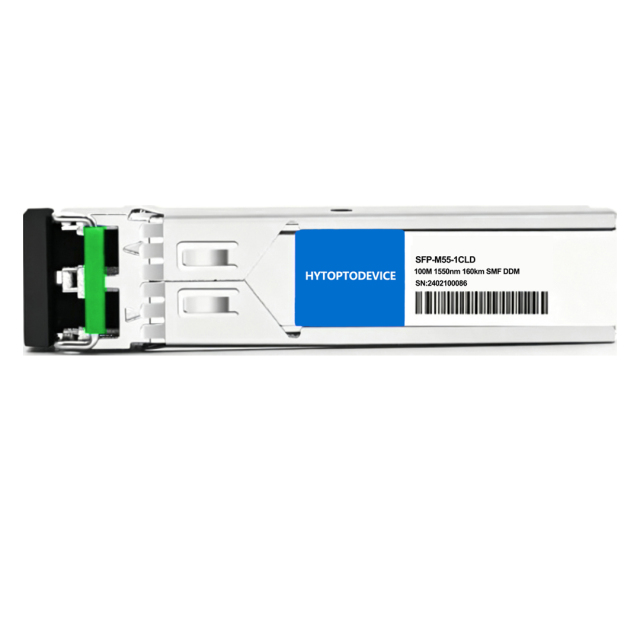
A: Unlike conventional 80km/120km optical modules, this 160km ultra-long version is equipped with a 36dB ultra-high optical power budget, paired with 1~+5dBm wide Tx range and -35dBm high sensitivity. It reserves abundant power margin to tackle complex long-distance links with multiple splicing points and heavy signal attenuation, delivering far more stable performance for cross-city ultra-long backbone networking.
Q3: Does this long-range optical module support intelligent operational monitoring?
A: Yes. Integrated with standard SFF-8472 DDM/DOM monitoring capability, the module enables real-time tracking of critical operating data, including optical transmit/receive power, working temperature, supply voltage and laser current. It simplifies daily network maintenance and allows fast positioning of link faults.
Q4: What are the key optical performance parameters of this 160km transceiver?
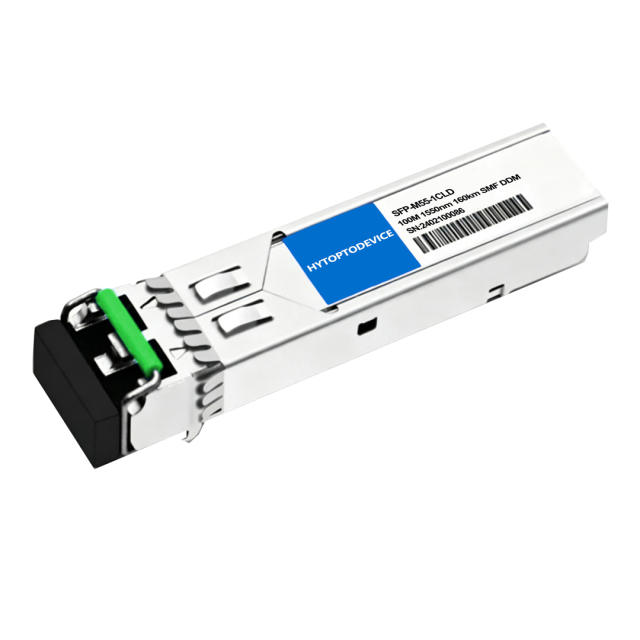
A: This ultra-long transceiver features upgraded professional optical indexes: transmit power of 1~+5dBm, ultra-high receiving sensitivity of -35dBm, receiver overload point of -8dBm, and 36dB superior optical power budget. These premium calibrated parameters deliver stronger anti-attenuation capability and guarantee stable error-free 100Mbps transmission over full 160km single-mode fiber links.
Q5: Can this module be customized for harsh outdoor and industrial environments?
A: Custom industrial-grade versions are available to meet harsh environment demands. The standard commercial module works steadily at 0°C~70°C, while the upgraded industrial model supports a wide temperature range of -40°C~85°C, perfectly adapting to outdoor cabinets, industrial sites and other extreme working scenarios.
Q6: How can I tell if the internal DFB/EML laser is degrading over time?
A: You can monitor laser aging status via DDM real-time data. Gradually declining transmit optical power, rising laser bias current, or occasional packet loss under full-load operation are typical signs of laser degradation. Regular data comparison helps judge the aging degree and predict module service life in advance.
Q7: What should I check if DDM reports an Rx power of -40 dBm?
A: Rx power at -40 dBm is far below the normal sensitivity threshold, indicating extremely weak received signals. Check for dirty or damaged LC fiber end faces, loose interface connections, excessive fiber splicing loss, ultra-long line attenuation, or faulty fiber jumper links. Cleaning and re-docking can usually restore normal link status.
Q8: What type of laser source is used in a 100BASE-ZX transceiver?
A: This 100BASE-ZX 160km long-range transceiver adopts high-stability DFB (Distributed Feedback) laser at 1550nm wavelength. Compared with ordinary FP lasers, DFB lasers feature narrower spectral width, lower dispersion loss and better stability, fully meeting ultra-long 160km single-mode fiber transmission requirements.
Q9: Does 100BASE-ZX work over dispersion-shifted fiber (G.653 or G.655)?
A: Yes, it is compatible with G.653 and G.655 dispersion-shifted single-mode fibers. The 1550nm working wavelength is the low-loss window of these fiber types, which effectively reduces chromatic dispersion and signal attenuation. It ensures stable transmission on both conventional G.652 and dispersion-shifted fiber links.
Q10: What applications commonly use 100BASE-ZX 160km optics?
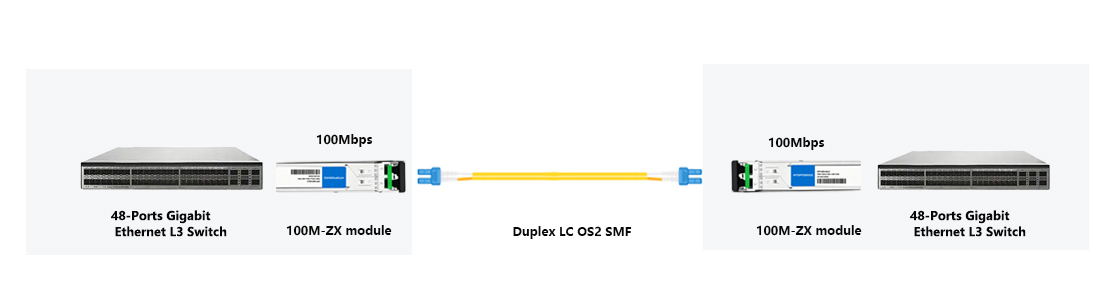
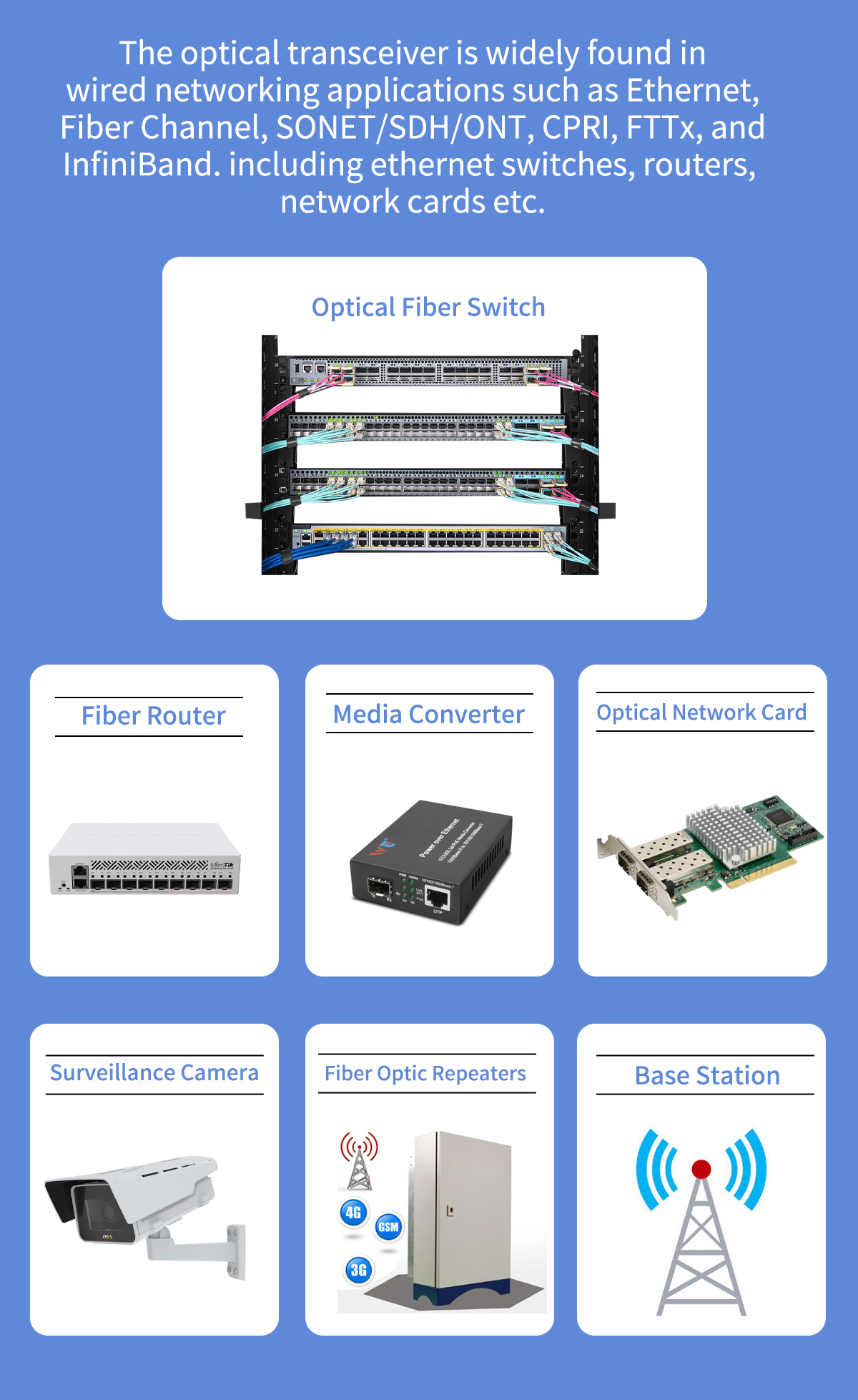
A: This ultra-long 160km optical module is widely used in cross-city WAN interconnection, remote enterprise branch networking, long-distance park/campus backbone links, ISP remote access layer deployment, and industrial ultra-long fiber transmission scenarios, solving ultra-long-distance network docking pain points.
Q11: Does 100BASE-ZX support full 100Mbps full-duplex throughput?
A: Absolutely. The transceiver complies with IEEE 802.3u standard, supporting full 100Mbps rate and full-duplex working mode. It maintains zero-rate-limit stable throughput under long-distance transmission, without bandwidth attenuation or frame loss.
Q12: What should I do with the transceiver when it is not in use?
A: Seal the unused module with original dust caps to protect the LC optical interface from dust and contamination. Store it in a dry, constant-temperature environment avoiding high temperature and humidity. Long-term idle modules should be inspected and tested regularly to guarantee stable performance for subsequent deployment.
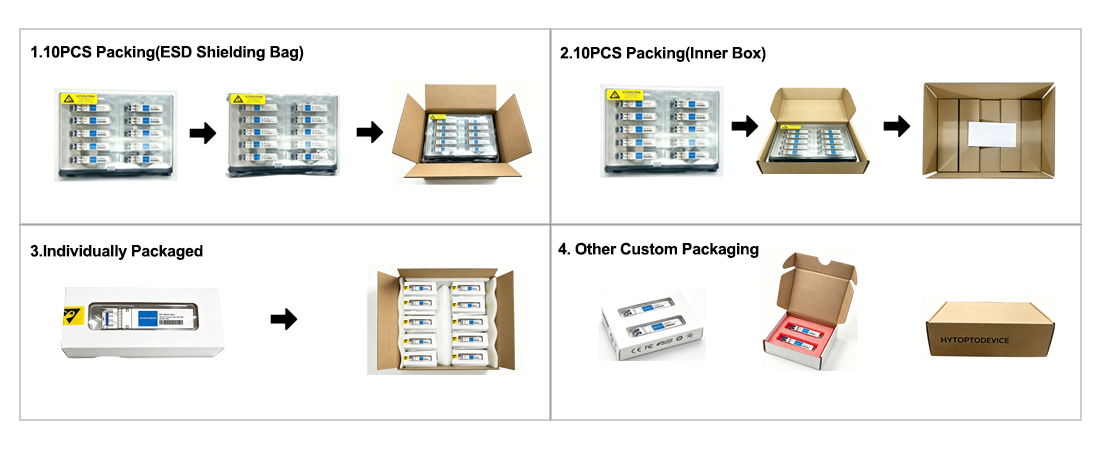
Packaging & Custom OEM Solutions
Each SFP module is factory-sealed in ESD-shielding, anti-static packaging—individually protected, quality-checked, and ready to ship the moment you place your order. We understand that distributors, wholesalers, and system integrators need more than just a product. That's why our flexible OEM and ODM programs include custom branding, private-label packaging, and your own logo on every unit—so you can grow your brand with confidence, without compromising on quality or lead time.
 Why Network Engineers Choose HYTOPTODEVICE