Q1: How to reduce excessive OEM costs and optimize network hardware budget for Brocade fiber links?
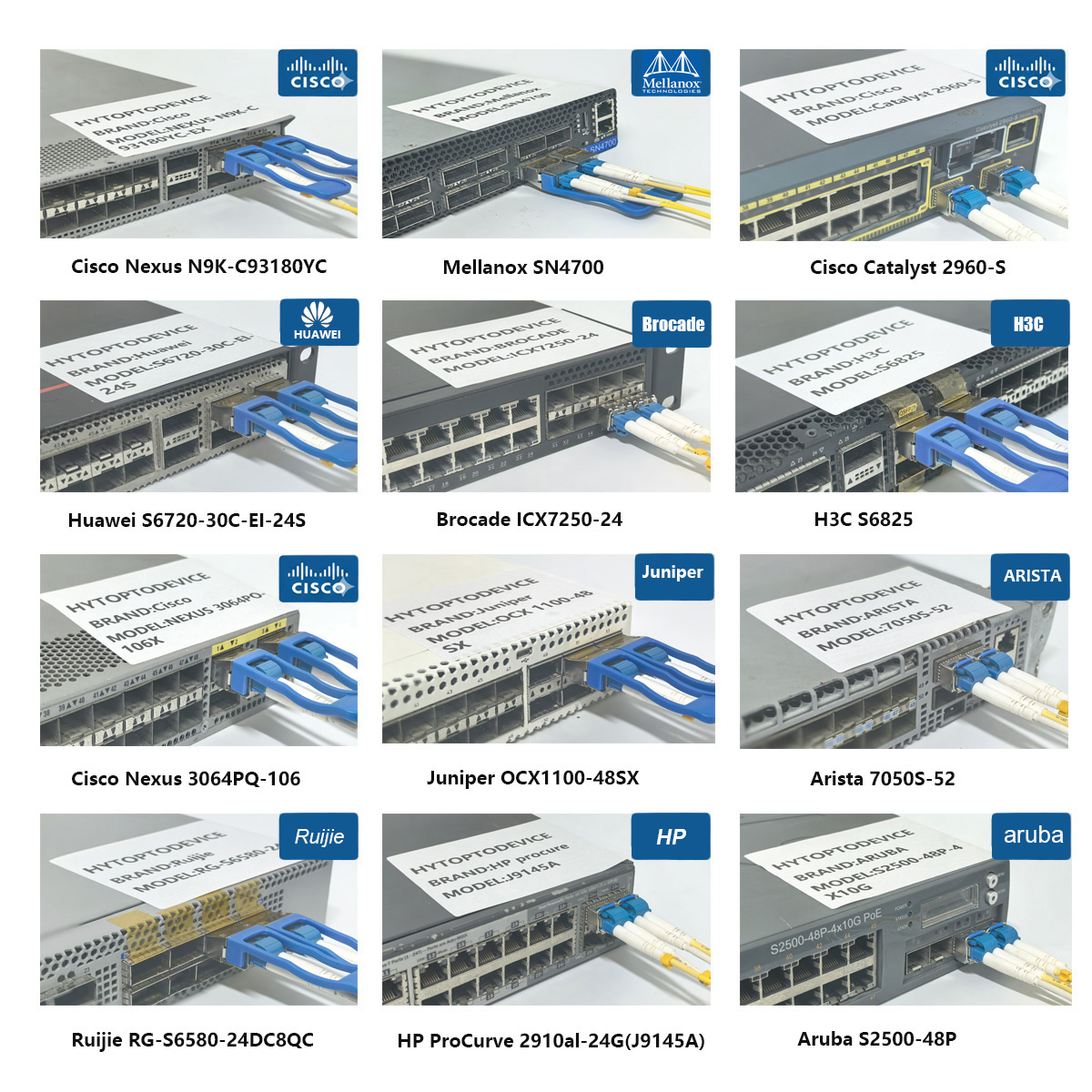
A1: HYTOPTODEVICE E1MG-1G-BXUA-40 SFP BiDi transceiver perfectly relieves budgets strained by expensive original Brocade brand optics. Our fully compatible replacement modules deliver identical industrial-grade performance at a more cost-effective price, helping network integrators and enterprises cut procurement costs without compromising link stability.
Q2: What solution can solve physical fiber strand shortage in long-distance gigabit network deployment?
A2: HYTOPTODEVICE E1MG-1G-BXUA-40 single-core SFP BiDi transceiver effectively solves fiber scarcity issues. Adopting professional BiDi 1-core transmission technology, it realizes bidirectional data transmission via only one single-mode fiber strand, maximizing the utilization rate of existing fiber resources and avoiding extra cabling costs.
Q3: Is there a compatible optic module that eliminates third-party warning prompts on Brocade and FastIron devices?
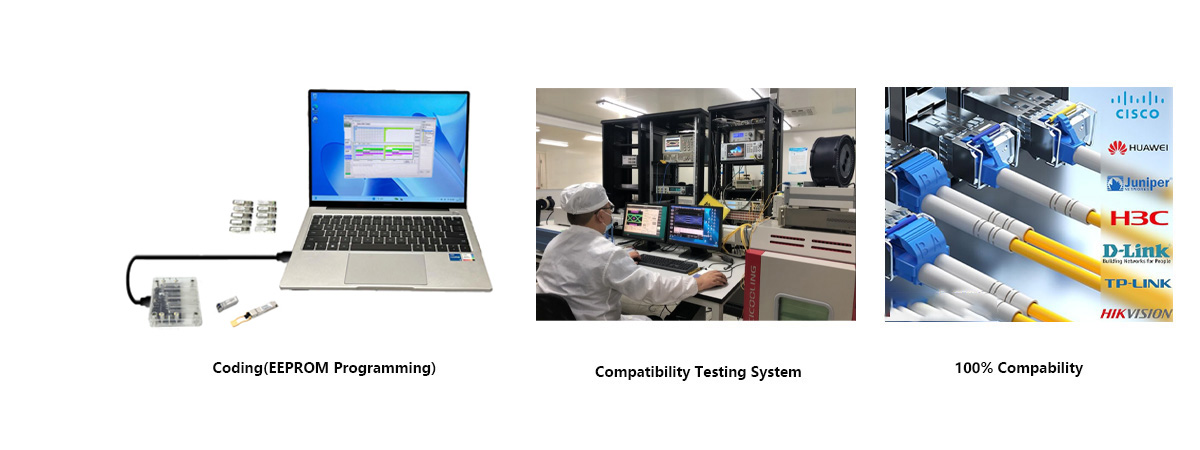
A3: Yes. The HYTOPTODEVICE E1MG-1G-BXUA-40 compatible SFP BiDi transceiver completely eliminates annoying “unsupported third-party optic” software warnings on Brocade OS and FastIron systems. All modules pass real-machine debugging, breaking vendor lock-in while ensuring full normal operation of device ports and systems.
Q4: How to avoid packet loss and intermittent link drops during 40km long-span fiber transmission? A4: HYTOPTODEVICE E1MG-1G-BXUA-40 long-reach SFP BiDi transceiver features a mature and stable 40km professional link budget. It effectively prevents common network failures such as data packet loss and sudden link disconnection in long-distance transmission, maintaining continuous and stable gigabit link operation for metro and remote network links.
Q5: How to realize real-time link monitoring and avoid blind troubleshooting for long-range BiDi fiber links?
A5: HYTOPTODEVICE E1MG-1G-BXUA-40 DDM/DOM-enabled SFP BiDi transceiver solves the problem of lack of real-time network monitoring. It supports real-time monitoring of optical power, temperature and voltage data, allowing engineers to quickly locate faults caused by power fluctuations or thermal spikes and end blind troubleshooting.
Q6: What compatible optical module fixes initialization failure of old optics on modern Ruckus ICX switches?
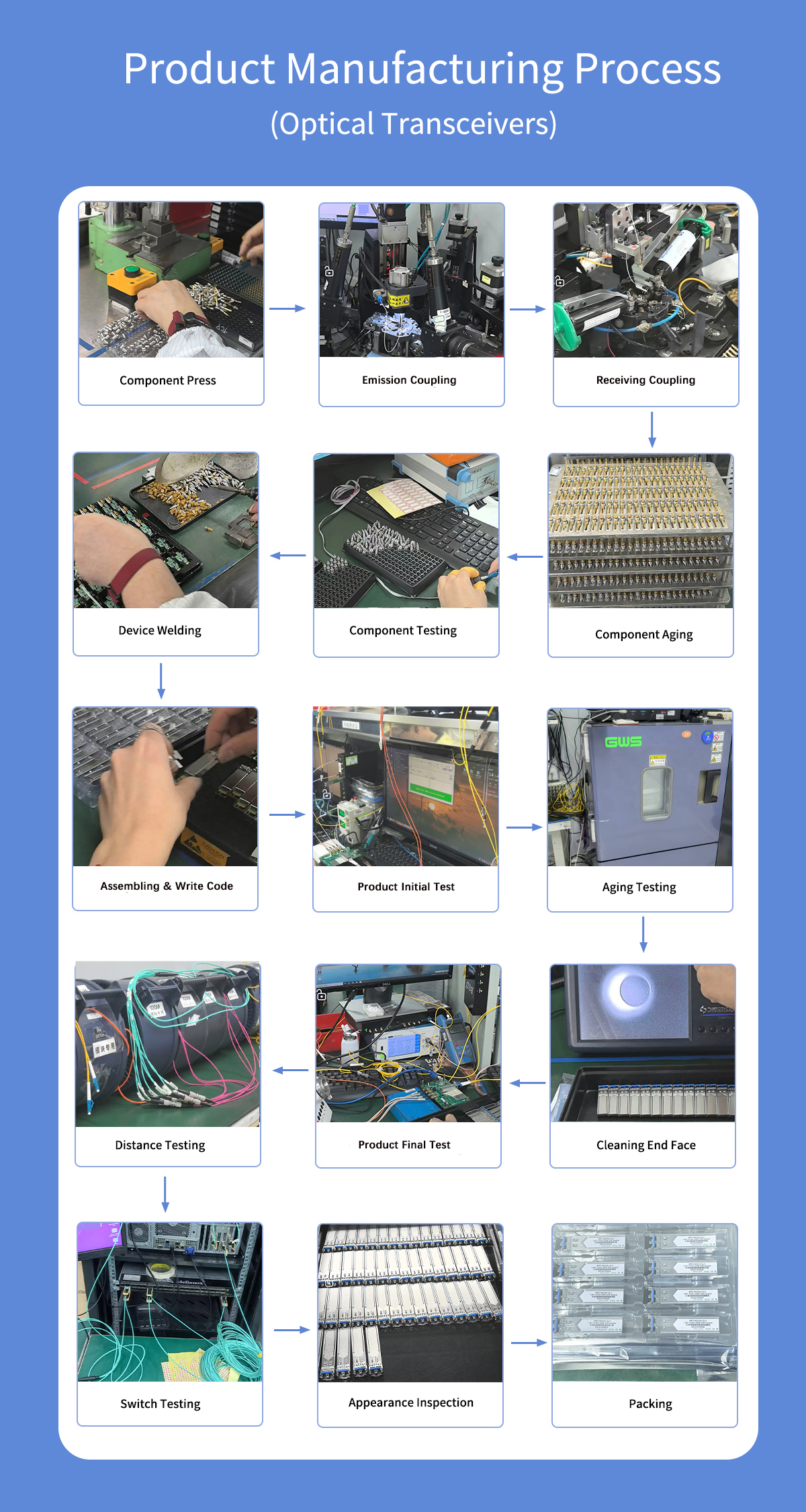
A6: HYTOPTODEVICE E1MG-1G-BXUA-40 cross-brand compatible SFP BiDi transceiver perfectly resolves incompatibility issues between traditional optical modules and modern network devices. It stably initializes and runs on upgraded Ruckus ICX switches, realizing seamless docking of new and old network equipment.
Q7: How to prevent wavelength matching errors during BiDi transceiver installation and deployment? A7: HYTOPTODEVICE E1MG-1G-BXUA-40 standard BXUA SFP BiDi transceiver eliminates traditional BiDi pairing confusion. With standardized 1310nm-TX/1490nm-RX wavelength design and clear BXUA/BXDA matching specifications, it completely avoids wrong-wavelength installation errors and improves on-site deployment efficiency.
Q8: How to solve overheating and automatic port shutdown in high-density switch cabinet deployment?
A8: HYTOPTODEVICE E1MG-1G-BXUA-40 low-power consumption SFP BiDi transceiver effectively avoids excessive heat generation. With optimized chip and laser design, it operates at low temperature under high-load operation, preventing switch port shutdown failures in high-density cabinet deployment and ensuring long-term stable device operation.
Q9: How to complete network module replacement and expansion without system downtime?
A9: HYTOPTODEVICE E1MG-1G-BXUA-40 hot-swappable SFP BiDi transceiver supports plug-and-play operation. It enables fast module replacement, upgrade and network expansion with zero system downtime, solving the problem of slow and inefficient traditional network deployment and maintenance.
Q10: How to avoid premature aging and failure of low-cost generic BiDi transceiver modules?
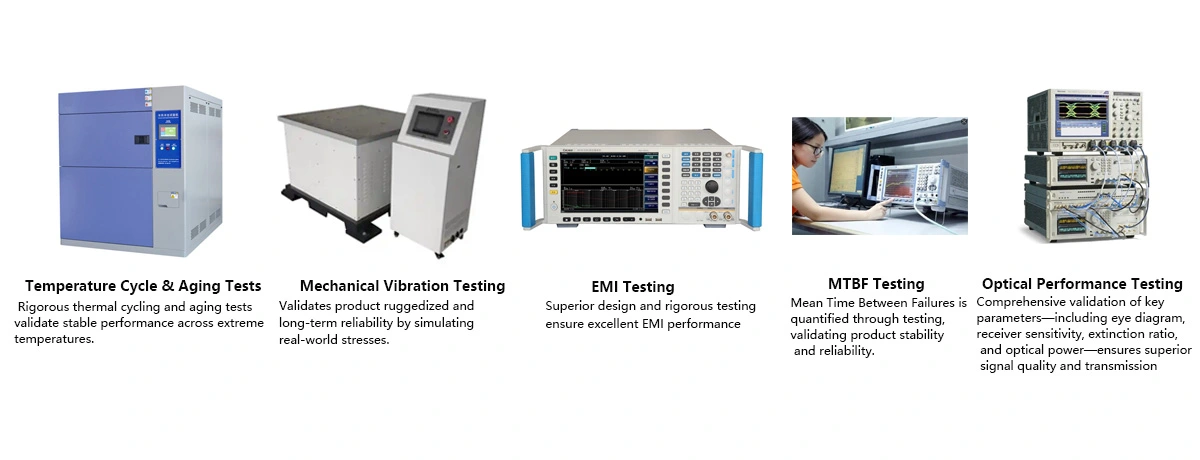
A10: HYTOPTODEVICE E1MG-1G-BXUA-40 high-reliability SFP BiDi transceiver adopts premium industrial-grade DFB laser core components. It effectively avoids premature laser degradation and performance attenuation common in cheap generic clones, providing stable, durable and long-term reliable fiber transmission for enterprise-level network projects.