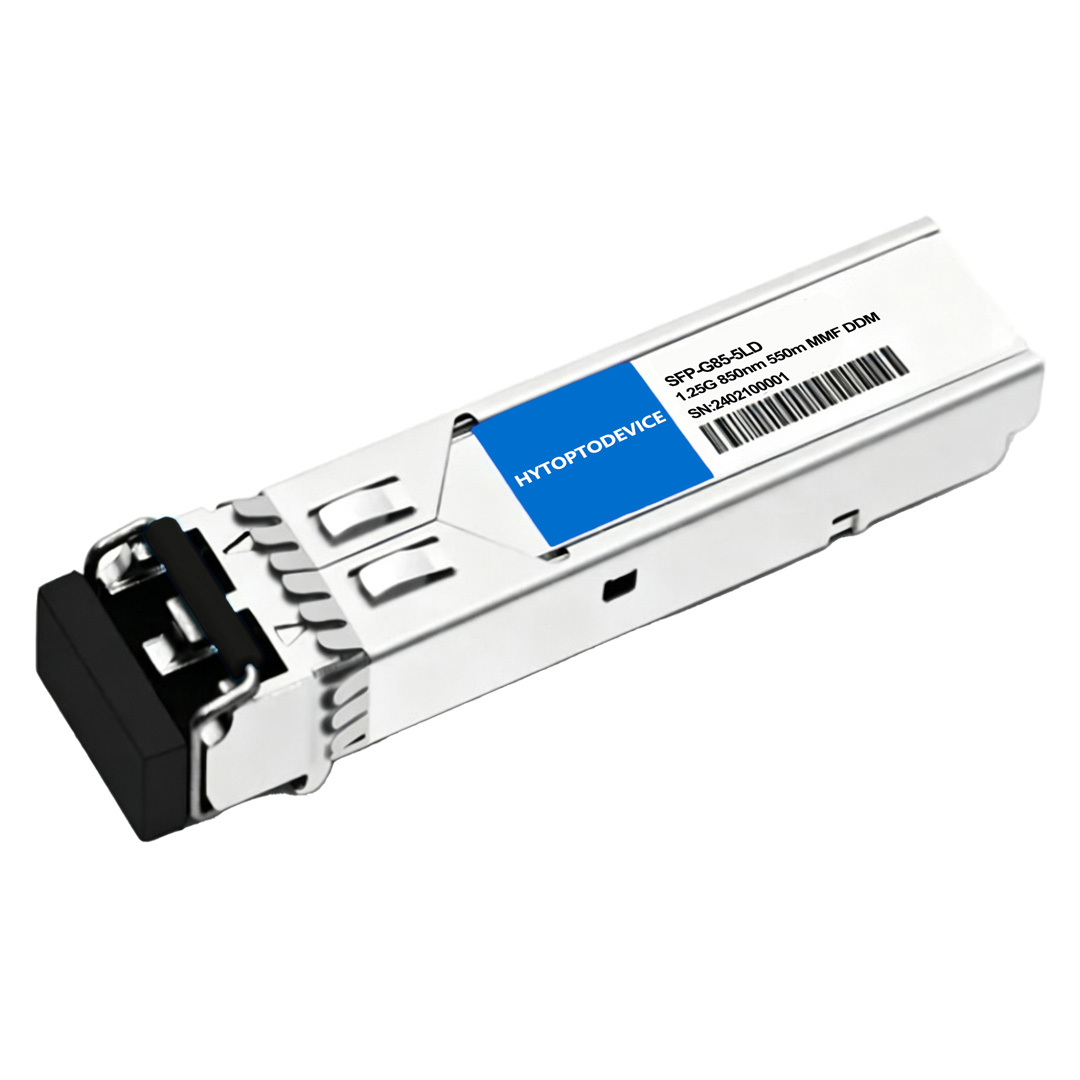
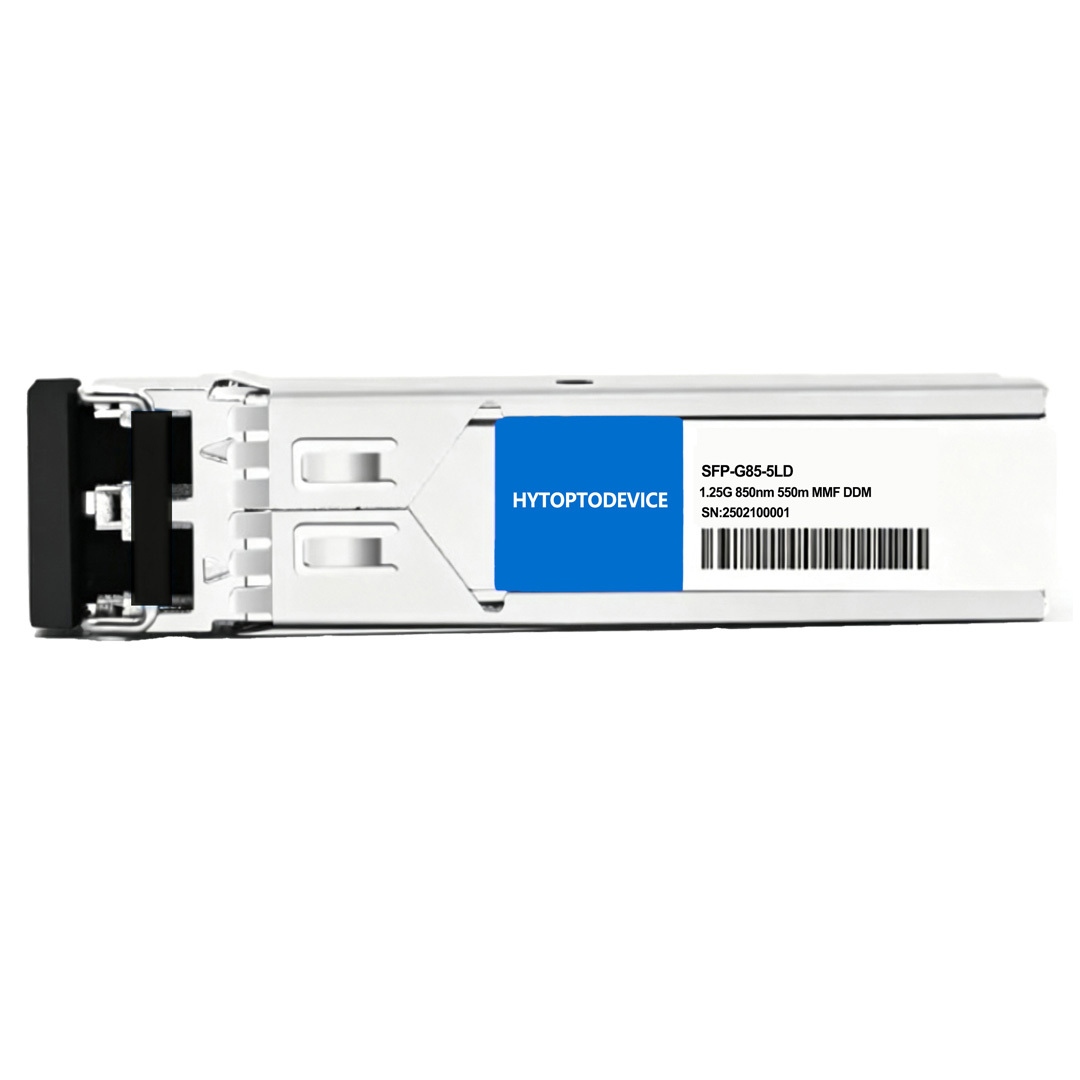
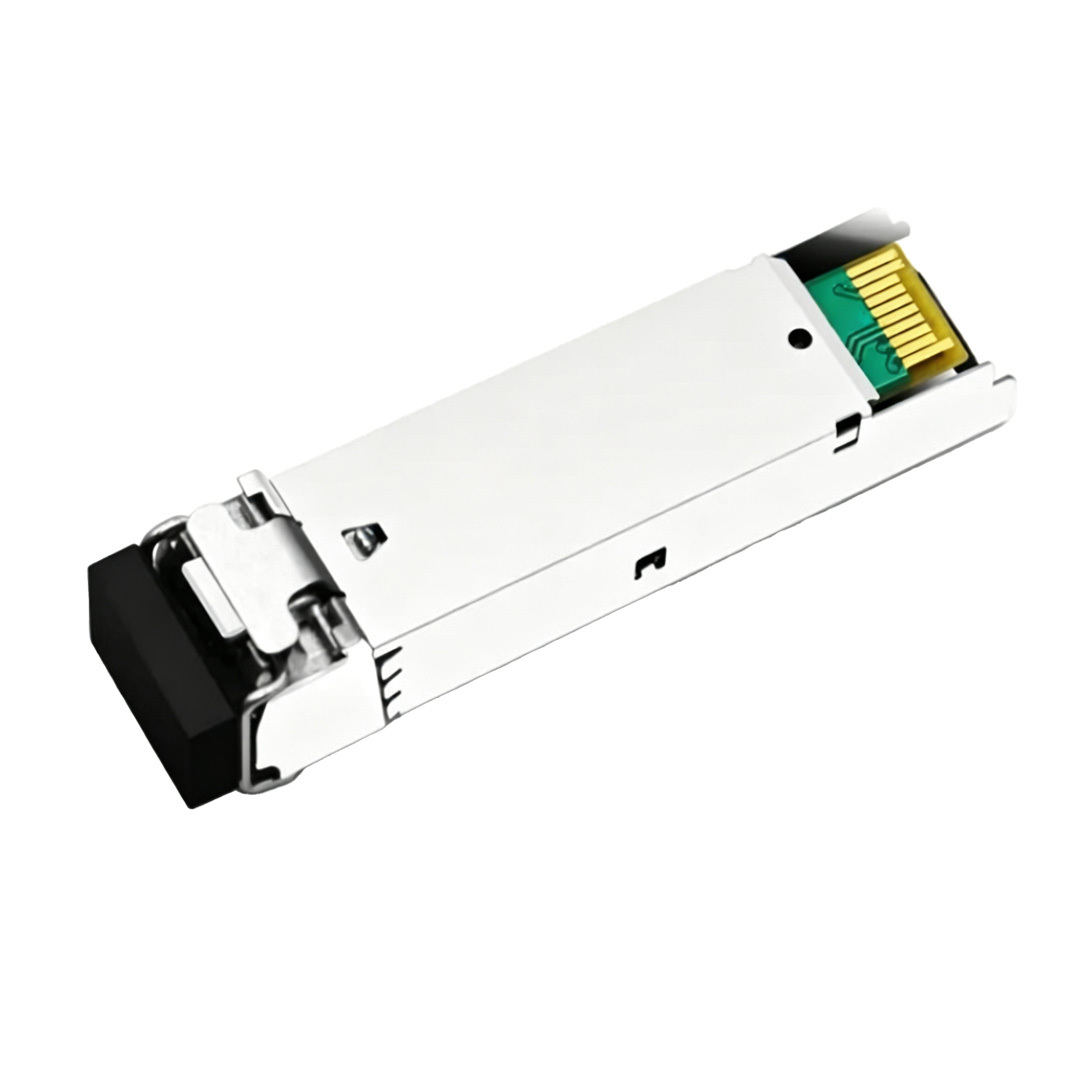
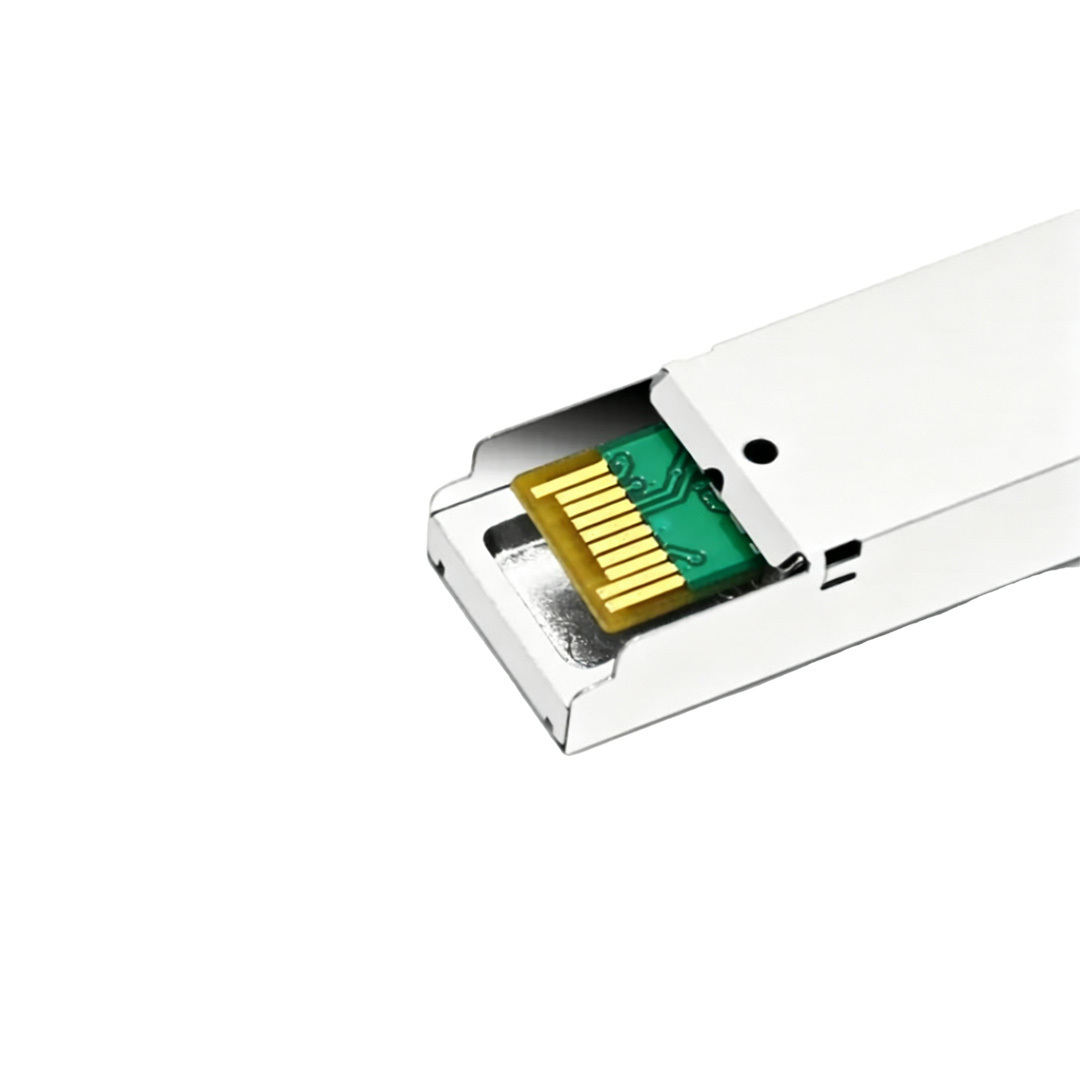
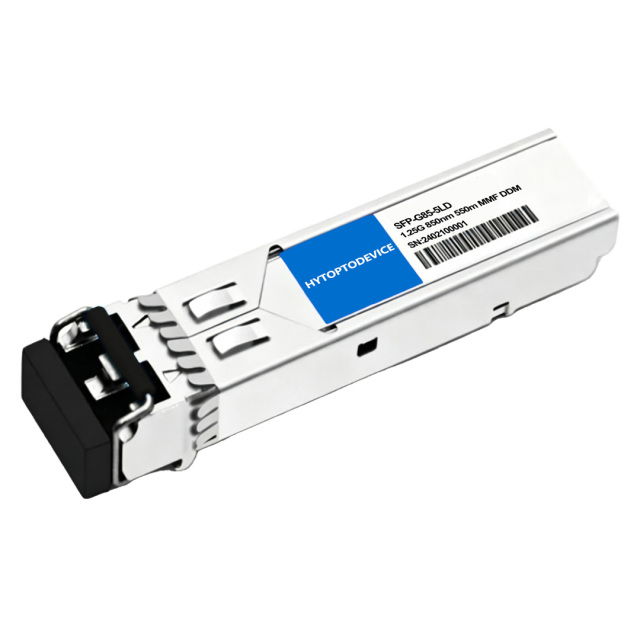
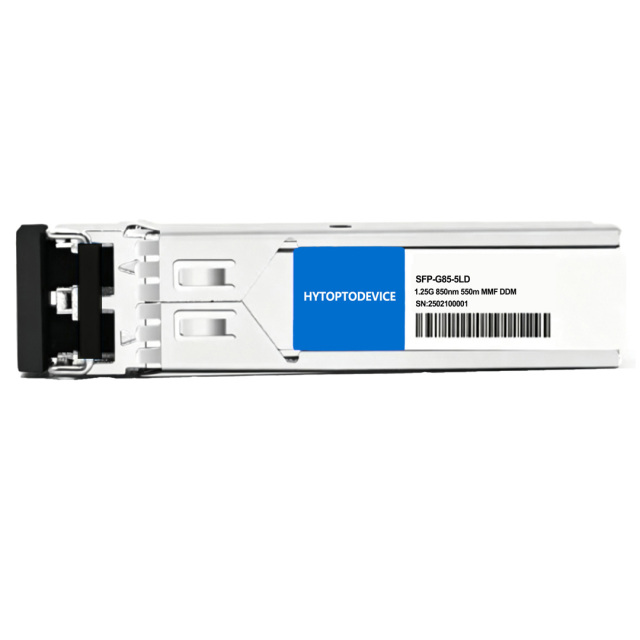
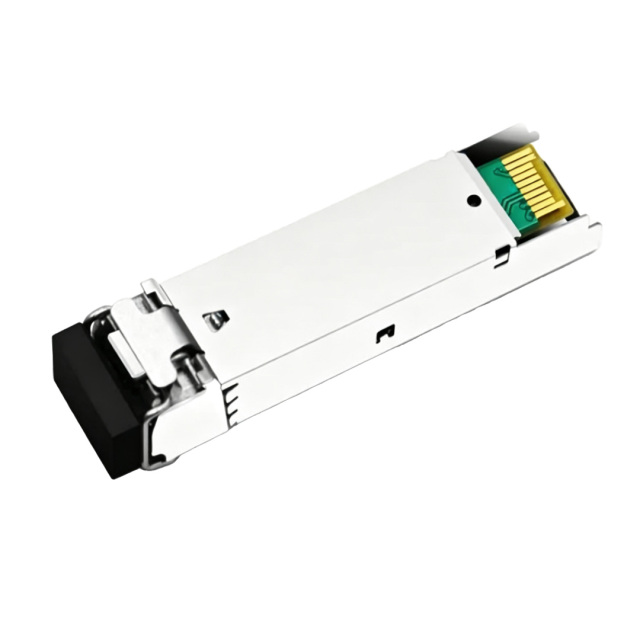
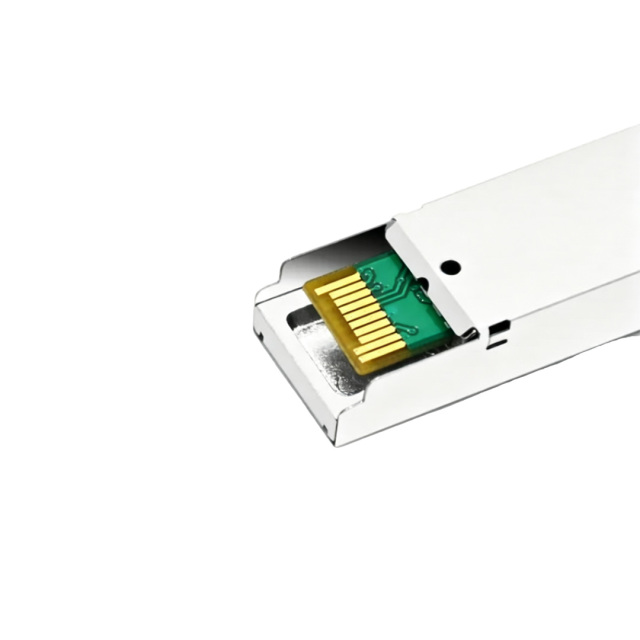
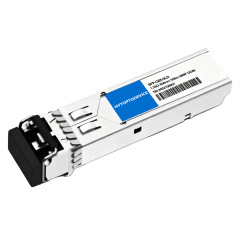
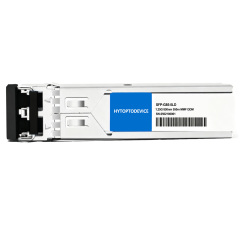
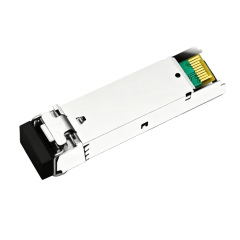
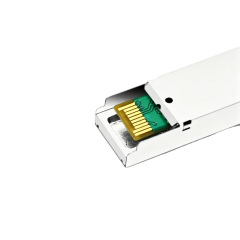
This 1000BASE-SX fiber optic transceiver is fully pin-to-pin compatible with F5 Networks F5-UPG-R, compliant with IEEE 802.3z and SFP MSA industry standards. It delivers stable 1.25Gbps gigabit transmission for F5 BIG-IP load balancer multimode fiber networks.
Pre-flashed with exclusive F5 adaptive EEPROM firmware, this HYTOPTODEVICE fiber optic transceiver eliminates common industry pain points including unknown transceiver alarms, DDM detection failure and port rejection issues, supporting plug-and-play and non-disruptive hot-swap deployment.
Equipped with high-performance 850nm VCSEL laser, this fiber optic transceiver supports 550m error-free transmission over OM2/OM3/OM4 multimode fiber and 275m stable links on legacy OM1 fiber. Strict factory aging testing resolves intermittent link flapping to ensure 7×24 stable operation for F5 enterprise application delivery networks.
Q2: Why do F5 BIG-IP SFP ports fail to establish links with incorrect fiber polarity?
A: Fiber transceiver communication relies on precise TX/RX crossover pairing. Only when the transmit end of one HYTOPTODEVICE fiber optic transceiver connects to the receive end of the opposite module can valid F5 network links be formed.
Q3: What is the operating power consumption of F5 1000BASE-SX replacement fiber optic transceiver?
A: This high-efficiency HYTOPTODEVICE fiber optic transceiver features ultra-low power consumption strictly below 0.8W, effectively reducing F5 device heat accumulation and long-term data center operating costs.
Q4: Can third-party F5-UPG-R compatible modules support 1G Fibre Channel SAN networking?
A: Yes. The HYTOPTODEVICE standard fiber optic transceiver is compatible with both 1G Fibre Channel (1GFC) and IEEE 802.3z Gigabit Ethernet, adapting to F5 data center service and storage network dual scenarios.
Q5: Is 850nm 1000BASE-SX multimode fiber optic transceiver applicable for SONET/SDH carrier networks?
A: No. This general-purpose HYTOPTODEVICE gigabit fiber optic transceiver is not suitable for SONET/SDH services, which require professional rate-matched OC-3/OC-12 dedicated optical modules.
Q6: What technical specifications standardize F5-UPG-R gigabit replacement transceivers?
A: All HYTOPTODEVICE F5-compatible fiber optic transceiver products are strictly designed and tested in compliance with the IEEE 802.3z 1000BASE-SX international industry standard.
Q7: How to troubleshoot F5 load balancer SFP port no-link and dark LED failures?
A: Effective troubleshooting solutions include reversing LC fiber polarity, cleaning contaminated connector end faces, verifying port speed configuration, and confirming complete EEPROM coding of HYTOPTODEVICE fiber optic transceiver.
Q8: What safe testing methods can verify SFP transceiver optical signal output status?
A: Users can safely detect the working performance of HYTOPTODEVICE fiber optic transceiver with an Optical Power Meter (OPM), Visual Fault Locator (VFL) or smartphone camera, avoiding direct laser eye exposure.
Q9: What environmental factors trigger DDM overheating alerts on F5 gigabit transceivers?
A: High-temperature DDM warnings for HYTOPTODEVICE fiber optic transceiver are mainly caused by poor cabinet ventilation, blocked fan filters and excessive ambient rack temperature in data centers.
Q10: What causes persistent CRC errors and random packet loss on F5 multimode fiber links?
A: Common triggers include dirty fiber end faces, damaged patch cords, and received optical power approaching the -18dBm sensitivity threshold of the HYTOPTODEVICE fiber optic transceiver.
Q11: Will using third-party compatible optics void official F5 device hardware warranty?
A: No. In accordance with the US Magnuson-Moss Act, network equipment manufacturers cannot void hardware warranties for users adopting qualified HYTOPTODEVICE third-party fiber optic transceiver modules.
Q12: What pre-shipment quality tests are performed on bulk F5-compatible fiber transceivers?
A: Every batch of HYTOPTODEVICE fiber optic transceiver undergoes 100% full inspection before delivery, including F5 device compatibility verification, optical power calibration and eye-diagram performance testing to ensure batch consistency.
Q13: Can F5-UPG-R compatible 1G SX modules work with universal fiber media converters?
A: Yes. The standard SFP interface design enables the HYTOPTODEVICE fiber optic transceiver to be perfectly compatible with all mainstream 1G fiber media converters on the market.
Q14: Are 850nm short-range SX fiber transceivers suitable for enterprise IP-SAN and FC storage networks?
A: Yes. The HYTOPTODEVICE 1000BASE-SX fiber optic transceiver is optimized for indoor short-distance scenarios, perfectly matching 1G Fibre Channel and IP-SAN storage network connection requirements.
Q15: How does excessive bending of multimode fiber jumpers affect F5 service link stability? A: Over-bent fiber cables will cause severe optical signal attenuation, triggering CRC errors, packet loss and intermittent link disconnection of the HYTOPTODEVICE fiber optic transceiver, affecting F5 service stability.
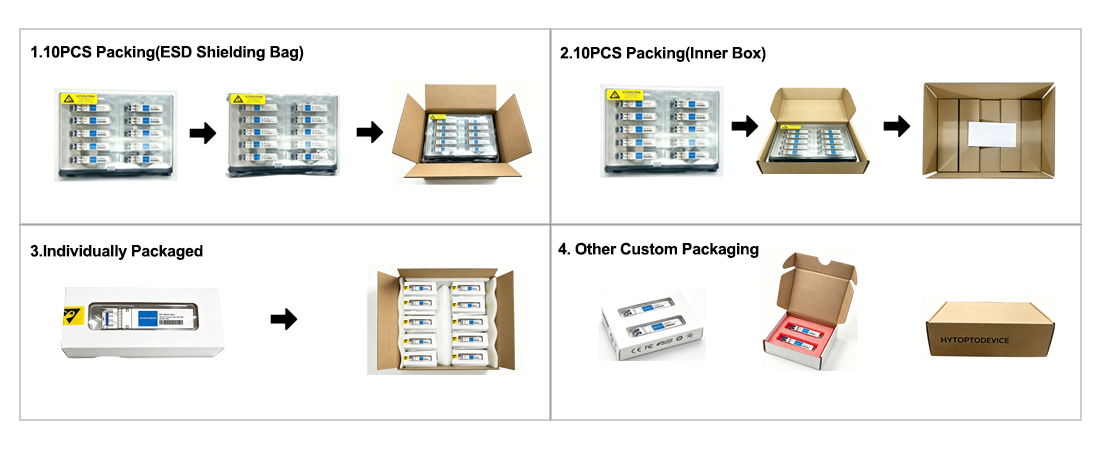
Packaging Options & Custom‑Packaging Solutions
Every transceiver module gets reliable ESD‑safe packaging out of the box. Standard packing is ready for immediate shipment, while custom‑printed packaging with your logo is available for bulk orders.
 Why Network Engineers Choose HYTOPTODEVICE