Q1: Why does QSFP28 100G ER4 Transceiver link fail even if Rx power meets standard baseline specifications?
A: Long-reach 100G ER4 optical links are highly sensitive to chromatic dispersion. Qualified receive power cannot offset signal distortion from aged fiber lines. HYTOPTODEVICE precise calibration ensures stable signal transmission for Huawei long-distance trunk network deployment.
Q2: Can QSFP28 100G ER4 Transceiver support ultra-short 1km point-to-point interconnection on Huawei switches?
A: It is technically possible but requires heavy optical attenuators to simulate 30–40km fiber loss and prevent receiver overload. Factory-calibrated by HYTOPTODEVICE, the module supports error-free short-range cross-rack interconnection for Huawei enterprise switches.
Q3: What latency increment does RS-FEC activation bring to Huawei long-haul links using QSFP28 100G ER4 Transceiver?
A: RS-FEC adds only 250 nanoseconds of negligible latency, far lower than 40km fiber physical propagation delay. Tuned by HYTOPTODEVICE, the module maintains balanced low-latency and error-correction performance for Huawei data center long-haul trunk links.
Q4: Can I disable RS-FEC on QSFP28 100G ER4 Transceiver for lower latency with ultra-clean fiber pathways?
A: FEC can be disabled for latency optimization, yet it causes high Pre-FEC BER and random packet drops on spans over 25–30km. HYTOPTODEVICE default settings guarantee low-BER stability for medium and long-distance Huawei optical transmission.
Q5: Why do Huawei switch CLI display checksum errors after inserting third-party QSFP28 100G ER4 Transceiver?
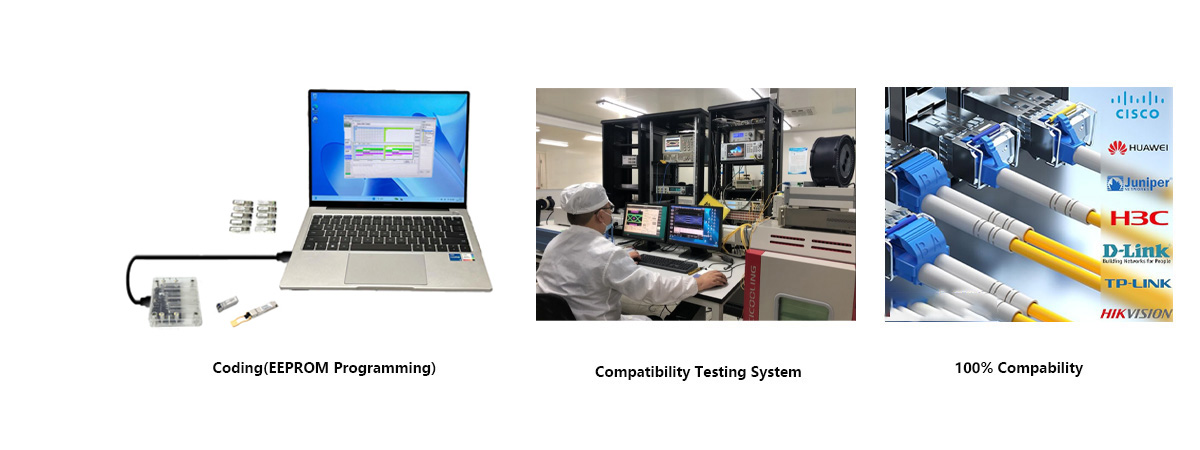
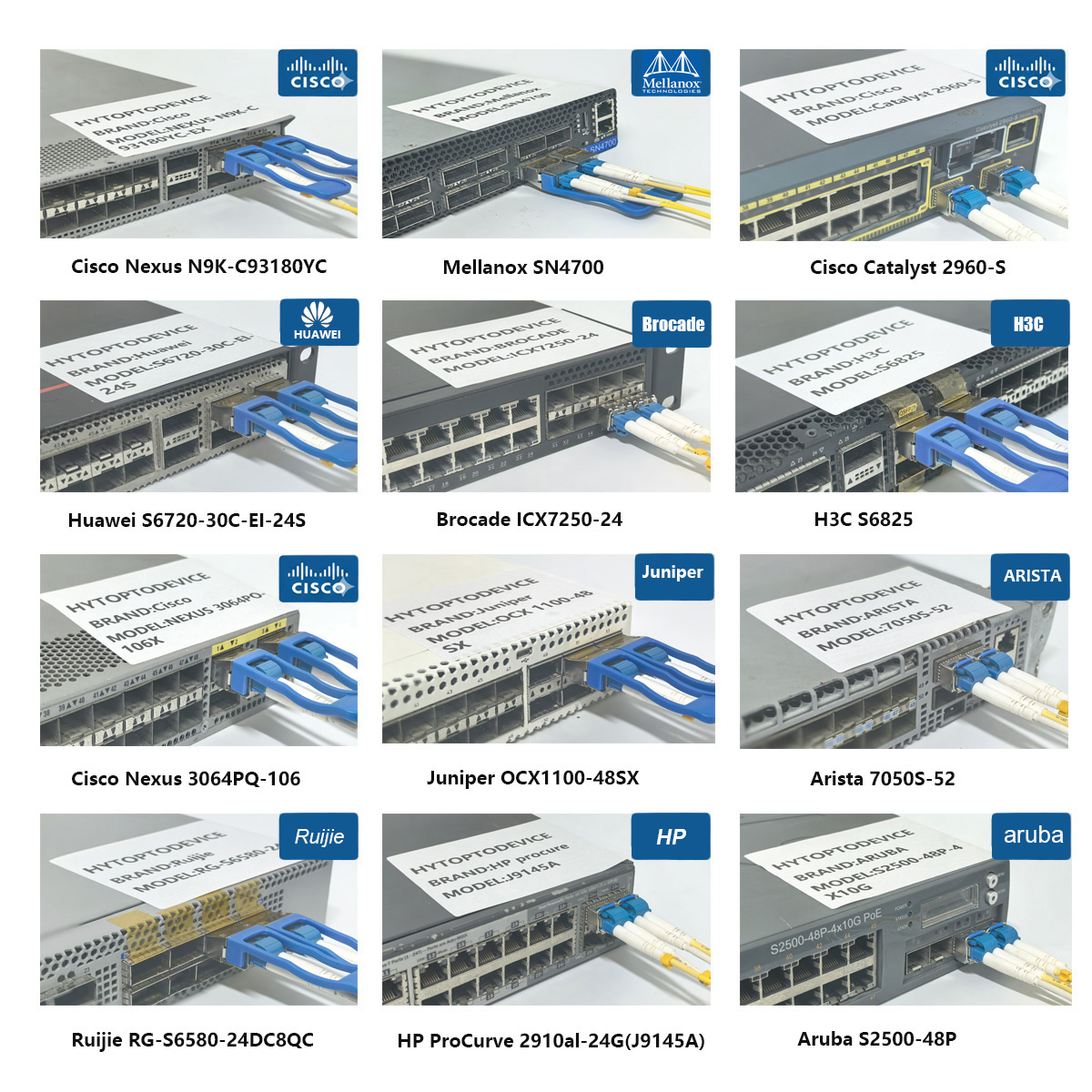
A: Errors are caused by corrupted and unoptimized third-party EEPROM data. HYTOPTODEVICE adopts exclusive Huawei-specific firmware programming to eliminate checksum mismatch and ensure full VRP system compatibility for 100G ER4 Lite module deployment.
Q6: Why does internal temperature of QSFP28 100G ER4 Transceiver spike under full line-rate Huawei traffic loads?
A: Full line-rate traffic drives internal EML lasers and CDR chips to peak operating power, raising module temperature. HYTOPTODEVICE industrial-grade modules feature optimized heat dissipation for stable operation under Huawei high-traffic data center workloads.
Q7: Is channel breakout supported for standard QSFP28 100G ER4 Transceiver deployed on Huawei fabric networks?
A: 4×25G channel breakout is unsupported. Internal LAN-WDM wavelength multiplexing integrates four optical lanes into one duplex LC port. HYTOPTODEVICE standard modules fully match native Huawei 100G fabric port working specifications.
Q8: What number of intermediate patch panel connections is tolerable for 35km Huawei links using QSFP28 100G ER4 Transceiver?
A: Each patch joint brings 0.5–0.75dB insertion loss; only 3–4 intermediate connections are allowed for stable 35km transmission. HYTOPTODEVICE modules provide sufficient power loss margin for complex Huawei on-site cabling environments.
Q9: Can I configure SNMP trap alarms for QSFP28 100G ER4 Transceiver APD receiver overload threshold on Huawei switches?
A: Yes. Fully calibrated HYTOPTODEVICE modules support complete DOM real-time monitoring and threshold alarms. Users can configure SNMP traps on Huawei VRP systems to prevent APD receiver overload and hardware damage on long-reach 100G links.
Q10: Why do 100G ER4 optical modules face extended factory lead times during global semiconductor component shortages?
A: High-end O-band EML lasers and APD receivers for 40km long-reach transceivers are niche low-yield components. As a professional supplier, HYTOPTODEVICE maintains stable component supply to ensure timely delivery of Huawei-compatible 100G optical modules.
Q11: Why do QSFP28 100G ER4 Transceiver Huawei links drop packets only during network microburst traffic?
A: Instant microburst traffic causes temporary CDR clock lock failure and packet loss. HYTOPTODEVICE modules adopt premium CDR chips to strengthen signal response and stabilize Huawei data center high-burst 100G transmission links.
Q12: Which latch structure optimizes high-density Huawei switch deployment: pull-tab or rubber bale-clasp QSFP28 100G ER4 Transceiver?
A: Pull-tab latch designs are ideal for high-density 100G port layouts. HYTOPTODEVICE tool-free pull-tab structure enables convenient module replacement without disturbing adjacent fibers, improving Huawei cabinet O&M efficiency.