Q1: Will this SFP28 25G SR module work in my Cisco/HPE/Dell switch?
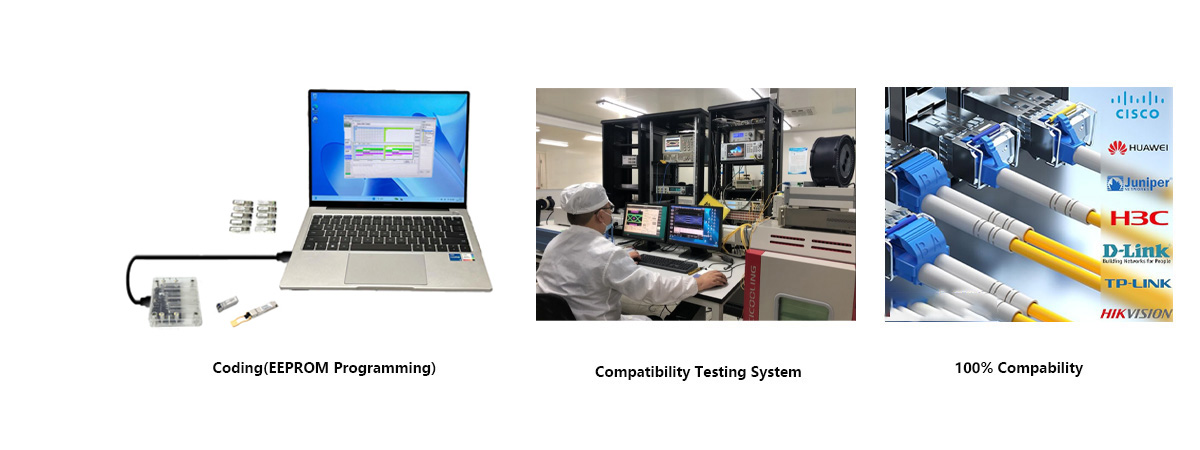
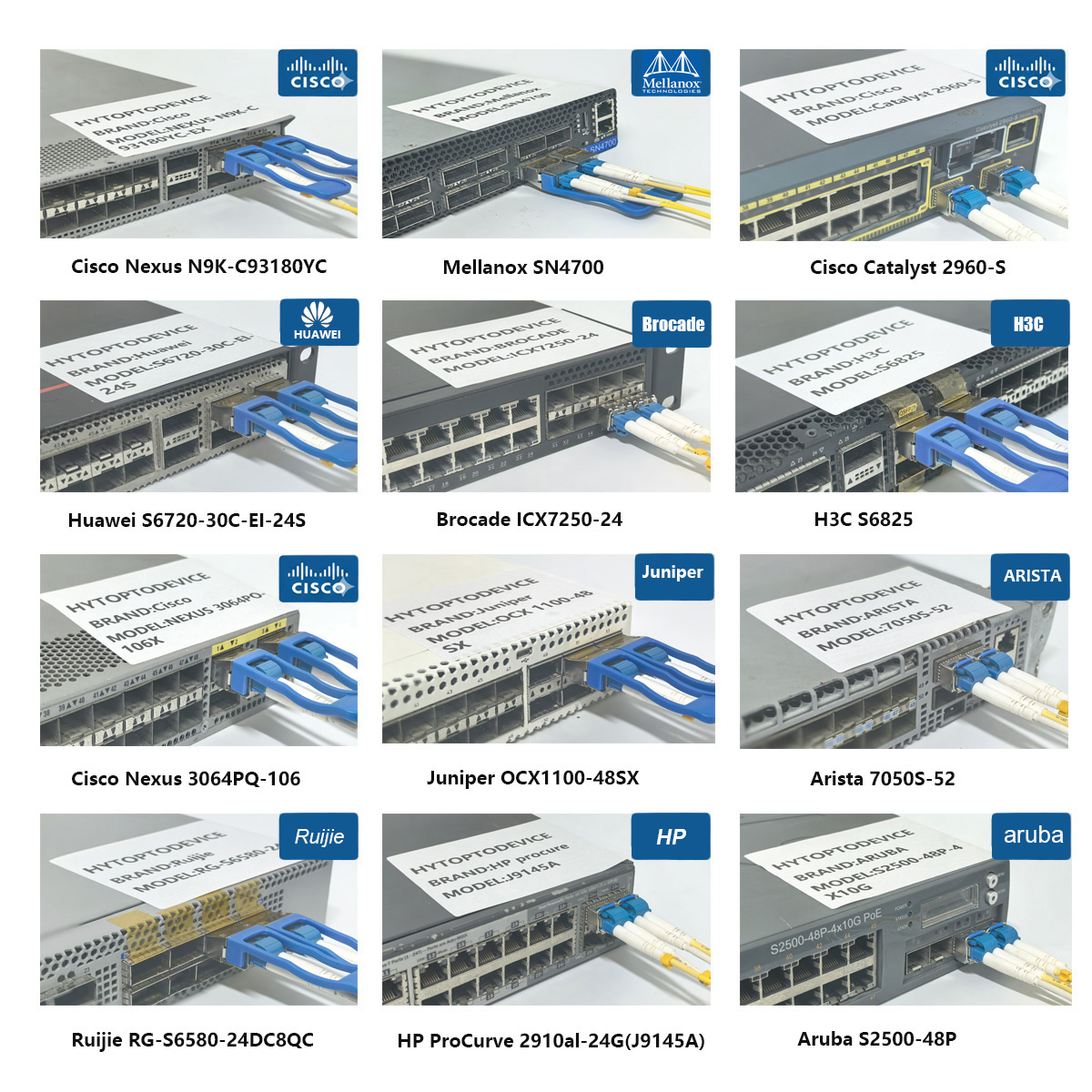
A1: Yes. HYTOPTODEVICE SFP-25G-SR-S SFP28 SR modules are pre-programmed with universal vendor ID and fully tested for cross-brand compatibility, supporting plug-and-play operation on Cisco, HPE, Dell and other mainstream enterprise switches without error logs or port alarms. Ideal for multi-brand switch compatible SFP28 SR bulk procurement for mixed vendor data center infrastructure.
Q2: Can I use a 25G SR module in a 10G SFP+ slot?
A2: No. 25G SFP28 SR modules are electrically incompatible with 10G SFP+ slots due to different rate protocols and pin definitions. Our factory strictly recommends matched port deployment to avoid link failure and hardware identification errors for enterprise network upgrade projects.
Q3: Can I force a 25G SR module to run at 10G in a 25G port?
A3: Forced 10G rate operation on 25G ports is not supported for this SFP28 SR transceiver. The module is fixed with 25GBASE-SR protocol firmware to ensure stable high-speed transmission. We provide customized firmware adaptation services for special rate-adaptive SFP28 SR project tender orders with special deployment requirements.
Q4: Do these modules support FEC (Forward Error Correction)?
A4: Yes. Our SFP-25G-SR-S modules fully support RS-FEC forward error correction. Enabling FEC on host ports unlocks the full 100m OM4 transmission distance, effectively optimizing link anti-interference ability and ensuring zero packet loss for long-distance 25G transmission.
Q5: Can I run 25G SR over legacy OM1 or OM2 orange fiber cables?
A5: No. 25GBASE-SR transmission requires high-bandwidth OM3/OM4/OM5 multimode fiber. Legacy OM1 and OM2 fiber has insufficient bandwidth and severe signal attenuation, which cannot support stable 25G link operation and will cause continuous link flapping and packet loss.
Q6: Can I breakout a 100G QSFP28 SR4 into four 25G SFP28 SR links?
A6: Yes. This SFP28 SR module perfectly matches 100G QSFP28 SR4 breakout cables, realizing 100G-to-4x25G high-density link splitting. It is the optimal solution for data center high-density breakout networking SFP28 SR bulk wholesale, greatly improving cabinet port utilization.
Q7: How do I know if my existing structured cabling can handle 25G?
A7: Verify your cabling specification first: only OM3, OM4 and OM5 multimode fiber support standard 25G SR transmission. Our professional technical team provides free cabling compatibility evaluation for bulk clients to help confirm existing network infrastructure adaptability before large-scale deployment.
Q8: Can these modules handle high-density switch configurations without overheating?
A8: Absolutely. Adopting industry-leading low-power chip design (≤1.0W power consumption) and optimized heat dissipation structure, our SFP28 SR modules run stably at 0℃-70℃. No overheating or performance degradation occurs even in fully populated high-density switch racks, suitable for long-term high-load data center operation.
Q9: How do I know if a vendor is selling refurbished or B-grade lasers?
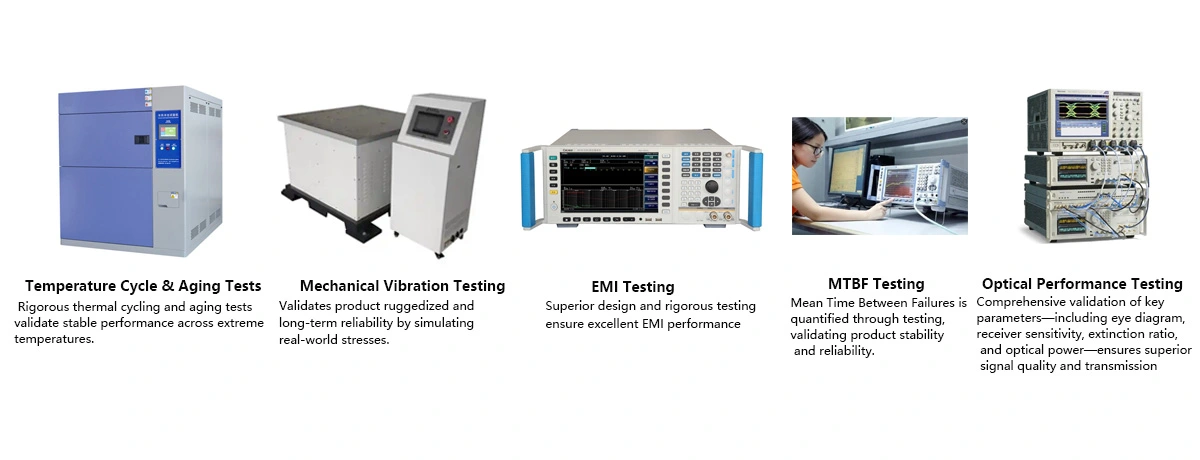
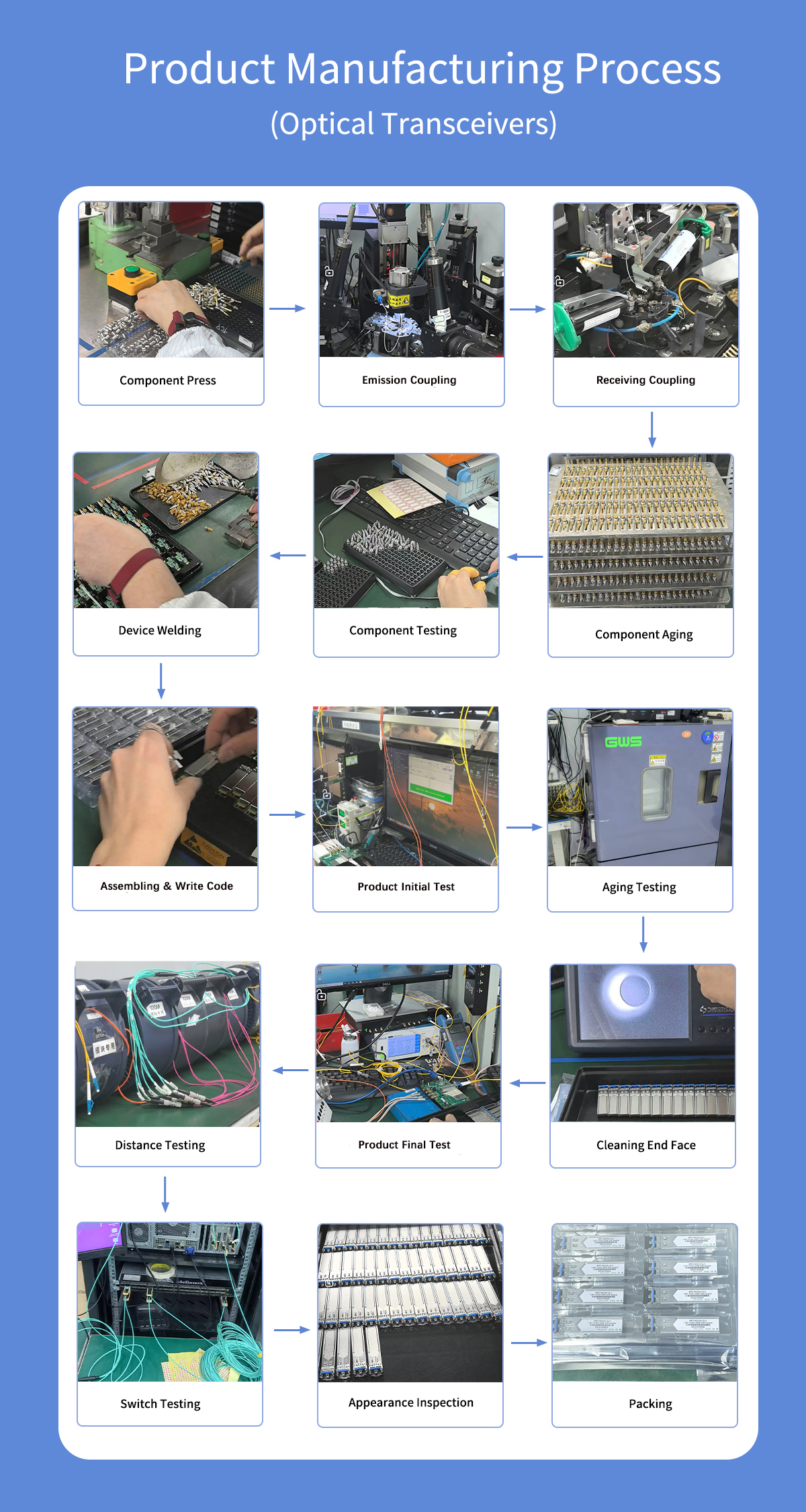
A9: HYTOPTODEVICE only uses brand-new industrial-grade VCSEL lasers and original chips for all SFP28 SR modules. We provide complete batch test reports and component certification files for every bulk order, completely avoiding refurbished, recycled or B-grade inferior laser components to guarantee consistent batch quality.
Q10: What is the standard warranty period for these modules?
A10: We provide a professional 3-year official warranty for all HYTOPTODEVICE SFP-25G-SR-S SFP28 SR modules. With strict factory quality control and full batch testing, we support free after-sales replacement and technical maintenance, providing reliable quality guarantee for enterprise bulk procurement projects.
Q11: Can I hot-swap these modules while the switch is running?
A11: Yes. This SFP28 SR transceiver complies with MSA standard hot-swap specifications, supporting online plug-and-play without shutting down the switch. It enables convenient on-site replacement and network expansion, effectively reducing data center network downtime and maintenance costs.