In the rapidly evolving fields of AI data centers and high-performance computing (HPC), high-speed optical modules are the lifeline of connectivity. However, as we transition from 400G to 800G, a new physical challenge arises: heat dissipation.It is critical to how to deal with the heat dissipation.As a leading 800G OSFP SR8 manufacturer China, HYTOPTODEVICE provides this comprehensive guide to help you make these critical hardware decisions.
When choosing an OSFP
(Octal Small Form-factor Pluggable) ) transceiver module, you will inevitably encounter two distinct physical designs: finned top and flat top. They only appear on 400G/800G OSFP optical transceiver modules.Making the wrong choice can lead to physical damage or immediate overheating and throttling.
Table of Contents
1.What Is The OSFP Form Factor? 1. 1What Is The OSFP? 1.2.The main Characteristics of OSFP2.What is OSFP Finned Top?3.What is OSFP Flat Top?4. Key Applications: Where to Use Which? 4.1.Application 1: AI Back-end Networks (InfiniBand & Ethernet) 4.2.Application 2: GPU Servers (NVIDIA H100/H200) 4.3.Application 3: Open Networking (Edgecore & Arista)5. How to Distinguish and Choose 5.1.Inspect the Port (Cage): 5.2.Verify the Power Consumption: 5.3.Check Long-Tail Keyword Compatibility: 5.4.Confirm the Form Factor:6. Why Accuracy Matters About Finned Top and Flat Top Choose7.Conclusion8.Frequently Asked Questions (FAQs)1.What Is The OSFP Form Factor?
1. 1.What Is The OSFP?
OSFP (Octal Small Form-factor Pluggable) is an optical transceiver packaging form used for high-speed data transmission, primarily for higher-speed network applications such as 100G, 200G,
400G,
800G and 1.6T. It offers greater bandwidth and more ports, making it suitable for scenarios requiring high transmission speeds and high density, such as data centers and communication networks.
1.2.The main Characteristics of OSFP
- Higher bandwidth: Compared to the traditional QSFP (Quad Small Form-factor Pluggable) package, OSFP supports higher transmission rates, especially excelling in applications beyond 400G.
- Higher port density: OSFP transceivers are designed to support more channels and higher port density, making them widely used in large-scale data centers and high-speed network equipments.
- Modular design: OSFP features pluggable design, facilitating maintenance and upgrades.
- Enhanced heat dissipation: Unlike the QSFP112、 QSFP-DD standard, the OSFP form factor was engineered specifically to handle pluggable transceiver high power consumption (up to 16W or more). the OSFP has two thermal cooling strategies based on whether the heat sink is on the transceiver or in the switch. It provides stronger heat dissipation capabilities, making it suitable for handling high-power-consuming optical transceiver modules.
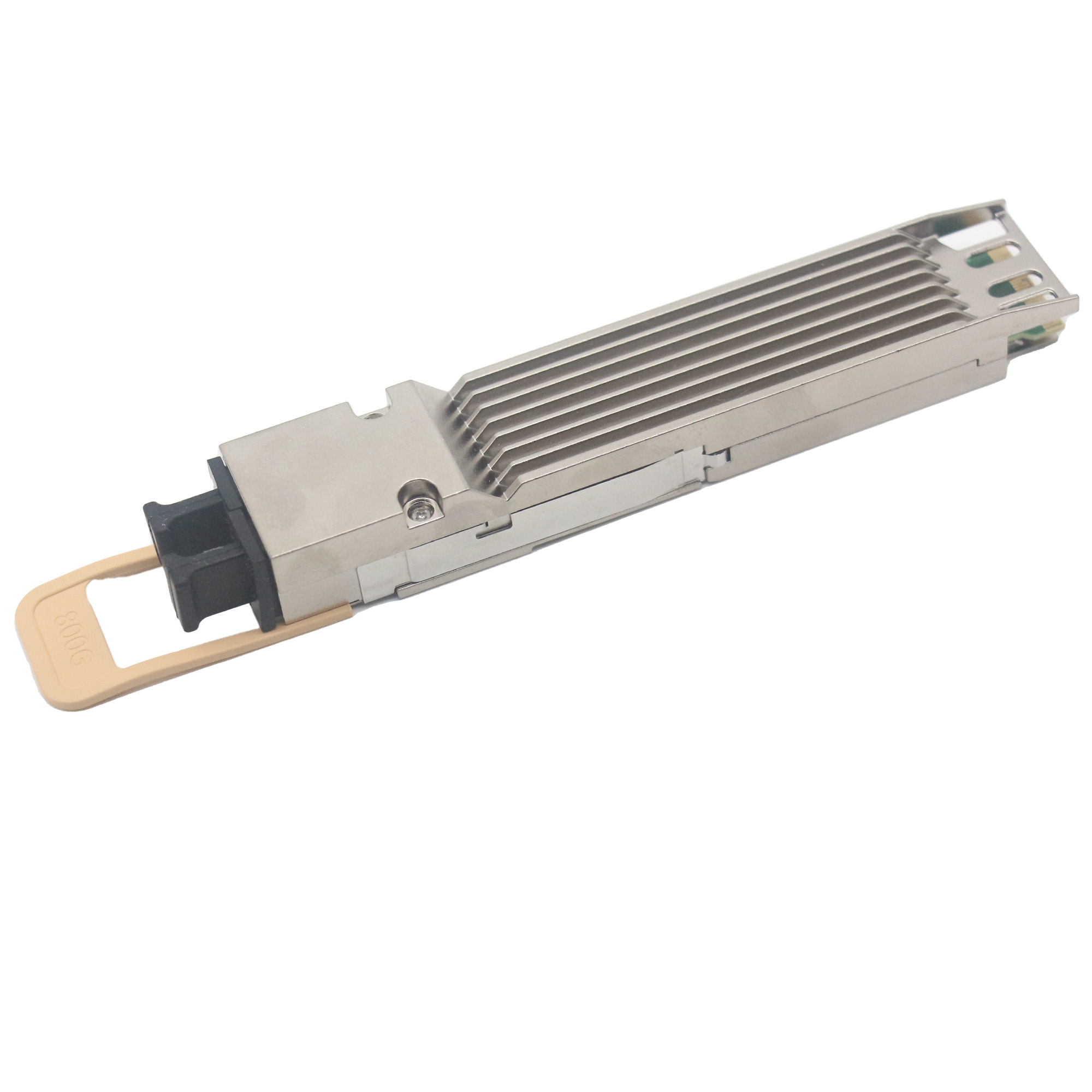
The OSFP features two physical designs: finned top and flat top.The Finned Top design features integrated thermal cooling fins directly on the upper surface of the module’s metal housing.
-
Cooling Mechanism: It relies on the switch’s internal airflow to pass through these fins.
-
Best For: Switches that have "open" cages without built-in heat sinks, such as the NVIDIA Quantum-2 series、 NVIDIA Spectrum-4、Cisco Nexus 9000 Series
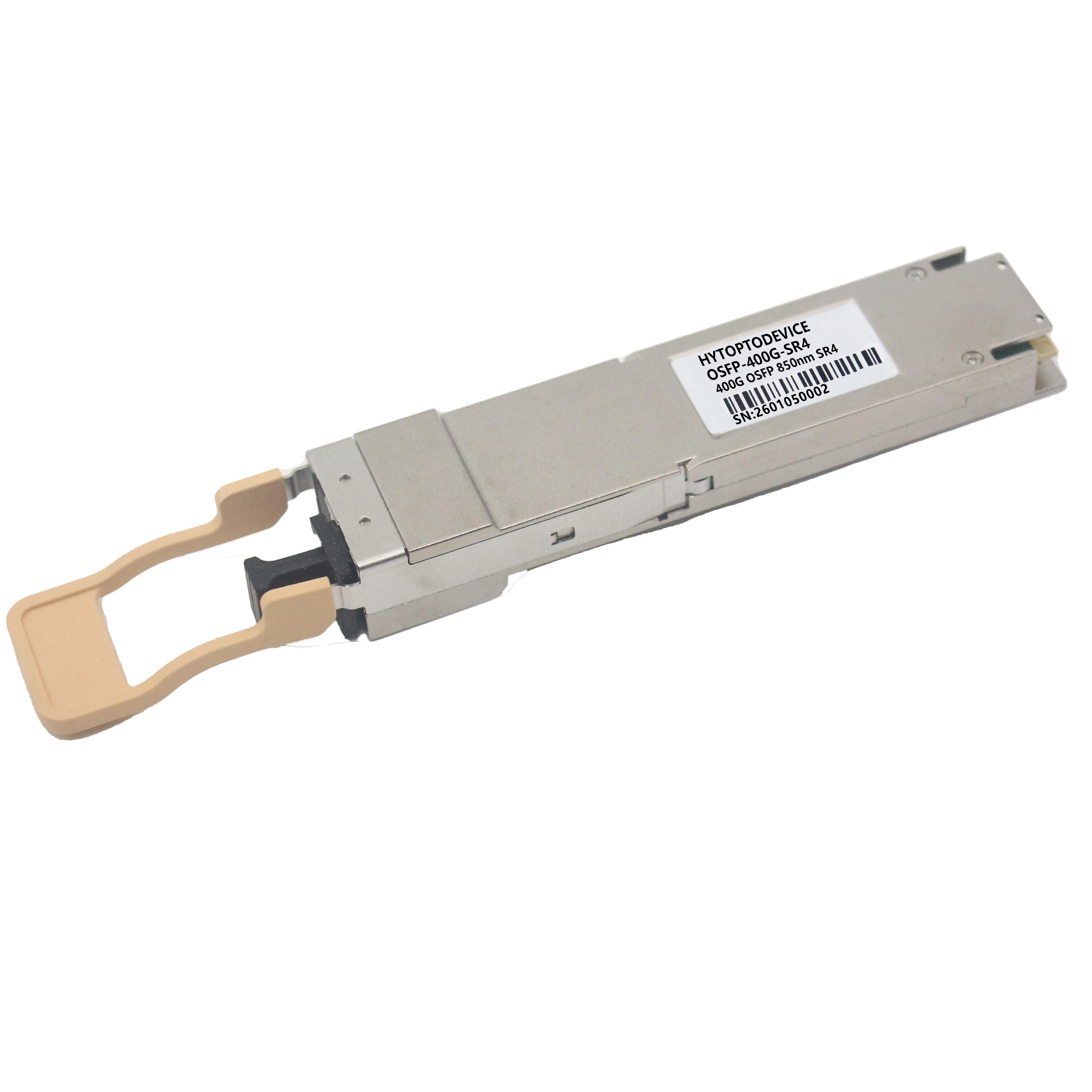
The Flat Top (also known as the Riding Heat Sink or RHS type) has a smooth, flat top surface.
-
Cooling Mechanism: It requires a Riding Heat Sink (a metal cooling block) built into the switch or server's port. When the transceiver module is inserted, the heat sink "rides" on the flat surface to conduct heat away.
-
Best For: High-density configurations and server NICs (Network Interface Cards).such as NVIDIA ConnectX-7 NICs、NVIDIA BlueField-3 DPUs.
4. Key Applications: Where to Use Which?
The choice between these designs depends entirely on your high-speed optical transceiver module hardware environment.
4.1.Application 1: AI Back-end Networks (InfiniBand & Ethernet)
Most AI-optimized switches require high-density fiber solutions. For instance, the 800G OSFP SR8 Finned Top is the standard for switch-side deployment where internal airflow is the primary cooling method. 800G OSFP SR8 Manufacturer China HYTOPTODEVICE ensures that our finned Top designs meet the rigorous aerodynamic requirements of Tier-1 switch vendors.
4.2.Application 2: GPU Servers (NVIDIA H100/H200)
In servers like the DGX H100, the OSFP cages on the ConnectX-7 or BlueField-3 NICs are equipped with their own internal cooling mechanisms. For these applications, you must use 400G OSFP Flat Top modules to ensure a flush, conductive fit with the server's riding heat sink.
4.3.Application 3: Open Networking (Edgecore & Arista)
White-box switches often support a variety of optics. When deploying an Edgecore 400G OSFP compatible solution, you must verify if the chassis uses a "finned-required" or "flat-required" cage design. High-Speed Optical Transceiver Manufacturer China HYTOPTODEVICE offers customized firmware for these platforms to ensure seamless DOM (Digital Optical Monitoring) reporting.
5. How to Distinguish and Choose
If you are a network engineer or procurement specialist looking for a 400G 800G OSFP optical module, follow this checklist:
5.1.Inspect the Port (Cage):
Look into the OSFP slot of your switch.
- If you see a metal flap or a "sink" hanging from the top of the hole,Choose Flat Top.
- If the hole is empty and you can see the PCB at the back,Choose Finned Top.
5.2.Verify the Power Consumption:
As a 400G OSFP SR4 manufacturer China HYTOPTODEVICE designs SR4 and SR8 modules to handle peak power loads. Finned Top modules generally offer better "self-cooling" in switches with front-to-back airflow.
5.3.Check Long-Tail Keyword Compatibility:
Ensure your transceiver module matches specific needs like low power consumption 400G OSFP DR4 or 800G OSFP SR8 for AI clusters.
5.4.Confirm the Form Factor:
Are you looking for QSFP-DD vs OSFP 400G? Remember that only OSFP typically requires the Finned vs. Flat distinction.
6. Why Accuracy Matters About Finned Top and Flat Top Choose
Using a Finned Top module in a Flat Top (RHS) slot can cause mechanical interference, preventing the module from seating correctly and potentially breaking the port. Conversely, using a Flat Top module in an open cage will result in thermal shutdown within minutes, as there is no surface area for the air to cool the internal DSP.
7.Conclusion
As we continue to push the limits of 800G and higher speeds, the physical design of high-speed optical transceivers is just as important as data rates. Whether you're deploying a 400G OSFP SR4 or an 800G SR8 in an AI cluster, understanding the the Finned vs. Flat distinction in optical modules is crucial for network stability.
HYTOPTODEVICE, a trusted 400G OSFP SR4 manufacturer China, is committed to providing high-performance, thermally optimized solutions for next-generation data centers, making it an ideal choice for high-end optical transceivermodules.
8.Frequently Asked Questions (FAQs)
8.1.Q1:What is the difference between Finned Top and Flat Top?
A:The difference as following:
-
Finned Top: The module's top casing integrates heat dissipation fins (heat sinks). These fins increase the surface area, allowing heat to be directly dissipated into the airflow of the switch.
-
Flat Top: The top surface is smooth and flat. It dissipates heat through conduction using a "movable heat sink" built into the switch housing.
8.2.Q2:Why is the choice between them so critical for 800G transceiver modules?
A: The power consumption of 800G transceiver can reach 16-30W. Deal with this heat is the "bottleneck" of data center performance. If you choose wrong type.that may lead to overheating, throttling, or hardware failure.
8.3.Q3:When should I use a Finned Top module? A:Finned Top transceiver is typically used in OSFP designs or certain QSFP-DD configurations where the switch cage lacks internal heatsinks. They are well-suited for "open" cooling, where air flows directly through the transceiver.
8.4.Q4:Can I plug a Finned Top module into a cage designed for Flat Top? A:No, you can not plug it into.the switch cage for Flat Top mechanism has a built-in heat sink, a Finned Top module will likely not fit or will physically damage the cage's internal mechanism. It was recommended that you should check the mechanical specifications of switch before buying.8.5.Q5:When should I use a Flat Top module? A: The Flat Top design is standard on most QSFP-DD switches. These switches feature spring-loaded heatsinks mounted on the module cage. The flat surface of the transceiver module ensures maximum contact with the heatsink, resulting in efficient heat dissipation.
8.6.Q6:Can I plug a Flat Top module into a cage designed for Finned Top? A:Yes.While it's physically possible to fit it, doing so would severely damage the flat top module.The cage designed for Finned Top module has no the heat sink. that will make the flat top module overheating and hardware failure.
8.7.Q7:How do I identify which one I need, Flat Top or Finned Top? A:First, you should check the switch manual. you will see the related introducion. or you may check the switch:
-
If the ports look "hollow" or empty, you likely need Finned Top.
-
If you see a metal block or "pedal" inside the top of the port, you need Flat Top.
8.8.Q8:What are the disadvantages of Flat Top?
A:Flat-top cage designs require high-performance thermally conductive interface materials (TIM) or very tight mechanical fit to ensure that heat is efficiently transferred from the module to the cage's radiator. This cooling hardware also makes it more expensive.
8.9.Q9:What are the disadvantages of Finned Top?
A:Compared to the Flat Top modules in traditional QSFP-DD systems, they have poor versatility. Furthermore,the fins may be bent or damaged during installation for rough operation.
8.10.Q10:Does a Finned Top module provide better cooling?
A:Yes. Removing the "interface" between the Finned Top module and the external heatsink reduces thermal resistance. However, the actual effect depends entirely on the airflow rate inside the chassis.



