The explosive growth of Artificial Intelligence (AI), particularly in large-scale model training and inference, is not just a software breakthrough—it's a profound hardware challenge. At its core, AI's hunger for processing power translates directly into an insatiable demand for data movement. This demand is fundamentally reshaping data center infrastructure and placing unprecedented requirements on high-speed optical transceivers, the unseen engines powering AI's advancement.
Table of Contents
For AI system architects and data center operators, understanding these specific requirements is key to building efficient, scalable, and reliable AI clusters. Here is a detailed breakdown of how AI drives the evolution of optical module technology.
一、The Need for Higher Speeds: Beyond Bandwidth BottlenecksTraining and inferencing with AI large models involves processing exabytes of data. Traditional network bandwidth is utterly insufficient for synchronizing parameters across thousands of GPUs in real-time.
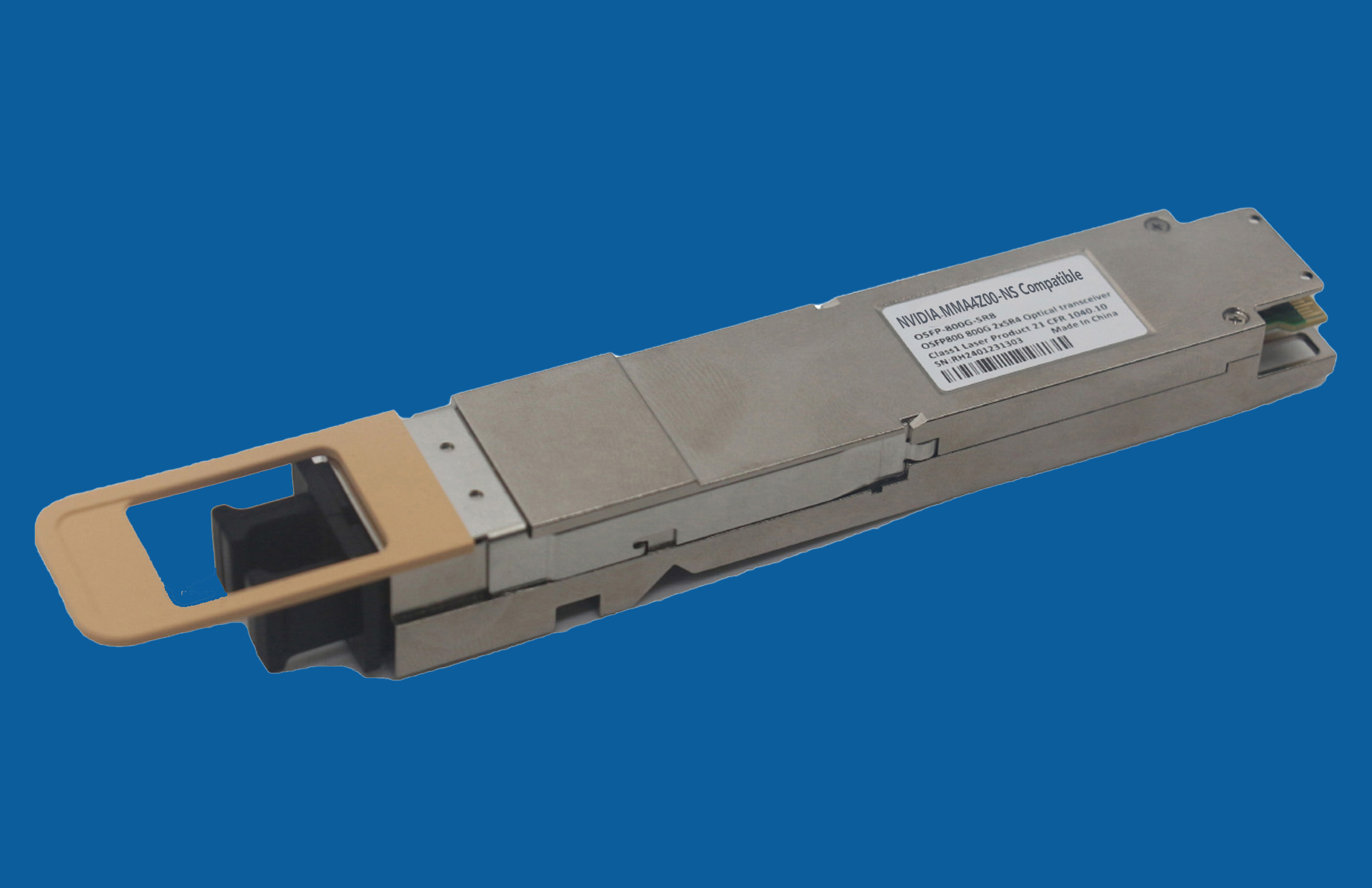
· The Rate Evolution: While 800G optical transceivers have become the mainstream workhorse for AI front-end networks, the industry is rapidly adopting 1.6T optical modules to keep pace. The roadmap already points toward 3.2T modules to meet future demands.
· Real-World Implementation: Leading-edge AI server clusters, such as those built on platforms like NVIDIA's GB200, already utilize 1.6T optical transceivers for critical leaf-spine and cross-rack interconnects. This enables the low-latency, high-bandwidth fabric essential for massive distributed computing tasks, preventing the computational array from being stalled by data transfer delays.
 二、The Need for Massive Scale: Quantity Becomes a Parameter
AI data centers are characterized by "thousand-card" or even "ten-thousand-card" GPU clusters. The scale of interconnection is immense.
· Sheer Volume: A single large-scale AI cluster can require thousands of high-speed optical modules to connect every node. The demand is not linear; as cluster size grows to achieve higher performance, the number of required modules increases correspondingly.
· Supply Chain & Consistency: This massive scale underscores the need for a supplier capable of guaranteeing not only high performance but also volume production, consistent quality, and reliable supply. A shortage of even a few modules can delay the deployment or expansion of a multi-million-dollar AI cluster.
 三、 The Need for Lower Power & Higher Density: Efficiency is Everything
The energy consumption of AI data centers is a major operational and environmental concern. Every watt saved in the interconnect translates to significant cost reduction and sustainability gains.
· Power-Per-Bit Metric: The power efficiency (pJ/bit) of an optical transceiver is now a critical purchase criterion.
· Innovative Architectures: Technologies like Linear-drive Pluggable Optics (LPO), which removes power-hungry DSP chips, and Co-Packaged Optics (CPO), which integrates the optical engine much closer to the ASIC/GPU, are being actively pursued. These approaches significantly reduce power consumption, improve port density, and minimize rack space and cabling complexity.
 四、 The Need for Uncompromising Stability & Reliability
An AI training job can run uninterrupted for weeks. Any single component failure, including in an optical module, can cause a catastrophic interruption, leading to lost time, wasted resources, and corrupted results.
· Extremely Low Failure Rates: AI-grade optical modules must achieve exceptional field reliability, with target failure rates in the range of 2‰ to 4‰. This demands rigorous manufacturing processes, superior component selection (including high-quality TOSA/ROSA/BOSA), and robust housing design.
· Intelligent Diagnostics: Modules must go beyond basic function and support advanced Digital Diagnostics Monitoring (DDM/DOM) and intelligent fault detection. Features like performance degradation alerts and predictive analytics are becoming essential for preemptive maintenance.
 五、The Need for Manageability & Control
In a deployment of thousands of modules across a vast data center, remote management is not a luxury—it's a necessity for operational efficiency.
· Remote Lifecycle Management: Optical modules must support remote monitoring, configuration, and firmware updates. This allows operating teams to have real-time visibility into the health of every link, perform rapid troubleshooting, and ensure the overall stability of the AI system without physical access.
 六、Partnering for the AI Infrastructure Build-Out
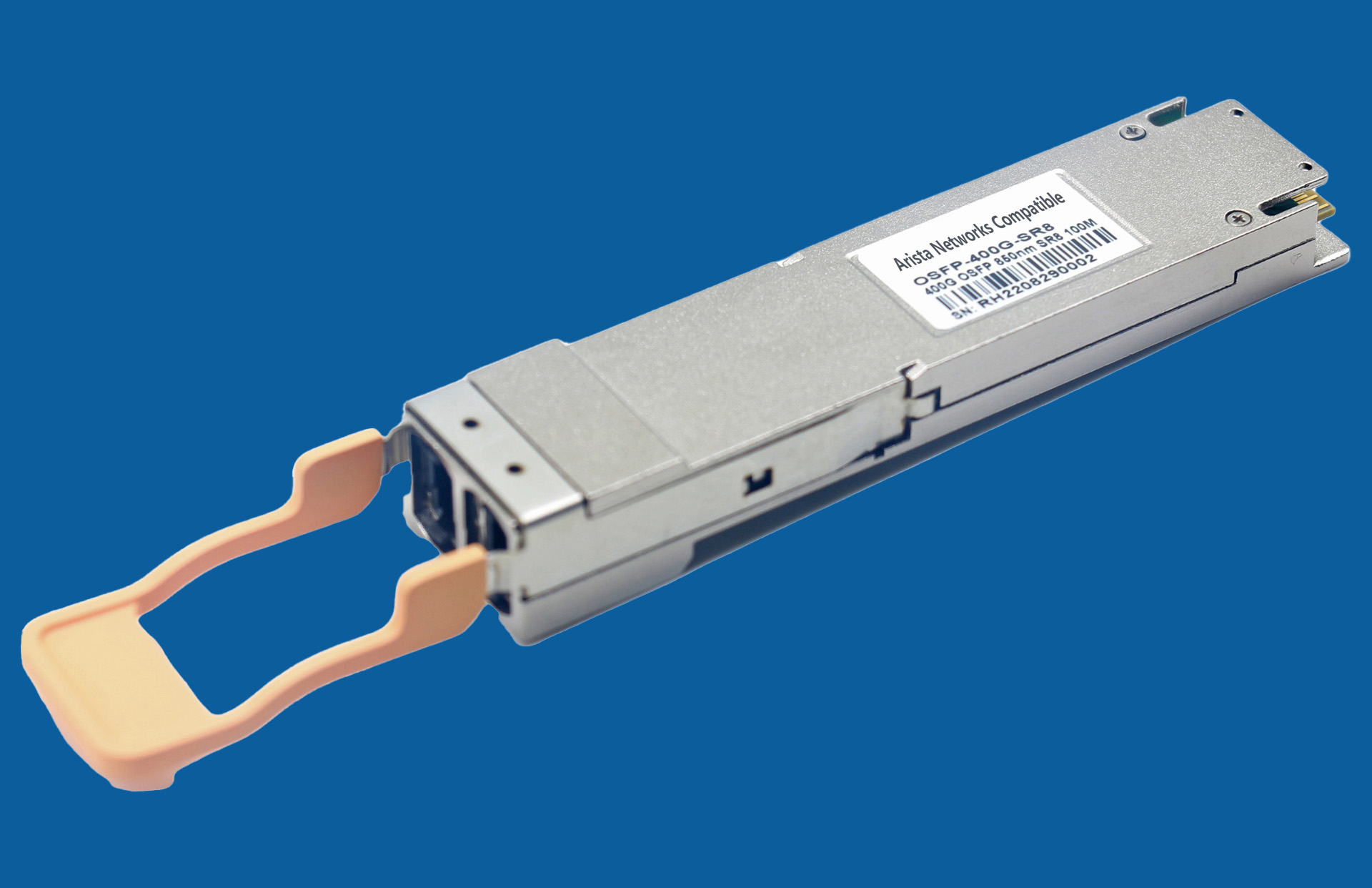
The rapid development of AI is directly driving explosive growth in the market for 800G and above fiber optical transceivers. These modules are no longer mere accessories; they are critical components of AI compute infrastructure.
At HYTOPTODEVICE TECHNOLOGY, we are committed to being a strategic partner in this build-out. As a vertically integrated manufacturer with deep expertise in R&D, production, and sales of optical communication products, we design and build the high-performance interconnect solutions that AI demands in the future.
· We develop next-generation high-speed optical transceivers ready for the transition to 1.6T and beyond.
· Our OEM & ODM services allow us to customize solutions, from the core optical components and housings to the complete module, meeting the precise thermal, signal integrity, and form-factor requirements of your AI hardware design.
· We implement stringent quality control to target the high-reliability standards that AI clusters require.
· We provide the tools and intelligence for manageability, ensuring your infrastructure is both powerful and controllable.
The future of AI is built on light. Let's build it together.