For video media companies—whether in live broadcasting or sports production—network performance is not just a metric; it's the product itself. A single glitch, a moment of latency, or a dropped packet during a global live stream can translate into monumental financial and reputational damage.The optical module is the foundational layer. Choosing the right transceiver is not a mere commodity purchase; it's a strategic decision for ensuring stability, low latency, and zero packet loss.
Table of Contents 一、Four Critical Selection Dimensions (The Core of the Solution) 二、Application Spotlight: Tailoring the Choice 三、A Practical Checklist for Your Team 四、Conclusion: Investing in the Invisible Foundation Media traffic is characterized by "elephant flows": sustained, high-bandwidth streams that are extremely sensitive to jitter and interruption. Standard data center transceivers might function, but they may not be optimized for the unique demands of uncompressed 4K/8K video, real-time remote production (REMI), or high-frame-rate cinematic transfers. How Video Media Companies Can select the right Optical Transceiver Modules? or what solution should be chosen?
 一、Four Critical Selection Dimensions (The Core of the Solution)
1. Performance Headroom: Never Fly at "Rated Capacity"
· Principle: Do not choose a module that only just meets your current bandwidth requirements. Instead, ensure a 20-30% performance headroom.
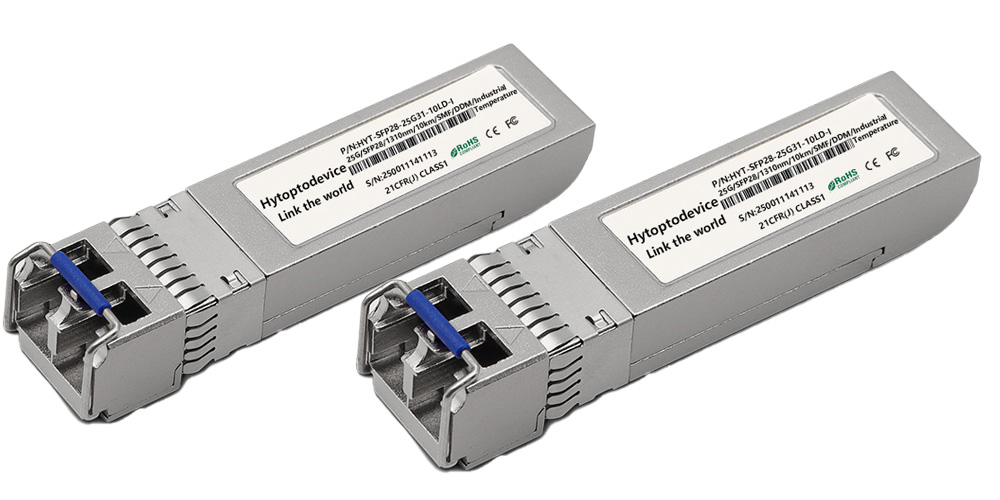
· Example: For transmitting an uncompressed 4K video stream (approximately 12Gbps), opt for a 25G optical module, not a 10G one. This provides a buffer for signal fluctuations, protocol overhead, and future upgrades, forming the cornerstone of stability.
· Your Professional Advice: "We often advise clients to select a speed grade one tier higher than the theoretical requirement for real-time production streams. It is the most cost-effective 'insurance'."
2. Environmental Hardening: Stability Under Fire
· The Issue: Broadcast environments are harsh. Equipment is packed into mobile production trucks, placed in non-climatized corners of studios, or deployed for outdoor broadcasts.
· The Solution: Standard Commercial Temperature (0°C to 70°C) transceivers may be insufficient. Specify Extended Temperature or Industrial Temperature (-40°C to 85°C) transceivers. These components are built with tougher tolerances and advanced thermal management to perform consistently where it matters.
· Our Insight: "Our extended-temp modules are designed for the reality of broadcast—ensuring signal integrity whether inside a controlled data center or on the sideline of a major sporting event."
3. Precision-Matched Reach & Media: Avoid the "Edge of Spec"
· Calculated Distance: Mismatched reach is a common source of failure. Precisely map every link.
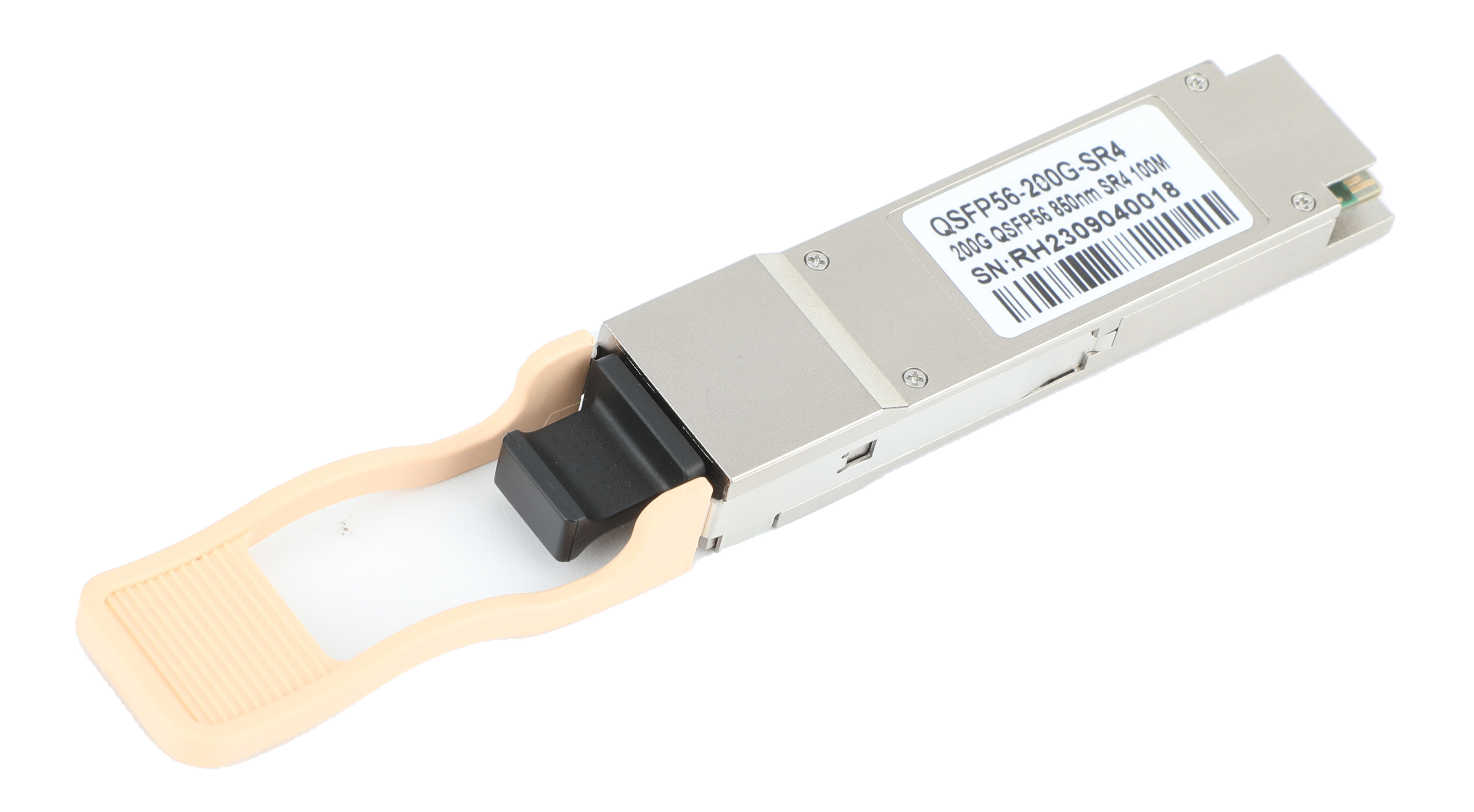
· Intra-facility/Studio: Multimode (e.g., SR, SR4) is often cost-effective for short runs.
· Campus/REMI/Contribution Links: Single-mode (e.g., LR, ER) is mandatory. For distances beyond 80km, pay close attention to Dispersion Tolerance. Consider Coherent optics (ZR) for ultra-long-haul, high-capacity contribution feeds.
· Key Point: An under-specified module fails; an over-specified one wastes budget. Precision is key.
4. Advanced Diagnostics & Compatibility: Proactive Management
· Digital Diagnostics Monitoring (DDM / DOM): This is non-optional for media. DDM provides real-time telemetry on temperature, voltage, laser bias, and transmitted/received optical power. This allows for predictive maintenance—replacing a module whose laser shows gradual decay before it fails during a prime-time broadcast.
· Deep Compatibility Testing: Ensure optical transceivers are rigorously tested with your specific core gear—not just generic switches, but also video routers (e.g., EMC, Grass Valley), IP media gateways, and ST-2110 compliant systems. Latency and synchronization can be affected by driver-level interactions.
 二、Application Spotlight: Tailoring the Choice
1.Scenario A: Remote Integrated Production (REMI)
· Requirement: Transporting multiple camera feeds, audio, and data back to a central production hub with minimal latency.
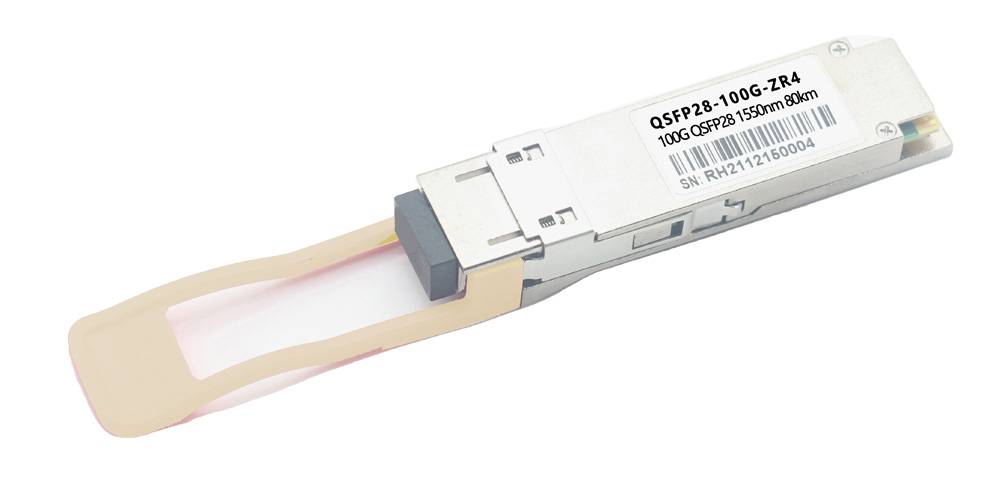
· Solution:: High-density 100G/400G ZR coherent optics to aggregate all feeds onto a single fiber pair, maximizing stability and reducing fiber lease costs.
2.Scenario B: Data Center Content Distribution
· Requirement: High-speed synchronization of massive video assets between rendering farms, storage servers, and encoding servers.
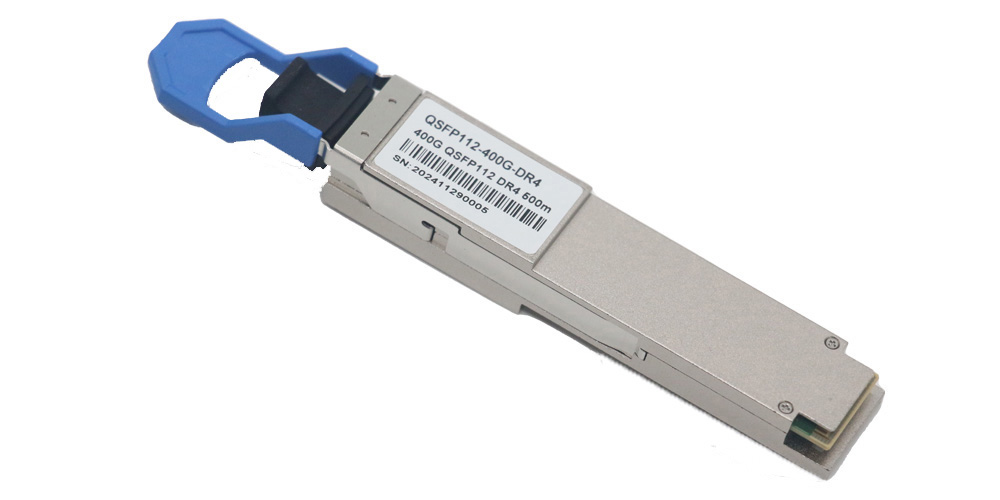
· Solution: Within a Spine-Leaf architecture, utilize 400G FR4 or DR4 optical modules for core interconnects, delivering high bandwidth and deterministic low latency.
3.Scenario C: Global Collaboration & Cloud Distribution
· Requirement: Securely and rapidly distributing finished content to global CDNs or partners.
· Solution: Employ standard 100G/400G LR/ER modules at the data center egress points to ensure seamless interoperability with public cloud and carrier networks.
三、A Practical Checklist for Your TeamBefore your next transceiver modules procurement:
1. Profile the Link: Document required bandwidth, exact distance, ambient temperature range, and connected equipment models.
2. Demand Data: Request Eye Diagram, BER (Bit Error Rate) test results, and long-term stability reports from suppliers.
3. Verify Compatibility: Ask for a compatibility matrix specific to your gear or request evaluation units for real-world testing in a non-critical link.
4. Plan for Redundancy: For primary broadcast signals, implement both module-level (within a device) and path-level redundancy.
5. Standardize Management: Use DDM data to establish performance baselines and track the health of every transceiver in your inventory.
四、Conclusion: Investing in the Invisible Foundation In the video media industry, the network is the production pipeline. The optical transceiver is the fundamental courier of your most valuable asset—your content. Selecting the right one means choosing a partner engineered for precision, hardened for reality, and transparent in its operation.
It's the component that, when chosen correctly, allows you to forget about the network entirely and focus on what you do best: creating and delivering stunning visual experiences.
Ready to Optimize Your Media Network's Foundation?
At HYTOPTODEVICE TECHNOLOGY, we specialize in fiber optical transceivers built for performance-critical applications. We understand the unique pressures of broadcast and media networks.
Contact our technical team today for a complimentary consultation on your specific video transmission links.
Please feel free to contact us if you have any questions. thank for you!



