
The push from 100G to 400G stopped being theoretical a while ago. AI training clusters, GPU-dense racks, and hyperscale-adjacent colocation deployments are saturating 100G spine links faster than most infrastructure teams expected. If your network refresh is coming up in 2026, this guide covers the migration mechanics, the economics, and the transceiver decisions you actually need to make.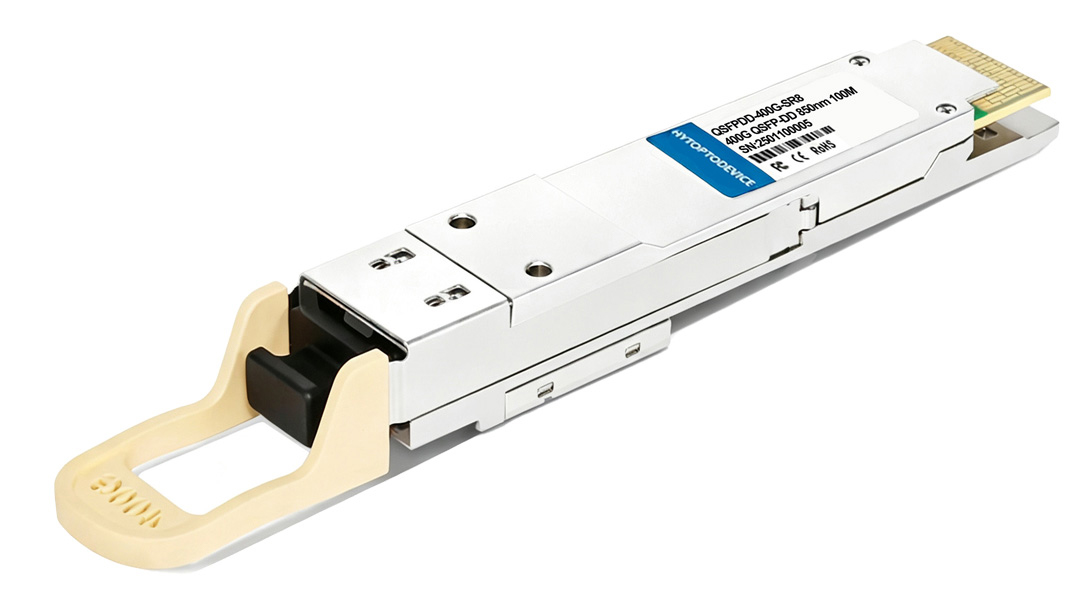
Bandwidth demand is accelerating on two fronts at once: AI workloads and 5G backhaul.
A single AI training job running across a GPU cluster can generate hundreds of terabits of east-west traffic per day — a traffic pattern that breaks the assumptions behind most 100G spine designs. Global data center investment is tracking toward $6.7 trillion by 2030, with a significant share going toward infrastructure capable of supporting AI inference at scale.
The optical networking hardware market reflects this directly. It reached $23 billion in 2025 with 50 percent year-over-year growth. That is not a forecast — it is procurement data. Operators are buying 400G and 800G hardware now.
Waiting another 12 to 18 months to plan your migration means starting the project when your 100G links are already congested. The 2026 window makes sense because QSFP-DD pricing has matured, compatible third-party options are widely available, and the operational playbook for phased migrations is well established.
One of the most practical aspects of QSFP-DD is its mechanical and electrical backward compatibility with QSFP28. A QSFP-DD port accepts a QSFP28 module — which means a switch with QSFP-DD ports can run your existing 100G transceivers during a phased migration without requiring a simultaneous forklift upgrade of every link.
This has real budget implications. You do not need to replace all 100G optics on day one. Upgrade the switch hardware to QSFP-DD-capable platforms, keep running QSFP28 modules on links that do not yet need 400G throughput, and swap those modules as traffic demands justify it.
The electrical difference is worth understanding: QSFP28 uses four lanes at 25G each (4×25G), while QSFP-DD uses eight lanes at 50G each (8×50G) to reach 400G. The physical connector adds a second row of contacts, but the port dimensions remain compatible. Cisco, Arista, and Juniper have all published compatibility matrices confirming QSFP28 operation in QSFP-DD ports. Verify your specific platform before committing, but the architecture is designed for exactly this transition.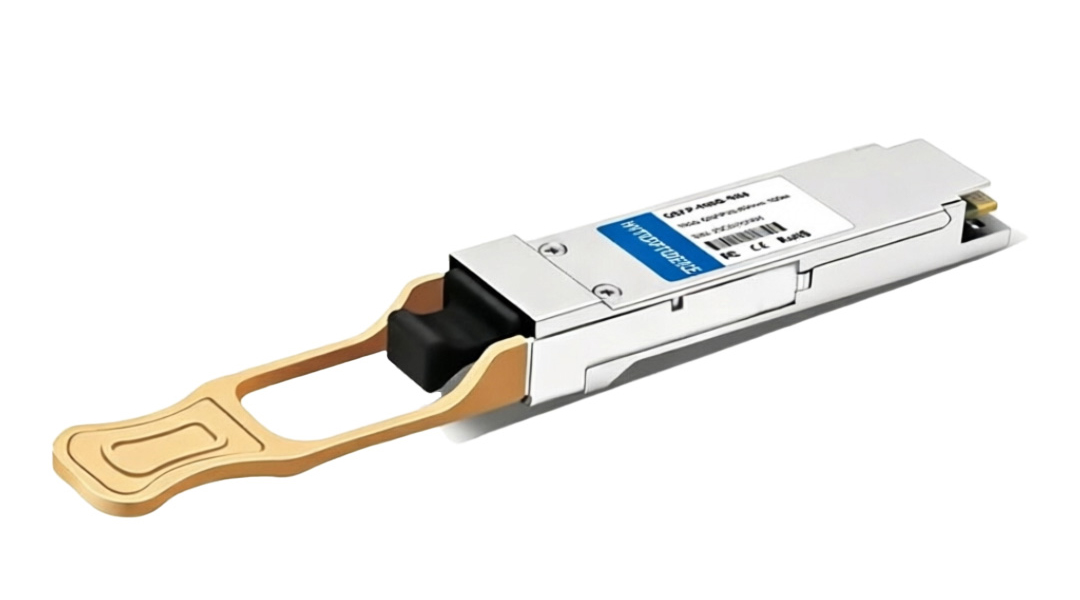
A 100G to 400G migration does not have to be a single cutover event. Most data center and enterprise teams execute this across four phases.
Start with a full inventory of your current 100G infrastructure: switch models, port counts, fiber plant (OM3, OM4, OS2), and current utilization by link. Links running above 60 percent sustained utilization are your first candidates for 400G.
Document your existing QSFP28 transceiver types as well. SR4, LR4, and CWDM4 modules have different fiber requirements, and your 400G replacement choices need to match the physical plant already in place.
Replace spine switches with QSFP-DD-capable platforms. During this phase, you can populate QSFP-DD ports with QSFP28 modules on links that do not yet need full 400G bandwidth — keeping the migration non-disruptive while you establish the hardware foundation.
For high-utilization spine-to-spine links, deploy 400G QSFP-DD SR8 (OM4 links up to 100M) or DR4 (single-mode links up to 500M) immediately. These links see the most immediate throughput benefit.
Once the spine is running 400G, move to ToR switches and aggregation layers. This is where breakout configurations earn their keep. A single 400G QSFP-DD port can break out into four 100G QSFP28 connections using a 400G to 4×100G breakout DAC or AOC, preserving connectivity to existing 100G servers while the spine runs at full capacity.
This approach extends the useful life of your server NICs and reduces the number of 400G ports you need at the edge.
Run parallel traffic on upgraded links before decommissioning 100G paths. Validate BER, latency, and failover behavior under production load. Once links are stable, remove the 100G fallback paths and reclaim port capacity.
The number that drives most 400G migration decisions is cost-per-bit, not cost-per-port.
A 100G QSFP28 LR4 OEM module from Cisco or Arista typically runs $200 to $500 per unit. At 100G of capacity, that works out to $2 to $5 per gigabit. A compatible third-party 400G QSFP-DD DR4 delivers four times the throughput at a fraction of that price — compatible alternatives in this category run 70 to 90 percent below OEM pricing.
Even accounting for the switch hardware refresh, cost-per-bit at 400G comes out substantially lower than maintaining and expanding a 100G infrastructure. You also reduce port count, fiber runs, and power draw per unit of throughput. A single 400G port replacing four 100G ports cuts transceiver count by 75 percent on that link.
Power efficiency compounds this further. 400G QSFP-DD modules draw more power per unit than QSFP28, but significantly less per gigabit of throughput. Across hundreds of links, that efficiency gain translates into real reductions in cooling and power costs over a three-to-five year hardware cycle.
The right 400G QSFP-DD variant depends on your fiber plant and reach requirements. Here is a direct breakdown:
| Variant | Reach | Fiber | Primary Use Case |
|---|---|---|---|
| SR8 | Up to 100M | OM4 MPO | Intra-rack, short-reach within a data hall |
| DR4 | Up to 500M | OS2 MPO-12 | Campus DCI, inter-row, short-haul single-mode |
| FR4 | Up to 2KM | OS2 duplex LC | Building-to-building, metro edge |
| LR4 | Up to 10KM | OS2 duplex LC | Inter-facility DCI, enterprise WAN handoff |
SR8 uses eight parallel lanes over multimode fiber. If your existing OM4 plant is already in place for 100G SR4, SR8 is the natural upgrade path for intra-data-center links. One important caveat: SR8 requires MPO-16 or MPO-24 connectivity, not the MPO-12 used by SR4. Verify your fiber breakout panels before ordering.
DR4 uses four parallel single-mode lanes and is the most common choice for spine interconnects in hyperscale and colocation environments. It works with OS2 fiber and MPO-12 connectors, which many facilities already have deployed for 100G PSM4 links.
FR4 and LR4 use WDM multiplexing over duplex LC connectors, making them compatible with existing single-mode fiber infrastructure built for 100G LR4. If your plant runs duplex LC throughout, FR4 or LR4 is the path of least resistance for a 400G upgrade without re-cabling.
For Arista-compatible deployments, the 800G QSFP-DD DR8 is worth evaluating on your highest-throughput spine links if you are planning a two-stage upgrade. HYTOPTODEVICE stocks this variant alongside the full range of 400G QSFP-DD options.
Before committing your migration budget, work through this checklist:
OEM QSFP-DD pricing from Cisco, Juniper, and Arista stays high. For a migration involving dozens or hundreds of ports, that gap is material to your project budget.
Compatible third-party modules tested and verified against major platforms are available at 70 to 90 percent below OEM list prices. HYTOPTODEVICE carries the full range of 400G QSFP-DD variants — SR8, DR4, FR4, and LR4 — along with 800G QSFP-DD options for teams planning ahead. The catalog also includes breakout DAC cables, including 100G QSFP28 to 4×25G SFP28 at 5 meters, which support the phased migration approach described above.
Compatibility test videos and datasheets are published on-site — which matters when your procurement team needs documented evidence before approving a third-party purchase. From 1.25G to 800G, every form factor your network demands is available at hytoptodevice.com.
Q1:Can I use QSFP28 modules in a QSFP-DD port during migration?
A1:Yes. QSFP-DD ports are mechanically and electrically backward compatible with QSFP28 modules. This is by design and confirmed by Cisco, Arista, and Juniper for their QSFP-DD-capable platforms. Always verify against your specific switch model's compatibility matrix before deployment.
Q2:What fiber do I need for 400G QSFP-DD SR8?
A2:SR8 requires OM4 multimode fiber with MPO-16 or MPO-24 connectors, depending on the specific implementation. It does not work with the MPO-12 used by 100G SR4. If your existing OM4 plant uses MPO-12, you will need new fiber breakout panels or harnesses for SR8 links.
Q3:Is 400G QSFP-DD worth the investment if I am already running 100G efficiently?
A3:If your spine utilization is below 40 percent and you have no AI workloads or major capacity expansions planned, a full migration is not urgent. That said, if you are planning a switch refresh anyway, selecting QSFP-DD-capable platforms now avoids a second hardware cycle in 18 to 24 months.
Q4:How do breakout DAC cables work in a 400G to 100G migration scenario?
A4:A 400G QSFP-DD to 4×100G QSFP28 breakout DAC connects a single 400G switch port to four 100G server or switch ports. This lets you run 400G on the spine while maintaining 100G connectivity at the server layer, extending the life of existing 100G NICs and ToR switches.
Q5:What is the difference between QSFP-DD and OSFP at 400G?
A5:Both form factors support 400G and 800G, but OSFP is physically larger and handles higher power envelopes, making it better suited for high-power coherent optics. QSFP-DD is the dominant form factor for direct-detect 400G in data centers and is backward compatible with QSFP28. OSFP is more common in long-haul and DCI coherent applications.
Q6:Are compatible third-party QSFP-DD modules reliable for production deployments?
A6:Reliability depends on the supplier. Look for vendors that publish compatibility test videos and datasheets for specific switch platforms. Modules validated against Cisco, Arista, and Juniper platforms with documented test results are appropriate for production use.
Q7:How long does a phased 100G to 400G migration typically take?
A7:It varies by environment size and complexity. A mid-size data center with 20 to 50 spine links can typically complete phases 1 through 3 in 90 to 120 days with proper planning. The audit and procurement phase is usually the longest part — not the physical cutover.
In 2026, the 100G to 400G migration is a well-defined engineering problem, not an open question. QSFP-DD backward compatibility with QSFP28 gives you a phased path that protects existing investments. The cost-per-bit math clearly favors 400G, and compatible third-party transceivers keep the optics budget manageable.
Start with the fiber audit and link utilization review. Select your QSFP-DD variants based on actual reach and fiber plant — not defaults. Source your transceivers from a supplier that provides documented compatibility evidence.
For the full range of 400G QSFP-DD and 800G QSFP-DD options, breakout DAC cables, and on-site compatibility documentation, visit hytoptodevice.com.
Reference Sources:
1.QSFP-DD
2.400 QSFP-DD
3.800G QSFP-DD
4.400G QSFP-DD SR8
5.100G QSFP28
6.100 Gigabit Ethernet
7.100G QSFP28 to Four 25G SFP28 DAC
8.5G


