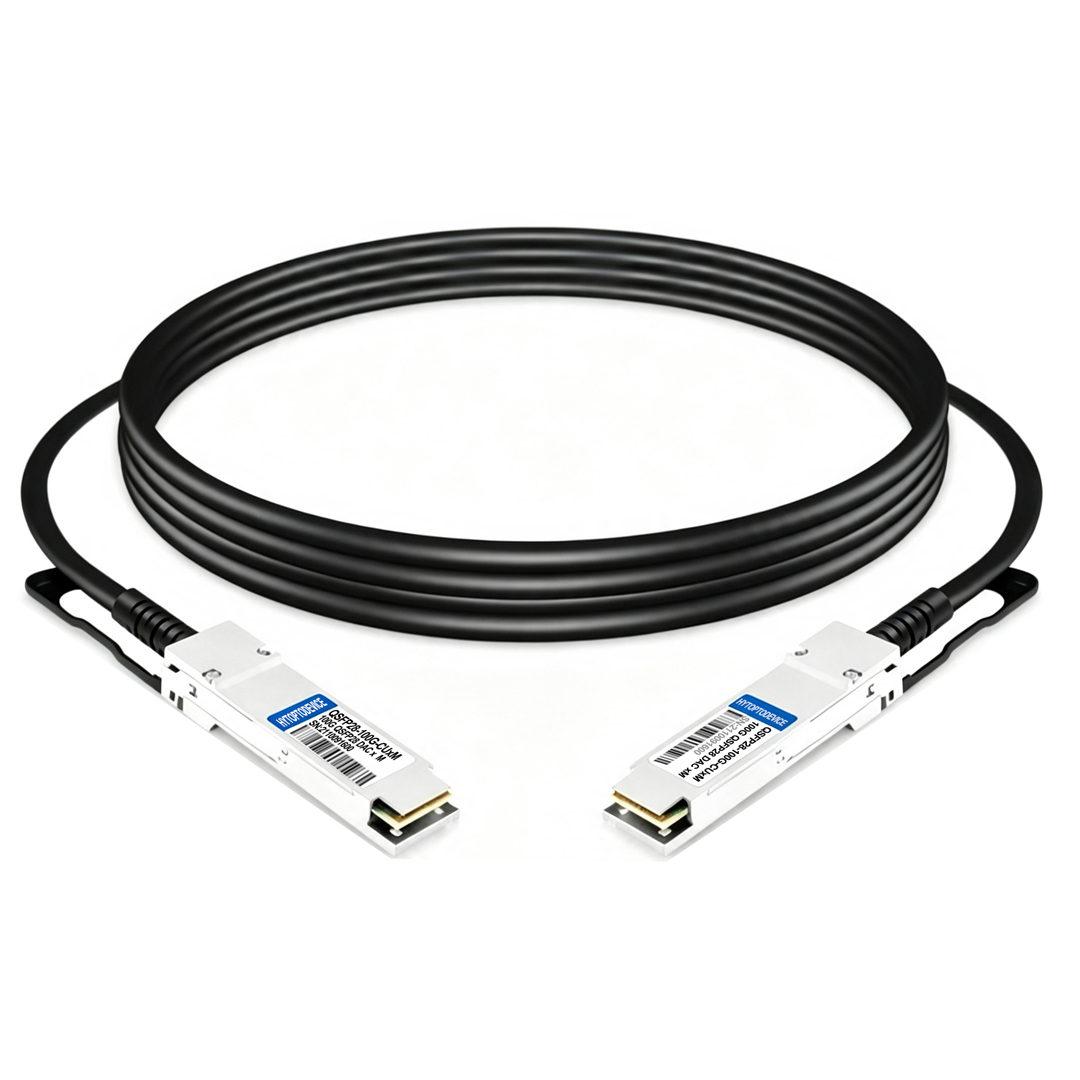
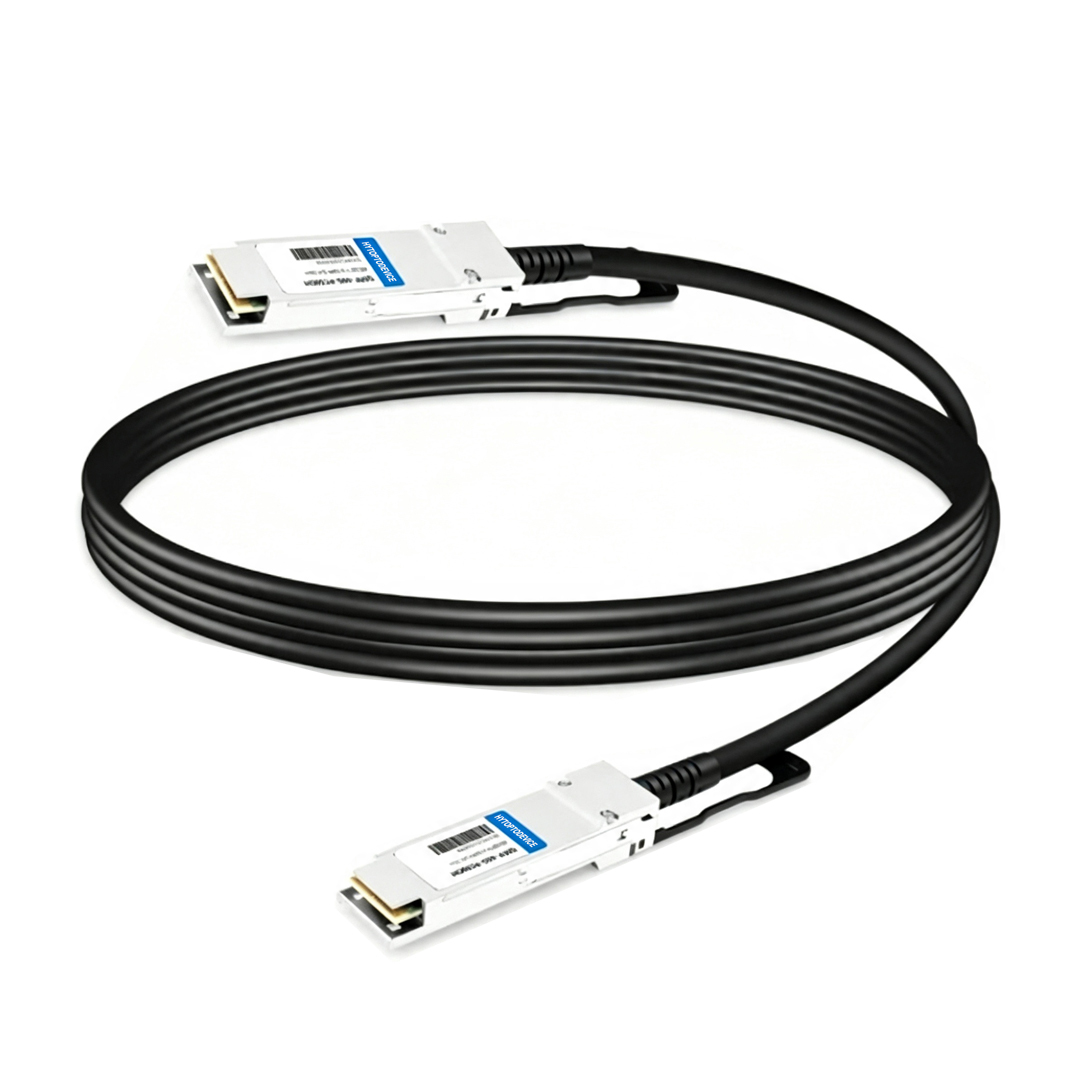
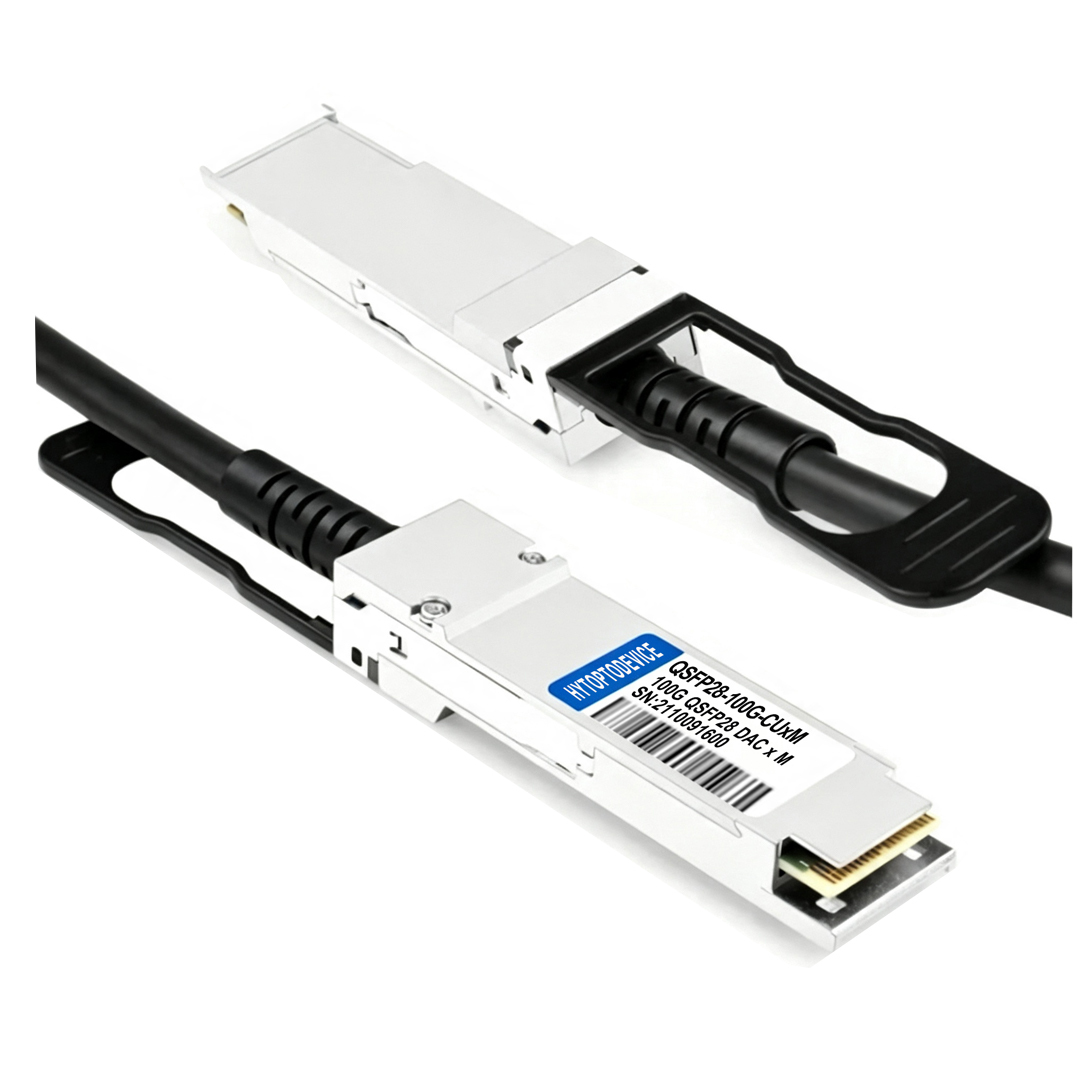
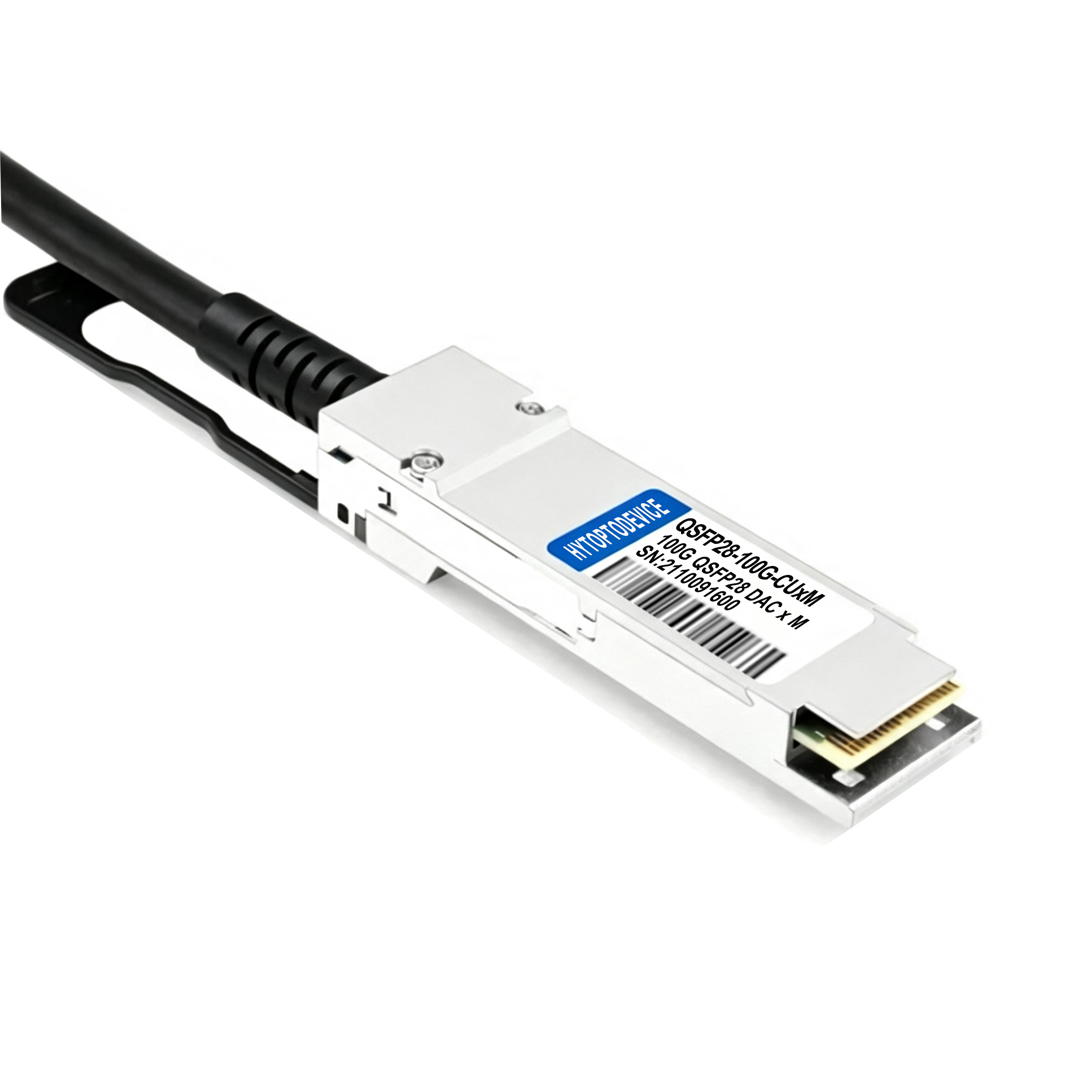
| NO. | Brand | Compatible P/N | Transceiver Type |
| 1 | Cisco | QSFP-100G-CU3M | |
| 2 | Arista Networks | CAB-Q-Q-100G-3M | |
| 3 | Juniper | QFX-QSFP28-DAC-3M | |
| 4 | Brocade | 100G-Q28-Q28-C-0301 | |
| 5 | Dell | DAC-Q28-100G-3M | |
| 6 | Huawei | QSFP28-100G-CU3M |
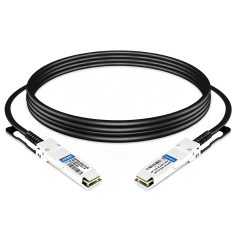
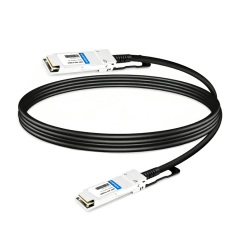
| Cisco Compatible |
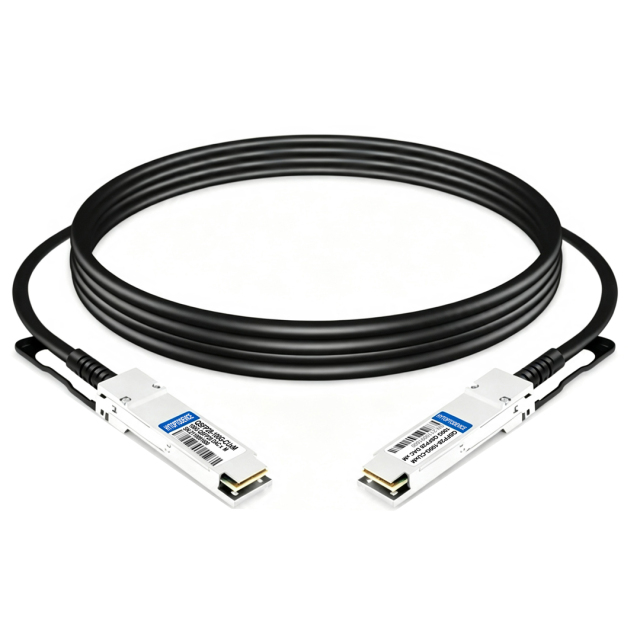
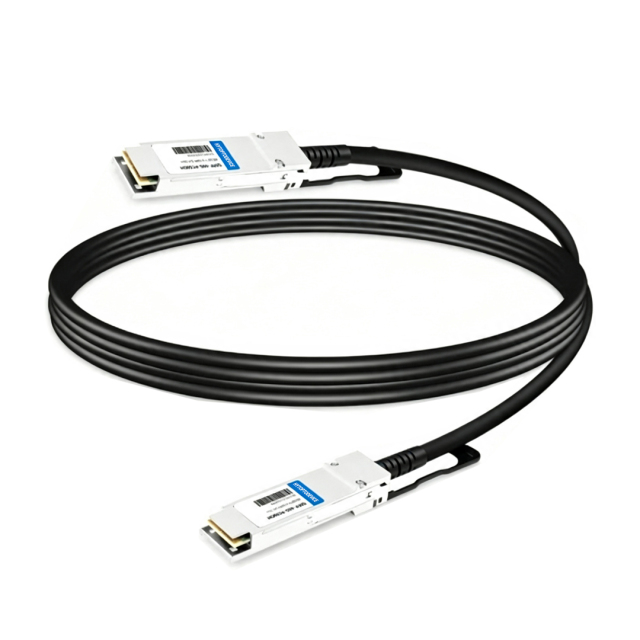
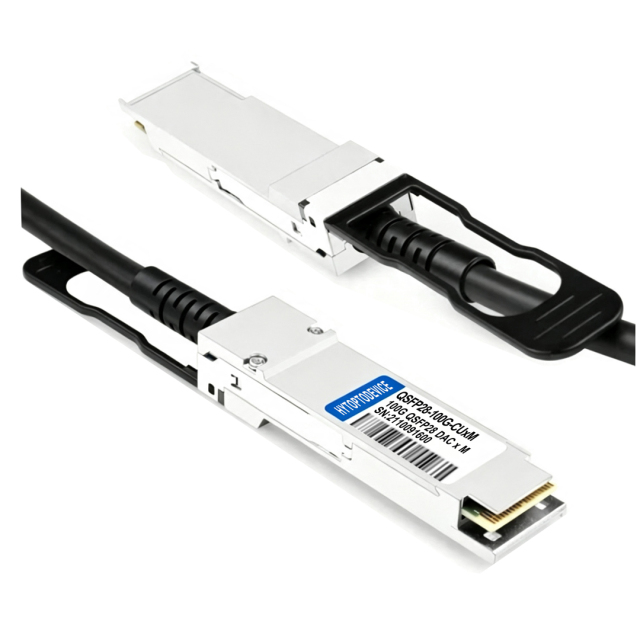
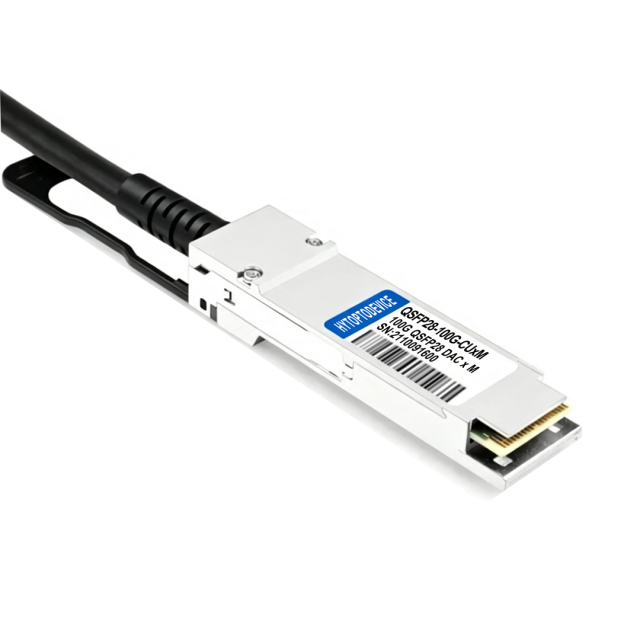
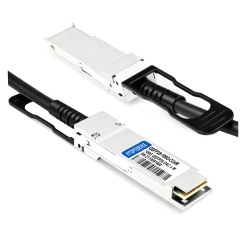
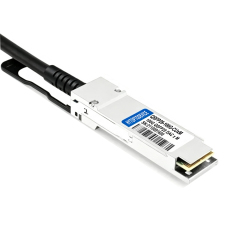
QSFP-100G-CU3M
|
Vendor Name | HYTOPTODEVICE |
| Connector | QSFP28 to QSFP28 | Max Data Rate | 100Gbps |
| Cable Length | 3m (10ft) | Wire AWG | AWG 26 |
| Cable Type | Passive Twinax | Power Consumption | ≤0.5W |
| Media | Copper | Operation Temperature | 0~ 70 °C (32 to 158°F) |
| Jacket Material | PVC(OFNR) | Protocols | QSFP28 MSA, SFF-8662, IEEE 802.3 |
| Minimum Bend Radius | 50mm | Application | 100 Gigabit Ethernet |
Usage Guidelines & Best Practices
Mandatory Port Setting: Host QSFP28 port must enable 100GBASE-CR4 mode; link negotiation failure will happen if forced to optical mode.
Cabling Requirements: Do not exceed the minimum 35mm bend radius, avoid sharp folding, heavy extrusion or long-term tension on the cable assembly.
Port Installation Standard: Works only with standard QSFP28 100G ports; cannot be inserted into SFP+ or XFP slots. Disable the host’s third-party transceiver lock policy in advance if required.
Maintenance Specification: Hot‑swap supported, grip the pull tab instead of pulling the cable body during plug/unplug to prevent internal conductor damage.
Operating Environment: This commercial-grade cable operates reliably within 0℃‑70℃; avoid installation beside high-heat power modules.
For detailed operation instructions, please refer to the User Guide.
Full Compatibility List & Supported Devices
Built on universal MSA open standards, this 100G QSFP28 passive copper twinax cable can interoperate with mainstream network brands including Arista, H3C, Juniper, Dell, NVIDIA Mellanox and more, for mixed-vendor rack stacking and server fabric expansion.
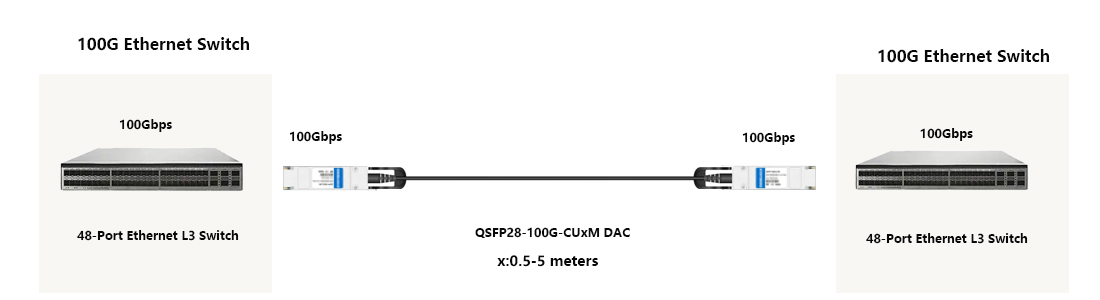
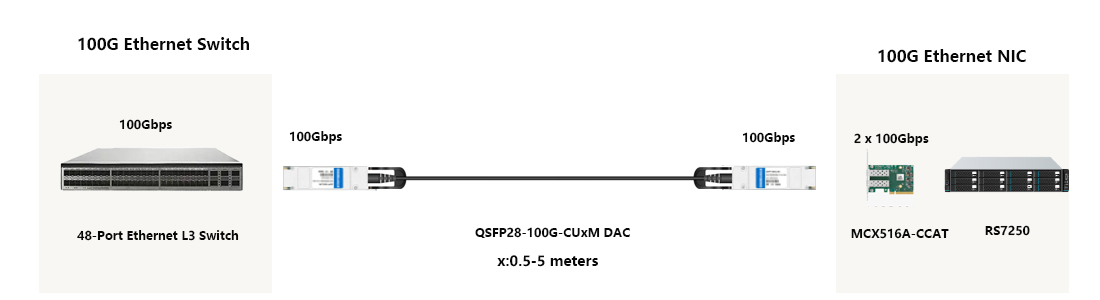
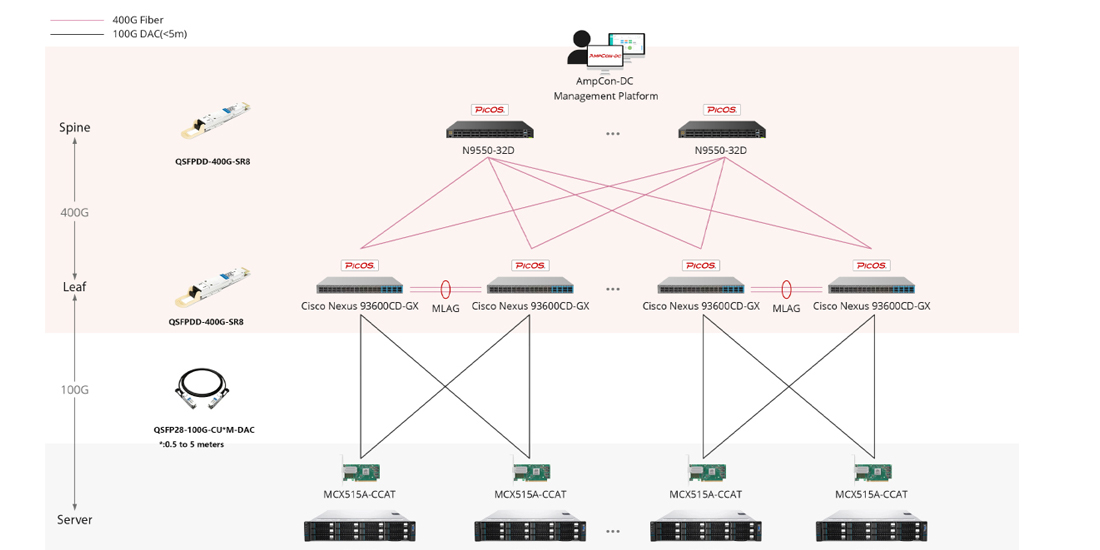

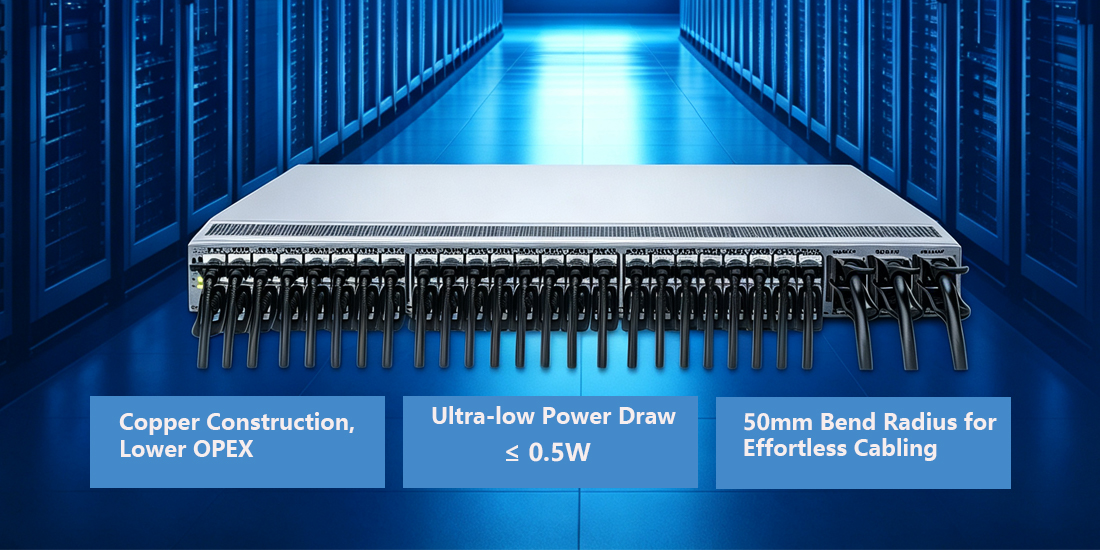


1: How does 3-meter length affect the signal budget of low-loss 100G QSFP28 passive dac cable? A: 3m sits within the 5m MSA maximum reach for 100GBASE-CR4 passive DAC, but longer twinax introduces more high-frequency attenuation than 1m/2m variants. HYTOPTODEVICE 100G QSFP28 passive dac cable uses upgraded low-loss copper to preserve sufficient margin at 3m for Cisco NX-OS deployments.
Q2: What advantages does passive twinax material bring over active copper for fixed 3-meter rack links? A: Low-loss twinax copper delivers stable 100G transmission with no powered signal retimers, cutting power draw and component failure points. Active DAC requires on-board chips and regular power input. HYTOPTODEVICE high-speed direct-attach DAC removes active electronics entirely for reliable short-range links.
Q3: Can I route this compact 3m 100G QSFP28 passive dac cable between racks in different rack rows? A: Compact 100G QSFP28 passive dac cable is not designed for cross-row inter-rack connections. It works only for adjacent racks or ToR to EoR connections within 5 meters total path length. Cross-row runs often exceed reach limits and raise EMI risk. HYTOPTODEVICE recommends AOC or fiber transceivers for cross-row or long-distance inter-rack cabling.
Q4: When should network architects pick AOC instead of 3m 100G QSFP28 passive dac cable on Cisco fabrics? A: Passive DAC is constrained by copper attenuation; AOC converts electrical signals to light and resists rack EMI interference. AOC also supports longer distances beyond 5m. HYTOPTODEVICE supplies both low-power 100G QSFP28 passive dac cable and matching AOC for mixed-distance fabric planning.
Q5: Will repeated thermal cycling inside dense Cisco server racks slowly degrade twinax DAC performance? A: Wide temperature swings will gradually increase copper resistance and reduce available signal margin. HYTOPTODEVICE 100G QSFP28 passive dac cable passes strict thermal cycle validation from 0°C to 70°C to maintain stable links in hot AI and HPC racks.
Q6: Why do unprogrammed third-party DACs trigger "unsupported transceiver" alerts on Cisco NX-OS? A: NX-OS reads vendor identifiers stored inside the cable EEPROM on port bring-up. Non-matching identifier data triggers warning logs and may prevent link negotiation. Each HYTOPTODEVICE 100G QSFP28 passive dac cable is pre-flashed and validated for Cisco NX-OS to skip these compatibility alerts.
Q7: Can I order a single 100G QSFP28 passive dac cable programmed for Cisco on one end and Arista on the other? A: Our standard 100G QSFP28 passive dac cable does not support asymmetric dual-OEM EEPROM coding on the two connectors. Matching vendor signatures on both ends are required for stable port handshake. Contact HYTOPTODEVICE sales team for custom EEPROM development for multi-vendor fabrics.
Q8: What diagnostic readings are accessible from this 100G QSFP28 passive dac cable in Cisco NX-OS? A: Only standard MSA DOM parameters are supported; Cisco exclusive proprietary telemetry channels do not function on passive copper assemblies with no optical chips onboard. HYTOPTODEVICE preloads standard MSA DOM records so NX-OS can read cable identity and basic diagnostic counters.
Q9: How much latency difference can I observe between 3m 100G QSFP28 passive dac cable and fiber links? A: Passive 100G QSFP28 DAC offers marginally lower latency than fiber. Electrical signals propagate faster in solid low-loss twinax copper than light in glass fiber, with typical latency gap less than 1ns. Low-latency HYTOPTODEVICE high-speed direct-attach DAC fits low-latency AI training and HPC workloads.
Q10: What EMI protection level does the shielded twinax design offer beside high-current power harnesses? A: Full twinax shielding suppresses induced electrical noise effectively, though copper media remains more susceptible than fiber when routed alongside power cables. HYTOPTODEVICE 100G QSFP28 passive dac cable adopts complete shielded construction to satisfy global EMC and EMI compliance standards.
Q11: What error patterns signal gradual signal deterioration on a 3m low-loss 100G QSFP28 passive dac cable? A: Degradation usually manifests as steadily climbing CRC error counters before sudden link drop. A compressed signal eye creates random bit flips logged as CRC faults. If these errors appear, verify the HYTOPTODEVICE 100G QSFP28 passive dac cable follows rated length and bend guidelines.
Q12: What mechanical harm happens if I bend this 100G QSFP28 passive dac cable too tightly during rack installation? A: Bending below the 5× outer-diameter minimum bend radius permanently distorts differential twinax pairs, creating impedance discontinuities and persistent bit errors. Careful cable routing protects your HYTOPTODEVICE compact cabling DAC from invisible mechanical damage.
Q13: What airflow risks exist when bundling multiple 3m 100G QSFP28 passive dac cables together? A: Thick copper cable bundles block front-to-back airflow and trap heat around Cisco switch ports, raising component operating temperature. HYTOPTODEVICE uses slim 30AWG twinax to minimize bundle volume and preserve airflow in high-density rack layouts.
Q14: Where does heat originate when deploying zero-power 100G QSFP28 passive dac cable on Cisco Nexus platforms? A: The passive DAC assembly itself generates nearly no heat due to low power consumption design. All thermal load originates from the host switch ASIC and QSFP28 port hardware, not the copper cable. HYTOPTODEVICE connector shells use thermally balanced plastic to support normal port cooling.
Q15: For 3-meter intra-rack Cisco leaf-spine AI clusters, what benefits make passive DAC preferable to AOC? A: It provides low power consumption, compact cabling and lower hardware cost for runs under 5 meters with zero active components. HYTOPTODEVICE high-speed direct-attach DAC is a cost-efficient selection for dense Cisco leaf-spine, storage and AI rack deployments.
Q16: How do power budgets compare for passive twinax DAC, active retimer DAC and 100G optical transceiver pairs? A: 100G QSFP28 passive dac cable consumes 0W. Active retimer DAC draws roughly 1–2W per end, while a matched pair of optical transceivers normally consumes 3–6W total. Zero-power HYTOPTODEVICE 100G QSFP28 passive dac cable cuts rack power draw and reduces overall data center TCO.
Packaging & Custom OEM Solutions
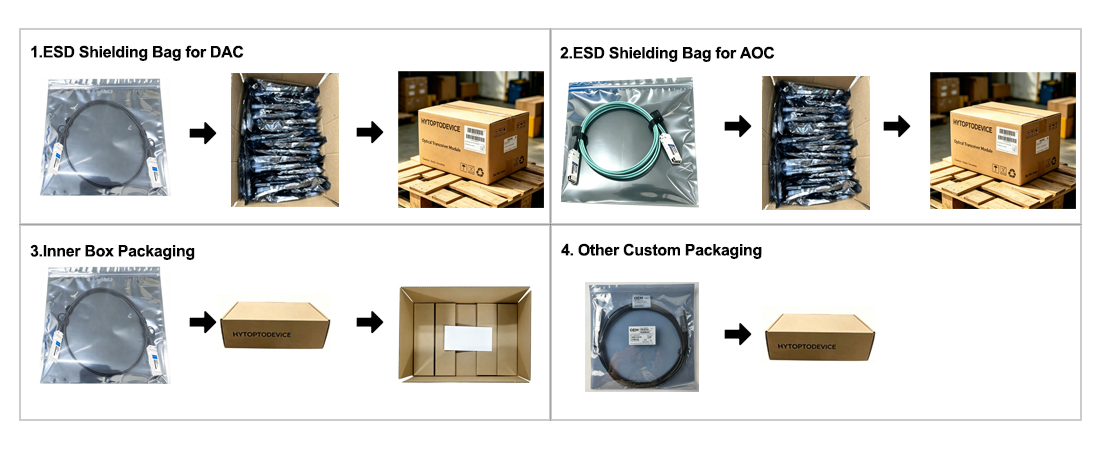
ESD Protection & Fast Shipping: Every transceiver is sealed in an ESD-safe bag and ready for same-day dispatch from stock.
Custom OEM & Branding: We provide logo printing, private labeling, and custom packaging to help distributors and integrators build their brand—no factory investment required.
Why Network Engineers Choose HYTOPTODEVICE
HYTOPTODEVICE has supplied over 5000,000 optical transceiver modules to data centers, ISPs, and enterprise networks across 100+ countries since 2011. Every module undergoes a 72-hour burn-in test and full DDM/DOM validation before shipment.
“Phenomenal performance. We deployed 200 HYTOPTODEVICE SFP modules to replace Cisco OEMs in our backbone network. Result? Zero compatibility issues and a 60% reduction in costs. Highly recommended for mission-critical networks."— Senior Network Engineer, Regional Telecom, Australia
Quality Certification & Compliance
At HYTOPTODEVICE, our quality commitment is backed by industry-standard validations. From fiber optical transceiver manufacturing to final visual inspection, from IQC、IPQC、FQC to OQC, our processes ensure global compliance and reliability.
We adhere to rigorous standards for our SFP modules and network solutions:
ISO 9001: Certified quality management and production consistency.
CE & FCC: Fully compliant for seamless Global Market Access.
RoHS: Committed to environmental responsibility and hazardous material control.
Proven Reliability: Rigorous testing to reduce compliance risk and ensure safety.
Certified Quality. Global Standards. Guaranteed Performance.