| NO. | Brand | Compatible P/N | Transceiver Type |
| 1 | Cisco | Q56-200-CU50CM | |
| 2 | Arista Networks | CAB-Q56-Q56-0.5M | |
| 3 | Dell | DAC-Q56-200G-0.5M | |
| 4 | NVIDIA/Mellanox | MCP1650-V00AE30 | |
| 5 | Generic | QSFP56-200G-CUxM |
| Cisco Compatible |
Q56-200-CU50CM
|
Vendor Name | HYTOPTODEVICE |
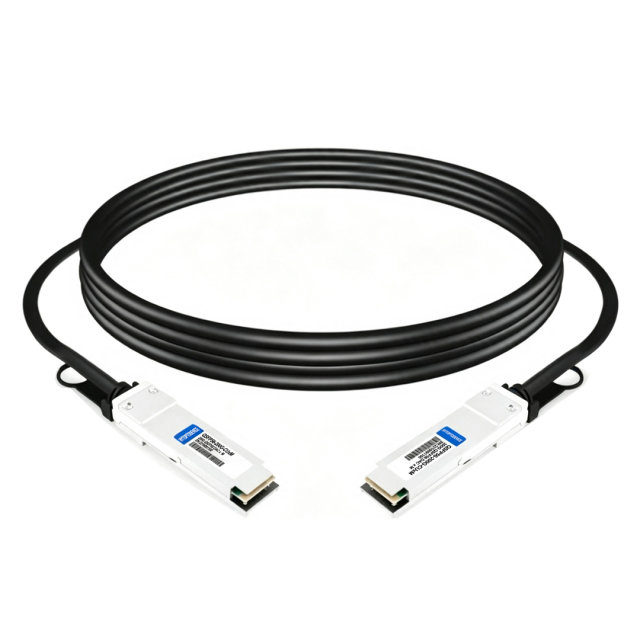
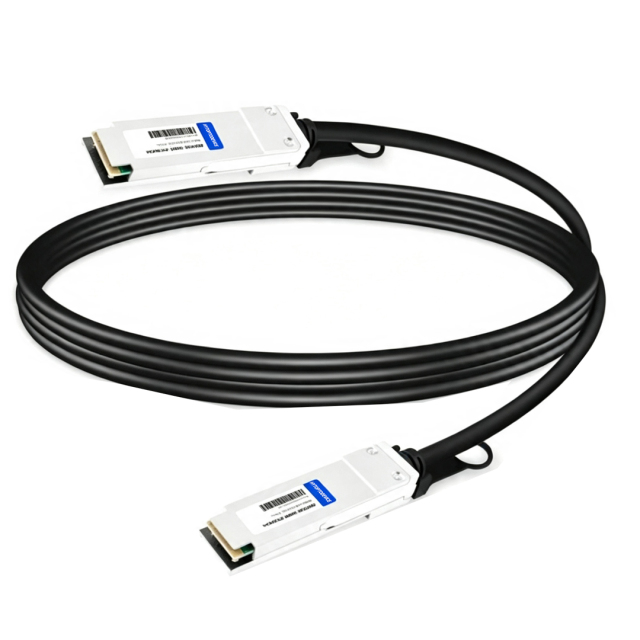
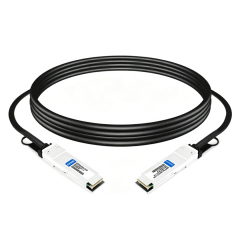
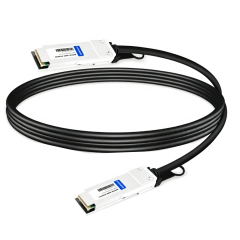
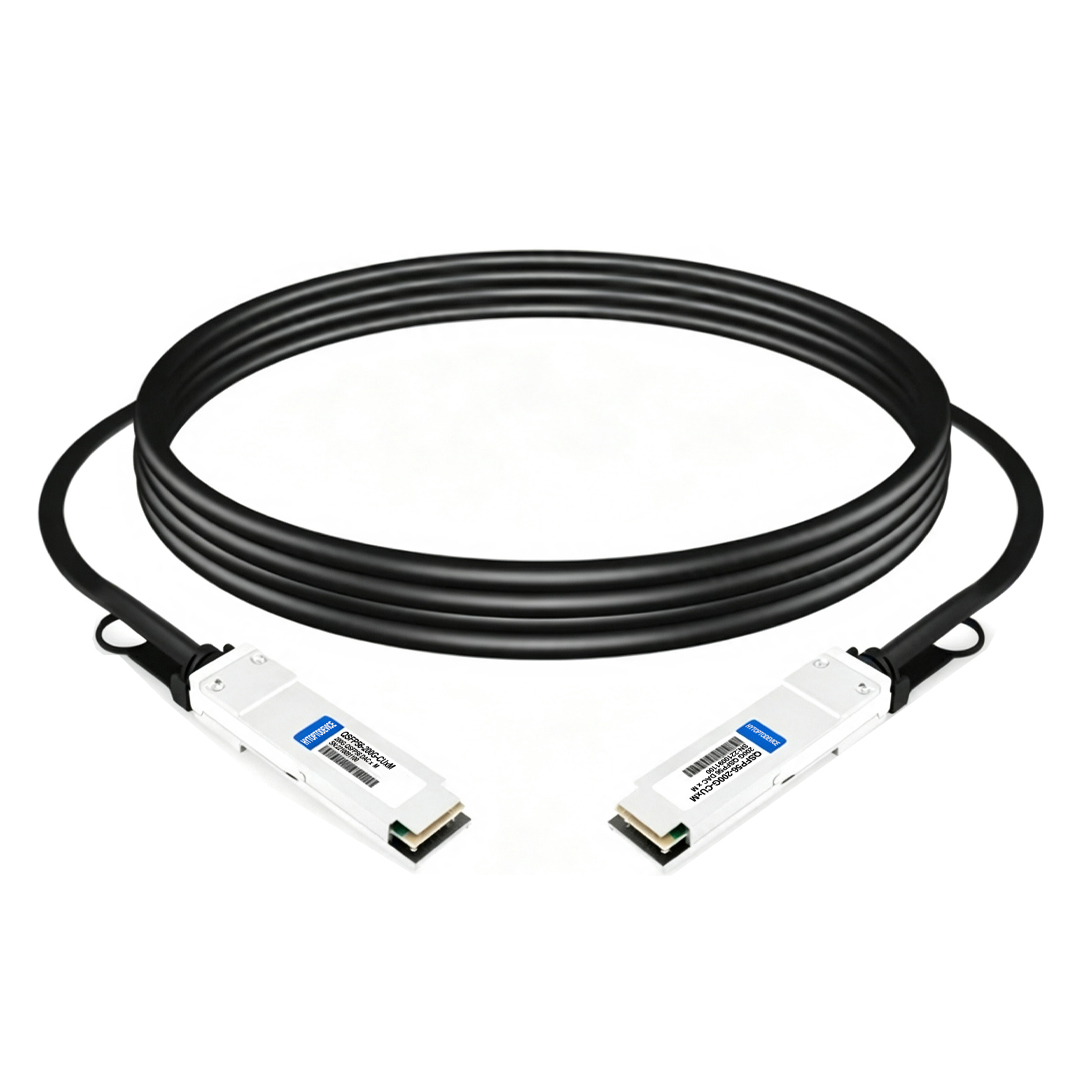
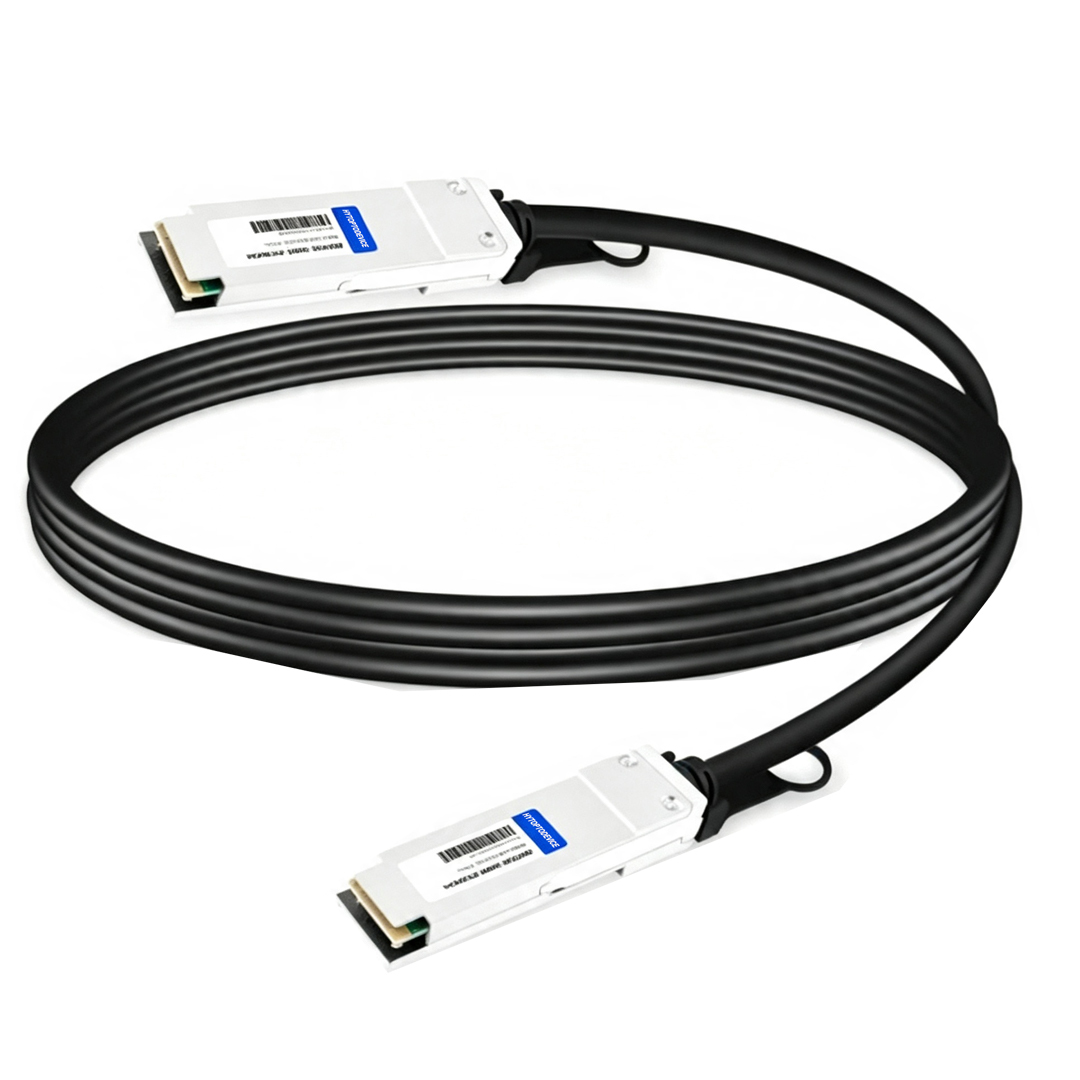
| Connector | QSFP56 to QSFP56 | Max Data Rate | 200Gbps |
| Cable Length | 0.5m (1.67ft) | Wire AWG | AWG 30 |
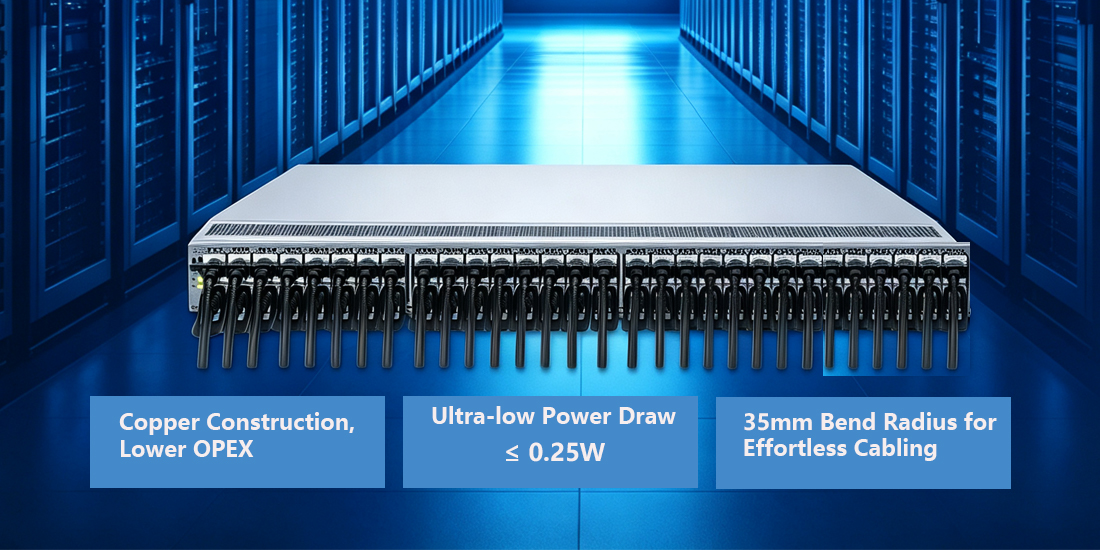
| Cable Type | Passive Twinax | Power Consumption | ≤0.25W |
| Media | Copper | Operation Temperature | 0~ 70 °C (32 to 158°F) |
| Jacket Material | PVC(OFNR) | Protocols | IEEE802.3cd, SFF-8436 |
| Minimum Bend Radius | 35mm | Application | 200G Ethernet and InfiniBand HDR |
Usage Guidelines & Best Practices
Mandatory Port Setting: Host QSFP56 port must enable 200GBASE-CR4 mode; link negotiation failure will happen if forced to optical mode.
Cabling Requirements: Do not exceed the minimum 35mm bend radius, avoid sharp folding, heavy extrusion or long-term tension on the cable assembly.
Port Installation Standard: Works only with standard QSFP56 200G ports; cannot be inserted into QSFP+ or SFP28 slots. Disable the host’s third-party transceiver lock policy in advance if required.
Maintenance Specification: Hot‑swap supported, grip the pull tab instead of pulling the cable body during plug/unplug to prevent internal conductor damage.
Operating Environment: This commercial-grade cable operates reliably within 0℃‑70℃; avoid installation beside high-heat power modules.
For detailed operation instructions, please refer to the User Guide.
Full Compatibility List & Supported Devices
Built on universal MSA open standards, this 200G QSFP56 passive copper twinax cable can interoperate with mainstream network brands including Arista, H3C, Juniper, Dell, NVIDIA Mellanox and more, for mixed-vendor rack stacking and server fabric expansion.
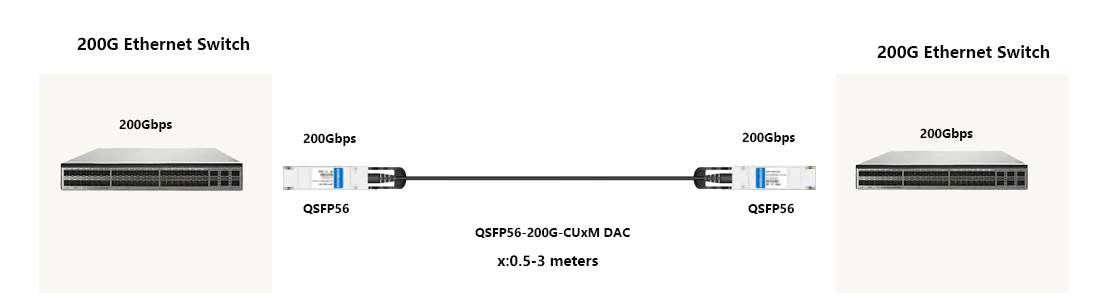
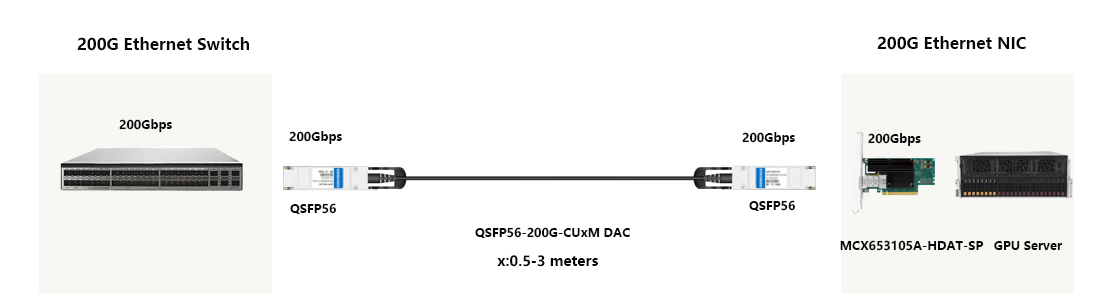



Q1: Can I purchase this Cisco compatible 200G QSFP56 twinax cable for mixed-vendor data center fabrics? A1: Yes, it works on MSA-compliant QSFP56 ports. HYTOPTODEVICE custom programs EEPROM on this passive copper twinax cable to eliminate transceiver alerts for multi-brand deployments.
Q2: Can this 200G QSFP56 DAC be plugged into older QSFP28 switch ports? A2: No, QSFP56 uses 50G PAM4 per lane, while QSFP28 is 25G NRZ. Electrical and signal standards differ and cannot establish reliable 200G links.
Q3: If I order this 0.5m 200G twinax cable, can I lock it down to 100G speed on the Cisco port? A3: Yes, many Cisco QSFP56 ports support speed reconfiguration. HYTOPTODEVICE can provide configuration notes to help buyers lock to 100G when needed.
Q4: Does Cisco NX-OS require specially coded EEPROM for this 200G passive twinax cable to pass transceiver checks? A4: Yes, NX-OS validates transceiver EEPROM signatures by default. HYTOPTODEVICE preloads Cisco matching codes on this twinax cable you purchase to skip unsupported transceiver warnings.
Q5: When I place bulk orders, can I pair this 200G QSFP56 DAC with third-party 200G NICs? A5: Yes, third-party NICs are acceptable if they follow MSA 200GBASE-CR4 standards. HYTOPTODEVICE runs cross-hardware compatibility testing to guarantee stable performance for wholesale buyers.
Q6: What is PAM4 signaling for 200G QSFP56 DAC cable? A6: PAM4 is 4-level pulse amplitude modulation. It carries 2 bits per symbol, doubling bandwidth vs NRZ at the same baud rate. This HYTOPTODEVICE 200G QSFP56 passive twinax cable uses 4×50G PAM4 lanes to hit 200Gbps, so it requires careful cable routing to preserve signal integrity.
Q7: What is the maximum reliable length for passive 200G QSFP56 twinax DAC cables I can source? A7: The stable transmission limit for passive 200GBASE-CR4 twinax design is 2 meters. HYTOPTODEVICE stocks this 200G QSFP56 cable in 0.5m,1m,1.5m and 2m standard lengths for your selection.
Q8: What latency performance will this 0.5m short 200G twinax cable bring to AI and HPC clusters? A8: Typical copper twinax latency is roughly 0.55 ns per meter. This passive DAC has no signal amplification chips, ideal for ultra-low-latency AI training workloads.
Q9: What wire gauge (AWG) is used in this cable, and does it affect flexibility? A9: Common gauges range from 30AWG to 26AWG. Thinner 30AWG delivers superior flexibility for dense in-rack routing, while 26AWG supports longer passive 200G links up to 2m. HYTOPTODEVICE supplies the correct AWG for every 200G QSFP56 twinax cable length you order.
Q10: Will this 200GBASE-CR4 passive twinax DAC automatically negotiate speed with connected devices? A10: No, passive 200GBASE-CR4 twinax does not support auto-negotiation. You need to manually lock both link ends to fixed 200G speed after receiving and installing this HYTOPTODEVICE DAC.
Q11: Why is PAM4 more sensitive to cable bending than 25G NRZ DAC? A11: PAM4 has narrower noise margin. Even minor deformation will trigger PAM4 bit errors, so this 200G passive DAC must follow the 35mm minimum bend radius we specified.
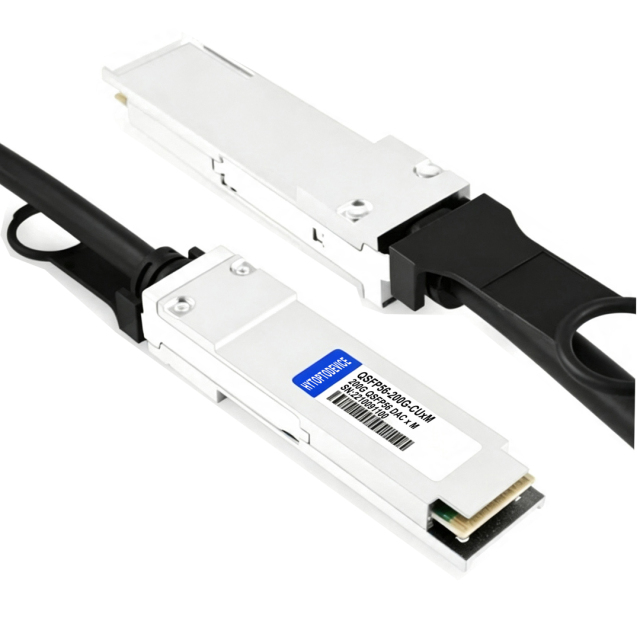
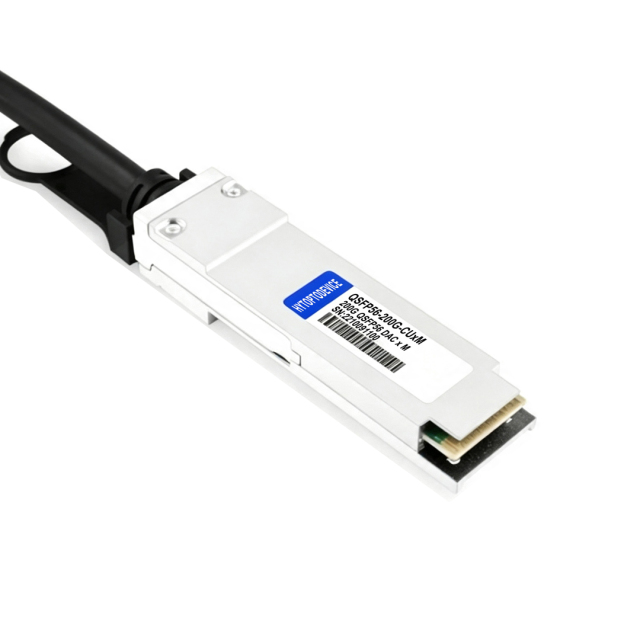
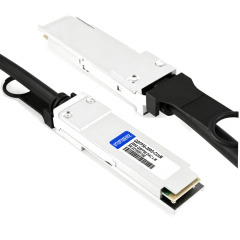
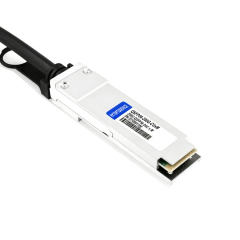
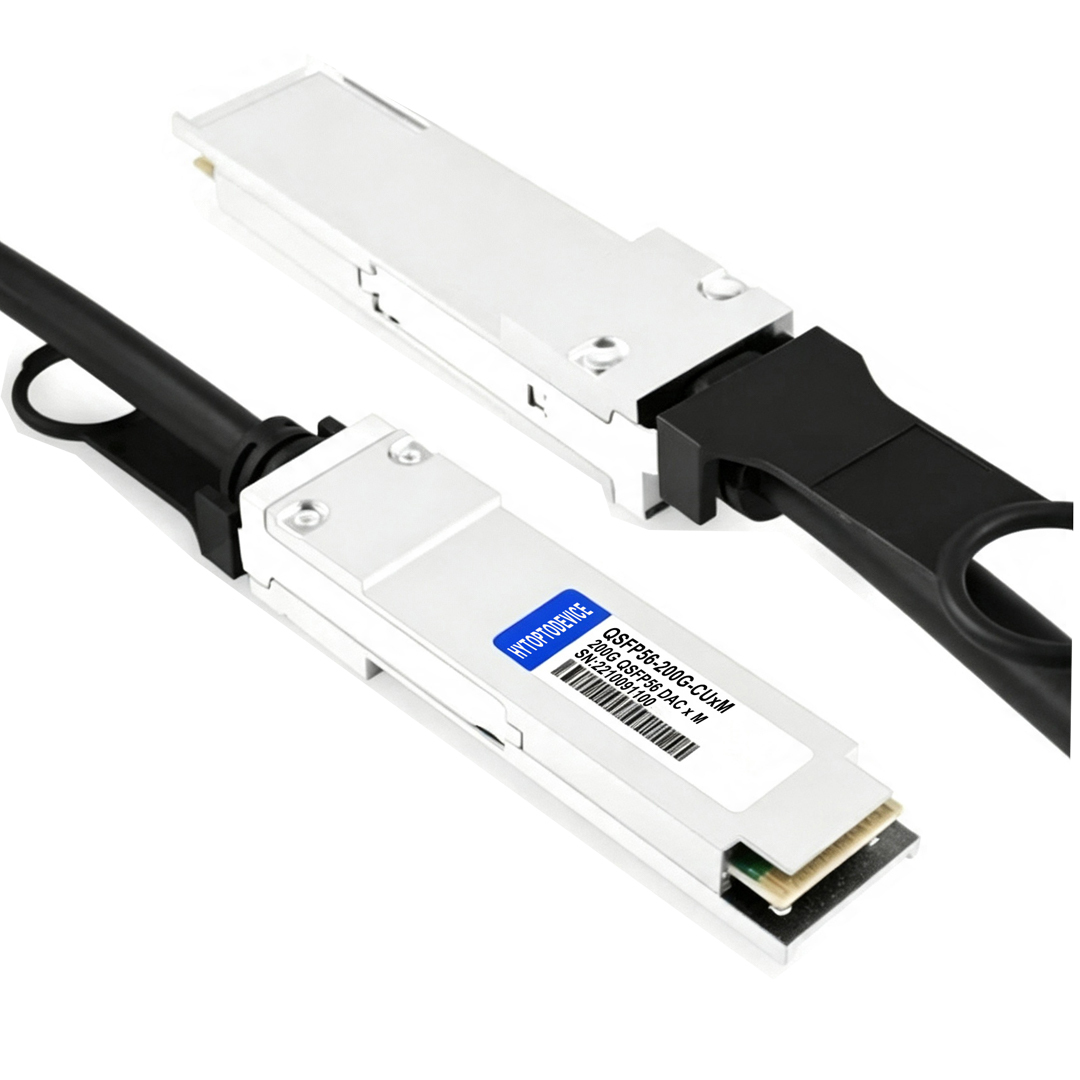
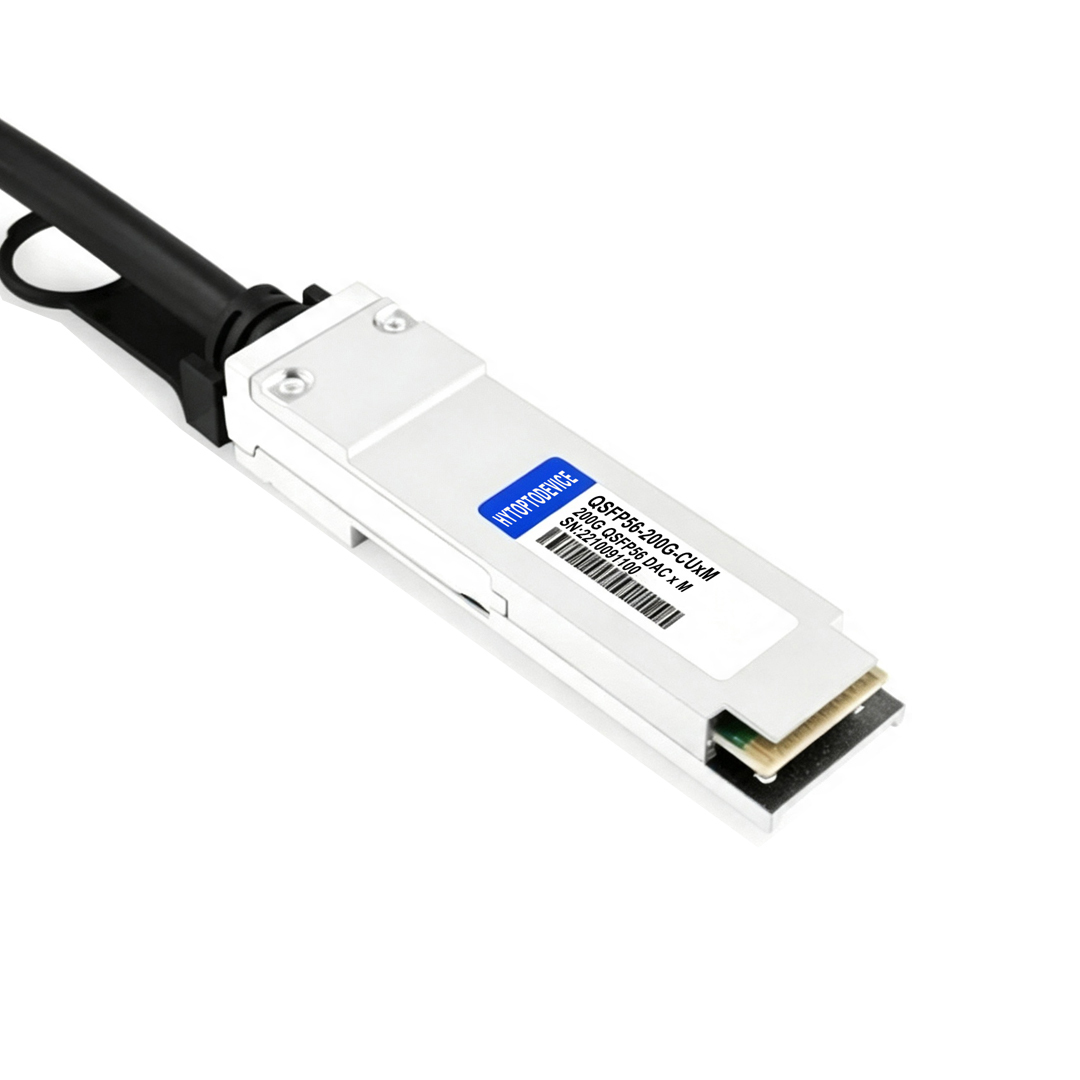
Q12: Are the two QSFP56 ends marked clearly so my cabling team can identify the cable specification easily? A12: Yes, each QSFP56 connector shell carries permanent laser marking. HYTOPTODEVICE marks every end of this passive twinax cable to simplify cabling audit and fault diagnosis.
Q13: Can this 0.5m Cisco 200G twinax DAC connect network devices housed in two separate server racks? A13: No, 0.5m is designed purely for in-rack local connections. This passive twinax cable is built for short patch links within the same cabinet, not inter-rack cabling.
Q14: Can bulk customers request custom jacket colors for this Cisco Q56-200-CU50CM compatible 200G DAC? A14: Black jacket is our standard stock version. HYTOPTODEVICE accepts custom color requests on bulk orders of this 200G QSFP56 twinax cable to match your site’s color coding rules.
Q15: Can I request non-standard custom lengths if standard 0.5/1/1.5/2m sizes do not match my rack layout? A15: Custom non-standard lengths are available for bulk procurement. Contact the HYTOPTODEVICE sales team for quotation and lead time when you buy custom-length 200G QSFP56 twinax cable.
Packaging & Custom OEM Solutions
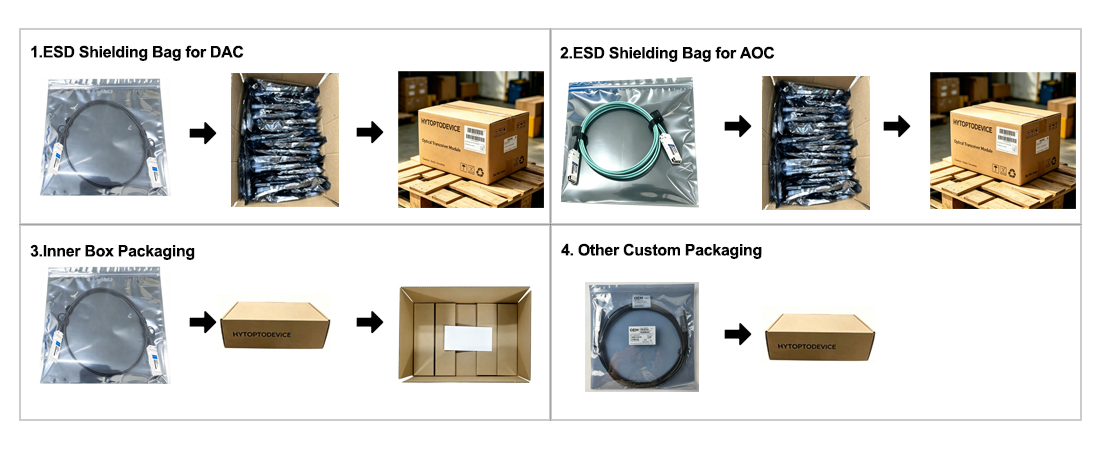
ESD Protection & Fast Shipping: Every transceiver is sealed in an ESD-safe bag and ready for same-day dispatch from stock.
Custom OEM & Branding: We provide logo printing, private labeling, and custom packaging to help distributors and integrators build their brand—no factory investment required.
Why Network Engineers Choose HYTOPTODEVICE
HYTOPTODEVICE has supplied over 5000,000 optical transceiver modules to data centers, ISPs, and enterprise networks across 100+ countries since 2011. Every module undergoes a 72-hour burn-in test and full DDM/DOM validation before shipment.
“Phenomenal performance. We deployed 200 HYTOPTODEVICE SFP modules to replace Cisco OEMs in our backbone network. Result? Zero compatibility issues and a 60% reduction in costs. Highly recommended for mission-critical networks."— Senior Network Engineer, Regional Telecom, Australia
Quality Certification & Compliance
At HYTOPTODEVICE, our quality commitment is backed by industry-standard validations. From fiber optical transceiver manufacturing to final visual inspection, from IQC、IPQC、FQC to OQC, our processes ensure global compliance and reliability.
We adhere to rigorous standards for our SFP modules and network solutions:
ISO 9001: Certified quality management and production consistency.
CE & FCC: Fully compliant for seamless Global Market Access.
RoHS: Committed to environmental responsibility and hazardous material control.
Proven Reliability: Rigorous testing to reduce compliance risk and ensure safety.
Certified Quality. Global Standards. Guaranteed Performance.