In our daily work with international clients, a common and costly mistake we see is the improper pairing of fiber optical transceivers. It's easy to focus on the specs of a single transceiver module and overlook its need for a "perfect partner" on the other end of the fiber link. The result? Downtime, troubleshooting headaches, and even potential damage to your network equipment. HYTOPTODEVICE,professional optic module manufacturer, will provide you with our professional guidance in this area.
Table of Contents
一、Rule #1: Wavelength & Fiber Type Must Be a Perfect Match 二、Rule #2: Transmission Distance Must "Cover the Journey" 三、Rule #3: Data Rate & Duplex Must Be in Sync 四、Rule #4: Brand Compatibility - The Official vs. Third-Party Dilemma 五、Quick Checklist for a Perfect MatchWhether you're a network engineer, a system integrator, or a procurement specialist,sfp module importer,optical transceivers wholesaler or dealer, understanding how to correctly match fiber optical transceivers is fundamental. This guide will walk you through the four golden rules to ensure a seamless and stable connection every time.
一、Rule #1: Wavelength & Fiber Type Must Be a Perfect Match This is the most fundamental rule. Think of the optical signal as a car, the fiber as the road, and the wavelength as the specific lane it must travel in.
1.Non-Negotiable Parameter: Wavelength
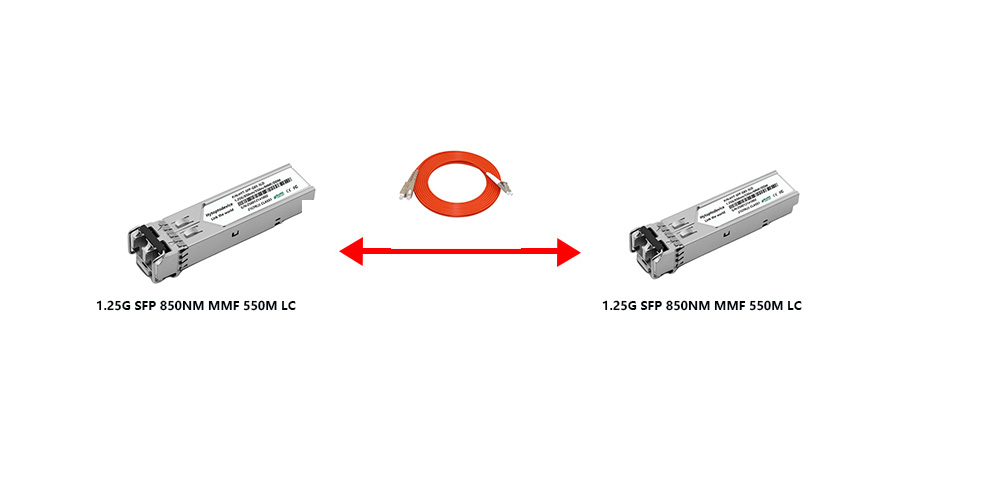
· The wavelength on both transceivers must be identical.
· Common Pairings:
· 850nm ←→ 850nm (Multimode, Short Reach)
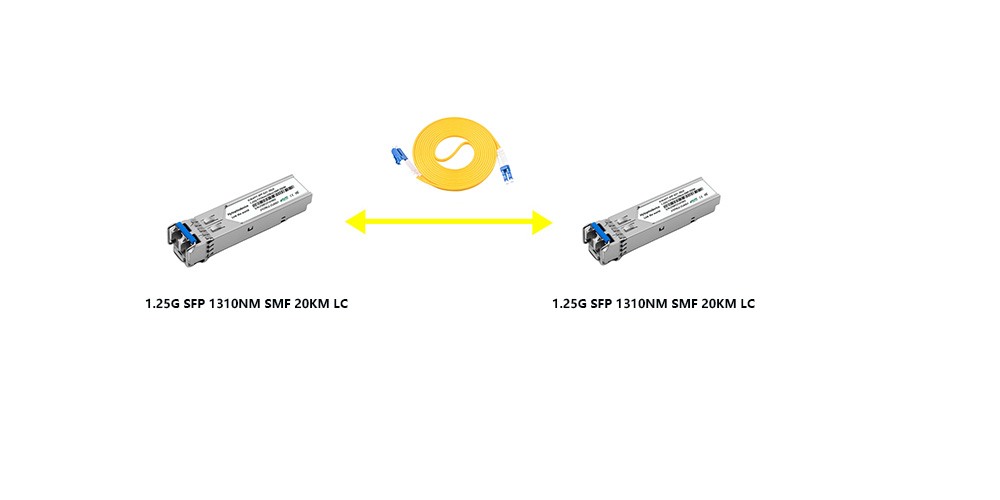
· 1310nm ←→ 1310nm (Single-mode, Long Reach)
· 1550nm ←→ 1550nm (Single-mode, Extended Reach)
· CWDM/DWDM Modules: The colors (central wavelengths) must be an exact match on both ends.
·
2.Non-Negotiable Medium: Fiber Type
· Multimode Fiber (MMF) requires Multimode Transceivers (typically 850nm or 1310nm VCSEL lasers).
· Single-mode Fiber (SMF) requires Single-mode Transceivers (typically 1310nm, 1550nm, etc., with FP/DFB lasers).
· 🚫 Critical Mistake to Avoid: Never directly connect a Multimode transceiver (e.g., SFP-850nm) to a Single-mode transceiver (e.g., SFP-1310nm). This will not only fail but could also damage the receiver due to power level mismatch.
Bottom Line: Match wavelengths exactly. Pair multimode with multimode, single-mode with single-mode.
 二、Rule #2: Transmission Distance Must "Cover the Journey"
The transmission distance (e.g., 100m, 10km, 40km) is a key specification. The matching principle here is to "overshoot, never undershoot."
· Core Principle: The maximum rated distance of BOTH fiber transceivers must be equal to or greater than your total fiber length.
· In Practice:
· Scenario: Your fiber link is 15 kilometers long.
· Correct Pairing: Use a 20km module on one end and a 20km module on the other. Or 40km on both ends.
· Incorrect Pairing: A 10km module on one end and a 40km sfp module on the other. While the 40km module's powerful transmitter can "shout" the signal, the 10km module's receiver isn't sensitive enough to "hear" the weakened signal after 15km, causing link failure.
Bottom Line: Choose transceivers with the same distance rating that meets or exceeds your actual fiber length.
三、Rule #3: Data Rate & Duplex Must Be in SyncThis seems straightforward but can cause issues when mixing equipment from different vendors or generations.
· 1.Data Rate Must Match: A 1.25G SFP transceiver cannot communicate with a 10G SFP+ transceiver. must Gigabit to Gigabit, 10G to 10G.
· 2.Duplex Mode Must Match: Optical transceivers operate in full-duplex mode. While this is a physical given, ensure your switch ports are not mistakenly configured for half-duplex.
Bottom Line: Match data rates precisely. Ensure port configurations are set to auto-negotiate or forced full-duplex.
四、Rule #4: Brand Compatibility - The Official vs. Third-Party DilemmaThis is a critical practical and commercial consideration. Switch vendors (like Cisco, HPE, Juniper) prefer you use their expensive, brand-locked fiber optic transceivers, often through coded compatibility.
· Brand-Matched (Easiest): Use official, vendor-branded optical transceivers on both ends. Pro: Guaranteed compatibility. Con: High cost.
· Third-Party Matched (Cost-Effective): Use optical transceivers from a reliable third-party manufacturer (like us) on both ends. A quality supplier will pre-test their modules extensively on major switch brands to ensure they are recognized and perform stably as a pair.
· 🚫 High-Risk Behavior: Mixing one official brand module with an untested third-party module. This often results in the switch port refusing to enable ("see") the non-coded module, or can lead to unstable performance due to minor electrical characteristic differences.
Our Recommendation: For network stability and to avoid troubleshooting nightmares, we strongly recommend using the same model of optical transceiver on both ends of the link. Partnering with a third-party supplier that offers comprehensive compatibility testing and strong technical support is the smartest way to control costs without sacrificing reliability.
五、Quick Checklist for a Perfect MatchBefore you purchase or deploy, run through this list:
1. Wavelength: ✅ Are they identical on both ends?
2. Transmission Distance: ✅ Is the rated distance for both ≥ the actual fiber length?
3. Data Rate: ✅ Are both the same (1G, 10G, 25G,100G etc.)?
4. Fiber Type: ✅ Are both fiber optic transceivers for the same fiber type (SMF/MMF)?
5. Brand Compatibility: ✅ Can both modules be reliably used in the target switch models?
ConclusionCorrectly matching fiber network transceiver is not rocket science, but it requires a meticulous approach and adherence to these fundamental rules. It is the foundation of a high-performance, reliable network. As your trusted optical transceiver supplier, HYTOPTODEVICE provide more than just high-quality, compatible products—we offer the expertise to help you make the right choice.
HYTOPTODEVICE hope this guide empowers you to build better networks. Feel free to contact us for any technical questions or specific product recommendations for your project.



