If you've ever worked with communication equipment, you've likely been intrigued by the various pluggable modules lining the switch ports. From the early "brick-like" GBICs to today's "postage stamp-sized" OSFP 800G optical modules, the evolution of the form factor is far more than just a change in the "shell." It represents a condensed history of communication technology advancement.HYTOPTODEVICE, a professional and reliable optical transceiver manufacturer, will take you into this history!
Table of Contents
一、Here’s a look at the key milestones in optical transceiver packaging
二、The Unstoppable Trend: Smaller, Denser, More Efficient
The form factor of optical module defines a module's physical dimensions, electrical interface, thermal management, and maximum supported data rate.It's More Than Just a "Box".The form factor of optic transceiverssolves below problems:
1. Electrical Interface: How to efficiently transfer electrical signals from the host device's motherboard to the module's laser driver or photodetector.
2. Optical Interface: How to precisely align and connect the module's optical signal to the fiber (via a connector like LC or SC).
3. Thermal Management: Lasers generate heat. The form factor must manage dissipation to ensure stable performance.
4. Size & Port Density: How to fit more ports onto a standard 1U switch front panel.
5. Standardization: Ensuring modules from different vendors are interoperable in the same host device (Multi-Source Agreement, or MSA).
一、Here’s a look at the key milestones in optical transceiver packaging 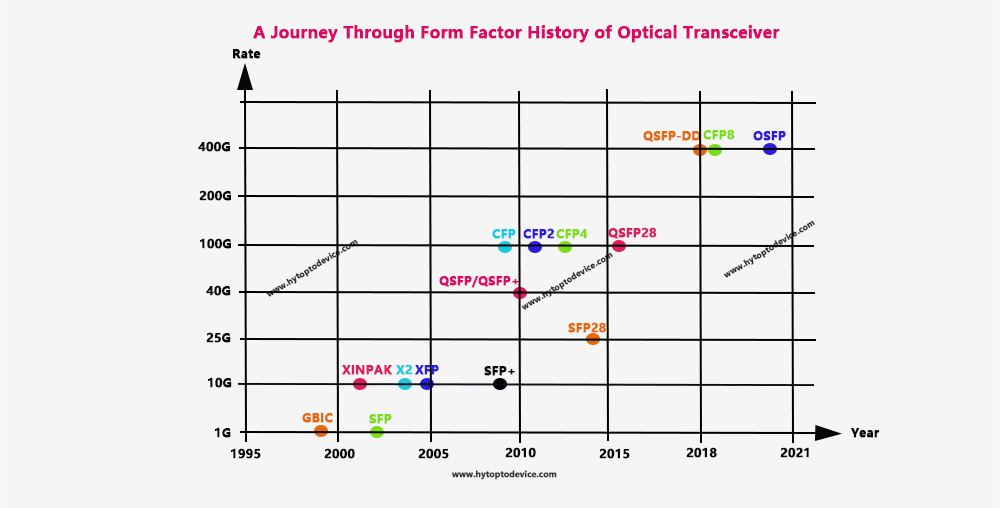
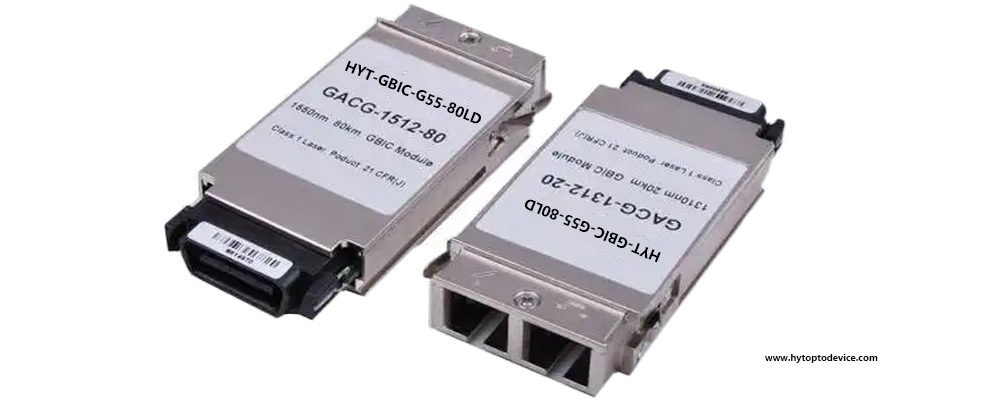
1. GBIC (Giga Bitrate Interface Converter)
Popular around the year 2000, GBIC was the dominant form factor for Gigabit-rate modules.
· Key Features: Rate: 155Mb/s to 2.5Gb/s | Voltage: 3.3V or 5V.
· Legacy Status: Its relatively large size led to its replacement by the more compact SFP.
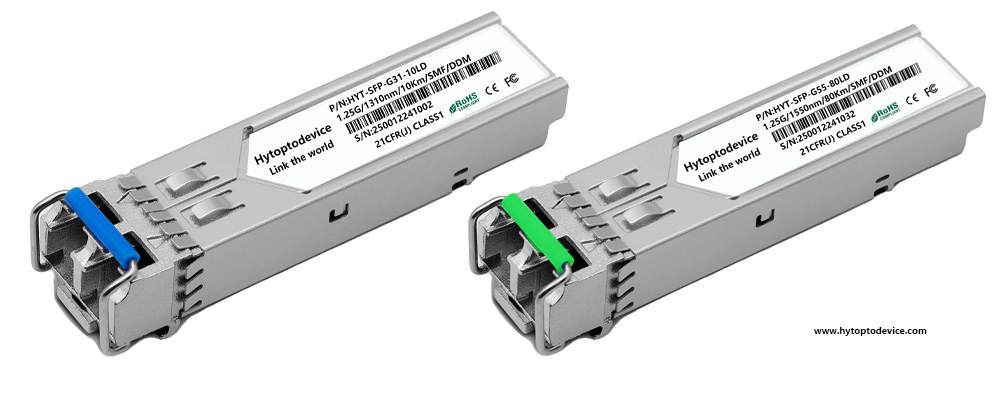
2. SFP (Small Form-factor Pluggable)
The SFP, or "Mini-GBIC," halved the size of the GBIC, instantly doubling potential port density. It became the ubiquitous standard for 1G/2.5G networks.
· Key Features: Rate: 155Mb/s to 4Gb/s+ | Voltage: 3.3V.
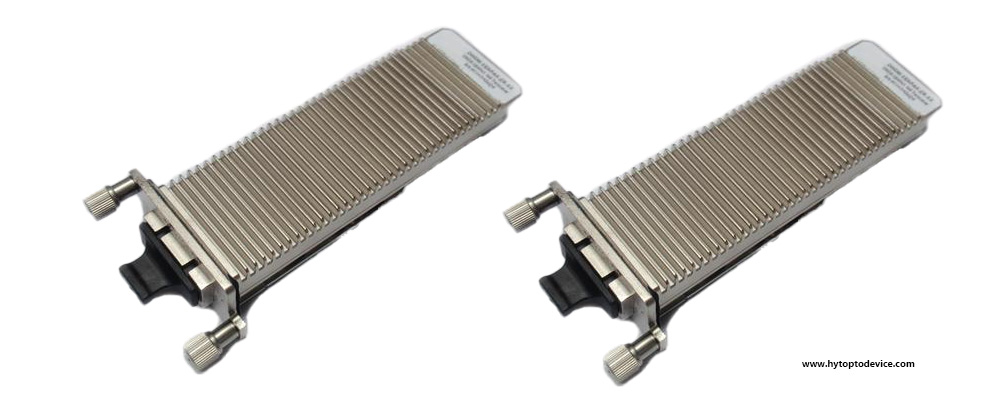
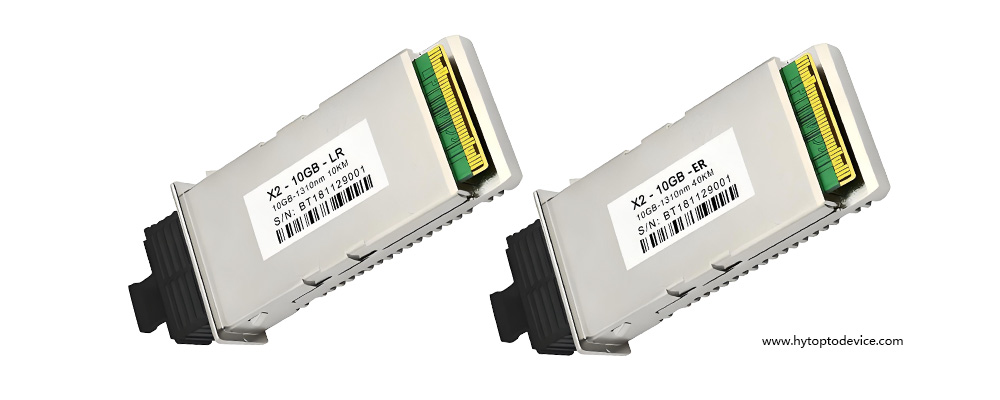
3. Xenpak & X2: The Pioneers of 10G
These were the first widely adopted form factors for 10 Gigabit Ethernet, emerging in the early 2000s.
· The Challenge: Early 10G circuitry was complex and power-hungry. Xenpak (the first standard) was quite large, limiting ports to just a few per switch.
· The Evolution: X2 followed as a streamlined, nearly half-sized version of Xenpak. Both used the XAUI electrical interface (4 lanes x 3.125 Gbps) and typically featured SC duplex fiber connectors.
· Legacy Status: Their high power consumption (>3.5W) and large footprint were major drawbacks. They served as crucial but transitional bridges, soon superseded by more efficient designs. (Note: Specific wavelength/distance specs (e.g., 10GBASE-SR, LR, ER) were defined by the optical technology inside, not the form factor itself).
4. XFP (10-Gigabit Small Form-factor Pluggable)
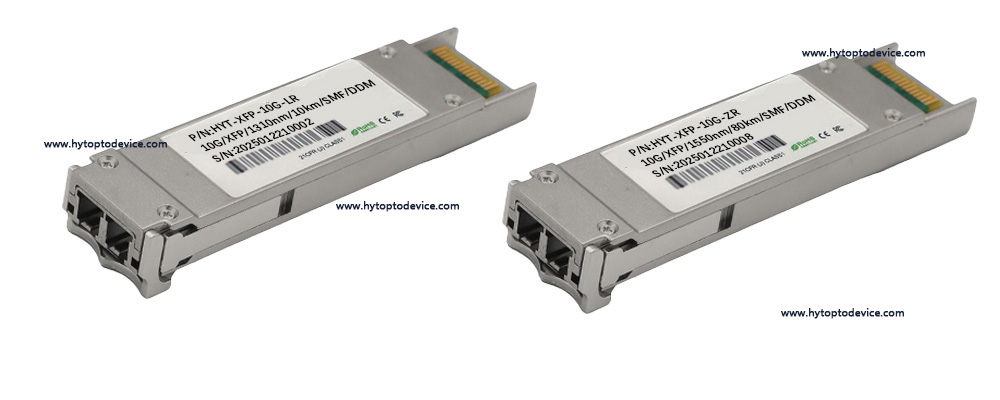
XFP marked a significant leap by moving away from the parallel XAUI interface to a simpler serial 10Gbps (XFI) interface. This allowed for a more compact design than Xenpak/X2.
· Key Features: Dedicated to 10G rates.
5. SFP+ (Enhanced Small Form-factor Pluggable)
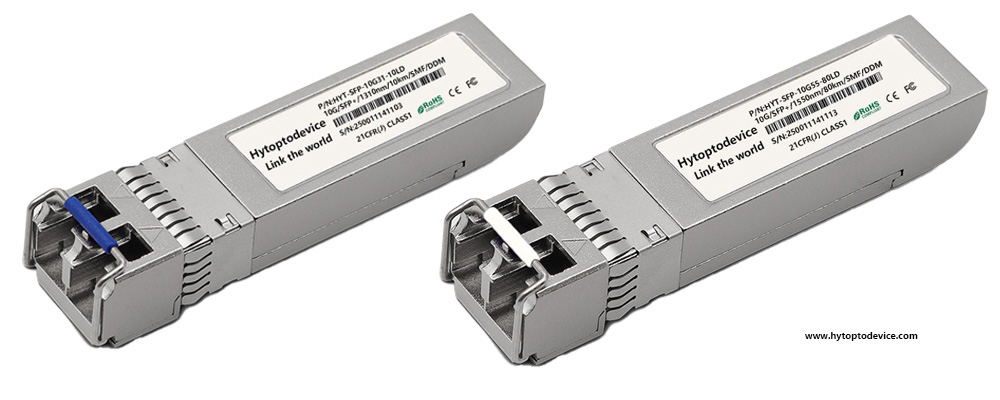
The game-changer for 10G. SFP+ refined the XFP approach, moving more functionality to the host board chipset. This resulted in a module identical in size to the SFP but capable of 10G speeds.
· Advantage over XFP: ~30% smaller, lower power consumption, and ultimate port density. It quickly became the dominant 10G form factor, making XFP, X2, and Xenpak obsolete.
Size Comparison of Key Legacy Form Factors:
GBIC > Xenpak > X2 > XFP > SFP+/SFP
6. SFP28
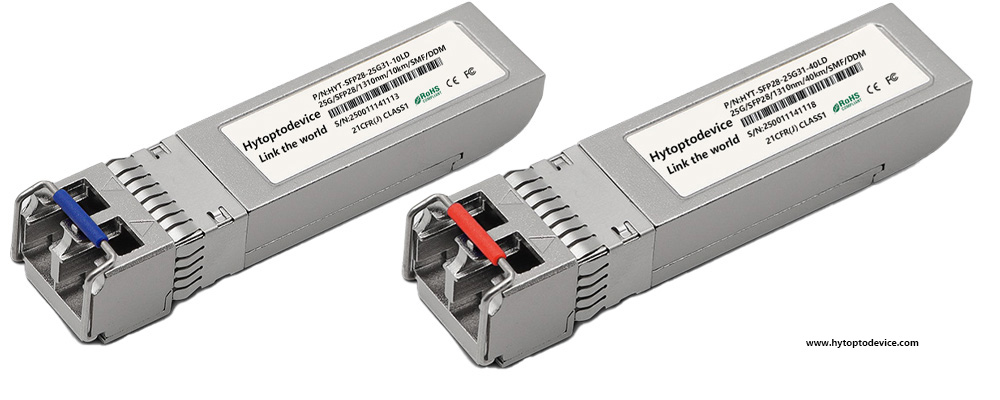
The natural evolution of SFP+, SFP28 maintains the same compact size but increases the serial lane rate to 25 Gbps. It is the cornerstone for 25G server access and a building block for 100G networks (using 4x SFP28 lanes).
· Key Role: Provides a smooth migration path from 10G to 25G/100G.
7. QSFP Family: The Highway to High Density
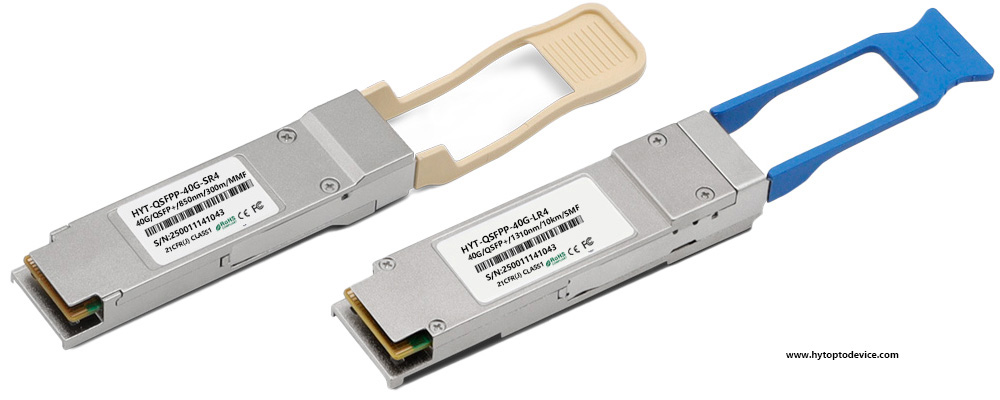
QSFP (Quad SFP) packages four independent lanes in one module, enabling high-density aggregation.
· QSFP+: Originally for 4x10G=40G. Enhanced versions supported 4x25G.
· QSFP28: The standard for 4x25G=100G networks, the dominant form factor for modern data center spine layers. such as
QSFP28-100G-LR4.· QSFP-DD (Double Density): Builds on QSFP by adding a second row of electrical contacts, supporting 8 lanes. This enables speeds like 8x50G=400G and 8x100G=800G in a slightly wider but backward-compatible (with QSFP28 ports) form factor.
8. CFP Family: The Powerhouse for Long Haul
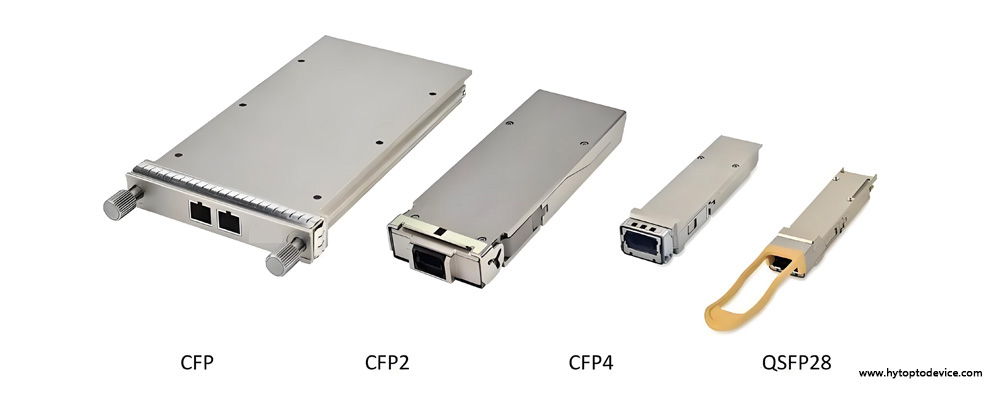
CFP (Centum Gigabit Form-factor Pluggable) was designed for early 100G+ applications, particularly demanding long-haul and coherent DWDM optics. It prioritized performance and thermal management over size.
· Evolution for Density: CFP2 (½ size of CFP) and CFP4 (¼ size of CFP) followed, improving density while handling high-power coherent optics. CFP8 targets 400G/800G applications.
9. OSFP: The High-Power Contender for the Next Generation
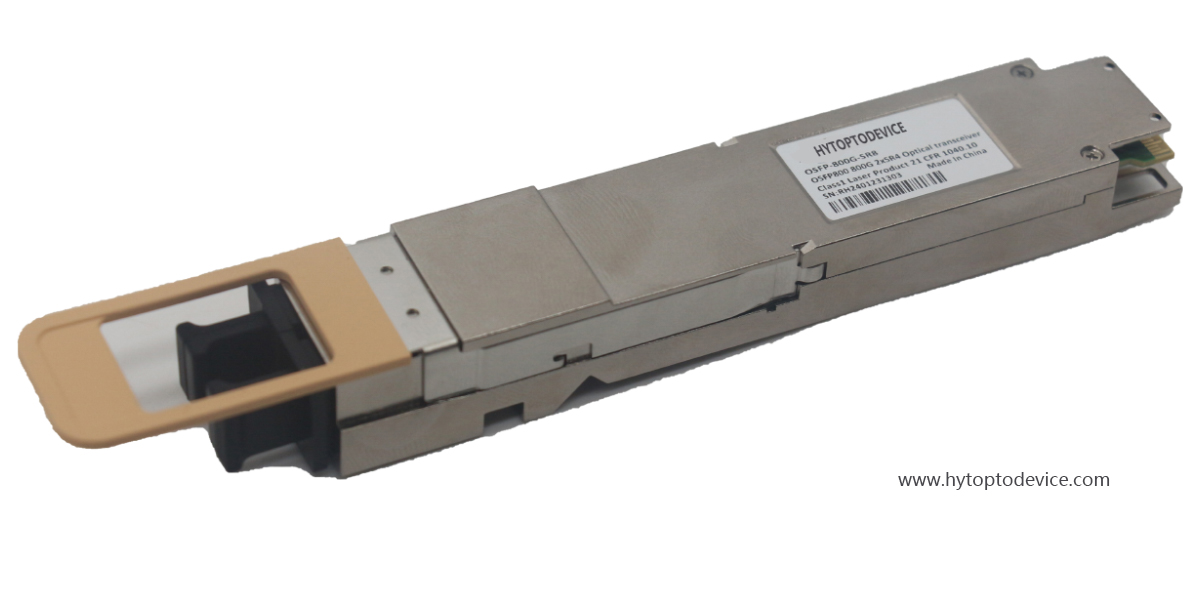
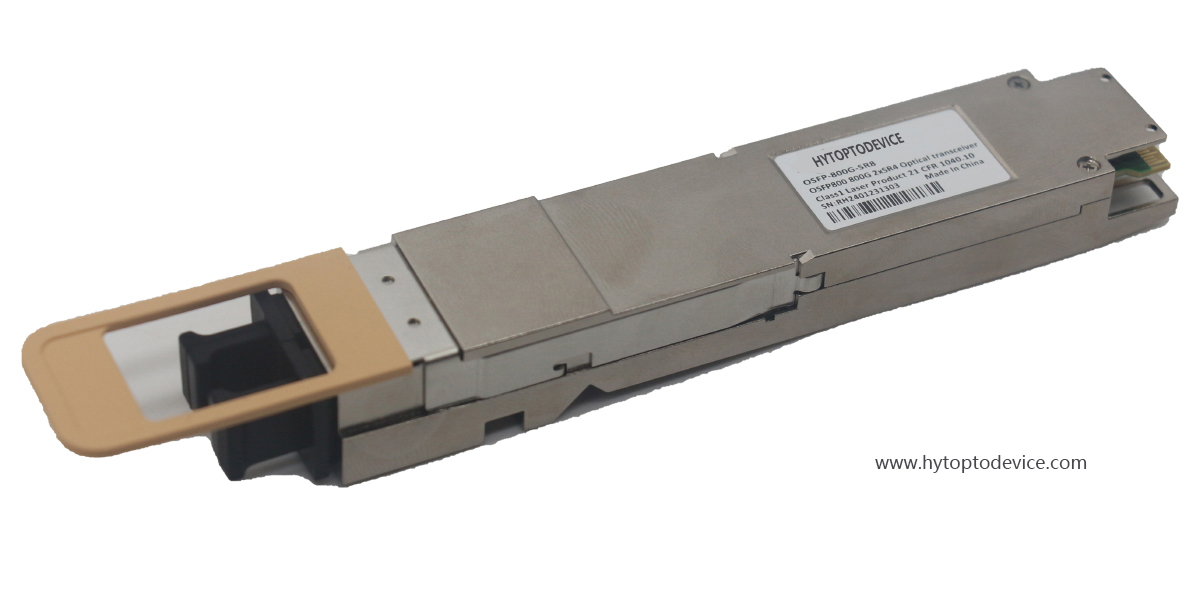
OSFP (Octal Small Form-factor Pluggable) is a key contender for 400G/800G and beyond, designed with future scalability in mind.
· Key Features: The "Octal" in its name denotes its native support for 8 electrical lanes. It is slightly wider and deeper than QSFP-DD.
· Design Philosophy: This larger size is a strategic trade-off, allowing for superior thermal management and the ability to house more complex, higher-power components (e.g., for coherent optics).
· Market Position: OSFP is often seen as particularly well-suited for very high-performance, high-power applications and is considered by many to have a stronger roadmap for 800G and 1.6T speeds due to its inherent power and thermal headroom. It is not electrically backward compatible with QSFP28 sockets.
QSFP-DD vs. OSFP: The 400G/800G Choice
Feature QSFP-DD OSFP
Name Implies Double Density on QSFP Octal (8) channels
Key Advantage Backward Compatibility with QSFP28 ports Thermal & Power Headroom for future speeds
Form Factor Slightly narrower Slightly wider and deeper
Primary Market Broad 400G adoption, path to 800G High-performance, high-power 400G/800G/1.6T
二、
The Unstoppable Trend: Smaller, Denser, More Efficient The history of optical transceiver form factors is a clear story of relentless miniaturization and integration. Each generation aimed to deliver higher bandwidth in a smaller package with lower power per bit.
Today, the frontier at 800G and beyond is defined by two main paths: the backward-compatible, density-optimized QSFP-DD and the high-performance, future-ready OSFP. This ongoing innovation, driven by the insatiable data demands of cloud computing and AI, ensures that the "postage stamp" of tomorrow will carry more data than we can imagine today.
Understanding this evolution isn't just about technical trivia; it's essential for making informed decisions about network design, compatibility, and future-proofing your infrastructure.
At HYTOPTODEVICE, we are a professional manufacturer with years of experience producing the very form factors detailed in this history. From the legacy GBICs and pioneering Xenpak/X2 modules to the modern high-density QSFP-DD and OSFP, we have a deep understanding of their technical characteristics, optimal application scenarios, and compatibility across major OEM brands.
We possess the expertise and manufacturing capability to supply these optical transceivers in volume, ensuring reliable performance for your projects. Whether you are a system integrator, wholesaler, distributor, or reseller, we are your trusted partner for high-quality, compatible optical connectivity solutions.
Interested buyers are welcome to contact us at any time to discuss your requirements.

Reference Sources:
100 Gigabit Ethernet
Small Form-factor Pluggable



