
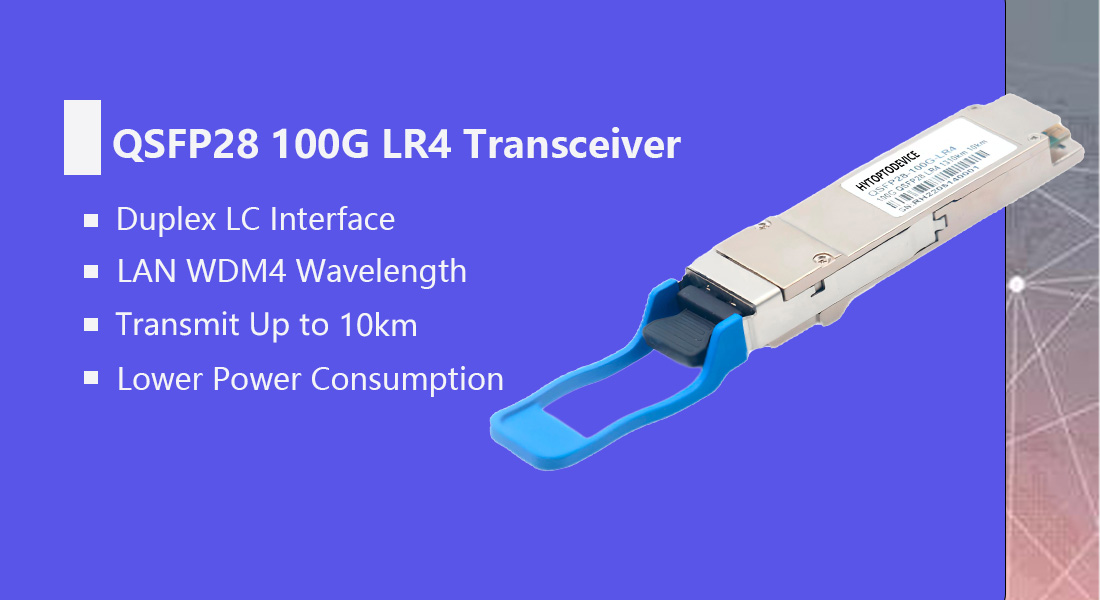
The QSFP28 LR4 (Long Range 4-channel) is a hot-pluggable, four-channel, full-duplex optical module. It is specifically designed for long-reach data transmission—up to 10km—over Single-Mode Fiber (SMF) in 100G Ethernet networks.
Unlike short-reach modules (like the SR4), which use MPO connectors, the LR4 uses a Standard LC Duplex connector, making it compatible with existing long-haul fiber cabling.
2.How It Works: LAN-WDM Technology
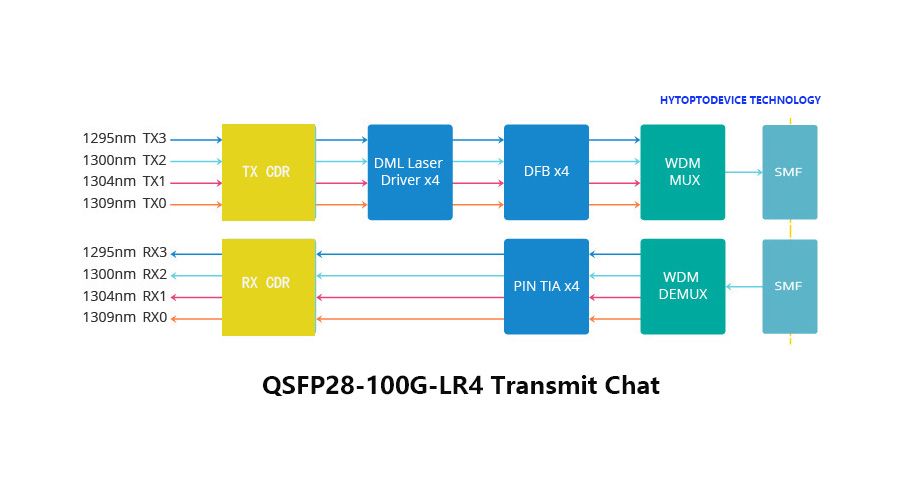
The "LR4" magic lies in its internal wavelength management. To transmit 100G over a single pair of fibers, the module uses LAN-WDM (Wavelength Division Multiplexing):
2.1Transmission: It converts four 25Gbps electrical signals into four specific optical wavelengths (1295.56nm, 1300.05nm, 1304.58nm, and 1309.14nm).
2.2Multiplexing: These four signals are combined into a single 100G optical stream.
2.3Reception: At the receiving end, the module de-multiplexes the light back into four 25Gbps channels.
This precision allows for high-speed data transfer over 10km with minimal signal degradation.
3.HYTOPTODEVICE QSFP28 LR4 Transceiver Module: Technical Specifications
Our modules are engineered to meet and exceed MSA (Multi-Source Agreement) and IEEE 802.3ba standards.
| Feature | HYTOPTODEVICE 100GBASE-LR4 Specification |
| Data Rate | 103.125 Gbps (4 x 25.78Gbps) |
| Wavelength | LAN-WDM (1295nm - 1310nm) |
| Max Distance | 10km over SMF MODE |
| Connector Type | Duplex LC |
| Power Consumption | < 2.5W (Ultra-Low Power Design) |
| Compatibility | Cisco, Arista, Juniper, Dell, Mellanox, and 100+ more |
| Operating Temp | 0°C to 70°C (Commercial Grade) |
For many IT directors, the biggest hurdle to scaling a network is the exorbitant cost of "original" optics. HYTOPTODEVICE solves the three primary pain points of the modern data center:
The most common fear with third-party optics is the "Unsupported Transceiver" error. HYTOPTODEVICE modules are coded and tested in-house on original brand switches (Cisco, Arista, etc.) to ensure they are recognized immediately upon plug-in.
While the industry standard allows for up to 4.5W, our QSFP28 LR4 typically operates under 2.5W. In a high-density data center with hundreds of ports, this reduction in heat significantly lowers cooling costs and extends hardware lifespan.
Global supply chain delays can stall your project for months. At HYTOPTODEVICE, we maintain a robust inventory in our warehouses, enabling same-day or next-day shipping to Europe, the USA, and Asia.
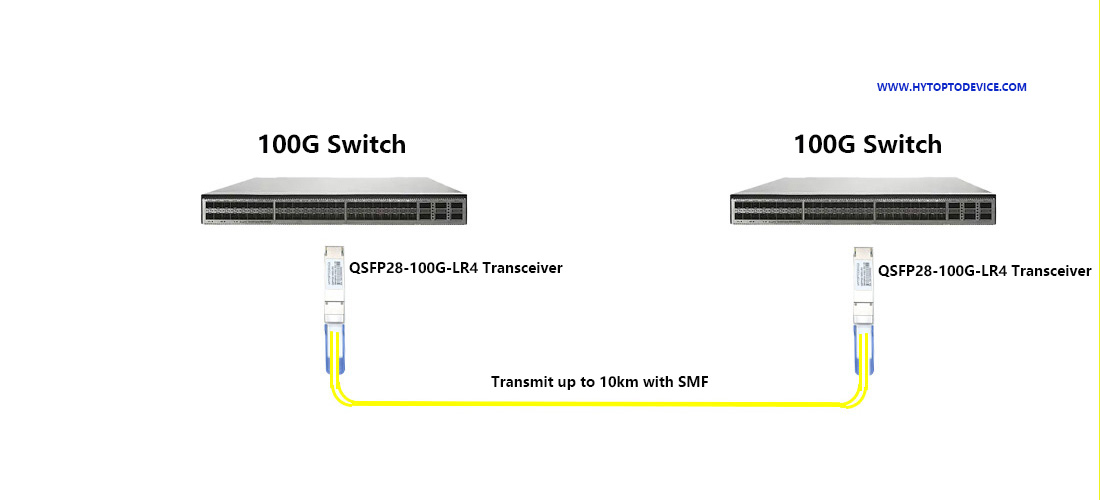
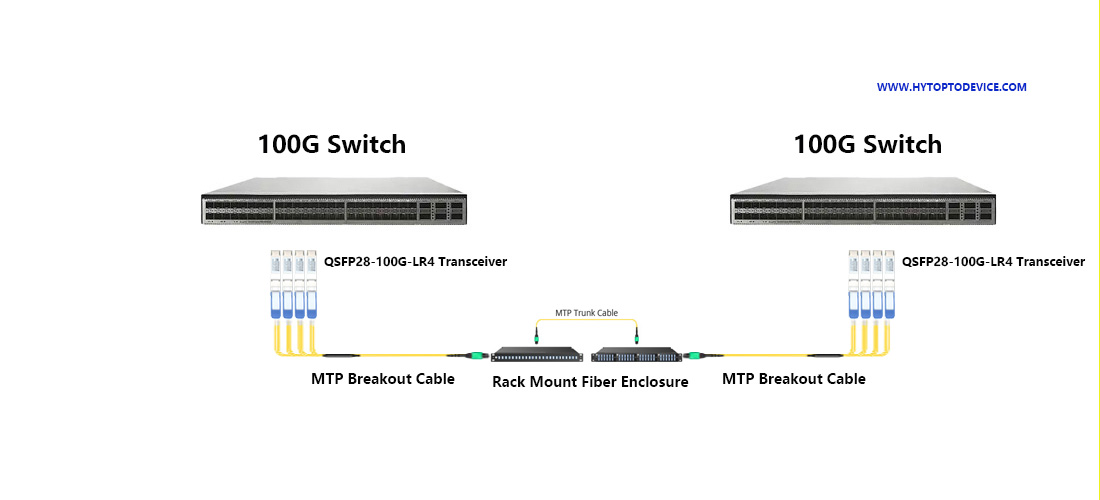
Data Center Interconnect (DCI): Linking two data centers located within a 10km radius.
Enterprise Core Switching: Upgrading campus backbones from 10G/40G to 100G.
Telecommunications: Serving as a reliable solution for 5G fronthaul and backhaul deployments.
Q: Can I connect a HYTOPTODEVICE QSFP28 LR4 to an original Cisco module? A: Absolutely. As long as both modules follow the IEEE 802.3ba 100GBASE-LR4 standard, they are fully interoperable.
Q: Does using HYTOPTODEVICE void my switch warranty? A: No. Per the Magnuson-Moss Warranty Act (and similar laws in the EU), manufacturers cannot void a warranty simply for using third-party components unless the component itself caused the damage.
Q: What is the warranty period? A: We provide a 3-year warranty and a 30-day return policy on all our optical transceivers.
Don't let OEM pricing bottleneck your growth. Get the same 10km reach, the same 100G speed, and the same reliability for a fraction of the cost.
Ready to optimize your infrastructure? Contact our Sales Team for a Volume Quote or tell us your ideas if any questions. we will give a reply in 24 hours.


