If you work in the field of fiber optic networks, you might wonder if bidirectional optical modules with different interfaces (especially SC and LC) can be used together. Because SC and LC connectors are physically incompatible, they cannot be directly connected. However, they can be perfectly paired if certain requirements are met. As a professional optical module manufacturer with years of experience in optical communication, HYTOPTODEVICE will provide you with a detailed introduction.
Table of Contents:
一、Understanding BiDi Technology 二、The Interface Challenge: SC vs. LC 三、Can SC and LC BiDi Modules Work Together? 四、Practical Example 五、Conclusion一、Understanding BiDi Technology
BiDi modules use wavelength division multiplexing (WDM) technology to send and receive data over a single fiber. One wavelength (e.g., 1310nm) is used for transmission, and another (e.g., 1550nm) is used for reception. To establish a link, two BiDi transceivers must be used as a pair, with their transmit and receive wavelengths reversed.
BiDi relies on precise wavelength management:
1.Wavelength Pairing: BiDi modules must be used in matched pairs.
Example:
· Module A: Tx at 1310nm / Rx at 1550nm
· Module B: Tx at 1550nm / Rx at 1310nm
· 2. Optical Filter (Thin-Film Filter):
Integrated into each BiDi module, this filter acts like a "traffic director." It:
· Transmits the specific Tx wavelength into the fiber.
· Selectively passes the Rx wavelength to the photodetector while blocking the Tx wavelength from interfering.
· 3.Signal Flow:
Both wavelengths (e.g., 1270nm and 1330nm) travel in opposite directions on the same fiber, separated and processed by the filters at each end.
二、The Interface Challenge: SC vs. LC The SC (Subscriber Connector) and LC (Lucent Connector) refer to the physical connector types on the optical module. They differ in size and latch mechanism:
· SC connectors are square and use a push-pull latching system.
· LC connectors are smaller, rectangular, and use a tab latch.
Since SC and LC connectors are physically incompatible, they cannot be directly mated to each other without an adapter or a hybrid cable.
三、Can SC and LC BiDi Modules Work Together?While the BiDi technology itself is independent of the connector type, a working link requires:
1. They must "speak" at the same speed (aka same rate).
2. Matched Wavelengths: The paired modules must have complementary TX/RX wavelengths.
3. They should have the same "stamina," meaning the same transmission distance.
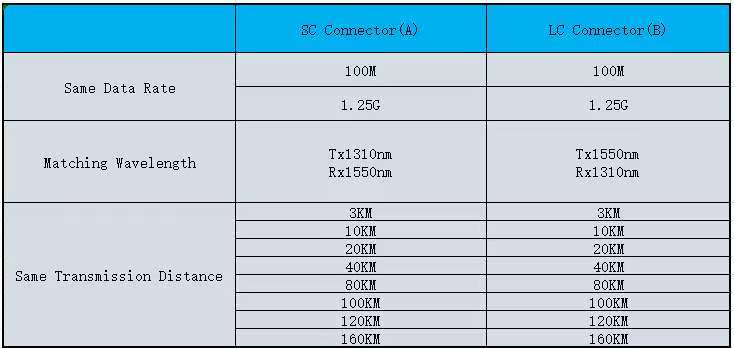
4. Physical Connectivity: The fibers must connect seamlessly between devices.
If one device has an SC interface and the other has an LC interface, you cannot simply plug them together. However, you can still connect them using one of the following solutions:
(1) Use a Hybrid Patch Cable
A hybrid (or transition) patch cable has an SC connector on one end and an LC connector on the other. This allows you to connect an SC-based BiDi module to an LC-based BiDi module directly via fiber.
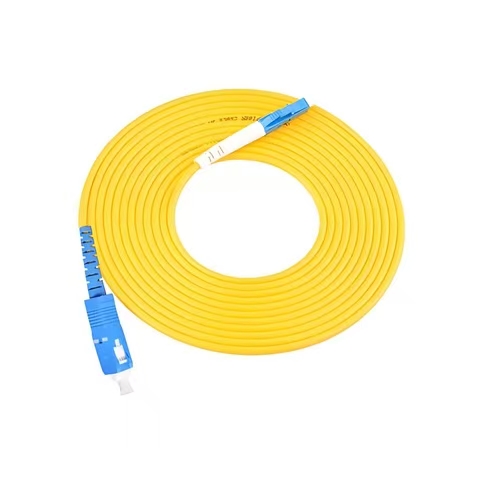
(2) Use Adapters
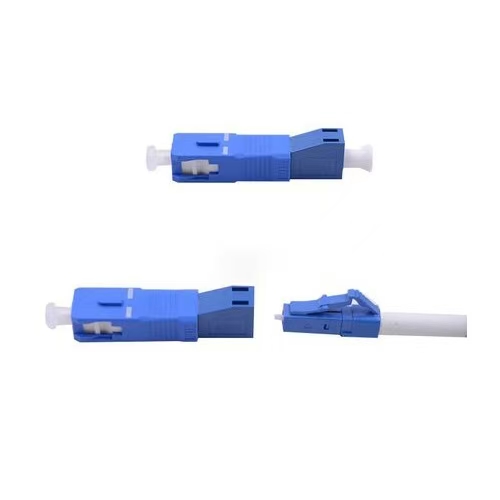
SC-to-LC duplex or simplex adapters can be used to join cables with different connectors. This is a flexible option if you already have existing cabling.
5.Ensure Wavelength Compatibility
Remember that even with the right physical connection, the BiDi modules must still be wavelength-paired (e.g., 1310nm/1550nm with 1550nm/1310nm). Check the datasheets to confirm compatibility.
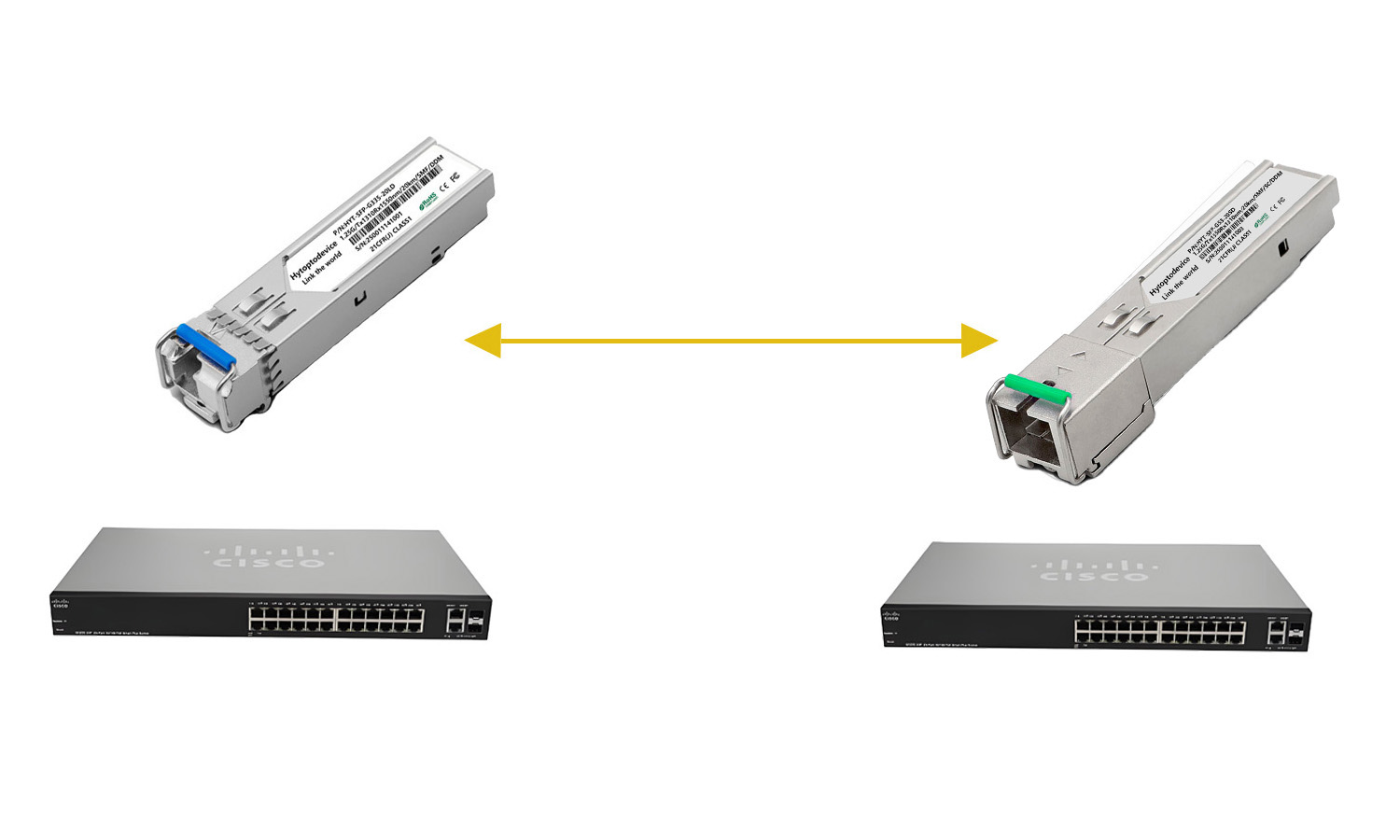
四、Practical ExampleSuppose you have:
· Device A: SC BiDi SFP, TX 1310nm / RX 1550nm
· Device B: LC BiDi SFP, TX 1550nm / RX 1310nm
You can connect them using:
· A single-mode simplex fiber cable with SC on one end and LC on the other, or
· An SC patch cable + SC-LC adapter + LC patch cable
Important Considerations
· Insertion Loss: Adding adapters or using hybrid cables may introduce additional insertion loss. Ensure the total link loss is within the budget of your BiDi modules.
· Polish Type: Align the polish types (UPC or APC) to avoid high reflectance and connection issues.
· Fiber Type: Both modules should use the same fiber type, typically single-mode fiber (SMF).
 五、Conclusion
 While SC and LC interface BiDi sfp modules are not directly plug-compatible, they can certainly be used together in the same link with the appropriate cabling or adapters—as long as their wavelengths are properly paired and link loss is carefully considered.
When planning your network, always verify both the physical interface requirements and the optical specifications to ensure a stable and efficient BiDi connection.
Need help selecting compatible BiDi modules or cables? Feel free to reach out—we’re here to help optimize your fiber network!



